How Long Does an Oil Change and Tire Rotation Take?
You can expect an oil change and tire rotation to take about 30 minutes to an hour, depending on your vehicle and the shop’s pace.
Quick-service places often get it done in 15 to 30 minutes, while dealerships might take a bit longer due to inspections.
Scheduling your service during off-peak times can help you avoid long wait times.
If you’re curious about how factors like vehicle type and service location affect the timing, keep exploring these details.
Understanding these elements can help you plan your visit effectively.
So, whether it’s a quick lube shop or a dealership, knowing what to expect can make your experience smoother.
Key Takeaways
- An oil change usually takes 20 to 45 minutes, varying by vehicle and service provider.
- Adding a tire rotation typically increases total service time to 30 to 60 minutes.
- Quick-service shops often complete both tasks within 15 to 30 minutes for faster turnaround.
- Dealerships may take 30 to 60 minutes or longer due to thorough inspections and paperwork.
- Scheduling during off-peak hours and booking ahead can significantly reduce wait times.
Typical Duration for Oil Changes and Tire Rotations

Although the time can vary, an oil change typically takes between 20 and 45 minutes, depending on your vehicle and the service provider.
If you add a tire rotation service, expect the total time to increase, usually ranging from 30 minutes to an hour.
Quick-service shops often complete both tasks in about 15 to 30 minutes thanks to efficient workflows.
On the other hand, dealerships might take longer—sometimes 30 to 60 minutes or more—due to extra inspections and paperwork.
To save time, consider scheduling your appointment early, especially during busy hours.
This way, you’ll get your oil change and tire rotation service done promptly without unnecessary waiting.
Factors Affecting Service Time
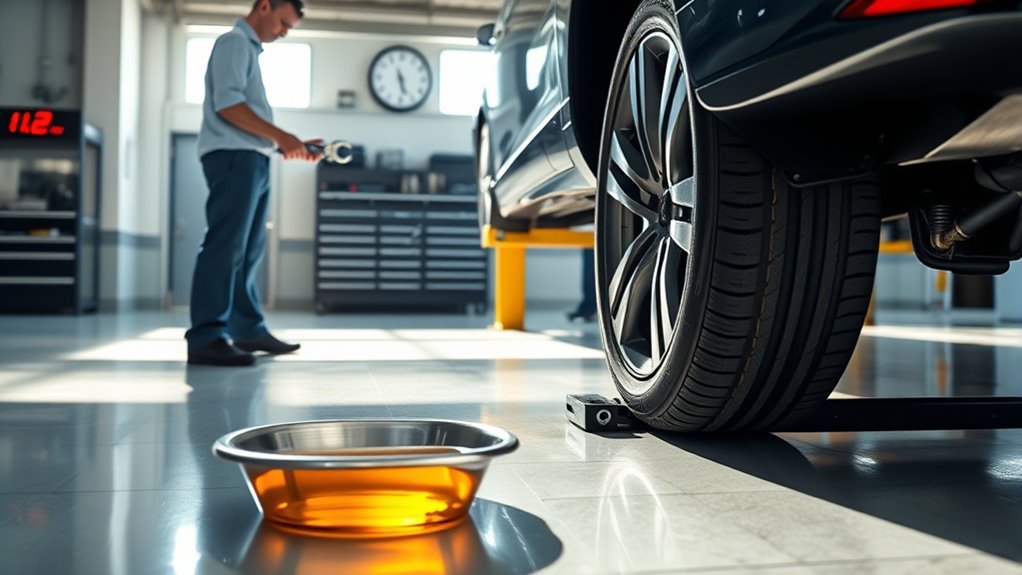
The time it takes to complete an oil change and tire rotation can vary widely depending on several factors.
First, your vehicle’s design plays a big role—some cars make accessing the oil filter and drain plugs easier, which can speed up the oil change.
Tire rotations usually add about 30 minutes or less, but if your car has unique requirements, it might take longer.
Also, high customer volume during peak hours can extend wait times, especially at busy shops.
If you request additional services like brake inspections, expect more time added to your overall service.
Quick-service shops often handle oil changes faster, sometimes in just 15 to 30 minutes, depending on traffic.
Knowing these factors can help you better plan your visit and avoid unexpected delays during oil change and tire rotations.
Comparing Service Times at Dealerships and Quick-Service Shops

When you bring your car to a dealership, expect the oil change and tire rotation to take anywhere from 30 to 60 minutes or more, especially if you have an appointment.
Quick-service shops usually complete the same tasks in 15 to 30 minutes, often without needing an appointment.
Choosing between appointment and walk-in can also affect how long you wait, so plan accordingly.
Dealership Service Duration
How long does an oil change and tire rotation usually take at a dealership compared to a quick-service shop?
At dealerships, the oil change service typically lasts between 30 to 60 minutes. This longer duration results from thorough inspections and necessary paperwork that dealerships prioritize.
You might also find that dealerships bundle tire rotations with oil changes, which can add to the overall service time depending on how busy they are.
Keep in mind, factors like shop traffic and your vehicle’s design can further extend your wait.
While quick-service shops focus on speed, dealerships emphasize an all-encompassing approach, ensuring every detail is checked.
Quick-Service Shop Speed
Although dealerships offer thorough inspections during oil changes, quick-service shops focus on speed. They often complete the job within 15 to 30 minutes.
If you’re looking to minimize wait time, these shops are designed for efficiency with streamlined processes. In low-traffic periods, some quick-service centers can finish an oil change in as little as 10 minutes, letting you get back on the road fast.
However, wait time at these shops can fluctuate depending on how busy they are, so it’s not always guaranteed to be super quick.
Compared to dealerships, where oil changes often take 30 to 60 minutes or more due to additional inspections and appointment scheduling, quick-service shops prioritize getting you in and out swiftly without extra delays.
Appointment Versus Walk-In
Since dealerships often include thorough inspections and paperwork, scheduling an appointment there usually means you’ll spend 30 to 60 minutes or more waiting for an oil change or tire rotation.
On the other hand, quick-service shops excel at speed, often finishing these services in 10 to 30 minutes, especially if you walk in without an appointment.
Choosing between the two affects your wait time considerably.
Consider these differences:
- Dealership appointments include detailed inspections and extra paperwork, extending the process.
- Quick-service shops prioritize efficiency, often serving walk-in customers faster.
- Walk-ins at quick-service centers can have their oil change and tire rotation done in as little as 10 minutes.
If time is tight, a quick-service walk-in might suit you better than a dealership appointment.
DIY Oil Change and Tire Rotation Time Considerations
When you tackle a DIY oil change, expect to spend anywhere from 30 to 90 minutes depending on your experience and tools.
Adding a tire rotation will take another 15 to 30 minutes, so planning ahead is key.
Make sure you have all the necessary equipment ready to keep the process smooth and efficient.
Time Needed for DIY
If you decide to tackle an oil change yourself, expect to spend anywhere from 30 to 90 minutes depending on your experience and tools.
Adding a tire rotation can add 30 to 60 more minutes, especially if your vehicle has complex tire arrangements.
Remember, regular oil changes and tire rotations are essential for vehicle health, but doing them yourself requires time for cleanup and proper disposal of used oil and filters.
Consider these time factors when planning your DIY session:
- Difficulty accessing drain plugs or removing filters can slow you down.
- Tire rotation complexity varies by vehicle type.
- Cleanup and disposal add extra minutes.
Tools and Preparation
A well-organized toolkit can cut your DIY oil change and tire rotation time considerably.
Proper preparation means gathering all essential tools and confirming you have the right oil type and quantity, as specified in your owner’s manual.
Without this, you risk costly delays.
Clean-up and disposal also require planning to avoid extra time.
| Tools Needed | Purpose |
|---|---|
| Oil filter wrench | Remove old oil filter |
| Socket set | Remove drain plug and wheels |
| Oil catch pan | Collect used oil |
| Funnel | Pour new oil accurately |
Scheduling Tips to Minimize Wait Times
How can you reduce the time spent waiting during your oil change and tire rotation?
Start by scheduling your appointment during less busy times like early mornings or mid-week. This avoids peak hours and speeds up service.
Always book ahead rather than walking in, as appointments help the shop manage their workload efficiently.
Also, look for oil change specials or promotions to get quicker, budget-friendly service.
Arriving 10-15 minutes early lets you handle paperwork without cutting into your service time.
Try these tips to minimize wait times:
- Choose quick-service shops known for fast oil change and tire rotation.
- Schedule during off-peak hours.
- Book appointments and arrive early.
These simple steps help you get back on the road faster.
Benefits of Regular Maintenance for Faster Service
Beyond scheduling smartly, keeping up with regular maintenance plays a big role in speeding up your oil change and tire rotation.
When you stay consistent with these services, mechanics can work faster because your oil drains smoothly and your tires are easier to handle.
Overdue oil changes often slow the process, making drainage messy and time-consuming. Plus, a clean, accessible oil filter helps technicians complete the job without delays.
Timely oil changes ensure smooth drainage and easy access to filters, speeding up your service appointment.
Regular maintenance also means fewer surprises or complications that could extend your visit.
By taking care of your vehicle routinely, you not only boost its performance but also guarantee your oil change and tire rotation appointments stay under an hour.
Ultimately, consistent care leads to quicker, more efficient service every time you visit.
Frequently Asked Questions
What Is the 30-60-90 Rule for Cars?
The 30-60-90 rule means you should service your car every 30,000, 60,000, and 90,000 miles.
At each interval, you’ll perform specific maintenance tasks to keep your vehicle running smoothly and safely.
Do You Get a Tire Rotation With an Oil Change?
You often get a tire rotation with an oil change, especially at dealerships or quick-service centers.
Just make sure to ask if it’s included or part of a package so you don’t face surprise fees later.
What Car Cost $25,000 for an Oil Change?
You won’t find a car costing $25,000 for just an oil change.
That price might be the car’s value, not the service.
Oil changes typically cost much less, even for luxury vehicles or specialty oils.
Do I Really Need to Rotate My Tires Every 5000 Miles?
Yes, you really should rotate your tires every 5,000 miles.
It helps them wear evenly, improves fuel efficiency, and boosts safety.
Skipping rotations can cause uneven wear and may cost you more in the long run.
Conclusion
Now that you know an oil change and tire rotation usually take about 30 to 45 minutes, you can plan your day without feeling like you’re stuck in a pit stop forever.
Remember, regular maintenance is your car’s best friend—it keeps things running smoothly and can even speed up future visits.
So, keep your ride in tip-top shape, and you’ll be back on the road before you know it, as quick as a flash.
In conclusion, scheduling an oil change and tire rotation doesn’t have to be a hassle. Investing that short amount of time ensures your vehicle stays in peak condition, enhancing safety and performance.
So, don’t put it off! Regular maintenance is key to prolonging your car’s life and avoiding costly repairs down the road. Make it a routine, and you’ll find that keeping your car in great shape is easier than you think!