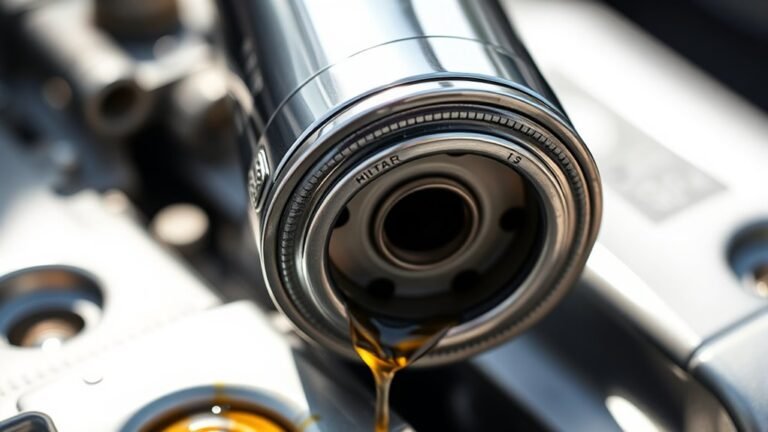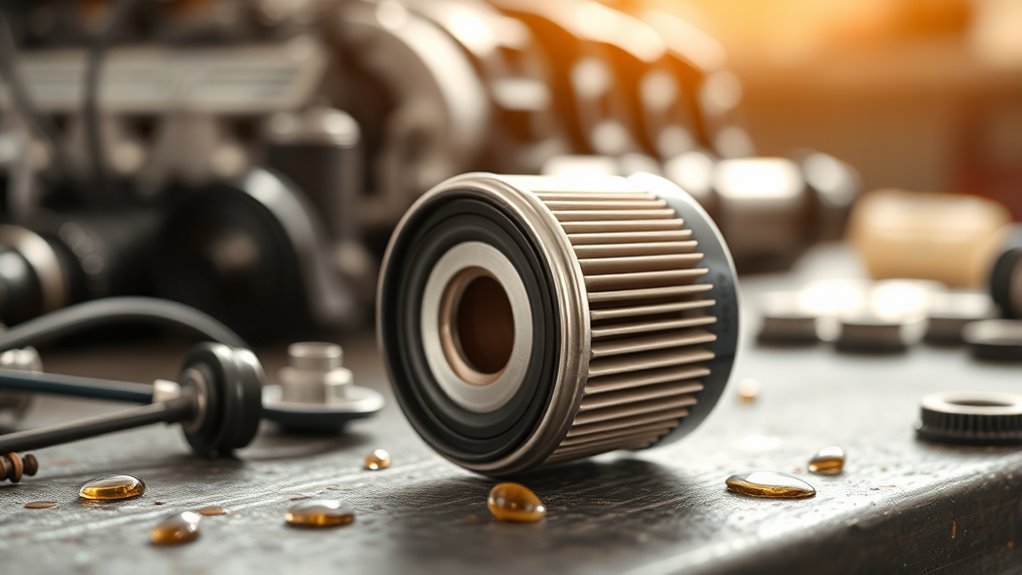
How Long Does an Oil Filter Last?
Your oil filter is a crucial component of your vehicle’s engine, and it typically lasts between 3,000 and 7,500 miles.
This lifespan can vary based on your driving habits and conditions. If you’re using synthetic oil and primarily driving on highways, you might be able to stretch it to 7,500 miles.
However, if you’re frequently making short trips or stuck in stop-and-go traffic, your oil filter may wear out much faster.
To keep your engine clean and running smoothly, it’s a good practice to replace the filter every time you change your oil.
Want to ensure you’re using the correct filter for your vehicle?
Understanding the best maintenance schedule will help you keep your engine in top shape.
Keep exploring for more tips!
Key Takeaways
- Oil filters generally last between 3,000 and 7,500 miles, depending on driving conditions and oil type.
- Manufacturers recommend replacing oil filters every oil change, which is typically every 3,000 miles or 3 months.
- Using synthetic oil can extend oil filter life up to 7,500 miles or more.
- However, harsh driving conditions and frequent short trips can reduce oil filter lifespan due to faster contaminant buildup.
- It’s a good idea to conduct regular inspections during oil changes to help determine if an oil filter needs earlier replacement.
Purpose of an Oil Filter
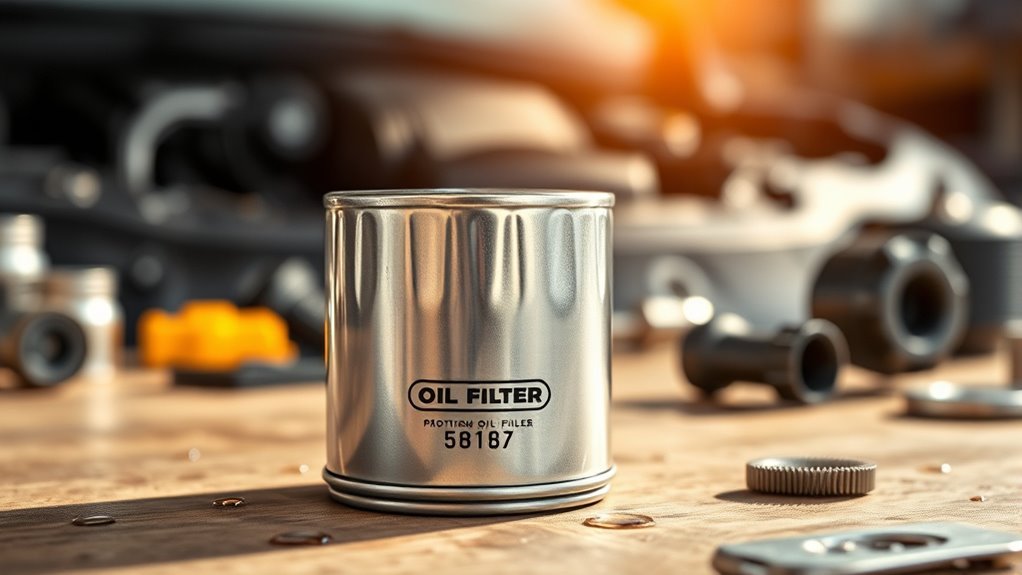
An oil filter plays an essential role in keeping your engine running smoothly by removing metal shavings, soot, sediment, and other contaminants from the engine oil.
The primary purpose of the oil filter is to guarantee clean oil circulates through your engine, preventing harmful particles from causing internal damage.
Without a properly functioning oil filter, contaminants would build up, reducing engine performance and potentially shortening your engine’s lifespan.
Regular maintenance, including timely oil changes and replacing the oil filter, helps maintain engine health and efficiency.
By filtering out debris and impurities, the oil filter supports ideal lubrication and cooling, which are crucial for your engine’s smooth operation.
Keeping the oil filter in good condition is essential for protecting your engine and prolonging its life.
Typical Lifespan of Oil Filters
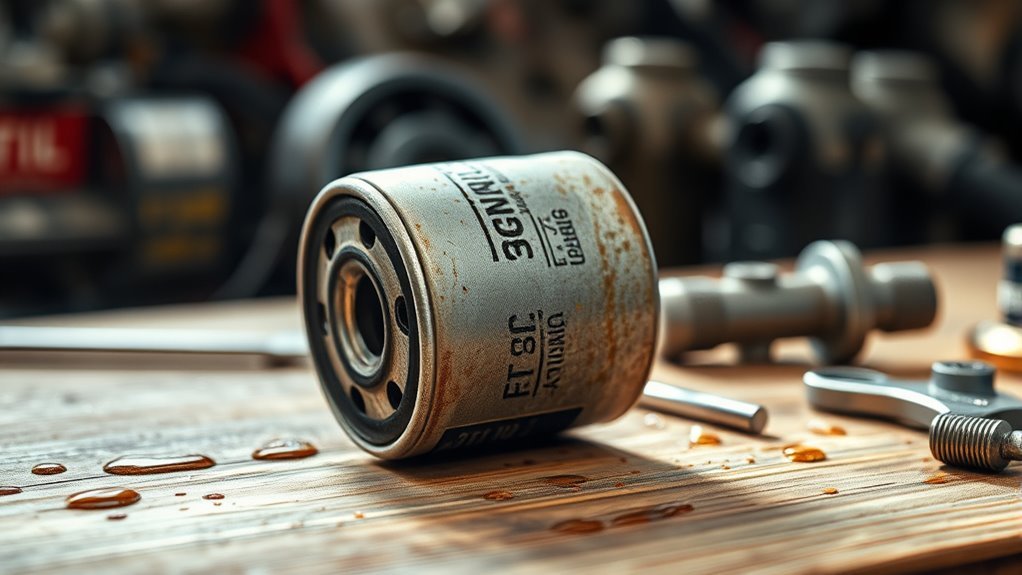
You’ll usually find oil filters last between 3,000 and 7,500 miles, depending on your driving habits and oil type.
Factors like synthetic oil use and manufacturer guidelines play a big role in how long your filter stays effective.
Always check your vehicle’s maintenance recommendations to keep your engine running smoothly.
Standard Mileage Range
Most oil filters last over 3,000 miles or about three months under normal driving conditions, but many can handle up to 7,500 miles before needing replacement.
You should plan to change your oil filters with every oil change to maintain peak engine performance.
While the standard mileage range for oil filters is typically between 3,000 and 7,500 miles, some users have reported going as far as 10,000 miles without issues.
Still, it’s important to inspect your oil filters regularly during routine maintenance.
Proper inspection helps identify whether the filter needs earlier replacement based on your specific driving conditions.
Sticking to these guidelines guarantees your engine stays clean and runs efficiently without risking damage from a clogged filter.
Factors Affecting Lifespan
Though oil filters generally last between 3,000 and 7,500 miles, several factors can shorten or extend their lifespan.
Your oil filter’s longevity depends on driving conditions, contaminants, and oil change intervals.
Using synthetic oil and following the recommended practice of oil filter replacement with every oil change helps maintain engine performance.
Regular inspections, as part of your maintenance guide, catch early signs of wear or clogging.
Harsh driving conditions like towing or heavy traffic may require more frequent changes.
| Factor | Impact on Lifespan | Recommended Action |
|---|---|---|
| Driving Conditions | Can shorten lifespan | More frequent inspections |
| Contaminants | Clogs filter faster | Replace filter as needed |
| Oil Change Intervals | Longer intervals reduce filter efficiency | Stick to intervals or adjust if using synthetic oil |
| Synthetic Oil | Extends filter life | Use with recommended intervals |
| Inspections | Detect issues early | Check during oil changes |
Manufacturer Recommendations
While oil filters typically last over 3,000 miles or about three months, manufacturers recommend replacing them with every oil change to keep your engine running smoothly.
Following manufacturer recommendations helps maintain peak engine performance by preventing contaminants from clogging the oil filter.
Many drivers replace their oil filter every oil change, usually around 3,000 miles.
However, some prefer extending this to 5,000 miles, especially when using OEM filters known for higher durability.
If you use synthetic oil, manufacturers often suggest longer oil change intervals, up to 10,000 miles.
But they still advise replacing the oil filter regularly to make sure it functions properly.
Regular inspections during service visits can catch contaminants early, helping you decide when it’s best to replace your oil filter for optimum engine health.
Factors Affecting Oil Filter Longevity
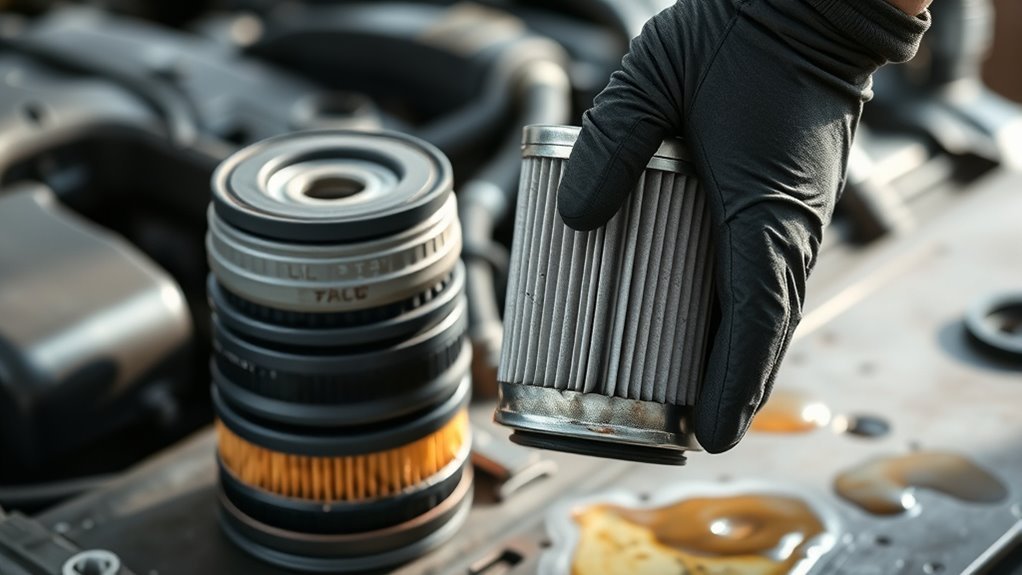
Because your driving habits and environment directly impact how quickly contaminants build up, several factors affect how long your oil filter lasts.
Aggressive driving, frequent short trips, and stop-and-go traffic increase engine wear and contaminate your oil faster, reducing oil filter longevity.
The type of oil you use also plays a role—synthetic oils often keep contaminants suspended better than conventional oils, helping extend the oil filter lifespan.
Environmental conditions like dust, humidity, and temperature extremes further influence filtering efficiency.
Regular maintenance, including timely oil changes, guarantees your filter doesn’t clog prematurely and continues protecting your engine.
Additionally, the oil filter’s design and quality determine how effectively it traps debris without restricting flow.
Recommended Replacement Intervals
You should follow your manufacturer’s guidelines when deciding how often to replace your oil filter, as recommendations can vary.
Typically, oil filters last between 3,000 and 7,500 miles, but your driving conditions can shorten or extend this range.
Paying attention to these factors helps keep your engine running smoothly.
Manufacturer Guidelines
Anyone maintaining their vehicle should follow manufacturer guidelines for oil filter replacement to keep the engine running smoothly.
Most manufacturers recommend oil filter replacement every 3,000 miles or 3 months.
However, modern oil filters often last up to 7,500 miles, especially with synthetic oil.
It’s best to change the oil filter at every oil change to guarantee peak engine performance.
Regular inspections during maintenance visits help spot contaminants and assess the filter’s condition.
This is especially important even if you extend oil change intervals with full synthetic oil.
| Condition | Recommended Action |
|---|---|
| Typical driving | Replace every 3,000 miles |
| Using synthetic oil | Replace up to 7,500 miles |
| Full synthetic oil | Monitor filter regularly |
| Maintenance visits | Inspect for contaminants |
| Peak performance | Change filter with oil change |
Typical Mileage Range
While oil filter lifespan varies by driving habits and oil type, most filters last between 3,000 and 7,500 miles before needing replacement.
Typically, you should change your oil filter every oil change to maintain peak engine performance.
If you use synthetic oil, many filters can handle extended oil change intervals, sometimes up to 10,000 miles.
However, sticking to a 5,000-mile interval with OEM filters offers added safety and reliability.
Under normal conditions, a 3,000 miles minimum is recommended, especially if you’re driving older vehicles or in stop-and-go traffic.
Driving Conditions Impact
Because driving conditions greatly affect oil filter longevity, you should adjust replacement intervals based on how and where you drive.
Harsh driving conditions, like towing or frequent stop-and-go traffic, expose oil filters to more contaminants, reducing their effectiveness.
While synthetic oil allows for longer oil change intervals—up to 10,000 miles under normal conditions—tougher environments may require changes every 8,000 miles to maintain engine performance and prevent internal damage.
Using OEM filters and following your vehicle’s maintenance guide can help guarantee ideal engine health, especially if you prefer changing oil and filters every 5,000 miles.
Ignoring driving conditions risks clogged filters and compromised engine parts.
Choosing the Best Oil Filter for Your Vehicle
When selecting an oil filter, you should prioritize an OEM (Original Equipment Manufacturer) filter since it’s engineered to match your engine’s specific needs and performance standards.
OEM oil filters, like those recommended for Toyota vehicles, guarantee peak filtration of contaminants, protecting your engine and maintaining performance.
Pay attention to the filter’s surface area; a larger surface area captures more impurities, enhancing engine longevity.
Always check your owner’s manual for the recommended oil filter type and replacement intervals to keep your maintenance on track.
While brands like Mobil 1 and Amsoil offer quality options, OEM filters typically provide reliable performance for regular maintenance.
Choosing the right oil filter helps your engine run smoothly and prevents premature wear, making it an essential part of your vehicle’s upkeep.
Cost Considerations for Oil Filter Replacement
Choosing the right oil filter is just one part of maintaining your vehicle; understanding the costs involved in replacing it is equally important.
The price of oil filters usually ranges from $8.99 to $19.99, making them a budget-friendly component of vehicle maintenance.
However, the cost of labor for oil filter replacement often exceeds the filter’s price.
That’s why bundled oil and filter change services are a smart choice—they combine oil and filter changes with free multi-point inspections, adding value and saving time.
Opting for original factory parts or certified OEM components guarantees a proper fit and peak performance.
This can potentially prevent costly repairs down the line.
When you prioritize quality and bundled services, you get efficient, cost-effective oil and filter changes that benefit your vehicle’s longevity.
Frequently Asked Questions
What Is the Life Expectancy of an Oil Filter?
You should expect your oil filter to last around 3,000 to 7,500 miles or about three months.
Changing it with every oil change keeps your engine clean and running smoothly, especially with OEM filters.
Can Oil Filters Really Last 20,000 Miles?
You can’t really rely on oil filters to last 20,000 miles safely.
They usually lose efficiency before then, risking engine damage.
It’s smarter to replace them with every oil change to keep your engine healthy.
How Often Should You Replace an Oil Filter?
Think of your oil filter as your engine’s guardian angel.
You should replace it every oil change, usually every 3,000 to 7,500 miles, to keep your engine running smoothly.
This helps you avoid costly damage down the road.
How Long Can an Oil Filter Last on a Car?
Your oil filter can last between 3,000 and 7,500 miles.
Sometimes it can even go up to 10,000 miles if you use synthetic oil.
It’s best to replace it with every oil change to keep your engine running smoothly.
Conclusion
You should never underestimate how important your oil filter is—it keeps your engine clean and running smoothly.
For example, imagine Sarah, who skipped changing her oil filter for 15,000 miles and ended up with costly engine damage.
By replacing your oil filter every 3,000 to 7,500 miles, depending on your vehicle and driving habits, you’ll protect your engine and save money in the long run.
Don’t wait—keep your filter fresh and your engine happy!
Regular oil filter changes are essential to maintaining engine health.
Neglecting this simple task can lead to serious, costly issues down the road.
So, make a habit of checking and replacing your oil filter as needed.
In conclusion, changing your oil filter regularly is vital for your engine’s performance and longevity.
By sticking to the recommended intervals, you ensure that your engine runs smoothly and efficiently, ultimately saving you money on repairs.
Keep your engine happy by prioritizing oil filter maintenance!