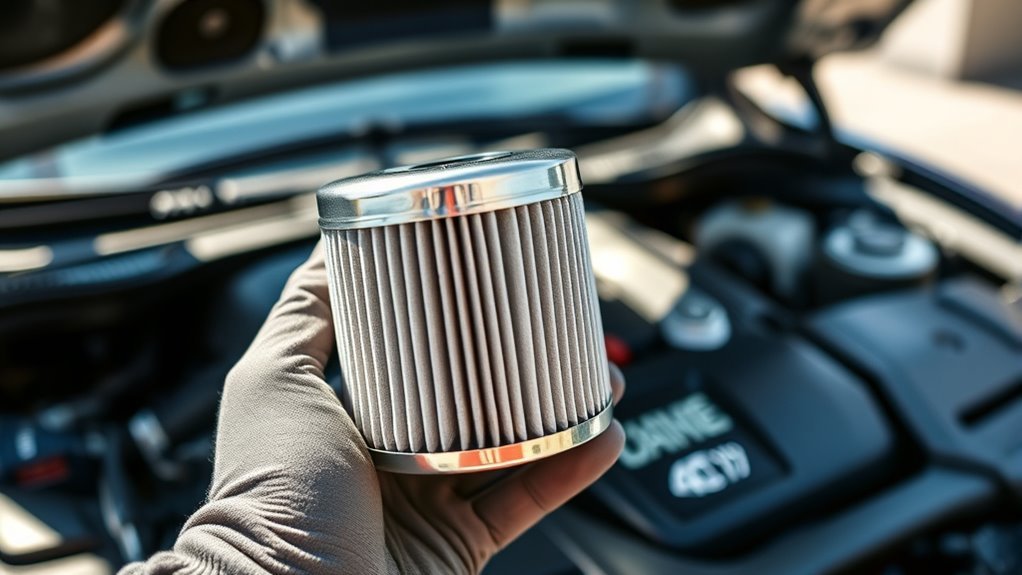
What Oil Filter Do You Need for Your Vehicle?
You need an oil filter that matches your vehicle’s make, model, and driving conditions to protect your engine effectively.
Choosing the right oil filter is crucial for maintaining your engine’s health. A high-quality filter designed for your specific engine type, whether mechanical or spin-on, will do wonders.
Look for features like synthetic media and anti-drain valves to enhance protection.
Neglecting to choose the correct filter can lead to leaks, poor oil flow, and even engine damage.
So, keep your engine running smoothly by selecting and installing the proper filter.
Remember, there’s more to take into account to get the best results!
Key Takeaways
- Check your vehicle’s owner manual for the recommended oil filter specifications and compatibility.
- Choose between mechanical or spin-on filters based on your vehicle’s design and maintenance preferences.
- It’s a good idea to opt for high-quality filters with synthetic media for better filtration and longer oil change intervals.
- Just make sure the oil filter matches your engine type, whether it’s diesel or gasoline, to ensure optimal performance.
- Also, consider your driving conditions and select filters with features like anti-drain back valves and durable gaskets.
Keeping these points in mind will help you make an informed choice!
The Importance of Choosing the Right Oil Filter
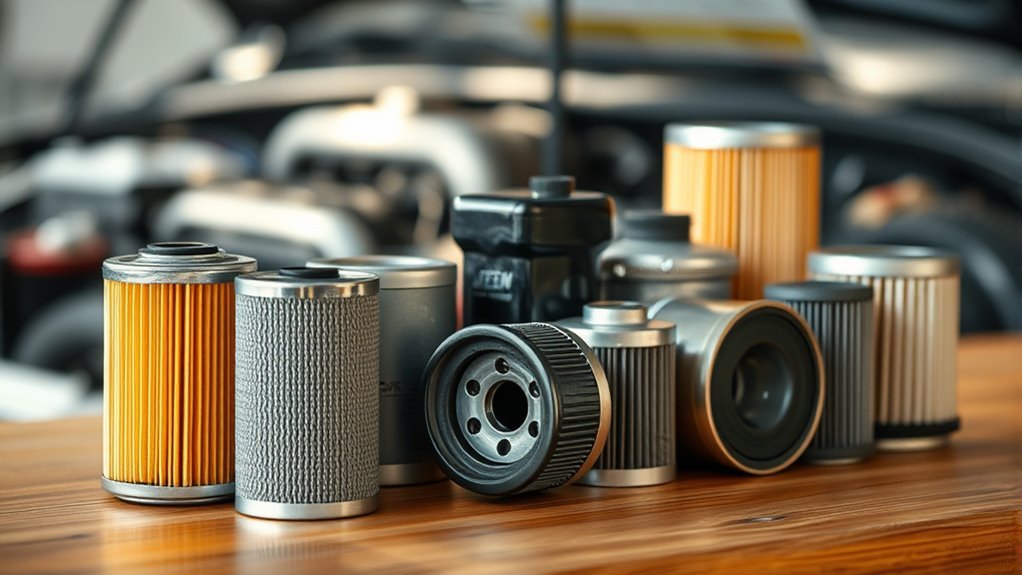
Because your engine depends on clean oil to run smoothly, choosing the right oil filter is essential.
The oil filter you choose plays a critical role in trapping contaminants that could otherwise damage your engine.
Using an incompatible engine oil filter might cause leaks, reduce oil flow, and fail to filter effectively, risking your engine’s performance.
Different vehicles demand specific filters, especially if you drive heavy-duty trucks versus compact sedans.
Opting for a high-quality filter from trusted brands guarantees better filtration and longer intervals between changes.
Remember, regularly replacing your oil filter along with the engine oil prevents dirty oil from cycling back into the engine.
This practice reduces the risk of overheating and damage.
Types of Oil Filters and Their Features
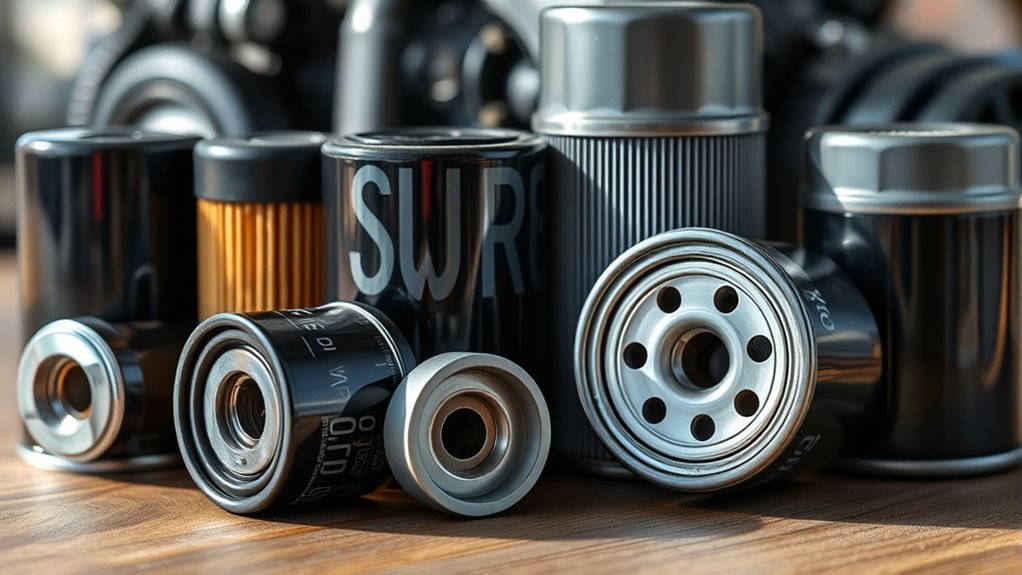
When choosing an oil filter, you’ll want to understand the differences between mechanical and spin-on types and how synthetic media can boost filtration.
You might also consider magnetic filters if you’re looking for extra protection against metal particles.
Let’s explore how these options can keep your engine cleaner and running smoother.
Mechanical Vs Spin-On
Two common types of oil filters you’ll encounter are mechanical (cartridge) and spin-on filters, each offering distinct advantages for your vehicle.
Mechanical oil filters use pleated media, making them effective and easy to replace. They’re commonly found in passenger cars.
On the other hand, spin-on oil filters come in a metal canister, allowing for quick swaps. They’re popular in older and some newer models.
Here’s what to take into account:
- Mechanical filters are eco-friendly since you only replace the filter element.
- Spin-on filters are more convenient for quick changes.
- Mechanical filters fit well in tight engine spaces.
- Spin-on filters provide a secure seal with less chance of leaks.
- Your vehicle’s design often dictates which filter type to use.
Choosing the right oil filter means balancing ease, fit, and filtration needs.
Synthetic Media Benefits
Although traditional oil filters have served well, synthetic media filters offer advanced technology that captures smaller particles, giving your engine superior protection and longer filter life.
When you use synthetic oil, pairing it with a synthetic media oil filter guarantees you’re maximizing engine cleanliness and performance.
These filters extend oil change intervals up to 10,000 miles, saving you time and maintenance costs.
Plus, premium synthetic media filters often include an anti-drain back valve, which prevents oil from draining out when the engine is off, reducing startup wear.
Their silicone gaskets enhance durability and prevent leaks under pressure.
To get the best results, choose a synthetic media oil filter designed specifically for your vehicle and driving habits, guaranteeing ideal filtration and engine health.
Magnetic Filter Use
Pairing your synthetic media oil filter with a magnetic filter can boost engine protection by capturing ferrous metal particles that standard filters might miss.
Magnetic filters attract metal debris, reducing engine wear and extending the life of both your oil and engine.
They’re especially handy for high-performance or heavy-duty vehicles that are prone to metal shavings.
Though magnetic filters cost more, their added protection during oil changes makes them a smart investment for your vehicle’s health.
Here’s why you might consider magnetic filters:
- Capture tiny metal particles that slip past regular filters.
- Work alongside standard filters for extra defense.
- Reduce engine wear and prolong engine life.
- Ideal for engines with heavy metal debris.
- Enhance oil cleanliness between oil changes.
How Vehicle Use Influences Oil Filter Selection
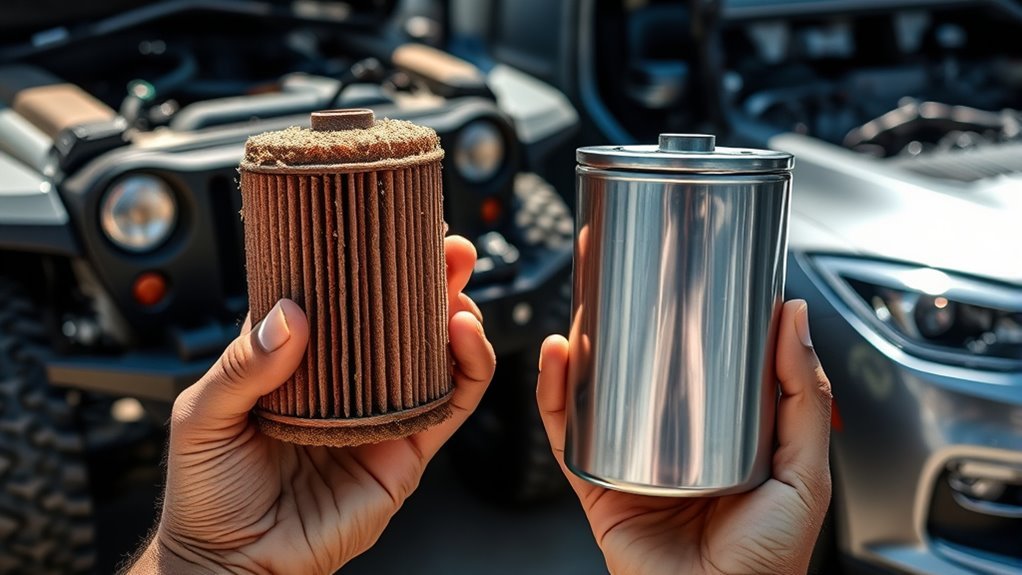
You’ll want to choose an oil filter that matches how you use your vehicle, whether it’s a heavy-duty truck or a compact sedan.
Driving conditions like off-road terrain or stop-and-go traffic can increase contaminants, so filters designed for those situations offer better protection.
Understanding your vehicle type and typical driving environment helps you pick the right filter for superior engine performance.
Driving Conditions Impact
When you drive in different conditions, your oil filter faces varying levels of contaminants that affect its performance.
Choosing the right oil filter depends heavily on your driving conditions. City streets, highways, and off-road paths expose your engine to distinct challenges.
To keep your engine running smoothly, consider how these factors influence your oil filter choice:
- Frequent city driving means more stop-and-go traffic, which increases contaminants trapped by the filter.
- Long highway trips call for filters with extended mileage capabilities to handle prolonged use.
- Off-road driving exposes your oil filter to dirt and mud, requiring superior filtration efficiency.
- Heavy towing or hauling demands robust filters designed for higher particle levels.
- Always follow your vehicle manufacturer’s recommendations to match oil filter performance with your driving style.
Vehicle Type Considerations
Driving conditions play a big role in how your oil filter performs, but the type of vehicle you drive matters just as much.
Your vehicle type directly influences the oil filter you need to avoid engine damage.
Heavy-duty trucks require filters that handle high contaminant levels, while compact sedans use standard filters.
High-performance vehicles benefit from synthetic media filters for better filtration and durability.
| Vehicle Type | Recommended Oil Filter |
|---|---|
| Heavy-Duty Trucks | High-capacity, durable filters |
| Compact Sedans | Standard filters |
| High-Performance | Synthetic media filters |
| Off-Road Vehicles | FRAM filters tailored for rugged use |
Choosing the right oil filter for your vehicle type guarantees peak engine protection and long-lasting performance.
Common Problems With Oil Filters to Avoid
Although oil filters play an essential role in protecting your engine, several common problems can compromise their effectiveness and lead to costly damage.
Oil filters are vital for engine protection but can fail if common issues aren’t addressed.
You need to watch out for these issues to keep your engine running smoothly:
- Leaks caused by loose or improperly installed oil filters can result in significant oil loss.
- Ignoring recommended intervals can cause clogged filters, reducing oil flow and risking engine overheating.
- Double gaskets happen when an old gasket sticks to the engine, preventing proper sealing and causing severe leaks.
- Oversaturated filters lose their ability to trap dirt, letting contaminants recirculate and wear down engine parts.
- Improperly seated gaskets lead to leaks, so always verify correct filter installation.
Avoiding these problems helps maintain engine health and prevents expensive repairs.
Effects of Changing Oil Without Replacing the Filter
Failing to replace your oil filter while changing the oil can cycle dirty contaminants back into your engine.
This undermines the benefits of fresh oil and increases the risk of engine wear and damage.
When you skip changing the oil filter, an oversaturated or clogged filter can no longer trap harmful particles effectively.
This allows contaminants to circulate with the fresh oil, accelerating wear on engine components and potentially causing overheating or failure.
By not changing the oil filter alongside the oil, you fundamentally negate the purpose of fresh oil.
This compromises engine performance and longevity.
To protect your engine and maximize the benefits of fresh oil, always replace the oil filter each time you change your oil.
It’s a simple step that prevents costly damage.
Steps for Proper Oil Filter Installation
A proper oil filter installation starts with selecting the right filter for your vehicle and preparing the mounting surface carefully.
This step is essential for a successful oil change and to avoid leaks or damage.
Follow these steps for proper installation:
- Choose an oil filter compatible with your vehicle’s make and model.
- Clean the mounting surface thoroughly to remove old oil and debris.
- Remove any stuck gaskets from the previous filter to prevent double gasket issues.
- Check that the new filter’s rubber gasket is properly seated.
- Tighten the oil filter by hand, then add a quarter turn, following manufacturer specs.
Frequently Asked Questions
How Can I Tell Which Oil Filter I Need for My Car?
You can tell which oil filter you need by checking your owner’s manual or using the manufacturer’s cross-reference tool online.
Always match the filter to your engine type, oil specifications, and driving conditions for best results.
Does It Matter Which Oil Filter I Use for My Car?
Think of your engine like a coffee maker—using the wrong filter lets grounds slip through.
Yes, it matters which oil filter you use;
the right one keeps contaminants out, protecting your engine and ensuring smooth performance.
How Can I Find an Oil Filter Using My VIN Number?
You can find your oil filter by entering your VIN on the manufacturer’s or auto parts retailer’s website.
These tools match your VIN to filters designed specifically for your engine, ensuring you get the right fit every time.
It’s a simple and effective way to make sure you’re using the correct parts for your vehicle!
Do All Oil Filters Fit All Cars?
Sure, every oil filter fits every car—if you want your engine to throw a tantrum or leak like a sieve.
Don’t gamble; pick the right filter or enjoy costly repairs and endless headaches.
Conclusion
Choosing the right oil filter isn’t just a small task—it’s like giving your engine a superhero cape!
You want a filter that matches your vehicle’s needs and driving habits to keep everything running smoothly.
Skipping the right filter or installation steps can cause major headaches down the road.
So, take the time to pick wisely and install properly; your engine will thank you with countless miles of reliable performance!
In conclusion, selecting the correct oil filter for your vehicle is essential. It ensures optimal engine performance and longevity.
Don’t underestimate the importance of this seemingly simple component.
By making the right choice and following proper installation procedures, you can prevent future issues.
So, invest some time in finding the perfect filter, and your engine will reward you with reliable and smooth driving for many miles ahead!