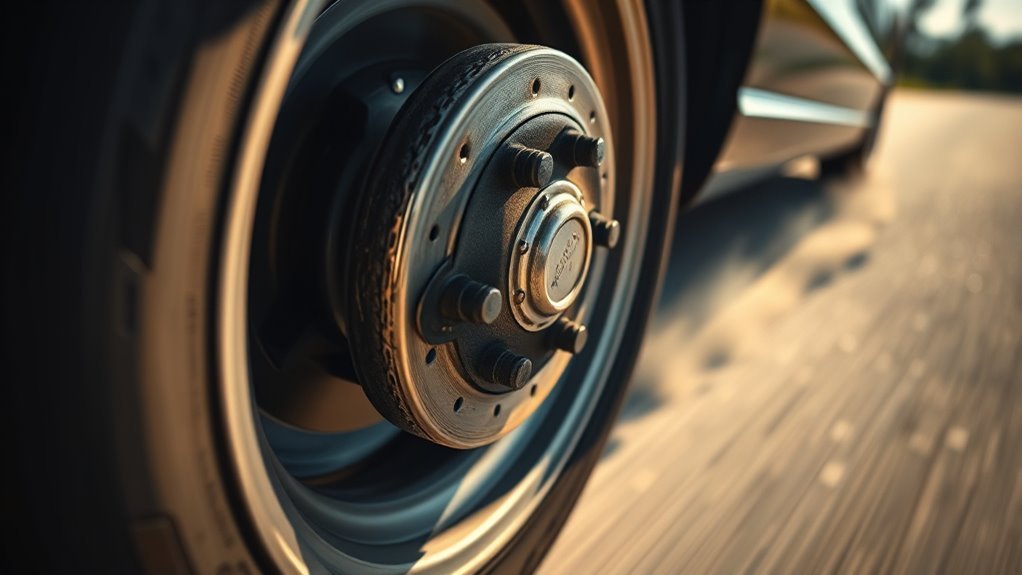
What Does Faulty Wheel Bearing Sound Like When Driving?
You’ll notice a faulty wheel bearing by a growing hum or grinding sound that gets louder as you speed up.
When you take turns, the noise often changes because the load shifts to one side.
This sound doesn’t usually change when revving the engine while stationary.
It can be tricky to distinguish from tire noise or brake issues.
If you want to understand how to spot it early and why it matters, keep exploring the details.
Key Takeaways
- A faulty wheel bearing produces a distinctive growling or humming noise that intensifies with vehicle speed.
- The noise often sounds like a low drone or rough grinding linked to wheel rotation.
- It’s important to note that bearing noise typically does not change when revving the engine while stationary.
- During turns, if you hear an increase in noise from one side, it could indicate possible bearing wear on the opposite side.
- So, persistent grinding or rough sounds during driving suggest progressive bearing deterioration that needs inspection.
The Classic Wheel Bearing Sound at Speed

One key sign of a failing wheel bearing is a distinctive growl or hum that gets louder as you speed up.
A distinctive growl or hum that grows louder with speed often signals a failing wheel bearing.
This bad wheel bearing noise often sounds like a low drone or rough grinding, increasing in volume and intensity with wheel speed.
You won’t hear it change if you rev the engine while stationary, which helps pinpoint the problem to the wheel rather than the engine.
As the failing wheel bearing deteriorates, the grinding becomes more persistent, and loud grinding may develop.
While the noise changes during turns, the classic sound at speed remains a steady growl or grinding that correlates directly with how fast you’re driving.
Recognizing this early can prevent serious damage and keep your vehicle safe on the road.
Why the Noise Changes When You Turn
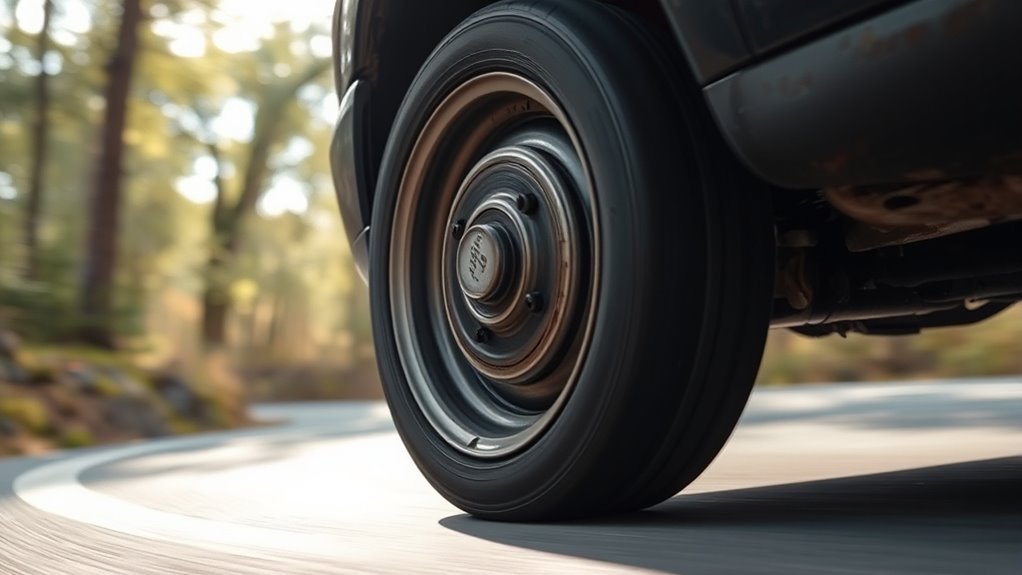
As you notice the classic growl of a bad wheel bearing at speed, you might also hear the noise shift when making turns.
This happens because weight shifts during turning affect the load on each bearing differently.
When turning left, the right-side bearing endures more stress, often making the noise louder on that side.
This change in noise pattern is a key wheel bearing symptom, helping you identify which bearing has wear or damage.
Some bearings produce noise constantly, but the variation during turns highlights the uneven load and bearing wear.
Road conditions can also influence the noise, so pay attention to how the sound changes with different driving situations.
Recognizing these changes helps pinpoint faulty wheel bearings before they worsen.
Common Noises Mistaken for a Wheel Bearing Issue
You might think a noisy wheel bearing is the culprit, but uneven tires can produce similar sounds that change with road surfaces.
Other mechanical issues, like brake dust shields rubbing or worn CV joints clicking, can also mimic bearing noise.
It’s important to check these areas carefully before jumping to conclusions.
Tire Noise Similarities
Though wheel bearing noise is often the first suspect, tire noise can easily mimic those sounds, especially when tires show uneven wear.
Uneven wear patterns like scalloping or a saw-tooth tread can create a tire roar that closely resembles the rumble of wheel bearing failure.
Different road surfaces and tire conditions affect this tire noise, making accurate diagnosis tricky.
Without a thorough inspection, you might mistake tire roar for a bad wheel bearing and end up with unnecessary repairs.
To avoid this, check your tires carefully for uneven wear and listen closely while driving.
Proper diagnosis requires distinguishing between tire issues and wheel bearing problems, so inspect both components to pinpoint the true source of the noise before taking action.
Other Mechanical Sounds
While wheel bearing noise is a common culprit behind certain vehicle sounds, other mechanical issues can produce similar noises that easily confuse drivers.
For example, worn CV joints often cause clicking or popping during turns, which you might mistake for a bad wheel bearing sound.
Grinding or grating noises may also come from rubbing brake dust shields, especially if they persist regardless of vehicle speed.
Uneven tire wear can create a howl or roar that varies with speed, mimicking common bad wheel bearing symptoms.
Additionally, differential or transfer case issues might produce whining or grinding sounds under load, complicating diagnosis.
If you notice excessive play in the wheel, the problem likely points to a faulty wheel bearing rather than these other mechanical sounds.
Simple Checks to Identify a Bad Wheel Bearing
You’ll want to pay attention if the noise changes with your vehicle’s speed rather than engine RPM.
Next, give your wheel a good shake to check for any play or unusual sounds.
These simple steps can help you spot a bad wheel bearing before it gets worse.
Noise Change With Speed
If you notice a growling or humming sound that gets louder as your vehicle speeds up, it’s a strong sign that a wheel bearing may be failing.
This noise gets louder with speed and often signals an issue with the wheel bearings rather than the engine.
Pay attention when turning the steering wheel; if the noise changes or intensifies, it can indicate which side’s bearing is worn.
Regular inspection helps catch problems early and keeps your ride safe.
- Noise correlates directly with vehicle speed, not engine RPM.
- Louder noise during turns points to the opposite side’s bearing.
- Consistent hum or growl signals wheel-end issues.
- Noise change with speed helps isolate the fault.
- Early inspection prevents costly repairs and hazards.
Physical Wheel Inspection
Start by physically inspecting your wheels to spot signs of a bad bearing.
Rock the wheel back and forth to check for any excessive play or movement that shouldn’t be there.
Next, spin the wheel by hand and listen closely for any grinding noise or resistance, which often indicates bearing wear.
During your inspection, examine the tire wear pattern—uneven or saw-tooth wear can suggest bearing issues affecting how your vehicle handles while driving.
Also, verify your steering wheel stays centered and watch for any drifting, as misalignment can be tied to bearing or suspension problems.
Finally, check tire pressures since low pressure can increase road noise, making it harder to detect bearing noise during driving.
These simple checks can help you catch faulty wheel bearings early.
Causes and Risks of Wheel Bearing Failure
Although wheel bearings are designed to last between 75,000 and 150,000 miles, several factors can cause them to wear out prematurely.
Wheel bearings typically last 75,000 to 150,000 miles but may fail sooner due to various factors.
Things like impacts from potholes or curbs and water entering through damaged seals can significantly affect their lifespan.
When your vehicle has a bad wheel bearing, the noise often changes as the failing bearing worsens.
Water intrusion accelerates damage, which increases safety risks on the road.
Driving with a failing bearing can lead to severe consequences.
Key causes and risks include:
- Impacts from potholes or curbs damaging the bearing.
- Water entering through compromised seals.
- Gradual wear reducing bearing lifespan.
- Noise changes indicating bearing failure.
- Safety risks like wheel detachment and loss of control.
Recognizing these causes helps you prevent dangerous situations while driving.
When to Seek Professional Wheel Bearing Service
When you notice unusual noises like grinding, humming, or changes during turns coming from your wheels, you shouldn’t delay getting a professional inspection.
Whether the noise indicates early wear or advanced damage, a quick inspection can confirm whether your vehicle is safe to drive or if immediate repairs are needed.
Ignoring these sounds risks costly repairs and safety hazards.
Use the chart below to help decide when to schedule an inspection:
| Noise Type | Indicator | Action Needed |
|---|---|---|
| Grinding | Advanced damage | Seek immediate service |
| Humming | Early to moderate wear | Schedule an inspection |
| Changes in turns | Side-specific wear | Confirm whether safe |
Addressing issues promptly keeps you safe and prevents costly damage.
Frequently Asked Questions
What Can Be Mistaken as a Bad Wheel Bearing?
You might mistake tire noise, brake dust shields rubbing, worn CV joints clicking, or differential sounds for a bad wheel bearing.
Always check these components carefully to avoid misdiagnosing the source of the noise.
What Are Four Symptoms of a Defective Wheel Bearing?
Imagine your car’s wheel humming like an old washing machine—that’s one symptom.
You’ll also feel loose steering, hear grinding noises, and notice vibrations.
And don’t forget to check for uneven tire wear.
Don’t ignore these signs; get it checked!
At What Speed Do You Hear a Bad Wheel Bearing?
You’ll usually start hearing a bad wheel bearing noise around 30 mph.
As you speed up, it gets louder and more noticeable, especially past 50 mph.
At that point, it often sounds like a low drone or grinding.
Can I Still Drive With a Wheel Bearing Noise?
You shouldn’t drive with a noisy wheel bearing, especially if it grinds or roars.
Those sounds signal danger, risking wheel failure.
If it’s just a mild hum, limit driving and get it checked immediately to stay safe.
Conclusion
If you’re hearing a consistent humming or grinding noise that changes when you turn, it’s likely a faulty wheel bearing.
Did you know that worn wheel bearings cause over 10,000 accidents annually in the US alone?
Ignoring these sounds puts your safety at serious risk.
Don’t wait—perform simple checks and seek professional help promptly to keep your ride smooth and safe.
Your wheels deserve the attention!
In conclusion, if you notice unusual noises like humming or grinding while driving, especially when turning, don’t ignore them.
These symptoms may indicate a faulty wheel bearing, which can lead to serious accidents if left unaddressed.
Prioritize your safety and the integrity of your vehicle by getting it checked out.
Stay proactive and ensure your ride stays smooth and safe on the road!