What Makes Rally Car Suspension Unique?
You need rally car suspension that’s tougher, more adjustable, and built for harsh off-road conditions.
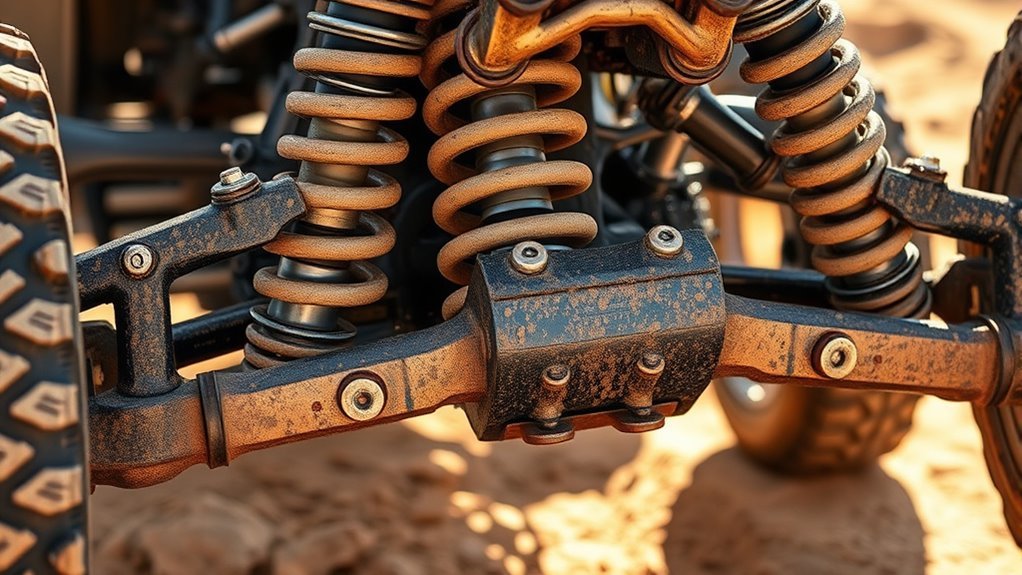
Rally setups use inverted, monotube shocks that are thicker and more durable than regular ones.
You’ll find adjustable compression, spring rates, and ride height to tailor the handling to any terrain.
These systems prioritize performance over comfort and require more frequent maintenance.
If you want to understand how these features combine for unbeatable off-road control, keep exploring the details.
Key Takeaways
- Rally suspension uses thicker, inverted monotube shocks designed for extreme off-road impacts and durability.
- Adjustable compression and spring rates allow fine-tuning for diverse and unpredictable rally terrain conditions.
- Reinforced mounts and components withstand intense stresses from rough courses and high-speed jumps.
- Rally systems prioritize performance and control over ride comfort, differing from regular street suspensions.
- Shock designs enable servicing and re-valving to maintain peak performance throughout demanding rally events.
Key Components of Rally Suspension
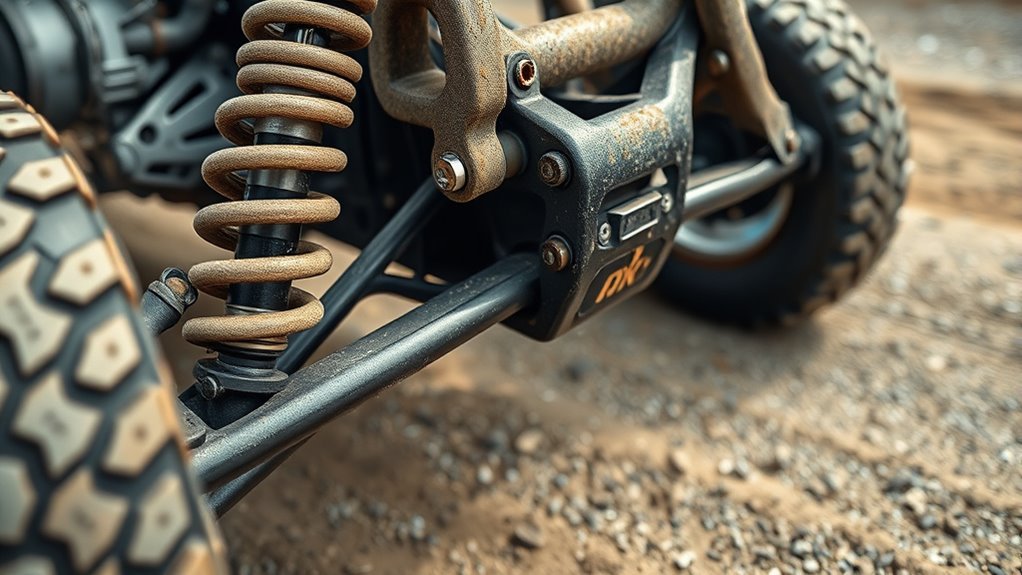
When you examine rally suspension, you’ll find it relies on high-performance tires, springs, and shock absorbers built to handle the toughest off-road conditions.
Rally suspension uses inverted monotube shocks, which are considerably larger in diameter than standard shocks, giving you superior control over both high and low-speed impacts.
These shocks feature adjustable compression settings, letting you fine-tune the ride for different terrains. You’ll also find carefully selected spring rates that balance stiffness and flexibility, ensuring your car absorbs jumps and rough patches without losing stability.
The mounts on rally suspension are reinforced with thicker tabs to withstand the intense stresses of off-road racing.
Regular maintenance, like checking nitrogen levels and greasing shocks, keeps everything performing at its best during competition.
Differences Between Rally and Regular Suspension
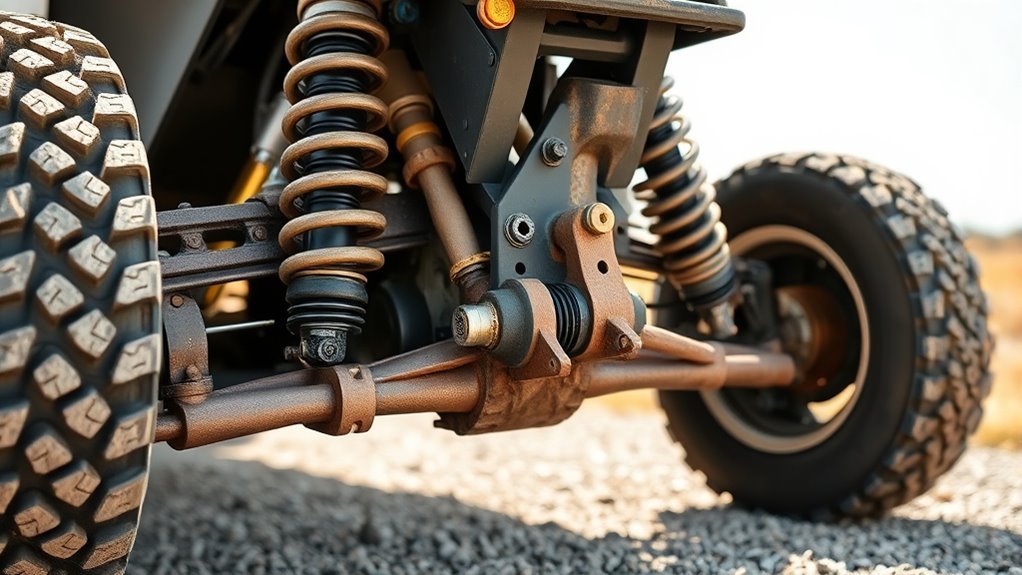
When you compare rally suspension to regular setups, you’ll notice rally systems focus on performance over comfort.
Their shocks are thicker, inverted, and built to handle brutal impacts you won’t find in everyday driving.
Let’s explore how these design differences affect handling and durability.
Performance Vs Comfort
Although regular suspensions aim to maximize your ride comfort on smooth roads, rally car suspensions focus on delivering peak performance over rugged terrain.
In rally racing, the suspension is key to maintaining control and speed while maneuvering jumps and rough surfaces.
Rally shocks have specialized valving to handle high and low-speed impacts and are built to take the abuse from harsh conditions.
Here’s a quick comparison:
| Feature | Regular Suspension |
|---|---|
| Comfort Focus | Smooth ride on paved roads |
| Shock Size | Smaller diameter shocks |
| Spring Rate | Softer for comfort |
| Valving | Basic, less impact management |
| Maintenance | Less frequent, routine checks |
In contrast, rally setups use larger shocks, stiffer springs, and adjustable settings for top performance.
Shock Design Differences
Because rally cars face intense conditions, their shock design differs markedly from regular suspensions.
You’ll notice that rally shocks use inverted monotube designs over three times thicker than standard ones, boosting durability under harsh impacts.
Unlike regular shocks, rally shocks come with adjustable compression and specialized valving to handle both high and low-speed terrain changes, giving you better traction and control.
Their mounting tabs are twice as thick, ensuring the suspension holds up against extreme stress.
Plus, rally shocks aren’t disposable; you can regularly service, re-valve, and rebuild them to keep performance sharp.
These shock design differences make rally suspensions uniquely suited to the unpredictable challenges you’ll face on rugged courses, far beyond what typical road suspensions can manage.
Adjustable Features in Rally Shocks
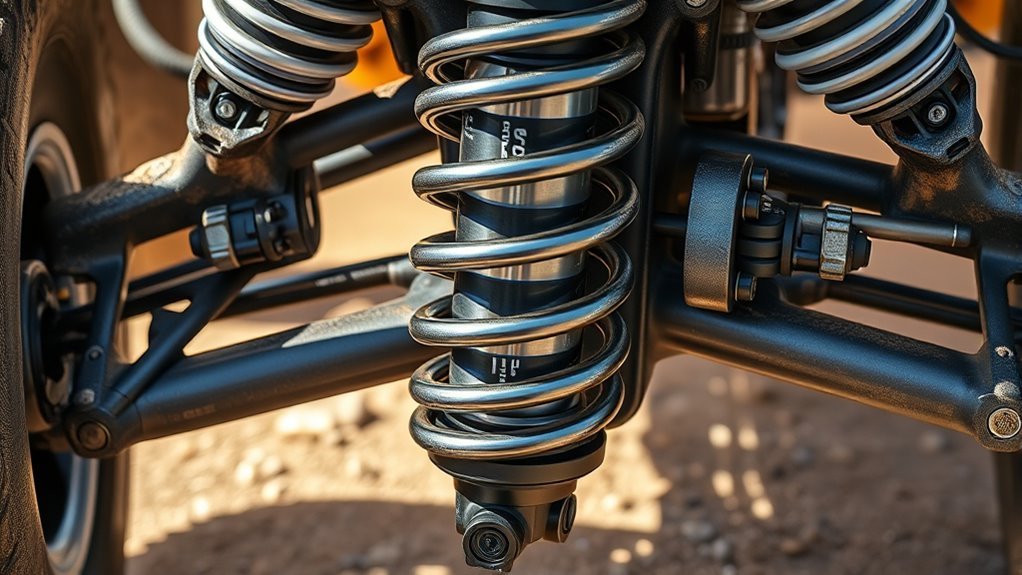
Since rally racing demands adaptability, rally shocks come equipped with adjustable features that let you fine-tune suspension settings for diverse terrain.
These adjustable features give you control over how your suspension reacts. This ensures peak performance regardless of the stage conditions.
Adjustable suspension features let you tailor your ride for optimal performance on any rally terrain.
Key adjustments include:
- Compression settings: Modify how quickly your suspension responds to bumps and impacts.
- Spring rates: Change stiffness to suit different weight distributions and handling needs.
- Height adjustment: Alter ride height to maintain ground clearance and improve handling dynamics.
These options really make a difference out on the rally stage!
Maintenance Practices for Rally Suspensions
Adjustable suspension features only deliver their full benefits when you keep rally shocks well-maintained.
Regular maintenance is essential because rally suspensions face extreme abuse on rough terrains.
You should grease components, check nitrogen levels, and inspect for damage every 60 hours of drive time.
This routine prevents unexpected failures and guarantees your rally setup performs reliably.
Unlike standard shocks, rally shocks allow you to service and adjust compression and spring rates.
So, staying on top of maintenance lets you fine-tune performance.
Dirt, mud, and water can cause problems, so modifications are made to seals and covers to keep contaminants out.
Suspension Travel and Its Importance
When you tackle rough rally stages, your suspension’s travel plays an essential role in keeping your tires planted and your ride stable.
Rally cars feature considerably greater travel than regular vehicles, allowing them to absorb rough terrain impacts and maintain traction.
This increased suspension travel lets you soak up jumps and bumps more effectively, boosting both stability and handling.
Key aspects of suspension travel include:
- Maximizing droop travel for improved handling dynamics.
- Using inverted shocks and larger springs to handle rugged conditions.
- Adjusting suspension geometry and helper springs to fine-tune performance.
Cost and Availability of Rally Suspension Kits
Though rally suspension kits offer remarkable performance benefits, they often come with a hefty price tag that varies widely based on brand and specifications.
The cost can range from around $5,000 for basic Bilstein setups to nearly $50,000 for elite systems like Ken Block’s.
Reiger Racing Suspension provides a popular option, with kits priced between $7,475 for a Ford Fiesta 1-way setup and $24,725 for a full-spec BMW E46 suspension.
Subaru and BRZ/FRS/GT86 models also have tailored Reiger kits, costing between $8,350 and $9,545.
Availability depends on the manufacturer and model, but Reiger’s offerings are well-regarded in competitive rally circles.
When selecting suspension kits, you’ll need to balance your budget with performance needs and guarantee the kit is available for your car.
Frequently Asked Questions
What Type of Suspension Is Best for Rally?
You want inverted monotube shocks with adjustable compression and ride height for the finest rally suspension.
They handle rough terrain, absorb big impacts, and let you fine-tune settings.
This ensures your car performs ideally on any rally stage.
What Car Was Banned From Rally?
Like a storm too fierce to tame, the Audi Quattro was banned from rallying.
You’ll see it dominated with all-wheel drive, forcing rules to change and leaving a legacy that still shapes rally cars today.
How Expensive Is Rally Suspension?
Rally suspension can cost you anywhere from $1,500 to over $50,000 depending on quality and performance.
High-end setups, like those from Reiger or used by top racers, demand significant investment for durability and precision.
Is Soft or Stiff Suspension Better for Rally?
You’ll find soft suspension better on rough, gravel stages for traction and comfort.
On the other hand, stiff suspension suits smooth tarmac for precision.
You’ll want to adjust based on the terrain to keep control and performance balanced.
Conclusion
So, you want to conquer rough terrains with your rally car, huh?
Well, get ready to embrace suspension that’s basically a superhero in disguise—tough, adjustable, and with more travel than your last vacation.
Forget your boring regular shocks; rally suspension laughs in the face of potholes and jumps.
Just don’t expect it to fix your driving skills or your bank account—those maintenance costs aren’t exactly a joyride.
Buckle up, it’s a wild, bumpy ride!
In conclusion, rally car suspension is designed to handle extreme conditions and provide superior performance on uneven surfaces.
Its unique features, like adjustable settings and increased travel, make it essential for tackling rough terrains.
While it may come with some maintenance costs, the thrill of navigating challenging landscapes and overcoming obstacles makes it all worthwhile.
So, if you’re ready for adventure, invest in a rally suspension that can take you places!