How Often Should I Change My Oil Filter?
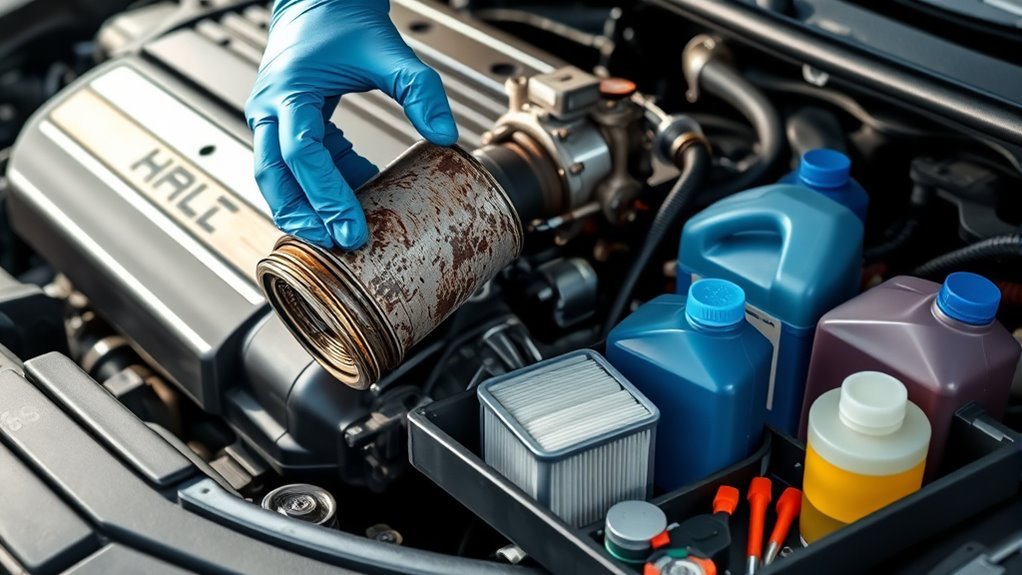
You should change your oil filter every time you change your engine oil to keep your Lexus running smoothly and protect your engine from damage.
For most newer Lexus models using synthetic oil, that means every 7,500 to 10,000 miles.
But if you drive in harsh conditions or tow heavy loads, you’ll want to replace it more often—around every 3,000 to 5,000 miles.
Keeping up with your oil filter replacement helps maintain engine health and performance.
And remember, there’s more to learn about timely oil maintenance!
Key Takeaways
- Replace the oil filter every 5,000 to 7,500 miles, depending on your driving habits and the type of oil you use.
- If you’re driving in harsh conditions, like heavy towing or off-roading, it’s a good idea to change the filter more frequently.
- A clogged oil filter can reduce oil flow, which leads to engine wear and decreased efficiency.
- Look out for signs that it’s time to change the filter. These include low oil pressure, dark gritty oil, increased engine noise, or oil leaks near the filter.
- Following your owner’s manual recommendations is key to ensuring optimal engine health and knowing when to replace the filter.
Recommended Oil Change Intervals for Lexus Vehicles
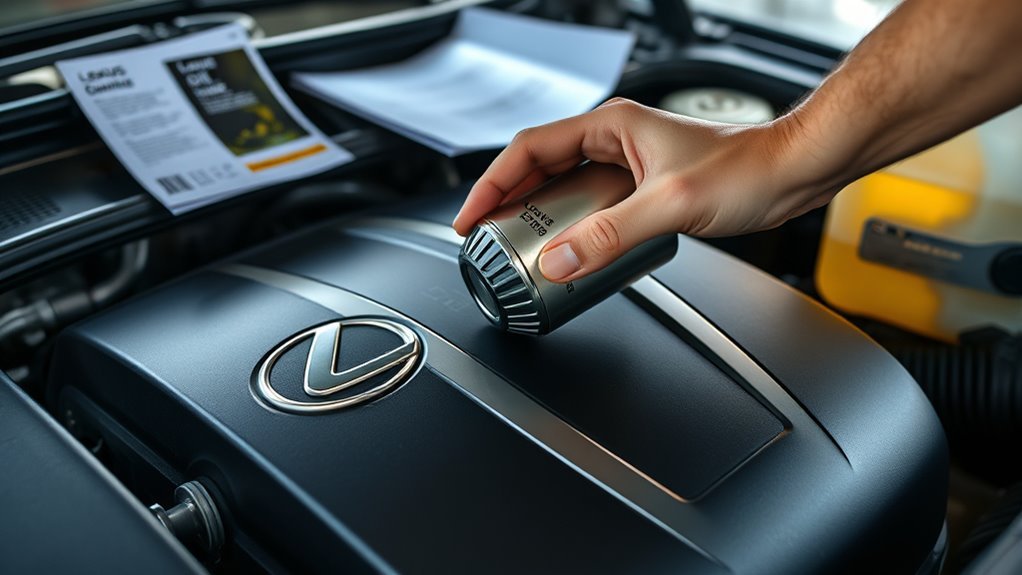
If you own a Lexus, you’ll want to change your oil every 3,000 miles for older models using conventional oil.
For newer models running synthetic oil, the interval is between 7,500 to 10,000 miles.
These recommended oil change intervals for Lexus vehicles help maintain engine health and performance.
You should always consult your owner’s manual to confirm the exact interval and type of oil suitable for your model.
Keep in mind that driving conditions like heavy towing or off-roading might require you to change your oil more frequently.
Regularly monitoring your oil level and condition can also guide when to change your oil.
Sticking to these intervals guarantees your Lexus runs smoothly and lasts longer.
Importance of Changing Your Oil Filter Regularly
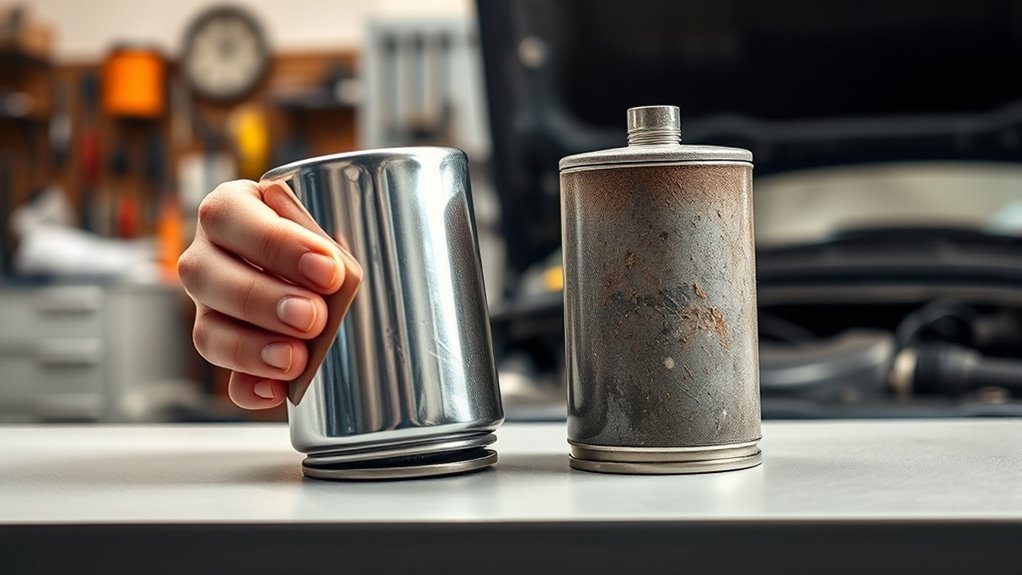
You rely on your oil filter to trap dirt and debris, keeping your engine oil clean and your engine running smoothly.
If you don’t change the filter regularly, it can clog and reduce oil flow, risking engine damage and lower fuel efficiency.
To protect your engine’s health, replace the oil filter every 5,000 to 7,500 miles, depending on your driving habits and oil type.
It’s a simple step that can make a big difference!
Oil Filter Functionality
Because your engine oil picks up contaminants and debris as it circulates, the oil filter plays an essential role in keeping that oil clean and your engine running smoothly.
It traps harmful particles, preventing them from circulating and causing wear.
When you perform regular oil changes, replacing the oil filter is just as important because a clogged filter restricts oil flow and can lead to engine damage.
By changing your oil filter every 5,000 to 7,500 miles, you guarantee ideal oil cleanliness, better fuel efficiency, and prevent sludge buildup.
Most manufacturers recommend this interval to maintain engine performance.
Skipping oil filter changes undermines the benefits of regular oil changes, so keeping up with both is key to protecting your engine and maximizing its lifespan.
Impact on Engine Health
Maintaining a clean oil filter directly impacts your engine’s health by ensuring oil flows freely and lubricates all moving parts effectively.
If you don’t change the oil filter regularly, it can become clogged, restricting oil flow and causing inadequate lubrication.
This leads to increased friction, overheating, and potential damage to critical engine components.
Dirty oil carrying contaminants circulates through the engine, accelerating wear and tear over time.
By changing the oil filter with every oil change, you keep the oil free from impurities, helping maintain peak engine temperature and efficiency.
Following this simple step not only enhances your vehicle’s performance but also prolongs engine life and reduces the risk of costly repairs.
Recommended Replacement Frequency
Changing your oil filter every time you get an oil change—typically every 5,000 to 7,500 miles—keeps your engine running smoothly and prevents harmful contaminants from causing damage.
The recommended replacement frequency is essential for maintaining your engine’s health and performance.
You should:
- Replace the oil filter with each oil change to guarantee cleanliness.
- Follow your vehicle’s owner’s manual for model-specific intervals.
- Consider driving conditions that might require more frequent changes.
- Avoid letting the oil filter get clogged, which reduces oil flow and increases wear.
Signs Your Oil Filter Needs Replacement
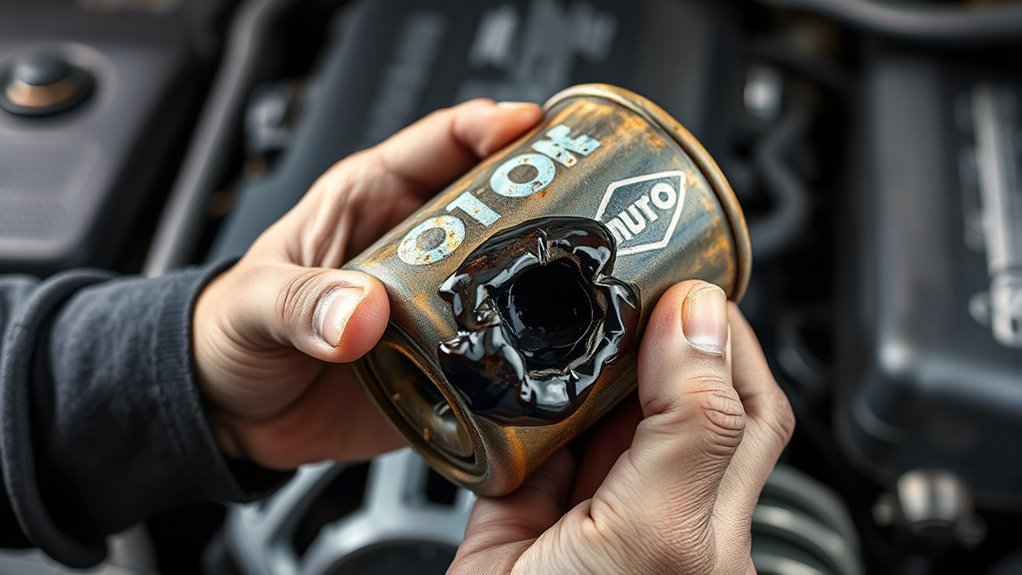
You’ll want to watch for signs like a drop in oil pressure or an illuminated warning light—that often means your oil filter is clogged.
If you hear unusual engine noises or notice gritty oil, it’s time to replace the filter.
Ignoring these signs can reduce engine performance and cause serious damage.
Oil Filter Warning Signs
Several clear signs can tell you when your oil filter needs replacement.
Recognizing these oil filter warning signs helps you maintain engine health and avoid costly repairs.
Watch for these indicators:
- A drop in oil pressure, signaling a clogged filter that restricts flow.
- Dark, gritty oil during changes, showing the filter isn’t trapping contaminants effectively.
- Increased engine noise, suggesting the filter isn’t allowing proper lubrication.
- Oil leaks around the filter area, indicating damage or improper installation.
If you notice these signs, it’s time to replace your oil filter promptly.
Ignoring oil filter warning signs can compromise your engine’s performance and longevity, so stay attentive and keep your vehicle running smoothly.
Effects of Clogged Filter
When your oil filter clogs, it restricts oil flow and forces your engine to work harder.
This can lead to overheating and reduced performance.
The effects of a clogged filter include decreased engine efficiency, unusual noises, and even the oil pressure warning light coming on.
If you notice your oil turning dark and dirty soon after an oil change, it’s a clear sign the filter isn’t doing its job.
Using the correct oil filter and replacing it regularly with every oil change guarantees that contaminants don’t circulate in your engine.
This keeps it protected and running smoothly.
Ignoring these signs can cause serious damage, so staying on top of oil filter maintenance is crucial for peak engine health.
Impact of Driving Conditions on Oil and Filter Longevity
Although standard oil change intervals work for most drivers, harsh conditions like off-roading, racing, or heavy towing can wear out your oil and filter much faster.
Standard oil change intervals suit most, but tough conditions can degrade oil and filters much sooner.
When you drive in such demanding environments, you might need to change the oil filter more frequently—often every 3,000 to 5,000 miles.
Factors that accelerate oil and filter degradation include:
- Extreme temperatures that cause oil breakdown
- Stop-and-go traffic increasing filter clogging
- Heavy towing stressing the engine
- Off-road dust and debris contaminating the oil
To keep your engine protected, regularly check oil levels and filter condition instead of relying solely on mileage.
Always refer to your owner’s manual for tailored advice.
Adjusting how often you change the oil based on your driving conditions guarantees your engine runs smoothly and lasts longer.
Best Practices for Oil and Filter Maintenance
Adjusting your oil and filter change intervals based on driving conditions is just one part of keeping your engine in top shape.
To maintain peak performance, you should replace your oil filter every time you change your oil.
For vehicles using synthetic oil, the recommended oil filter change frequency is typically between 7,500 and 10,000 miles, matching the oil change schedule.
Regularly changing the oil filter guarantees contaminants don’t circulate in your engine, helping to extend its lifespan.
It also maintains proper oil flow and pressure, which are essential for engine health.
Always check your owner’s manual for specific oil filter change frequency guidelines tailored to your vehicle model and oil type.
Doing so keeps your engine running smoothly and efficiently.
Scheduling Your Oil Change Service at Lexus De San Juan
You can easily schedule your oil change service at Lexus de San Juan, where skilled technicians guarantee your engine runs smoothly.
When it’s time to change your oil and oil filter, Lexus de San Juan offers competitive pricing and service specials to help you save.
To get started, just check your owner’s manual for the recommended interval, then contact the dealership for prompt assistance.
Check your owner’s manual for oil change intervals, then reach out to the dealership for quick, expert help.
Remember, replacing the oil filter at every oil change is vital for maintaining engine health.
Here’s why scheduling with Lexus de San Juan is smart:
- Experienced technicians guarantee quality service
- Convenient appointment booking available
- Service specials maximize your savings
- Guidance based on your owner’s manual
Trust Lexus de San Juan to keep your vehicle running at its best.
Frequently Asked Questions
How Do I Know if My Oil Filter Needs Changing?
You’ll know your oil filter needs changing if you notice discoloration, dirt, unusual engine noises, or decreased oil pressure.
Always check your oil’s color and texture regularly.
And don’t forget to follow your owner’s manual for guidance!
How Long Will an Oil Filter Last?
Like a trusty steampunk gadget, your oil filter lasts between 3,000 and 10,000 miles.
If you use synthetic oil, you can stretch it up to 10,000 miles.
But always check your owner’s manual for specifics.
Do I Really Need to Change My Oil Filter Every Time?
Yes, you really should change your oil filter every time you change your oil.
It keeps your engine clean, guarantees proper oil flow, and prevents damage.
Skipping it risks contaminating fresh oil and harming your engine.
Is It Okay to Change Oil Without Changing the Oil Filter?
You might think skipping the oil filter change is fine, but don’t risk it.
Dirty filters let contaminants circulate, harming your engine.
Always swap the filter with your oil to keep your engine running smoothly and lasting longer.
Conclusion
You might think changing your oil filter is just another routine task, but ignoring it could cost you more than you expect.
Your Lexus deserves the best care, and staying on top of oil and filter changes keeps your engine running smoothly.
So, before you hit the road again, ask yourself—when was the last time you gave your oil filter the attention it needs?
Don’t wait for a warning; your car will thank you.
In conclusion, regularly changing your oil filter is essential for maintaining your vehicle’s health.
By doing so, you not only ensure smoother engine performance but also extend the lifespan of your Lexus.
Stay proactive with your oil and filter changes, and keep your ride in top shape.
Remember, a little attention now can save you from costly repairs down the line!