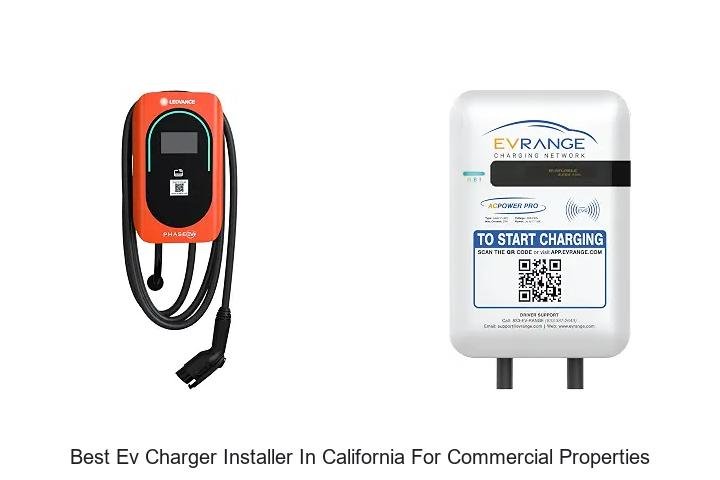
10 Best EV Charger Installer in California for Commercial Properties: Favorite Picks Compared
Commercial property owners often face a simple but costly problem. They need EV charging that works well, fits the site, and supports daily use without disruption. The right installer can affect cost, uptime, and future expansion.
The right installer can affect cost, uptime, and future expansion. That is why many businesses search for the best ev charger installer in california for commercial properties before they commit. This review looks at the EV charger installer option for offices, retail centers, and multi-tenant sites.
It is meant for managers who want reliable charging with less hassle. You will see what the service includes, who it suits, and where it may fit best. The review will also cover setup quality, service scope, and the main points that matter for commercial use.
Top Commercial EV Charger Installers in California
| Image | Product | Price |
|---|---|---|
Pick 1  | LEDVANCE Phase EV Commercial Charger Gen 2 | Check Price On Amazon |
Pick 2  | EV Range Commercial EV Charging Station | Check Price On Amazon |
Pick 3  | Level 2 EV Charger J1772 40A | Check Price On Amazon |
1. LEDVANCE Phase EV Commercial Charger Gen 2
Commercial charging needs speed, visibility, and dependable hardware, and this charger focuses on all three. It suits multi-unit sites and business parking areas that need Level 2 charging with practical controls. LEDVANCE Phase EV Commercial Charger Gen 2 delivers 48 amps and 11.5kW for fast commercial charging.
The 4.3-inch color LCD touchscreen supports English, French, and Spanish for simple operation. A bright LED status indicator makes charge progress easy to see from a distance.
The unit includes a 25-foot SAE J1772 cable, which gives wide reach for varied parking layouts. Its wall-mount or pedestal options support single or dual charger setups.
The NEMA 4, IP65, and IK08 ratings point to strong outdoor durability. Built-in WiFi, Ethernet, and 4G LTE support connected management features. ChargeLab software compatibility adds load balancing, revenue tracking, and analytics with a subscription.
ENERGY STAR certification and free-charging mode add flexibility for different site goals. It suits commercial properties wanting fast, connected, and durable charging.
Pros
- 48-amp output supports fast Level 2 charging
- Long 25-foot cable fits varied parking spaces
- Built for indoor and outdoor commercial use
Cons
- ChargeLab software needs an optional subscription
- Single-port setups may limit higher traffic sites
- Pedestal installation may require more site planning
Who Should Buy It?
Property managers, workplace operators, and multi-unit sites should consider it. It fits locations that want fast Level 2 charging with clear controls and connected management options. Businesses needing indoor or outdoor installation may value its weather-rated enclosure and long cable reach.
Sites serving mixed vehicles will also appreciate the J1772 connector and broad compatibility.
Key Specifications
| Specification | Details |
|---|---|
| Brand | LEDVANCE |
| Model/Title | LEDVANCE Phase EV Commercial Charger, Gen 2, Level 2, 48 Amp, 4G Module, 11.5kW, J1772 Charge Gun, 25 ft Cable, LCD Touch Screen, NEMA 4, IP65, Orange (75905) |
| Current Rating | 48 A |
| Amperage | 48 A |
| Output Voltage | 240 volts_of_alternating_current |
| Input Voltage | 240 volts_of_alternating_current |
| Connector Type | SAE J1772 |
| Number of Ports | 2 |
| Specification Met | Energy Star |
| Cable Length | 25 ft |
The charger runs on 240 volts AC and delivers 48 amps. That combination supports 11.5kW charging for Level 2 use. The SAE J1772 connector works with most North American EVs. A 25-foot cable gives drivers room to park comfortably beside the unit. Two ports are listed, which may suit commercial layouts needing flexible installation planning. ENERGY STAR certification also points to efficient operation in daily use.
These specifications matter most in busy commercial settings with regular turnover. Higher amperage helps reduce wait times for drivers returning to work or travel. The long cable can simplify installation in spaces with awkward stall placement. The J1772 connector broadens vehicle compatibility for mixed fleets and public users. The 240-volt input matches common commercial electrical service. Sites that need reliable daytime charging, indoor coverage, or outdoor durability will benefit most from this setup.
2. EV Range Commercial EV Charging Station
Commercial sites can turn charging into a revenue stream with this EV Range unit. It combines access control, app-based payments, and reporting for paid charging use. The EV Range Commercial EV Charging Station is built for hotels, retail, restaurants, rentals, workplaces, apartments, resorts, and fleets.
It supports OCPP compliance, a driver pay app, and monthly revenue deposits through EV Range software. Operators can set custom pricing and idle fees, then manage access with RFID or app control. The white enclosure uses polycarbonate construction with NEMA 4 protection and IK10 impact resistance.
That makes it suitable for marine, desert, and snow environments. Wall or pedestal mounting adds installation flexibility, while the 25-foot J1772 cable supports many plug-in hybrids and electric vehicles. Tesla drivers can use adapters typically supplied with their vehicles.
Energy Star and UL specifications add confidence for commercial deployments. It suits properties that want charging access, usage tracking, and payment handling in one system.
Pros
- Revenue features support paid charging and usage reports.
- RFID and app access fit mixed user groups.
- Polycarbonate enclosure suits demanding outdoor environments.
Cons
- Pedestal is not included with wall or pedestal mounting.
- Single-port design limits charging capacity at busy sites.
- Tesla drivers need an adapter for connection.
Who Should Buy It?
Property owners, fleet managers, and hospitality operators should buy it. It fits commercial sites that want paid charging, access control, and monthly usage reporting. Hotels, apartments, retail centers, restaurants, and workplaces can use it for guest, tenant, or customer charging.
It also suits operators needing a weather-resistant charger with app-based payment handling and RFID access management.
Key Specifications
| Specification | Details |
|---|---|
| Brand | EV Range |
| Model/Title | Commercial EV Charging Station – OCPP-Compliant, Revenue-Generating Charger with Driver Pay App – Powered by EV Range Software |
| Current Rating | 32 A |
| Amperage | 32 A |
| Output Voltage | 240 volts of alternating current |
| Input Voltage | 240 volts of alternating current |
| Connector Type | J1772 |
| Number of Ports | 1 |
| Specification Met | Energy Star, UL |
| Cable Length | 25 feet |
The charger runs on 240 volts AC with a 32 amp rating. That combination suits commercial Level 2 charging needs for everyday parking stays. A J1772 connector works with most plug-in hybrids and many battery electric vehicles. The 25-foot cable gives drivers room to park without awkward positioning. One charging port keeps the unit straightforward for controlled access settings, such as offices, apartments, and hospitality properties.
Energy Star and UL specifications support commercial planning and installation confidence. The OCPP-compliant design helps integrate the charger into managed charging networks. NEMA 4 protection and IK10 impact resistance suit exposed environments and busy public areas. Wall or pedestal mounting gives flexibility during site planning, although the pedestal is not included. The single-port format fits locations that value revenue tracking, access control, and durable hardware over high-volume shared charging.
3. Level 2 EV Charger J1772 40A
Commercial charging gets simpler with a unit built for quick, low-cost installation. Its plug-in design, smart controls, and safety monitoring make daily use practical for many sites. The Level 2 EV Charger J1772 40A uses a NEMA 14-50 plug and works on a dedicated 50A circuit, so hardwiring is not required.
It supports non-Tesla EVs through a J1772 connector, and Tesla drivers can use an adapter. The 25-foot cable gives generous reach across garages and driveways. App control lets users schedule off-peak charging, track energy use, and adjust current from 6 to 40 amps.
The built-in NTC sensor watches plug temperature and can reduce or stop charging if heat rises. The charger also supports automatic software updates and stable 2.4 GHz Wi-Fi. It suits property owners who want practical charging with fewer installation demands.
Pros
- Plug-in setup avoids hardwiring.
- 25-foot cable reaches wide parking areas.
- App controls charging and energy tracking.
Cons
- Requires a compatible 240V NEMA 14-50 outlet.
- Tesla adapter is not included.
- Single-port design serves one vehicle at a time.
Who Should Buy It?
Property managers, office sites, and smaller commercial locations may like this charger. It fits places needing lower installation effort and flexible charging control. The plug-in design works well where a dedicated 50A circuit and NEMA 14-50 outlet already exist.
Businesses with mixed EV brands will value the J1772 compatibility and app-based scheduling.
Key Specifications
| Specification | Details |
|---|---|
| Model/Title | Level 2 EV Charger J1772 40A NEMA 14-50 – NTC Overheat Protection |
| Current Rating | 40A |
| Amperage | 40A |
| Output Voltage | 240V |
| Input Voltage | 240V |
| Connector Type | J1772 |
| Number of Ports | 1 |
| Specification Met | NEMA 14-50 |
| Cable Length | 25 ft |
A 40-amp Level 2 charger delivers faster charging than a basic outlet. The 240-volt input and output mean it runs on standard high-power EV charging service. The J1772 connector fits many non-Tesla vehicles, while Tesla drivers can use an adapter. A single charging port keeps the design straightforward for one vehicle at a time. The NEMA 14-50 plug points to easy outlet-based installation when the right circuit already exists.
The 25-foot cable gives more freedom when the vehicle is not parked close to the outlet. That helps in garages, shared parking spots, and wider driveways. The 40A rating also lets users set charging current between 6 and 40 amps through the app. For commercial properties, that can help match charging speed to site needs. The NTC overheat monitoring adds temperature awareness at the plug, which supports safer everyday use.
4. Autel MaxiCharger Level 2 EV Charger

High-power charging meets smart station control in a compact wall unit. Autel MaxiCharger Level 2 suits commercial sites that need fast turnaround and remote management.
It delivers up to 80 amps and 19.2 kW, which supports quick charging between customer visits or shifts. The AI-powered app helps schedule sessions around time-of-use utility rates and monitor energy use.
Operators can start or stop charging remotely, adjust current, and view alerts. Dual-network Wi-Fi and Wi-SUN help keep the station online.
The flame-retardant enclosure and internal temperature monitoring support daily outdoor or indoor use. Tamper-resistant screws and remote locking add theft protection for shared parking areas. Hardwired installation supports reliable power delivery, while one-click setup helps installers get stations running fast.
It suits businesses that want high output, smart controls, and future-ready charging.
Pros
- Up to 80 amps for fast Level 2 charging
- AI app helps manage usage and pricing
- Dual-network connectivity supports strong uptime
Cons
- Hardwired installation needs a professional electrician
- Single port limits simultaneous charging
- Maximum output needs a 100A circuit
Who Should Buy It?
Property managers, workplace operators, and commercial installers should consider it. It fits sites that need fast Level 2 charging, remote session control, and usage monitoring. Businesses with time-of-use electricity rates may value the scheduling tools.
It also suits locations that want theft protection, reliable connectivity, and one-port charging for a dedicated parking space.
Key Specifications
| Specification | Details |
|---|---|
| Brand | Autel |
| Model/Title | Autel MaxiCharger Level 2 Electric Vehicle Charger |
| Current Rating | 80 A |
| Amperage | 80 A |
| Output Voltage | 240 volts_of_alternating_current |
| Input Voltage | 240 volts |
| Connector Type | SAE J1772 |
| Number of Ports | 1 |
| Specification Met | CSA, UL |
| Cable Length | Not provided |
The charger runs on 240 volts and delivers up to 80 amps. That means it can send strong power to compatible EVs and PHEVs in North America. The J1772 connector works with many common vehicles, so the unit fits broad fleet and visitor use. A single charging port keeps the layout simple. CSA and UL certification show it meets recognized safety standards for installation and daily operation in commercial spaces.
These specifications point to fast charging and straightforward site planning. The 80 amp rating supports high output, while the 240 volt input matches standard Level 2 electrical service. Because the unit has one port, it suits dedicated spaces more than shared multi-vehicle bays. The listed indoor and outdoor design, plus hardwired setup, fit properties that want dependable charging with controlled access. Businesses that value speed and compatibility will benefit most.
5. ChargePoint HomeFlex Level 2 EV Charger
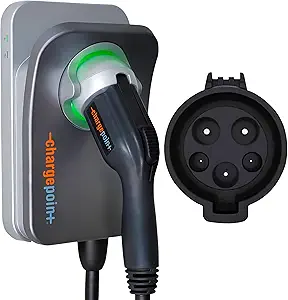
ChargePoint HomeFlex brings trusted smart charging into a compact, hardwired design. It suits properties that want reliable app control and broad charging compatibility.
The charger uses a J1772 connector for non-Tesla EVs and supports WiFi-connected smart features through the ChargePoint Mobile App. Users can manage reminders, view charging data, find stations, and connect smart home devices. The unit is UL-certified and indoor or outdoor rated, which helps it fit mixed-use commercial settings.
Its cold-resistant cable adds practical durability for demanding locations. With adjustable 16-50A charging and up to 45 miles of range per hour, it offers strong everyday performance. The 23-foot cable gives helpful reach for parking layouts.
It works well for businesses wanting a recognized charging brand and flexible installation.
Pros
- Trusted ChargePoint network and brand recognition
- Smart app controls with charging data
- Indoor or outdoor installation flexibility
Cons
- WiFi needed for some app functions
- Requires professional hardwired installation
- Tesla drivers need an adapter
Who Should Buy It?
Commercial properties should buy it when they want a trusted brand with smart control features. It fits offices, retail lots, and other locations needing flexible installation indoors or outdoors. The hardwired setup and J1772 connector suit non-Tesla drivers well.
Businesses that value app-based charging management and broad network access will find it appealing.
Key Specifications
| Specification | Details |
|---|---|
| Brand | ChargePoint |
| Model/Title | ChargePoint HomeFlex Level 2 EV Fast Charger, J1772, Smart, Hardwired, 50A |
| Current Rating | 80 A |
| Amperage | 50 A |
| Output Voltage | 240 volts_of_alternating_current |
| Input Voltage | 240 volts |
| Connector Type | Hardwired (J1772)-Non Tesla |
| Number of Ports | 1 |
| Specification Met | Energy Star |
| Cable Length | 23-Ft Cable |
The charger runs on 240 volts and uses a hardwired J1772 connector. That setup fits non-Tesla electric vehicles and suits fixed installations. Its 50A amperage supports Level 2 charging at higher speeds than basic outlets. The listed current rating reaches 80A, while the adjustable range spans 16 to 50A. In everyday use, that means an electrician can size the circuit for the site. The single-port design keeps the station focused on one vehicle at a time.
These specifications point to a charger made for planned parking spaces and regular daily use. The 23-foot cable helps reach vehicles in varied stall layouts, which can reduce awkward positioning. Energy Star compliance may appeal to properties watching efficiency goals. Indoor and outdoor rating adds placement flexibility for garages, lots, or covered spaces. The hardwired build also supports a cleaner permanent setup. Businesses with non-Tesla fleets, employee parking, or customer charging will benefit most from these choices.
6. Level 1&2 EV Charger 25ft for J1772 EVs

Portable charging flexibility stands out immediately here. Adjustable current and dual-plug support make it useful for mixed charging needs. AIXINE’s Level 1&2 EV Charger offers 8A, 10A, 12A, and 16A settings through a physical button.
It supports both 240V NEMA 6-20 outlets and 120V NEMA 5-15 outlets with the included adapter. The 25-foot cable gives wider reach across garages, driveways, or job sites. ETL, FCC, and UL specification claims add confidence for commercial use cases.
IP67 protection helps it handle dust, rain, snow, and harsh temperatures.
The charger suits J1772 EVs and plug-in hybrids from many brands. It supports Ford, GM, Nissan, Audi, Kia, Honda, BMW, Hyundai, GMC, Chevy, and Mercedes models. The built-in 2 to 8 hour delay timer helps shift charging to off-peak hours.
Charging output reaches up to 3.68 kW at 240V and 16A. The TPU-coated cable and oxygen-free copper cores suggest durable construction. It is a practical choice for portable basic charging, especially where permanent installation is not the goal.
Pros
- Adjustable current settings for different outlets
- Long 25-foot cable improves reach
- IP67 rating helps in harsh weather
Cons
- Not compatible with Tesla NACS ports
- 120V adapter requires lower current setting
- Portable charging suits basic needs only
Who Should Buy It?
Buy it if you need portable charging for J1772 vehicles at commercial properties, travel stops, or temporary work sites. It fits fleets or staff parking areas with mixed outlet types and basic charging needs. The long cable, delay timer, and adjustable current help when charging access is limited.
It works best for operators who want a flexible backup charger rather than a fixed wall unit.
Key Specifications
| Specification | Details |
|---|---|
| Brand | AIXINE |
| Model/Title | Level 1&2 EV Charger,12/16 Amp 6-20P/5-15 Adapter,25ft for J1772 EVs |
| Current Rating | 16 A |
| Amperage | 16 A |
| Output Voltage | 240 volts |
| Input Voltage | 240 volts |
| Connector Type | J1772, NEMA 6-20 Plug&120V NEMA 5-15 Adapter |
| Number of Ports | 1 |
| Specification Met | ETL, FCC, UL |
| Cable Length | 25 ft |
The 16-amp rating and 240-volt input mean it charges through stronger outlets. With the included NEMA 6-20 plug, it can use 240V power directly. The NEMA 5-15 adapter adds compatibility with standard 120V outlets. That flexibility helps in workplaces with mixed electrical access. The J1772 connector works with many common EV and PHEV models. A single port keeps operation simple for one vehicle at a time.
The 25-foot cable gives extra reach for parking spots placed far from outlets. ETL, FCC, and UL specification claims point to recognized safety and compliance checks. IP67 protection supports outdoor use around dust, rain, snow, and sand. The delay timer helps schedule charging during lower-cost hours. Adjustable current settings can reduce strain on weaker circuits. Drivers, fleet users, and property managers benefit from its portable setup and simple controls.
7. Level 2 EV Charger for Tesla

Tesla fleets and workplace charging get a fast, focused solution here. The charger pairs a NACS connector with adjustable 48-amp output and smart app control.
IYILO’s Level 2 wall unit is designed for hardwired setups with a 60A breaker and licensed electrician. It can deliver up to 46 miles of range per hour. That makes it practical for commercial sites that need quicker turnaround.
The charger supports current adjustment from 6A to 48A in 1A steps. Built-in NTC temperature sensing monitors connector heat in real time. If temperatures rise above 221°F, charging power drops or stops automatically.
The unit also supports scheduled charging, power sharing, and dynamic load balancing. With UL 2594, ETL, Energy Star, and FCC wireless certification, it fits buyers wanting certified equipment and smart controls. The included RFID cards and app-based insights help multiple users manage charging with less hassle.
It suits Tesla owners who want dependable daily charging at work or in shared commercial spaces.
Pros
- Fast 48A charging for Tesla vehicles
- Real-time connector temperature protection
- Supports app control and scheduling
Cons
- Requires hardwired installation
- Needs a licensed electrician
- Designed mainly for Tesla connectors
Who Should Buy It?
Who should buy it: Tesla owners managing commercial parking, workplace charging, or shared garage use. It also fits properties wanting smart charging controls, load balancing, and utility program compatibility. The adjustable amperage helps match electrical limits, while RFID access and app management suit multi-user settings.
It works best for buyers planning a permanent hardwired installation.
Key Specifications
| Specification | Details |
|---|---|
| Brand | IYILO |
| Model/Title | Level 2 EV Charger for Tesla, 48Amp/11.5KW, UL 2594/ETL/Energy Star |
| Current Rating | 48 Amps |
| Amperage | 6A to 48A adjustable |
| Output Voltage | 11.5 kW |
| Input Voltage | 60A breaker required |
| Connector Type | NACS(J3400) |
| Number of Ports | 1 |
| Specification Met | CA ETL U.S. Safety Certification, Energy Star, FCC Wireless Certification |
| Cable Length | Not listed |
The 48-amp rating shows how much current the charger can deliver. In everyday use, that means faster charging for compatible Tesla vehicles. The 11.5 kW output points to higher power delivery than basic home chargers. Adjustable amperage from 6A to 48A helps match electrical capacity and charging needs. The NACS connector fits Tesla-style charging ports. Since the unit is hardwired, installation suits permanent parking spots, fleet bays, or dedicated workplace chargers.
These specifications favor sites that want steady charging and controlled power use. The 60A breaker requirement points to a more involved setup, yet it also supports faster operation. One port makes it a focused solution for one vehicle at a time. Certified safety and wireless standards add confidence for commercial use. The app, scheduling, and load balancing features help managers coordinate charging across multiple users. Tesla owners benefit most when they want speed, monitoring, and fixed installation.
8. Level 2 EV Charger 48A J1772 Smart WiFi EVSE

Commercial sites need charging gear that stays simple and dependable. A smart Level 2 unit with J1772 support fits that need well.
The Level 2 EV Charger 48A J1772 Smart WiFi EVSE is built for North American non-Tesla EVs and plug-in hybrids. Its NEMA 14-50 plug supports plug-in installation when a dedicated outlet already exists.
That can simplify setup in garages, fleet spaces, or employee parking areas.
The charger delivers up to 40A and 9.6kW output, with up to 38 miles per hour of charging. A 25-foot cable gives extra reach for larger parking layouts. UL compliant, ETL listed, and FCC listed certifications add confidence for daily use.
The IP55 enclosure supports indoor or outdoor placement, while over-current, over-voltage, and overheating protections support steady operation. Smart app control adds useful monitoring for budget-minded buyers needing control without extra complexity.
Pros
- Smart WiFi control adds practical charging management
- 25-foot cable helps reach awkward parking spots
- UL compliant and ETL listed for added confidence
Cons
- Needs a NEMA 14-50 outlet already installed
- Tesla drivers need a separate adapter
- Plug-in design may not suit every site
Who Should Buy It?
Commercial property owners should buy it when they already have a dedicated NEMA 14-50 outlet available. It suits small offices, shared garages, and mixed EV parking areas with non-Tesla vehicles. The smart app, long cable, and weather-resistant build make it practical for budget-focused charging setups that need simple control and reliable daily use.
Key Specifications
| Specification | Details |
|---|---|
| Brand | Hicrab |
| Model/Title | Level 2 EV Charger 48A NEMA 14-50 Plug J1772 Smart WiFi EVSE |
| Current Rating | 48 A |
| Amperage | 48 A |
| Output Voltage | 240 volts_of_alternating_current |
| Input Voltage | 240 volts |
| Connector Type | J1772 |
| Number of Ports | 1 |
| Specification Met | UL, ETL, FCC |
| Cable Length | 25 FT |
The 48A rating and 240-volt input describe a Level 2 charging setup. In daily use, that means faster charging than a standard wall outlet. The J1772 connector works with non-Tesla EVs and plug-in hybrids in North America. One charging port suits a single vehicle at a time. The 25-foot cable helps reach vehicles parked farther from the outlet, which is useful in wider bays or shared parking spaces.
UL, ETL, and FCC markings point to recognized electrical and communications compliance. That matters for commercial properties that want standard-compatible equipment. The NEMA 14-50 plug also affects setup, since it needs a dedicated 50A, 240V outlet already in place. The plug-in format helps simplify installation where that outlet exists. The IP55 enclosure and protection features support outdoor use and daily wear, which benefits sites with regular employee or customer charging.
9. Autel 40A Level 2 EV Charger

Smart charging convenience stands out immediately with Autel’s adjustable 40A design. WiFi control, scheduled charging, and RFID access add useful control for daily charging needs. Autel built this Level 2 charger as a plug-in unit with a NEMA 14-50 connection.
That makes setup straightforward for spaces already equipped with the right outlet. The 25-foot cable gives extra reach for flexible parking positions. Its J1772 connector works with many EVs and plug-in hybrids.
NEMA 4X weatherproofing supports indoor or outdoor use in harsh conditions. The dark gray housing has a compact profile and a clean, practical look.
Energy monitoring and adjustable current help users match charging to routine needs. It suits drivers wanting standard smart charging with simple installation and remote control.
Commercial properties with existing outlets may value the quick setup and portable format.
Pros
- Adjustable charging current from 16A to 40A
- WiFi app control with scheduling and monitoring
- NEMA 4X rating suits indoor or outdoor use
Cons
- Requires a compatible NEMA 14-50 outlet
- Single-port design limits simultaneous charging
- Plug-in format may not suit all sites
Who Should Buy It?
Buy it for standard smart charging at properties with existing NEMA 14-50 outlets. It fits users who want app control, adjustable current, and weatherproof hardware without a complicated setup. The 25-foot cable also helps where parking positions vary.
Commercial locations with one vehicle charging at a time may find it practical and easy to manage.
Key Specifications
| Specification | Details |
|---|---|
| Brand | Autel |
| Model/Title | Autel 40A Level 2 EV Charger, 240V NEMA 14-50 J1772, WiFi, 25ft Cable |
| Current Rating | 40 A |
| Amperage | 40 A |
| Output Voltage | 240 volts |
| Input Voltage | 240 volts |
| Connector Type | SAE J1772 |
| Number of Ports | 1 |
| Specification Met | CSA |
| Cable Length | 25 ft |
The charger operates at 240 volts with a 40 amp rating. That combination suits Level 2 charging and supports faster charging than standard outlets. The SAE J1772 connector works with many EVs and plug-in hybrids. One port keeps the unit simple for single-vehicle charging. The 25-foot cable adds reach, which helps when parking spots sit farther from the outlet. CSA compliance gives an additional hardware standard reference for buyers.
The 240-volt input and output point to straightforward electrical matching during setup. The 40 amp capacity also means the charger can be adjusted down to 16 amps through the app. That flexibility helps users manage charging speed and power use. The single-port layout works best for one vehicle at a time. The long cable and J1772 connector make it practical for mixed parking arrangements and many common EV setups.
10. Enphase CS 100 EV Charger

High-output charging makes the Enphase CS 100 stand out in commercial environments. Its 80-amp, 19.2 kW capability supports fast turnaround for busy EV drivers. Built for indoor or outdoor use, it pairs a sealed NEMA 3R enclosure with a 25-foot rugged cable.
That combination suits garages, fleets, and shared parking areas needing dependable daily charging.
The CS 100 uses a J1772 connector, so it works with all North American EVs. COSMOS technology adds load sharing, digital load management, and access control for connected sites.
UL, ETL, and ENERGY STAR certifications support confidence in safety and efficiency. An automatic circuit reclosure feature helps clear minor faults. Field-serviceable cables can reduce downtime during maintenance.
Its commercial-grade design fits high-traffic properties needing durable, high-power equipment.
Pros
- High 80-amp charging output for fast turnaround
- Weather-resistant enclosure suits indoor or outdoor installs
- Load management features help commercial sites
Cons
- Single port limits charging to one vehicle
- Large unit may need more installation space
- Higher power setup may require electrical upgrades
Who Should Buy It?
Property managers, fleet operators, and commercial installers should buy it. It suits sites needing fast charging, durable hardware, and controlled energy use. The 25-foot cable helps reach parking spots in larger lots.
Facilities with mixed EV brands will like the universal J1772 connector. Teams wanting connected load management will also benefit from COSMOS support.
Key Specifications
| Specification | Details |
|---|---|
| Brand | Enphase Energy |
| Model/Title | 80 Amp Hardwired EV Charger – Enphase CS 100, Level 2 Charger, Safety Certified, Indoor/Outdoor, 25ft Rugged Cable & J1772 Connector, 19.2 kW Power |
| Current Rating | 100 A |
| Amperage | 80 A |
| Output Voltage | 240 volts |
| Input Voltage | 240 volts |
| Connector Type | J1772 |
| Number of Ports | 1 |
| Specification Met | ETL, Energy Star, UL |
| Cable Length | 25 ft |
The CS 100 runs on 240 volts and delivers 80 amps of charging output. That means it can supply up to 19.2 kW for faster Level 2 charging. The 25-foot cable gives more reach across parking spaces and garage layouts. A J1772 connector fits all North American EVs, which helps mixed-use commercial sites serve many drivers without extra adapter planning or equipment changes.
Its 100-amp current rating supports higher-capacity installation needs, while the 80-amp output supports strong charging performance. The single-port design works well for dedicated spaces and controlled parking areas. ETL, UL, and ENERGY STAR listings support professional site requirements. Indoor or outdoor placement fits covered garages, lots, and service areas. Commercial properties gain from the long cable, sealed enclosure, and field-serviceable cable design during regular use.
Best EV Charger Installer in California for Commercial Properties: What to Look for Before You Buy
Commercial site load assessment
Commercial EV charging installations often depend on the property’s electrical headroom, because the available service and panel space determine how many chargers can operate safely without costly upgrades. A thorough site assessment should confirm whether the building can support the added demand, especially in facilities where lighting, HVAC, refrigeration, and other equipment already place steady pressure on the system. Load management becomes especially important for locations with several charging points, since smart balancing can prevent overloads, reduce peak demand charges, and keep operations stable throughout the day.
It is also wise to plan for future growth, since adding more chargers later is easier and less disruptive when conduit space, switchgear capacity, and panel room have been reserved from the start. By evaluating current electrical limits alongside long-term charging needs, commercial property owners can avoid unexpected delays, lower retrofit costs, and build a charging setup that remains practical as demand rises.
Permits, codes, and california compliance
Commercial charging projects in California must align with local permitting rules, accessibility requirements, and utility program standards to avoid costly delays and redesigns. A well-planned installation should account for the site’s electrical capacity, network compatibility, and future charger additions so the system can support more vehicles without major reconstruction later. Local permitting requirements often vary by city and county, which means equipment placement, trenching, panel upgrades, and inspection timing must be coordinated from the start.
ADA and accessibility standards are equally important, because stall width, reach ranges, signage, and pathway access can affect whether the site is compliant and usable for all drivers. It also helps to verify that the project meets utility and state incentive rules, since rebate programs and energy benefits may depend on approved hardware, reporting features, and installation methods.
Installer experience and credentials
Commercial EV charger projects depend on more than the hardware itself, because the installer’s experience and credentials directly affect safety, compliance, and long-term performance. A provider with a strong portfolio of commercial installations is more likely to understand load management, site planning, and the demands of high-traffic properties such as offices, retail centers, and multifamily developments. Proper licensing, insurance, and up-to-date certifications add another layer of protection by reducing project risk and helping ensure the work meets professional standards. It is also essential that the installer understands California-specific regulations, including permitting requirements, utility coordination, and local code compliance, since these rules can affect timelines, costs, and system approval.
It is also essential that the installer understands California-specific regulations, including permitting requirements, utility coordination, and local code compliance, since these rules can affect timelines, costs, and system approval. Together, these factors help ensure the charger installation is reliable, legally compliant, and ready to support future property needs.
Charger types and business compatibility
Commercial charging systems need enough technical flexibility to handle different vehicle volumes, operating hours, and future energy demands without costly upgrades. Level 2 units are well suited to workplaces, employee parking, and retail locations where vehicles stay parked for several hours, while DC fast charging is better for fleets, service depots, and customer-facing sites that need rapid turnaround and high daily throughput. It also helps to verify whether the platform supports networked smart charging, since remote monitoring, user access controls, load balancing, and usage reporting can simplify management and reduce operating costs.
A system that can grow with the site’s needs makes it easier to add more ports later, support mixed vehicle types, and keep the property efficient as charging demand increases.
- Level 2 charging: Ideal for longer dwell times and steady use.
- DC fast charging: Best for quick top-offs and high-utilization locations.
- Smart network features: Helpful for tracking sessions, managing energy use, and coordinating multiple chargers.
Project costs and roi factors
Project costs for commercial EV charging installations in California often extend far beyond the charger hardware itself, because equipment, labor, electrical upgrades, and permit fees can each have a major impact on the final budget. Communication features and future-ready capacity are especially important since they affect how easily the system integrates with energy management platforms, access control tools, and fleet operations, while also allowing additional units to be added later without a major redesign. Ongoing expenses also matter, including maintenance, network monitoring, and software subscription costs that can influence long-term operating margins.
Ongoing expenses also matter, including maintenance, network monitoring, and software subscription costs that can influence long-term operating margins. A smart financial review should also factor in available incentives and rebates, since these can reduce upfront spending and shorten the payback timeline significantly.
| Cost Factor | Why It Matters |
|---|---|
| Equipment, labor, and permits | These are the largest upfront expenses and can vary based on site conditions, electrical capacity, and local approval requirements. |
| Maintenance and software subscriptions | Regular service and platform fees affect long-term ownership costs and system reliability. |
| Incentives, rebates, and payback timeline | Available financial programs can lower net cost and improve return on investment over time. |
Service, support, and scalability
Commercial EV charging systems depend on reliable service access, because frequent use, high electrical demand, and software updates can all create issues that disrupt daily operations. A strong installer should offer ongoing maintenance and fast troubleshooting so downtime stays minimal, especially in workplaces, retail centers, and fleet facilities where chargers must remain available.
It also helps to confirm the warranty terms and average response times, since clear coverage can reduce repair costs and speed up support if a unit fails. Just as important, the provider should be able to support future growth with room for additional EVSE installs, making it easier to add more chargers as demand increases without major redesigns or unexpected infrastructure changes.
When a Charger Needs Replacement
Commercial EV chargers usually last for years, but their life span depends on use, weather, wiring quality, and service care. A charger at a busy workplace or retail lot may wear out faster than one used a few times a day. Outdoor units in hot sun, salt air, or heavy rain can age sooner as well.
Many chargers start showing problems before they stop working completely. Slower charging, frequent error lights, damaged cables, loose plugs, or failed payment features can point to wear. If a unit trips breakers often or needs repeated repairs, replacement may be a better choice than another fix.
For commercial properties in California, it helps to plan ahead. A good installer can check the electrical panel, cable condition, software support, and site use. They can also tell you whether the charger still fits your business needs. A unit that once worked well may no longer match fleet growth, higher charging demand, or newer EV models.
Here are common signs it may be time to replace a charger:
- It charges much slower than before.
- Parts are cracked, frayed, or loose.
- Repair costs keep adding up.
- The charger no longer supports current plug types or features.
- It has trouble staying online or accepting payments.
Replacement can also make sense when energy use has changed. A newer model may offer better controls, stronger safety features, or smarter load management for a commercial site. That can help reduce downtime and keep tenants, staff, or customers charging with less hassle.
When comparing installers, ask how long the charger model is expected to last, what warranty is included, and what maintenance is needed. A clear service plan can help you get more years from the system and replace it before failures start affecting your property.
FAQ’s
What Should Commercial Property Owners Look For When Choosing The Best Ev Charger Installer In California?
Commercial property owners in California should look for an installer with proven experience in commercial EV charging projects, proper licensing, and knowledge of local codes, permits, and utility requirements. They should also check for strong customer reviews, transparent pricing, and support for ongoing maintenance and future charger expansion.
How Much Does It Typically Cost To Install Commercial Ev Chargers In California?
Installing commercial EV chargers in California typically costs about **$10,000 to $50,000 per charger**, depending on the charger type, electrical upgrades, and site conditions. For larger fast-charging setups, total project costs can run much higher, sometimes **$100,000+ per station**.
What Permits And Electrical Requirements Are Needed For Commercial Ev Charger Installation In California?
In California, commercial EV charger installation typically requires local building, electrical, and sometimes planning permits, along with compliance with the California Electrical Code, ADA accessibility rules, and any utility interconnection requirements. Electrical needs usually include adequate panel capacity, proper circuit sizing, grounding, and sometimes transformer or service upgrades depending on the charger load.
Which Types Of Ev Chargers Are Best Suited For Commercial Properties In California?
For most commercial properties in California, Level 2 chargers are best suited because they provide a good balance of charging speed, cost, and installation flexibility for workplaces, retail centers, and multifamily sites. DC fast chargers are ideal for locations with high turnover or customer traffic, such as highway stops, fleet depots, and busy commercial hubs.
How Can A Commercial Ev Charger Installer Help Businesses Maximize Incentives And Rebates In California?
A commercial EV charger installer can help businesses identify eligible California incentives and rebates, handle required documentation, and ensure the installation meets program requirements. They can also recommend the best charger setup to maximize savings while staying compliant with local and utility rules.
Final Verdict
For buyers seeking the best ev charger installer in california for commercial properties, LEDVANCE Phase EV Commercial Charger Gen 2 is the strongest overall fit for fast commercial charging, especially at sites where throughput matters most. Its position as Best Overall makes it a smart match for offices, retail centers, and fleet-adjacent properties that need dependable charging speed without stepping into premium-only territory.
EV Range Commercial EV Charging Station is the best value pick for properties focused on revenue charging, giving owners a more budget-friendly way to add paid charging access. Enphase CS 100 EV Charger is the right choice for buyers who want maximum rugged power, and it stands out twice here for Best Premium and Best for Rugged Outdoor Installs. That makes it the best pick for harsh weather, demanding usage, and sites that need a tougher outdoor unit.
Choose LEDVANCE for fast commercial turnover, EV Range for revenue-focused value, and Enphase CS 100 for premium outdoor durability.