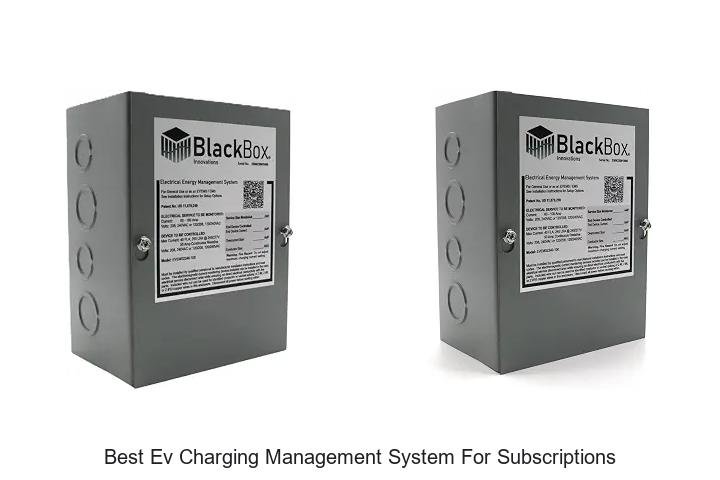
10 Best Ev Charging Management System for Subscriptions: Top Picks Compared
Fleet operators and property managers often need a simple way to track charging use, billing, and access control. A poor system can waste time, create billing errors, and make it harder to serve drivers well. That is why many teams search for the best ev charging management system for subscriptions.
That is why many teams search for the best ev charging management system for subscriptions. This product category helps businesses handle recurring plans, user access, and charging activity in one place. It is a fit for companies that run public chargers, workplace stations, apartment networks, or EV service plans.
It can also help teams that want clearer usage data and easier subscription handling. A good system can reduce manual work and make daily operations easier to manage.
It may also support smoother billing and better control over who can charge and when. This review will explain what the product does, who it suits, and how it performs in real use. It will also cover the main features, the setup process, and the value it offers for subscription-based charging.
Best EV Charging Management Systems for Subscription Plans
| Image | Product | Price |
|---|---|---|
Pick 1  | BLACKBOX EV Charger 240V 60-100A | Check Price On Amazon |
Pick 2  | BLACKBOX EV Charger 240V NEMA 3R | Check Price On Amazon |
Pick 3  | BLACKBOX EV Charger 240V | Check Price On Amazon |
1. BLACKBOX EV Charger 240V 60-100A
Power limits do not have to block home charging plans. BLACKBOX EV Charger 240V 60-100A focuses on smart load control without requiring a panel upgrade. It works with any EV charger and supports many charging rates, from 16 amp to 48 amp.
That range gives owners flexibility for different vehicles and daily routines. The unit is compact, measuring 8 by 6 by 4 inches, so it fits near an electrical panel.
Its patented algorithm allows longer on times when capacity is available. It can halt charging when household demand rises, then resume safely later. That makes it a practical fit for homes with limited electrical service.
It suits drivers who want managed charging, steady overnight use, and broader compatibility.
Pros
- Works with any brand of EV charger
- Supports multiple charging rates
- Compact size for easier installation
Cons
- EV charger sold separately
- Qualified electrician recommended for installation
- Does not include smart app control
Who Should Buy It?
Drivers with 60A to 100A service who want managed charging should consider it. It also suits homes that cannot support a panel upgrade. People using different EV charger brands may like its broad compatibility.
It fits owners who want overnight charging control and safe load handling without extra complexity.
Key Specifications
| Specification | Details |
|---|---|
| Brand | BLACKBOX |
| Model/Title | EV Charger BLACKBOX 240V 60-100A Service – No Electrical Panel or Service Upgrade Required. Allows 240 Volt up to 48 Amp (60Amp) EV Fast Charge Rate EV Load Management System Save $$ |
| Amperage | 50 A |
| Input Voltage | 240 volts |
| Output Voltage | 240 volts |
| Load Management | Yes |
| Smart/App Control | No data provided |
| Metering | No data provided |
| Certifications | CEC, ETL (UL 2594 Equivalent), NEC |
| Warranty | No data provided |
The BLACKBOX unit runs on 240 volts and is rated at 50 amps. It supports service sizes from 60 amps to 100 amps. In daily use, that means it can manage charging around other household loads. The output stays at 240 volts, which matches common home EV charging setups. It also supports several charging levels, including 16, 20, 24, 30, 32, 40, and 48 amps. That range helps match different EV charger settings and vehicle needs.
Its load management design matters most in homes with limited electrical capacity. When other appliances draw power, the system can pause charging and resume later. That helps preserve safe operation without a service upgrade. The unit carries CEC, ETL, and NEC specifications, which may matter for installation planning. Its compact 8 by 6 by 4 inch size also helps placement near a panel. Owners who want flexible charging control and wide charger compatibility benefit most.
2. BLACKBOX EV Charger 240V NEMA 3R
Smart EV load control can save an expensive panel upgrade. BLACKBOX EV Charger 240V NEMA 3R manages charging for 60A to 100A service sizes. It works with any brand of EV charger or 240V plug.
The unit allows 20, 24, 30, 32, 40, and 48 amp charging levels. That gives owners flexible charging without changing their existing equipment.
The compact 8 x 6 x 4 inch enclosure fits near an electrical panel. Its weatherproof NEMA 3R design suits outdoor or exposed locations.
The internal computer algorithm supports longer on times when power allows. It pauses charging when electrical capacity drops, then resumes safely later.
That makes it useful for homes with limited service capacity. It suits drivers who want lower-cost smart charging and a simple load management setup.
Installation by a qualified electrician is recommended, since it ties into household power management. The unit does not include the EV charger itself, so buyers need compatible charging hardware already or separately.
Pros
- Works with any brand of EV charger
- Supports multiple charging amperage levels
- Helps avoid panel upgrade costs
Cons
- EV charger sold separately
- Installation needs a qualified electrician
- No app control or built-in metering listed
Who Should Buy It?
Buyers with limited electrical service and a separate EV charger should consider it. It suits households that want managed 240-volt charging without a panel upgrade. It also fits drivers who want weatherproof load control and flexible amperage settings.
People who value simple, lower-cost smart charging over app features will get the most use.
Key Specifications
| Specification | Details |
|---|---|
| Brand | BLACKBOX |
| Model/Title | EV Charger BLACKBOX 240V NEMA 3R 60-100A Service Size Weatherproof |
| Amperage | 50 A |
| Input Voltage | 240 volts |
| Output Voltage | 240 volts |
| Connector Type | NEMA 3R |
| Load Management | Yes |
| Smart/App Control | No data listed |
| Metering | No data listed |
| Certifications | CEC, ETL, UL 2594 Compliant, NEC |
| Warranty | 1 Year Manufacturer Warranty |
The BLACKBOX unit runs on 240 volts and manages charging through load control. It supports service sizes from 60A to 100A, which helps homes with limited electrical headroom. The amperage setting can match charging needs from 20 amps up to 48 amps. In daily use, that means the system can reduce charging when other appliances draw power. The NEMA 3R weatherproof enclosure also helps placement near a panel or outside.
These specifications matter because they shape how much charging power the home can support. Higher supported amperage gives faster charging when capacity is available. Lower settings help households share power more safely across appliances. The compact enclosure can simplify installation near existing electrical gear. Certification to CEC, ETL, UL 2594, and NEC standards supports electrical compatibility. Drivers who want flexible charging control, outdoor-ready hardware, and a charger-agnostic setup benefit most.
3. BLACKBOX EV Charger 240V
A smart load management device can make home EV charging far easier. BLACKBOX focuses on keeping charging available without forcing an electrical panel upgrade.
It supports 125A to 200A service sizes and works with any EV charger or 240V plug. The unit automatically pauses charging when household demand is high, then resumes when power is available. That helps users charge overnight with less worry about overloads.
The compact NEMA 3R enclosure measures 8 by 6 by 4 inches, which helps installation near an electrical panel. It supports several charging levels, from 16 amp to 48 amp output, giving flexibility for different vehicles and charging needs.
Build quality is aimed at weather exposure and code compliance, with CEC, ETL, and NEC specifications listed. It suits drivers who want premium utility features, lower installation complexity, and dependable energy control.
Pros
- Works with any EV charger or 240V plug
- Supports multiple charge rates up to 48 amp
- Helps avoid electrical panel upgrade costs
Cons
- EV charger is sold separately
- Installation should be handled by an electrician
- No smart app control is listed
Who Should Buy It?
Buyers with 125A to 200A service who want smarter home charging should consider it. It suits homes where panel capacity is limited, yet overnight EV charging still matters. Drivers who want a flexible, weatherproof load management unit will appreciate the broad compatibility.
It also fits households with different EVs or charging devices, since it works with any brand of charger.
Key Specifications
| Specification | Details |
|---|---|
| Brand | BLACKBOX |
| Model/Title | EV Charger BLACKBOX 240 V NEMA 3R 125-200A Service Size Weatherproof |
| Amperage | 200 A |
| Input Voltage | 240 volts |
| Output Voltage | 240 volts |
| Connector Type | Any EV Charger or 240 V Plug |
| Load Management | Yes |
| Smart/App Control | Not listed |
| Metering | Not listed |
| Certifications | CEC, ETL, NEC |
The BLACKBOX unit runs on 240 volts and supports 125A to 200A service sizes. That matters for homes where electrical capacity is limited. It can manage charging across several output levels, from 16 amp through 48 amp. In daily use, that gives owners flexibility to match charging speed to household demand. The unit also works with any EV charger or 240V plug, which makes it useful for mixed charging setups and different vehicle brands.
Its NEMA 3R weatherproof design suits installation near an electrical panel. The compact 8 by 6 by 4 inch size helps reduce setup space needs. CEC, ETL, and NEC listings add confidence for code-aware installations. The system pauses charging when household power demand rises, then resumes later. That behavior benefits households with variable electricity use. Drivers who want utility control, flexible charger compatibility, and a simpler installation path will get the most value.
4. Home EV Charger Level 2, J1772 EVSE

Smart charging gets easier when home loads need careful balancing. ELECQ’s hardwired Level 2 charger combines fast charging, solar modes, and app control. It supports up to 50 amps and can add about 48 miles of range per hour, depending on vehicle and breaker capacity.
The J1772 connector works with all North American EVs, while Tesla drivers need an adapter.
The charger pairs with the Elecq Power Monitor for dynamic load balancing across household loads. That helps avoid panel upgrades while keeping charging steady during normal home use.
Three solar charging modes let owners use cleaner energy and reduce charging costs. NEMA 4 and IK10 ratings, plus 10kV/5kA surge protection, point to strong weather and impact resistance. Its modular design also simplifies installation and future part replacement for homeowners and installers.
Pros
- Load balancing suits homes with shared electrical capacity
- Solar charging modes add useful energy flexibility
- Modular design can reduce installation effort
Cons
- Requires a separate Power Monitor for load balancing
- Tesla drivers need an adapter
- Hardwired installation needs professional setup
Who Should Buy It?
Homeowners who want managed charging for a single vehicle or shared household electrical load will appreciate this unit. It fits buyers who value solar charging options, app-based current control, and a hardwired setup. It also suits people planning for future EV needs, since the OCPP-compatible design supports broader charging system use.
Key Specifications
| Specification | Details |
|---|---|
| Brand | ELECQ |
| Model/Title | Home EV Charger Level 2, Active Load Management, Solar Charging Modes, OCPP Compatible & Future-Proof, 50A Hardwired EVSE with J1772 Connector |
| Amperage | 50 A |
| Connector Type | J1772 |
| Load Management | Dynamic load balancing with Elecq Power Monitor |
| Smart/App Control | Elecq App current adjustment |
| Certifications | NEMA 4, IK10 |
A 50-amp charger can deliver fast Level 2 home charging. The unit’s hardwired setup supports high output, while actual speed still depends on the EV and breaker capacity. The J1772 connector works with most North American EVs. Tesla drivers need an adapter. Adjustable current in the Elecq App gives homeowners control over charging power, which helps match charging speed to daily household needs without constant manual changes.
Dynamic load balancing matters when the house shares power across several devices. Paired with the Elecq Power Monitor, the charger can adjust charging around other household loads. That can help avoid expensive electrical panel upgrades. The NEMA 4 and IK10 ratings suggest strong protection against weather and physical impact, which suits indoor or outdoor placement. Homeowners with limited panel capacity and mixed energy use may benefit most from that setup.
5. ChargePoint HomeFlex Level 2 EV Charger
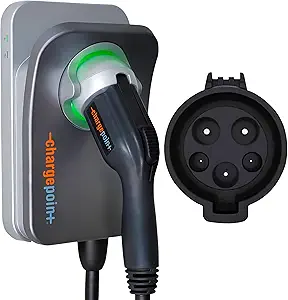
ChargePoint HomeFlex brings a trusted app ecosystem to home EV charging. It pairs hardwired power with smart controls and broad network access.
The HomeFlex is a Level 2 charger with a J1772 connector for non-Tesla EVs. It can be installed indoors or outdoors by an electrician.
The charger supports adjustable 16 to 50 amp operation, with a 23-foot cable for flexible parking. ChargePoint’s mobile app adds scheduling, reminders, charging data, and smart home connections. WiFi is needed for some features and troubleshooting steps.
The unit is Energy Star certified and UL-certified for safer home charging. Its cold-resistant cable and durable housing suit regular daily use.
Performance reaches up to 45 miles per hour, depending on the vehicle. It is a strong fit for drivers who want app control and a familiar charging network.
Pros
- Trusted ChargePoint app with charging controls
- Indoor and outdoor installation support
- Adjustable amperage suits different circuits
Cons
- WiFi needed for some app features
- Tesla drivers need an adapter
- Requires electrician installation
Who Should Buy It?
Buyers who want a familiar charging app and broad network support should consider it. It suits non-Tesla drivers who want home charging with mobile controls. The adjustable amperage also helps households with different electrical setups.
Drivers who value app-based reminders, station search, and charging data will get the most from it.
Key Specifications
| Specification | Details |
|---|---|
| Brand | ChargePoint |
| Model/Title | ChargePoint HomeFlex Level 2 EV Fast Charger, J1772, Smart, Hardwired, 50A |
| Amperage | 50 A |
| Input Voltage | 240 volts |
| Output Voltage | 240 volts_of_alternating_current |
| Connector Type | Hardwired (J1772)-Non Tesla |
| Smart/App Control | ChargePoint Mobile App |
| Certifications | UL-certified, Energy Star |
| Warranty | 3 year manufacturer warranty |
The charger uses a 240-volt input and output for Level 2 home charging. Its 50 amp rating and adjustable 16 to 50 amp setup help match different electrical circuits. The hardwired J1772 connector works for non-Tesla EVs, while Tesla owners need an adapter. A 23-foot cable gives more reach from the wall to the parking spot. Together, these details point to a home unit built for daily charging and flexible installation.
Smart features come through the ChargePoint Mobile App, which handles reminders, charging data, station search, and smart home connections. WiFi support is needed for certain features and troubleshooting steps. UL certification and Energy Star labeling point to safer operation and efficient design. Indoor and outdoor rating adds placement flexibility, while the cold-resistant cable helps in harsher weather. These specs suit drivers who want app control, reliable charging, and a setup that fits home use.
6. Flexible Charging EV Cable Management System

Messy charging cables can make a garage feel cluttered fast. A ceiling- or wall-mounted organizer brings order while keeping the charging area easier to use.
The Flexible Charging EV Cable Management System is built for Tesla Wall Connector Gen 3, Tesla Mobile Connector, and many other common EV chargers. It supports charging cables from 3/8 inch to 3/4 inch, which gives it broad everyday compatibility. The retractable design helps keep the cable off the floor when not needed, reducing trip hazards and helping protect the cable from unnecessary wear.
Its flexible reach makes it easier to guide the cable to the vehicle, while the one-hand operation is handy when your other hand is full. The hardware uses 304 stainless steel for weather resistance and long service life. At 1.9 pounds, it is light enough for practical mounting, yet still built for stable garage use.
It suits drivers who want cleaner cable storage and quicker charging access without adding complex controls.
Pros
- Works with many common EV charger setups
- Keeps cables organized and off the floor
- One-hand use simplifies daily charging
Cons
- Does not include smart app controls
- No metering or usage tracking features listed
- Requires wall or ceiling installation
Who Should Buy It?
Buyers who want a cleaner garage charging area should consider it. It suits Tesla Wall Connector Gen 3 owners, Tesla Mobile Connector users, and drivers with other common Level 2 chargers. People who value cable storage, easier reach, and reduced floor clutter will get the most from it.
It also fits households that want a simple, hardware-only setup without app features.
Key Specifications
| Specification | Details |
|---|---|
| Brand | FETUSI |
| Model/Title | CDQZLQ |
| Connector Type | Tesla Wall Connector Gen 3, Tesla Mobile Connector, other common EV chargers |
The listed brand is FETUSI, and the model is CDQZLQ. Those identifiers help match the organizer to the exact product version sold online. The compatible connector list includes Tesla Wall Connector Gen 3 and Tesla Mobile Connector. It also works with other common EV chargers. The cable size range from 3/8 inch to 3/4 inch means it fits many charging cords used in home garages.
The compatibility range matters because it affects setup flexibility at home. A wider cable fit makes installation easier for many Level 2 charging setups. The mount works on walls or ceilings, which helps different garage layouts. Weather-resistant 304 stainless steel hardware supports long-term indoor or sheltered use. Because the product is focused on cable organization, it suits drivers who want tidy storage and quicker access, not digital charging controls.
7. Level 2 EV Charger 40A J1772

Fast home charging meets smart app control in a plug-in format. The 40A Level 2 design delivers up to 38 miles of range per hour.
CleverCharge adds multi-home tracking, schedule control, and energy monitoring for organized charging. The NEMA 14-50 plug keeps installation simple when a matching outlet is available. A 25-foot heavy-duty cable helps reach different parking positions with less hassle.
Built for North American EVs and PHEVs with J1772 ports, it suits daily charging needs well. The charger runs on 240 volts and uses a 40 amp current rating. Energy Star, FCC, and UL specifications add confidence in its electrical compliance.
CleverKey AI features may vary by vehicle compatibility. That makes it a strong fit for households managing several cars or properties. It feels especially useful for high-speed plug-in charging without hardwired installation.
Pros
- Charges up to 38 miles per hour
- Manages multiple homes and vehicles
- Easy plug-in NEMA 14-50 setup
Cons
- CleverKey features depend on vehicle compatibility
- Requires a NEMA 14-50 outlet
- No built-in hardwired installation option
Who Should Buy It?
Buyers with J1772 EVs who want faster home charging should consider it. It suits households with multiple vehicles or multiple properties. The app tools help people track charging, schedules, and energy use.
Drivers with a NEMA 14-50 outlet will get the easiest setup. It also fits owners who want a long cable and plug-in convenience.
Key Specifications
| Specification | Details |
|---|---|
| Brand | CleverCharge |
| Model/Title | Level 2 EV Charger, 40A/240V, NEMA 14-50 Plug, J1772 Connector |
| Amperage | 40 A |
| Input Voltage | 240 volts of alternating current |
| Output Voltage | 240 volts of alternating current |
| Connector Type | J1772 |
| Load Management | Multi-home and vehicle management |
| Smart/App Control | CleverCharge app with CleverKey AI |
| Metering | Energy consumption monitoring |
| Certifications | Energy Star, FCC, UL |
| Warranty | 3 Year Manufacturer |
The 40 amp, 240 volt setup supports fast Level 2 home charging. In daily use, that means less waiting between drives and more consistent topping off overnight. The J1772 connector works with North American EVs and PHEVs that use that port style. The NEMA 14-50 plug also matters, because it lets the unit connect to a matching outlet without permanent wiring. A 25-foot cable helps reach garages and driveways with easier placement.
Smart features add more control beyond basic charging. The app can create charge schedules, send notifications, and track energy use. Multi-home and vehicle management helps families or owners with several properties keep charging organized from one account. Energy Star, FCC, and UL markings point to recognized compliance standards. That combination suits drivers who want fast charging, app oversight, and a plug-in setup. It also helps households that need flexible charging across different parking spots.
8. Level 2 EV Charger with Energy Meter

Metered charging control stands out here, especially for homes with tighter electrical capacity. The included energy meter and CT clamps help the charger balance load in real time. IYILO pairs fast Level 2 charging with smart control, so daily charging feels practical and controlled.
The charger delivers up to 48A and 11.5kW through hardwired installation. It can add up to 46 miles of range per hour, depending on conditions.
Current adjusts in 1A steps from 6A to 48A. The built-in NTC sensor monitors connector temperature and stops charging above 221°F. The app supports time-of-use scheduling, energy tracking, cost tracking, RFID cards, multiple user accounts, and OTA updates.
It uses 2.4GHz WiFi only, which may matter during setup. Build quality appears focused on safety and control, with ETL certification and EV-C compatibility. It suits drivers who want managed charging without a panel upgrade.
Pros
- Real-time load balancing with included energy meter
- Adjustable current from 6A to 48A
- App supports scheduling, RFID, and energy tracking
Cons
- Requires hardwired installation and licensed electrician
- Supports 2.4GHz WiFi only
- No 5GHz WiFi support
Who Should Buy It?
Homeowners who want meter-based load balancing should consider this charger. It fits households that need smart charging control without upgrading the electrical panel. Drivers with multiple users, scheduled charging needs, or energy tracking goals will value the app tools.
It also suits EV owners who want a hardwired Level 2 setup with adjustable amperage and connector temperature protection.
Key Specifications
| Specification | Details |
|---|---|
| Brand | IYILO |
| Model/Title | Level 2 EV Charger with Energy Meter, CT Clamps for Load Balancing |
| Amperage | 48A |
| Input Voltage | Not provided |
| Output Voltage | Not provided |
| Connector Type | J1772 |
| Load Management | Real-time dynamic load balancing with energy meter and CT clamps |
| Smart/App Control | IYILO App with TOU rates, energy and cost tracking, scheduled charging, RFID card support, multiple user accounts, OTA upgrades |
| Metering | Energy Meter up to 200A |
| Certifications | ETL Certified, EV-C compatible |
The 48A rating means the charger can deliver strong Level 2 output at home. Hardwired installation is required, along with a 60A breaker and licensed electrician. The included Energy Meter and CT clamps monitor available power across the home. In daily use, that helps the charger reduce current when household demand rises. The J1772 connector works with many EVs, while the app tracks energy use, charging cost, and schedules.
Those specifications matter most in homes with limited electrical headroom. Adjustable current from 6A to 48A lets the charger match different circuits and usage patterns. The temperature sensor in the connector adds another layer of protection during longer sessions. Support for RFID cards and multiple user accounts works well for shared charging. 2.4GHz WiFi support fits many home networks, though 5GHz users will need a compatible setup.
9. Lectron Nexus Pro EV Charger

Compact charging management stands out here, especially for homes with limited wall space. The Lectron Nexus Pro pairs 40-amp Level 2 output with Wi-Fi and Bluetooth control for convenient daily charging.
It can add up to 38 miles of range per hour, which suits overnight top-ups well. The Lectron Nexus App lets drivers monitor charging status, track energy use, schedule sessions, and adjust current output.
A NEMA 14-50 plug avoids hardwiring, and the 23-foot cable helps reach awkward parking spots. The IP66-rated housing supports indoor and outdoor use, while the included holster helps keep cables tidy. Its J1772 connector works with most electric vehicles, and Tesla drivers can use an adapter.
ETL listing and multiple UL certifications add confidence for cautious buyers. It fits users who want smart control without a bulky setup.
Pros
- Wi-Fi and Bluetooth app control
- 40A Level 2 charging output
- Long 23-foot cable
Cons
- Needs a NEMA 14-50 outlet
- Tesla needs an adapter
- No hardwired installation option
Who Should Buy It?
Buyers wanting compact smart charging should consider this unit. It suits drivers who prefer plug-in installation and app-based monitoring. The 40-amp output helps support daily home charging, while scheduling tools fit varied routines.
It also works well for households that need a weatherproof charger for garage or outdoor mounting.
Key Specifications
| Specification | Details |
|---|---|
| Brand | Lectron |
| Model/Title | Lectron Level 2 J1772 Nexus Pro EV Charger – 40A, NEMA 14-50, WiFi |
| Amperage | 40 A |
| Input Voltage | 240V |
| Output Voltage | 9.6 kW |
| Connector Type | J1772 |
| Load Management | Current output adjustable up to 40A |
| Smart/App Control | Lectron Nexus App, Wi-Fi, Bluetooth |
| Metering | Energy usage tracking |
| Certifications | UL 2594, UL 2231, UL 2251, UL 817, ETL listed, Energy Star, FCC |
| Warranty | 3-year limited warranty |
The 40-amp, 240-volt setup gives a 9.6 kW charging rate. In daily use, that means faster home charging than basic portable units. The J1772 connector supports many electric vehicles, while Tesla drivers can add a compatible NACS adapter. A NEMA 14-50 plug also keeps installation simple for homes with the right outlet. The 23-foot cable gives more reach for garages, driveways, or tighter parking spots.
Wi-Fi and Bluetooth support make control easy from a phone. Drivers can check charging status, schedule sessions, track energy usage, and adjust current output. That flexibility helps households manage charging around off-peak routines or shared electrical limits. The IP66 rating suits indoor and outdoor placement, while the listed safety certifications add confidence for regular use. The charger holster and long cable also make storage and day-to-day handling easier.
10. Enphase IQ EV Charger 2

Revenue-grade metering makes this charger especially relevant for subscription-based charging setups. It combines accurate energy monitoring with smart access control and solar compatibility. The Enphase IQ EV Charger 2 is a 40A Level 2 charger delivering up to 9.6 kW on 240 volts.
It uses a J1772 connector and includes a 25-foot cable for flexible placement.
The compact design supports indoor and outdoor use, with UL and Energy Star certifications. App-based control adds goal-based charging, green charging, and Storm Guard modes. RFID access helps prevent unauthorized charging, which supports managed access for shared users.
The charger also adjusts power to avoid overloads, which can reduce the need for electrical upgrades. Build quality appears focused on durability, with protection against overcurrent, surges, short circuits, and ground faults. It suits homes, fleets, and shared charging setups needing controlled usage and accurate metering.
Pros
- Revenue-grade metering supports accurate energy tracking
- App control and RFID access improve charge management
- Solar charging support suits energy-conscious users
Cons
- Single-port design limits simultaneous charging
- Requires compatible setup for solar features
- Hardwired flexibility is not highlighted here
Who Should Buy It?
Buyers needing accurate usage tracking should consider this charger first. It fits subscription charging, shared parking, and utility rebate programs well. The app controls and RFID access help manage who charges and when.
Homeowners with solar also benefit from charging with their own generation. Drivers wanting a tidy, durable Level 2 unit with flexible placement will appreciate the 25-foot cable and indoor or outdoor design.
Key Specifications
| Specification | Details |
|---|---|
| Brand | Enphase Energy |
| Model/Title | Enphase IQ EV Charger 2 |
| Amperage | 40 A |
| Input Voltage | 240 volts |
| Output Voltage | 240 volts |
| Connector Type | J1772 |
| Load Management | Adjusts power to prevent tripping and overloads |
| Smart/App Control | Wi-Fi + Bluetooth, app-based control, goal-based charging, green charging, Storm Guard, RFID card access |
| Metering | Revenue Grade Meter |
| Certifications | UL, Energy Star |
| Warranty | 5 Year Manufacturer Warranty |
The 40A rating and 240-volt input point to Level 2 charging at home or in shared spaces. Up to 9.6 kW means faster charging than basic outlets can provide. The J1772 connector works with many EVs sold in North America. Revenue-grade metering matters for charging programs that need accurate energy records. Wi-Fi and Bluetooth let users manage charging from the app, while RFID access adds controlled entry for different drivers.
The charger’s load management feature helps limit stress on the electrical system. That can matter in homes with existing panel limits or shared sites. UL and Energy Star certifications support a safer, more efficient installation profile. The 25-foot cable gives extra reach for flexible parking layouts. Indoor and outdoor construction suits garages, driveways, and managed charging areas. These specifications suit users who want reliable monitoring, controlled access, and straightforward daily charging.
Best EV Charging Management System for Subscriptions: A Smart Buyer’s Guide
Subscription plan flexibility
Subscription platforms work best when the billing structure can adapt to different customer habits, and that makes monthly, annual, and usage-based billing options especially valuable. A strong platform should also support multiple membership tiers, so operators can serve casual drivers, regular users, and fleet accounts with different pricing and access levels.
Just as important are free trials, promotional offers, and pause/resume tools, which help attract new members, reduce cancellations, and give customers more control over their plans. These features create a more flexible subscription experience and make it easier to match pricing with real-world charging demand.
Billing and payment management
Reliable payment operations keep subscription-based charging services running smoothly because drivers expect uninterrupted access and clear, accurate billing. A platform should support automated recurring invoicing and renewals so memberships continue without manual follow-up, while also accepting cards, digital wallets, and direct debit to match customer preferences and reduce payment friction.
These capabilities help maintain trust, reduce churn, and ensure every transaction is processed in a consistent, transparent way.
Charging session tracking and access control
Reliable access control and flexible network capacity are essential because subscription-based charging services depend on accurate session tracking, secure user verification, and smooth growth as demand increases. A strong platform should support session-based pricing and user authentication so drivers are charged correctly and only authorized accounts can start a session.
Just as important, the software must allow operators to set usage limits, time restrictions, or charging caps to protect revenue, prevent abuse, and keep subscription plans fair.
- Accurate session records that match billing rules for subscription plans.
- Support for RFID, app-based, and license plate access methods.
- Custom limits on charging duration, energy use, or number of sessions.
- Room for additional stations and user accounts without disrupting service.
Software integrations and compatibility
Reliable software integration can determine how smoothly a subscription-based charging operation scales, because a platform that supports OCPP and works well with a wide range of charger hardware reduces installation risk and future replacement costs. It also helps to verify that the platform connects cleanly with CRM, ERP, and accounting tools, since those links keep customer records, billing, invoices, and revenue tracking aligned without extra manual work. For operators with unique processes, API access is equally important, as it allows custom workflows, automated notifications, and tailored reporting that fit the business model instead of forcing teams into rigid software limits.
For operators with unique processes, API access is equally important, as it allows custom workflows, automated notifications, and tailored reporting that fit the business model instead of forcing teams into rigid software limits.
- OCPP support and hardware compatibility: helps ensure chargers, stations, and software can work together across different sites and device brands.
- CRM, ERP, and accounting integrations: streamline subscriber management, invoicing, and financial reconciliation.
- API availability for custom workflows: gives operators flexibility to automate tasks and adapt the platform to specific subscription needs.
Reporting, analytics, and admin tools
Reliable data links and room for system growth directly affect how well a subscription-based charging platform can track usage, manage accounts, and scale with demand. A strong setup gives operators clear dashboard visibility for stations and accounts, making it easier to monitor activity in real time, spot inactive locations, and respond quickly to service issues.
It also supports subscriber usage trends and revenue reporting, which helps teams understand charging behavior, identify peak periods, and measure recurring income with confidence. Just as important, exportable data for finance and operations allows reports to move smoothly into accounting, billing, and planning workflows without manual workarounds. Together, these capabilities help keep reporting accurate, administration efficient, and future growth manageable.
Scalability, support, and security
A charging platform used for subscription-based operations needs to handle multiple sites without adding administrative friction, because growth can quickly expose weak points in network oversight, billing accuracy, and device control. Multisite management and expansion readiness matter since a system should be able to add new locations, chargers, and users without major reconfiguration or downtime, keeping operations consistent as demand rises.
- Customer support and onboarding resources are essential for faster setup, smoother staff adoption, and fewer service interruptions during rollout.
- Data security, compliance, and user permissions protect subscriber information, restrict access to sensitive settings, and help the platform align with regulatory requirements.
| Key area | Why it matters |
|---|---|
| Multisite management | Keeps every station visible and manageable from one platform, even as the network grows. |
| Onboarding and support | Speeds up deployment and helps teams resolve issues before they affect subscribers. |
| Security and permissions | Safeguards customer data and limits system access to authorized users only. |
These capabilities are important because a subscription model depends on reliable day-to-day operation, smooth scaling, and trust in how user data is handled. A platform that performs well across all three areas is more likely to support long-term growth without creating extra risk or workload.
Pick the Right Plan Size
Choosing an EV charging management system for subscriptions starts with your setup. A small site with a few chargers has very different needs than a large workplace, apartment building, or public charging network. The right system should match your number of chargers, users, and billing needs without adding extra complexity.
Start by thinking about scale. If you only manage a handful of chargers, a simple platform with basic access control, usage reports, and monthly billing may be enough. If you run many charging points or multiple locations, you may want a system that supports user groups, different pricing plans, load balancing, and detailed reports.
Also think about how your subscribers will use the chargers. A system for residents may need badge or app access, shared billing, and usage limits. A system for employees may need free or discounted charging, while a public site may need pay-per-use pricing and customer support tools. The best choice fits your users, not just your hardware.
Check what the platform can grow into. Some systems are made for one site, while others work across many locations and can add more chargers later. That matters if you plan to expand. A good subscription system should support your current setup and leave room for more chargers, more users, or new pricing plans.
- Small site: simple access, basic billing, easy reports
- Mid-size site: user management, pricing rules, load control
- Large network: multi-site tools, advanced reporting, growth support
Also look at how much admin work the system creates. A smaller team may prefer a platform that is quick to set up and easy to use. A larger operator may want more controls and automation, even if setup takes longer.
The best fit is the one that matches your site size, your subscriber type, and your plans for growth.
FAQ’s
What Features Should The Best Ev Charging Management System For Subscriptions Include?
The best EV charging management system for subscriptions should include real-time session tracking, automated billing, usage analytics, and flexible plan management. It should also offer user authentication, easy payment integration, smart load balancing, and reliable customer support.
How Does An Ev Charging Management System Help Manage Recurring Billing For Subscribers?
An EV charging management system automates recurring billing by tracking each subscriber’s usage, applying the correct plan or rate, and charging them on a set schedule. It also helps manage invoices, payment methods, and subscription changes, reducing manual work and billing errors.
What Are The Key Benefits Of Using A Subscription-Based Ev Charging Platform For Businesses And Drivers?
A subscription-based EV charging platform gives businesses predictable revenue and easier customer retention while helping drivers save money with consistent pricing and convenient access to charging. It also improves utilization, simplifies billing, and can offer added perks like priority access, discounts, and usage tracking.
How Can Ev Charging Management Software Improve Customer Retention In Subscription Models?
EV charging management software improves customer retention in subscription models by making billing, usage tracking, and plan management seamless and transparent for users. It also enables personalized offers, reliable charging experiences, and loyalty features that encourage customers to keep renewing their subscriptions.
What Factors Should Be Considered When Choosing An Ev Charging Management System For Subscription Services?
When choosing an EV charging management system for subscription services, consider pricing flexibility, billing and subscription features, scalability, and ease of integration with existing platforms. Also evaluate reliability, user experience, reporting capabilities, and support for access control and multiple charging stations.
Final Verdict
For buyers seeking the best ev charging management system for subscriptions, BLACKBOX EV Charger 240V 60-100A is the best overall pick for balanced smart control, making it a solid fit for operators who want dependable management without overpaying for advanced extras. Level 2 EV Charger 40A J1772 is the best value choice for faster plug-in charging, so it suits budget-conscious buyers who still need strong performance.
Enphase IQ EV Charger 2 is the best premium option for revenue-grade metering, which makes it a better match for subscription-based charging setups that need tighter billing accuracy. Home EV Charger Level 2, J1772 EVSE stands out for load management and works well for home charging setups where shared electrical capacity matters most.
Choose BLACKBOX for balanced control, Enphase for billing-grade metering, and the other two if speed or load management matters more than premium features.