10 Best Professional Car Diagnostic Tool: Models Compared Side by Side
A warning light can appear at the worst time. A rough idle, weak battery, or strange noise can leave you guessing. That is where the best professional car diagnostic tool can help.
This product review looks at a tool made for clearer fault checks and faster trouble finding. It is useful for home mechanics, shop owners, and anyone who wants better control over car checks.
It can save time, reduce guesswork, and make vehicle problems easier to understand. In this review, we will cover how it works, what it can read, and who it suits best.
We will also look at build quality, ease of use, and value for money. By the end, you will have a clear idea of whether it fits your repair needs.
Here’s a strong subtitle you can use before the product comparison list: **Discover the top-rated scan tools trusted by mechanics and serious car owners alike.**
| Image | Product | Price |
|---|---|---|
Pick 1  | ANCEL AD310 OBD II Scanner | Check Price On Amazon |
Pick 2 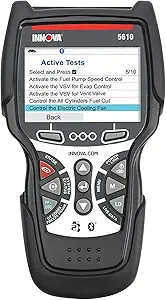 | Innova 5610 OBD2 Bidirectional Scan Tool | Check Price On Amazon |
Pick 3  | MUCAR 892BT PRO OBD2 Scanner | Check Price On Amazon |
1. ANCEL AD310 OBD II Scanner
A simple code reader can save time when the check engine light appears. The ANCEL AD310 focuses on fast, clear fault-code reading for everyday drivers and small garages. It reads and clears engine emission codes, shows live data, freeze frame data, I/M readiness, and vehicle information.
The large screen and clearly labeled buttons make operation easy, even for first-time users. Its 2.5-foot cable, compact body, and light weight help it handle garage use without feeling bulky. Power comes directly from the vehicle, so no batteries or charger are needed.
That keeps setup quick and maintenance low. The AD310 suits anyone who wants a low-cost tool for basic OBD2 checks.
It works with 1996 or newer OBD2 protocol vehicles. It is a practical choice for quick troubleshooting, routine checks, and clearing codes after repairs.
Pros
- Fast code reading and clearing
- Compact body with clear buttons
- No batteries or charger needed
Cons
- Limited to basic OBD2 functions
- No bidirectional control features
- Small screen size may feel basic
Who Should Buy It?
Drivers who want a simple budget code reader should consider it. It suits owners of 1996 or newer OBD2 vehicles who want quick check-engine diagnosis. Small shops and home mechanics may also like its easy setup and direct vehicle power.
It fits routine emissions-code checks, live data viewing, and readiness checks without complex menu systems.
Key Specifications
| Specification | Details |
|---|---|
| Brand | ANCEL |
| Power Source | Corded Electric |
| Operating System | Linux |
| Screen Size | 2.4 inches |
| System Coverage | OBD II / OBD2 protocols, 1996 or newer vehicles |
| Bidirectional | No |
| Service Functions | Read and clear error codes, live data, hard memory data, freeze frame, I/M readiness, vehicle information |
| Connectivity | Wired, via OBDII Data Link Connector |
| Included Accessories | AD310 OBD2 scanner, user manual |
The ANCEL AD310 runs on corded power from the vehicle itself. That means no charging and no batteries to manage. Its 2.4-inch screen shows code results clearly on a compact unit. The Linux operating system supports the scanner’s basic fault-reading functions. It works with OBD II protocols for 1996 or newer vehicles. In daily use, that makes it a straightforward tool for reading engine fault codes and checking readiness after repairs.
Its wired connection keeps setup simple and direct. The included 2.5-foot cable offers enough reach for common dashboard work. The scanner’s compact size and 12-ounce weight make it easy to carry and store. A large display and clearly labeled buttons help users move through functions quickly. That setup suits drivers who want quick emissions-code checks, and it also helps small garages needing a basic reader for routine fault diagnosis.
2. Innova 5610 OBD2 Bidirectional Scan Tool
Serious diagnostics meet practical workshop convenience here. The Innova 5610 focuses on bidirectional control and guided repair steps.
It helps pinpoint faults, verify fixes, and handle select service resets. That makes it appealing for technicians who need more than basic code reading.
It supports OBD2 and OEM live data, plus enhanced streams for ABS, SRS, transmission, and engine systems. The bidirectional controls can command functions like fuel pump testing and electronic parking brake retraction, depending on vehicle support. Its 3.5-inch screen keeps readings visible without making the unit bulky.
Build quality looks suited to regular shop use, and the included protective boot adds extra protection.
Ease of use stands out through English, Spanish, and French language support. Vehicle coverage spans many 1996 to 2023 OBD2 vehicles, with 2024 support coming soon.
Compatibility is not universal, so matching the tool to specific makes and models matters. Updates are included, and US-based technical support adds helpful backup.
For professional-level work without a full dealership setup, it offers strong value.
Pros
- Bidirectional controls support active testing.
- Displays enhanced live data streams.
- Includes special reset functions.
Cons
- Compatibility is limited to select vehicles.
- Small screen may feel cramped.
- Advanced functions depend on vehicle support.
Who Should Buy It?
Buy it if you need bidirectional functions for select vehicles. It suits technicians and advanced DIY users who want live data, active testing, and reset capabilities in one handheld tool. The multi-language interface and included support also help users who value straightforward operation and repair verification.
Key Specifications
| Specification | Details |
|---|---|
| Brand | Innova |
| Power Source | Vehicle Powered |
| Operating System | iOS and Android |
| Screen Size | 3.5 inches |
| System Coverage | 1996 – 2023 OBD2 vehicles, 2024 coming soon |
| Bidirectional | Yes |
| Service Functions | Special Reset Function, dealership-level re-learn procedures |
| Connectivity | OBD2 cable, USB cable |
| Included Accessories | Code Reader with Protective Boot, Manual, OBD2 Cable, Soft Pouch for Storage, USB Cable |
The 5610 runs on vehicle power, so it does not need separate batteries. Its 3.5-inch screen gives quick access to live data and diagnostics. Support for iOS and Android helps when using companion functions tied to mobile devices. The included OBD2 and USB cables cover setup and updates. In daily use, that means less charging, fewer extra parts, and a setup suited to garage work or mobile repairs.
Coverage for 1996 to 2023 OBD2 vehicles makes it useful across many modern cars. Bidirectional control matters because it can send commands, not just read faults. Service functions like special reset procedures help after repairs and component replacement. The protective boot and soft pouch support regular carry and storage. Technicians benefit most, since active tests and live data can save time when checking systems like engine, transmission, ABS, and SRS.
3. MUCAR 892BT PRO OBD2 Scanner
Dealer-level diagnostics arrive in a tablet-style tool built for serious workshop use. The MUCAR 892BT PRO combines topology mapping, J2534 pass-thru support, and bidirectional control in one package. It shows vehicle systems in a clear visual layout, which helps speed up fault tracing.
The 8-inch Android 10.0 screen gives it a familiar feel and plenty of room for menus. Its wireless VCI supports faster movement around the vehicle during scans. With 3000 plus active tests, ECU coding, and 35 plus service functions, it reaches far beyond basic code reading.
That makes it a strong fit for technicians who need broad coverage and advanced functions. The included carrying box, cables, charger, and VCI also help it feel ready for shop use.
Pros
- Topology map speeds up full-system fault checks
- Supports J2534 pass-thru and OEM software
- Large screen and many service functions
Cons
- Advanced features may exceed casual users’ needs
- Setup may require PC driver installation
- Compatibility questions may need VIN support
Who Should Buy It?
Technicians and advanced DIY users should buy it. It suits drivers who need dealer-style diagnostics, bidirectional controls, and service work across many systems. Shops that rely on J2534 support and ECU coding will benefit most.
The large screen and wireless VCI also help users who want faster workflow and less cable clutter during daily diagnostic jobs.
Key Specifications
| Specification | Details |
|---|---|
| Brand | mucar |
| Power Source | Battery Powered |
| Operating System | Android 10.0 |
| Screen Size | 8 inches |
| System Coverage | OE topology mapping, OEM diagnostics, 35+ services |
| Bidirectional | Yes, with 3000+ active tests |
| Service Functions | 35+ services, ECU coding |
| Connectivity | High-speed wireless VCI, J2534 pass-thru |
| Included Accessories | TYPE-C cable, 3-in-1 charger, carrying box, user manual, J2534 VCI |
The 8-inch Android 10.0 screen gives the tool a tablet-like layout for daily work. Battery power and wireless VCI support make it easier to move around the vehicle. Topology mapping shows control modules in color, which helps identify system status quickly. J2534 pass-thru support also matters for users running OEM software on a PC. The included TYPE-C cable, charger, and manual help with setup and daily charging needs.
Its 3000 plus active tests and 35 plus service functions suit advanced repair tasks. Bidirectional control lets users send commands to vehicle systems during diagnosis. That can speed up checks on actuators, modules, and service routines. ECU coding adds another layer for users handling more involved jobs. The carrying box helps protect the unit during transport, while the wireless VCI reduces cable clutter. These details favor shop users and experienced home mechanics.
4. OTOFIX IM1 Diagnostic Scan Tool

Keys and immobilizer work get serious support here. Full-system diagnostics add another layer for complex repairs.
OTOFIX IM1 combines immobilizer functions with OE-level diagnostics for 1996 and newer vehicles. It pairs with the XP1 programmer for wireless key cloning, key generation, EEPROM reading and writing, and chip processing for specialized chips like MC9S12.
It also handles Mercedes infrared keys and remote frequency detection. On the diagnostic side, it scans all vehicle modules, reads and clears codes, shows live data, and supports active tests for actuators.
That makes fault tracing faster and more direct.
The Android 9.0 platform keeps the interface familiar and responsive. Wireless XP1 use reduces setup clutter during key work.
Support for DoIP and CAN FD also prepares it for newer vehicle systems. The included report management helps organize scan results for shop use or customer records. Its wide coverage suits technicians who handle both security-related programming and routine repair diagnostics.
Anyone needing a single tool for immobilizer jobs and advanced system scans will find strong value here.
Pros
- Combines immobilizer work and full-system diagnostics
- Supports wireless XP1 key programming tasks
- Offers active tests and live data
Cons
- Immobilizer functions may exceed casual users’ needs
- Advanced key work can require learning
- Android 9.0 is not the newest platform
Who Should Buy It?
Buy this if you handle key programming and advanced diagnostics regularly. It suits locksmiths, repair shops, and technicians who need immobilizer support alongside full-system scans. The wireless XP1 programmer helps with key cloning, EEPROM work, and specialized chip tasks.
It also fits users who want active tests, report management, and broad vehicle coverage in one tool.
Key Specifications
| Specification | Details |
|---|---|
| Brand | OTOFIX |
| Operating System | Android 9.0 |
| System Coverage | US/Asian/European vehicles, 1996+ |
| Bidirectional | Yes |
| Service Functions | 40+ services |
| Connectivity | Wireless XP1 programmer |
| Included Accessories | XP1 programmer |
The OTOFIX IM1 uses Android 9.0, so the tablet-style interface should feel familiar to many users. Its support for US, Asian, and European vehicles from 1996 onward gives it broad workshop reach. The wireless XP1 programmer is the key accessory, since it handles immobilizer tasks without needing a direct vehicle connection. That setup suits technicians who split their time between diagnostics and key-related work.
Bidirectional control means the tool can command parts like windows, solenoids, and wipers during testing. That helps confirm whether a fault sits in the component or elsewhere in the system. The 40+ service functions add routine maintenance coverage, while report management helps keep records organized. Together, these features make the unit fit better for repair shops, mobile technicians, and locksmiths who need both speed and flexibility.
5. BLCKTEC 460T OBD2 Scanner

Affordable coverage makes the BLCKTEC 460T appealing for serious home diagnostics. It brings all-system scanning and multiple reset services into one compact handheld tool. The 460T reads and clears engine, transmission, ABS, and SRS codes.
It also supports all 10 OBD2 modes and live data viewing. That makes it useful for checking warning lights and confirming repair results. The 4.3-inch screen helps keep readings easy to follow during garage work.
Its vehicle-powered design avoids charging concerns during use. The included storage case, OBD2 cable, and quick start guide make setup simpler. English, French, and Spanish language support adds convenience for mixed households and shops.
Reset functions include oil, TPMS, EPB, BMS, SAS, DPF, throttle, and more. It also offers ABS bleeding and battery test support.
Function availability depends on the vehicle, so compatibility checking matters. For the money, it suits drivers who want more than a basic code reader.
Pros
- Reads engine, ABS, SRS, and transmission codes.
- Includes 12+ reset and service functions.
- Compact screen and case aid everyday use.
Cons
- Feature availability depends on vehicle compatibility.
- Not every reset works on every car.
- Screen size may feel limited for some users.
Who Should Buy It?
Drivers who want affordable all-system diagnostics will find it appealing. It suits home mechanics handling warning lights, service resets, and routine checks. Small workshops may also like its wide service menu and live data support.
Buyers should confirm vehicle compatibility before ordering, since functions vary by year, make, and model.
Key Specifications
| Specification | Details |
|---|---|
| Brand | BLCKTEC |
| Power Source | Vehicle |
| Operating System | iOS and Android |
| Screen Size | 4.3 inches |
| System Coverage | All-system diagnostics; reads and clears Engine, Transmission, ABS, and SRS codes |
| Service Functions | 12+ reset services, including Oil, TPMS, EPB, BMS, SAS, DPF, Throttle, ABS Bleeding, Battery Test, and more |
| Connectivity | OBD2 cable |
| Included Accessories | Tool, OBD2 cable, storage case, quick start guide |
The BLCKTEC 460T uses vehicle power, so it runs without charging breaks. Its 4.3-inch screen keeps live data and code results readable in the garage. Support for iOS and Android helps with setup and companion use. The included OBD2 cable, storage case, and quick start guide make first use simpler. English, French, and Spanish language support also helps users who prefer different menus or instructions.
All-system diagnostics means the scanner can check major vehicle modules, not just the engine. It reads and clears engine, transmission, ABS, and SRS codes for broader troubleshooting. The 12-plus service functions help with maintenance tasks like oil resets, EPB work, and TPMS relearns. Because feature availability depends on the vehicle, compatibility checking matters before purchase. That makes it a stronger fit for owners who want wider coverage and service support.
6. FOXWELL NT301 OBD2 Scanner

A simple scanner can save time when the check engine light appears. FOXWELL NT301 focuses on quick code reading, clear definitions, and live engine data.
It connects through the vehicle’s 16-pin OBD2 port and helps identify engine trouble codes. The one-click I/M Readiness hotkey gives a fast view of inspection status.
Red, yellow, and green LEDs, plus audible alerts, make the readiness check easy to follow. Live data and graphing add useful detail for monitoring supported engine parameters, including RPM and coolant temperature.
The corded design keeps power steady during use, and the compact body stays easy to handle. Its 2.8-inch screen uses a 320×240 resolution, which suits quick roadside or garage checks.
It works well for drivers who want reliable check-engine diagnosis without extra complexity.
Pros
- Reads and clears eligible engine codes
- Live data with graphing support
- Simple readiness check with LED alerts
Cons
- Does not support bidirectional control
- Mac and iOS are not supported
- Limited mainly to engine diagnostics
Who Should Buy It?
Drivers and DIY mechanics who need focused check-engine diagnosis should consider it. It suits anyone who wants quick code reading, code clearing, and readiness checks without advanced system access. The live data feature also helps users watch engine behavior after a repair.
It fits best for basic troubleshooting, inspection prep, and routine fault-code checks.
Key Specifications
| Specification | Details |
|---|---|
| Brand | FOXWELL |
| Power Source | Corded Electric |
| Operating System | Windows to update, Mac and IOS system not supported. |
| Screen Size | 2.8 inches |
| System Coverage | OBDII engine diagnostics, check-engine codes, I/M readiness, live data |
| Bidirectional | No data |
| Connectivity | 16-pin OBD2 port, USB cable |
| Included Accessories | 1*NT301 obd2 scanner, 1* usb cable, 1* quick reference guide |
The FOXWELL NT301 uses a corded electric power source, so it stays powered while connected. It links through the vehicle’s 16-pin OBD2 port and includes a USB cable for updates. The 2.8-inch screen is small, but it suits quick code checks and readiness status viewing. Windows support is listed for updating, while Mac and iOS are not supported. That makes it a practical choice for users with a Windows computer.
These specifications point to a tool made for direct, focused diagnostics rather than broad system control. The OBDII coverage centers on engine trouble codes, readiness checks, and live data reading. The included quick reference guide helps first-time users get started faster. Its compact size and light weight can make handling easier in a garage or driveway. Drivers who want clear check-engine information without extra complexity will likely benefit most.
7. FOXWELL NT604 Elite Car Scanner

Warning lights can be confusing, and this scanner helps make them easier to understand. It reads common fault codes across four major vehicle systems, including engine, ABS, airbag, and transmission.
FOXWELL NT604 Elite adds more than a basic OBD2 reader, with live data, ECU information, freeze frame, and code lookup support on compatible vehicles. The 4.3-inch color screen keeps operation direct, while physical buttons avoid phone pairing or app setup. Quick Scan provides a system overview, and AutoVIN or manual selection helps identify the vehicle.
The corded design feels straightforward and practical for garage use. A hard carrying case is included for storage and transport. It suits drivers who want clear answers before visiting a repair shop.
Pros
- Reads engine, ABS, SRS, and transmission codes
- No phone or Bluetooth pairing required
- Live data helps narrow down faults
Cons
- Coverage depends on vehicle compatibility
- No bidirectional control functions listed
- Screen is smaller than tablet-based scanners
Who Should Buy It?
Buyers with warning lights for engine, ABS, airbag, or transmission systems should consider it. It fits drivers who want a direct scanner with onboard controls and no app setup. It also suits home mechanics who want more than a basic code reader, yet do not need advanced workshop-grade functions.
Compatibility should be checked first, since coverage varies by vehicle make, model, year, engine, ECU, and system.
Key Specifications
| Specification | Details |
|---|---|
| Brand | FOXWELL |
| Power Source | Corded Electric |
| Operating System | Linux |
| Screen Size | 4.3 inches |
| System Coverage | Engine, Transmission, ABS, SRS |
| Bidirectional | No data |
| Service Functions | Freeze frame, I/M readiness, O2 sensor tests, onboard monitor tests, vehicle information, code lookup |
| Connectivity | No phone or Bluetooth pairing; Wi-Fi software updates |
| Included Accessories | Diagnostic cable, USB cable, quick start guide, user manual, protective box |
The FOXWELL NT604 Elite uses a corded electric design and a Linux operating system. Its 4.3-inch screen keeps readings visible without needing a phone or tablet. The scanner covers Engine, Transmission, ABS, and SRS systems on supported vehicles. That coverage matters when warning lights appear on the dashboard. It also includes freeze frame, I/M readiness, O2 sensor tests, onboard monitor tests, vehicle information, and code lookup for compatible vehicles.
In everyday use, these specifications point to a scanner built for direct vehicle checks. The physical screen and buttons keep setup simple in a driveway or garage. Wi-Fi software updates help maintain coverage over time. The included cable set, quick start guide, manual, and protective box support storage and first-time use. Drivers who want to inspect common warning lights without app pairing will benefit most. Vehicle compatibility still depends on make, model, year, engine, ECU, and system.
8. Autel MaxiCOM MK900BT Scanner

Wireless convenience meets advanced shop-level coverage in a compact 8-inch scanner. The Autel MaxiCOM MK900BT targets users who want wide system access, fast diagnostics, and modern protocol support. It includes CAN-FD and DoIP support, plus 3000+ active tests for actuator control and component checks.
The tool also offers 40+ service functions, Auto VIN, Auto Scan 2.0, and pre and post diagnostic reports. Its battery-powered design and included MaxiVCI V150 connector support flexible use around the vehicle.
The build centers on a handheld tablet with 1280×800 resolution and a carrying case for transport. At 600 grams, it stays light enough for regular shop use without feeling flimsy. The interface is designed for broad system diagnostics and direct bi-directional control, which helps with faster troubleshooting.
Setup appears straightforward with the included power adapter, USB Type-C cable, and quick reference guide. It suits professional users who want wireless freedom and strong function coverage in one scanner.
Pros
- Wireless VCI support helps reduce cable clutter.
- 3000+ active tests expand actuator control options.
- CAN-FD and DoIP support modern vehicle coverage.
Cons
- Battery-powered design still depends on charging.
- Advanced functions may exceed casual DIY needs.
- Battery test needs the separate BT506 accessory.
Who Should Buy It?
Buyers who service newer vehicles and want wireless diagnostic flexibility should consider it. It suits independent shops, mobile technicians, and serious home users handling advanced diagnostics. The wide service menu, active tests, and modern protocol support help on complex jobs.
Users who value a portable tablet layout and included carrying case may find it especially practical.
Key Specifications
| Specification | Details |
|---|---|
| Brand | Autel |
| Power Source | Battery Powered |
| Operating System | US, 2026 New Flagship Autel MK900BT, Up of Range Limited MK900 & 10X Faster Than Old MK808S MX808S, 3000+ Active Tests, 40+ Service, CAN FD & DoIP US, |
| Screen Size | 8 inches |
| System Coverage | All System Diagnostic |
| Bidirectional | Yes |
| Service Functions | 40+ Service |
| Connectivity | Bluetooth, CAN-FD, DoIP, Wi-Fi Print |
| Included Accessories | MK900BT Main Unit, MaxiVCI V150, Power Adapter, USB Type-C Cable, Soft Cloth, Quick Reference Guide, Packing List, Carrying Case |
The eight-inch screen gives enough space for menus, fault data, and service steps. Battery power means fewer cords during under-hood work or roadside checks. Bluetooth connectivity links the tablet to the MaxiVCI V150, which supports wireless vehicle communication. CAN-FD and DoIP support matters on newer vehicles using modern data protocols. All system diagnostic coverage means it can reach many vehicle modules during a session. The included carrying case helps keep the kit organized between jobs.
Bidirectional control lets the scanner send commands to vehicle components during diagnosis. That helps with actuator checks, testing responses, and confirming repair results. Forty-plus service functions cover a wide range of maintenance and reset tasks. The included power adapter and USB Type-C cable simplify charging and setup. The soft cloth, quick reference guide, and packing list make the package easier to manage. Technicians who need portable diagnostics and broad service access benefit most from these specifications.
9. TOPDON AD900 Lite OBD2 Scanner

Large-screen diagnostics feel much easier when the display stays clear and roomy. Wireless operation also keeps the workspace less crowded and more comfortable.
TOPDON AD900 Lite focuses on fast, professional-style diagnostics with an 8-inch touchscreen and Android 11.0 system. Its 5x faster CPU, 2GB memory, and 32GB storage support quick menu movement and smoother operation. Bluetooth 5.0 wireless communication reaches up to 33 feet, which helps during under-hood checks and roadside work.
Bidirectional control lets users send commands to the vehicle ECU for active testing, covering parts such as injectors, coolant pumps, windows, wipers, headlights, and mirrors. The tool also includes wireless all-system diagnostics, FCA AutoAuth, CAN-FD support, eight reset functions, and a DTC repair guide. A 10,000mAh battery supports up to 12 hours of use, which suits long workshop sessions.
Its large screen, wireless design, and broad service coverage make it a strong choice for repair shops and serious home technicians who want convenience without sacrificing capability.
Pros
- Large 8-inch touchscreen is easy to read
- Wireless Bluetooth keeps cable clutter low
- Bidirectional testing speeds up component checks
Cons
- Battery testing is listed as optional
- Four-pound weight may feel bulky
- Repair guide support is limited for some models
Who Should Buy It?
Buyers who want a roomy display and wireless convenience should consider it. It suits repair shops, mobile technicians, and advanced DIY users who need bidirectional testing, all-system coverage, and useful reset functions. The long battery life and Bluetooth range help when working away from the vehicle screen or in tight spaces.
It also fits users who value guided fault-code help and broad vehicle support.
Key Specifications
| Specification | Details |
|---|---|
| Brand | TOPDON |
| Power Source | 10000mAh Battery Powered |
| Operating System | Android 11.0 |
| Screen Size | 8 inches |
| System Coverage | Wireless all-system diagnostics, FCA AutoAuth, CAN-FD, 120+ brands |
| Bidirectional | Yes |
| Service Functions | 8 resets, DTC repair guide, battery testing optional |
| Connectivity | Bluetooth 5.0, 5G and 2.4 GHz dual WiFi, VCI cable |
| Included Accessories | OBD2 scanner |
The 8-inch touchscreen gives plenty of room for menus and live data. Android 11.0 runs the interface, while 2GB memory and 32GB storage support everyday diagnostic work. The 10,000mAh battery helps the scanner stay powered for long sessions, and the Bluetooth 5.0 VCI removes cable clutter during testing. A native 1280×800 resolution also helps text and graphs stay easy to read during busy shop use.
These specifications suit technicians who move between vehicles and work areas often. Wireless range up to 33 feet helps when testing from outside the cabin or beside the engine bay. The 5x faster CPU can shorten waiting time during scans and menu changes, which improves pace in busy settings. CAN-FD, FCA AutoAuth, and support for 120+ brands widen compatibility, while the 8 resets and bidirectional control add useful service depth.
10. THINKCAR 673BT OBD2 Scanner

Fast diagnostics matter when a vehicle needs answers quickly. The THINKCAR 673BT focuses on bidirectional control and broad system access. It sends commands to vehicle ECUs for active testing, helping locate faults faster.
That makes it useful for injectors, fuel pumps, locks, windows, wipers, and mirrors.
The scanner also offers 28+ maintenance services through a simple interface. Oil reset, SAS reset, EPB reset, TPMS reset, throttle adaptation, BMS matching, ABS bleeding, and injector coding are included.
Full system diagnostics cover engine, transmission, ABS, SRS, SAS, BCM, TPMS, and BMS. It supports CAN FD and DoIP, which helps with newer vehicles.
The 7-inch Android 10.0 screen, Bluetooth VCI, and lifetime free updates make daily use practical. Its case and included accessories support shop work or garage use.
This suits technicians and serious DIY users who want quicker fault finding and broad service coverage.
Pros
- Bidirectional testing speeds up fault diagnosis
- Covers many systems and maintenance services
- Wireless Bluetooth setup improves mobility
Cons
- Service availability varies by vehicle make
- Compatibility check is needed before purchase
- Not every function fits every car
Who Should Buy It?
Buyers who need fast active testing and wide service coverage should consider it. It suits automotive technicians, mobile repair work, and serious DIY users handling modern vehicles. The bidirectional controls, CAN FD, and DoIP support help with newer models.
It also fits drivers who want one scanner for many maintenance jobs and system checks.
Key Specifications
| Specification | Details |
|---|---|
| Brand | thinkcar |
| Power Source | Battery Powered |
| Operating System | Android 10.0 |
| Screen Size | 7 inches |
| System Coverage | Engine, transmission, ABS, SRS, SAS, BCM, TPMS, BMS, and other systems |
| Bidirectional | Yes |
| Service Functions | 28+ maintenance services including Oil Reset, SAS Reset, EPB Reset, TPMS Reset, Throttle Adaptation, Battery Matching, ABS Bleeding, Injector Coding |
| Connectivity | BT 5.0 VCI, Bluetooth |
| Included Accessories | BT 5.0 VCI, carrying case, charging cable, user manual |
The THINKCAR 673BT uses a 7-inch screen with Android 10.0 software. That gives a tablet-like interface for menu navigation and live data viewing. Battery-powered operation makes it easy to move around the vehicle. The included BT 5.0 VCI connects wirelessly, which reduces cable clutter during testing. In everyday use, that means quicker setup, clearer viewing, and easier access to multiple diagnostic functions without staying tied to the dashboard.
Its system coverage spans engine, transmission, ABS, SRS, SAS, BCM, TPMS, and BMS. That breadth helps users check many vehicle areas from one device. Bidirectional control also matters in real work, since it can trigger active tests on parts like locks, wipers, and pumps. The included carrying case, charging cable, and manual help with storage and setup. Technicians and advanced DIY users benefit most from this mix of portability and service reach.
Best Professional Car Diagnostic Tool: How to Choose the Right One for Your Garage
Vehicle compatibility and coverage
A diagnostic scanner is only as useful as the vehicles it can communicate with. A unit that supports a wide range of protocols such as OBD2 and OBD1, along with manufacturer-specific systems, gives technicians access to deeper fault data, live readings, and special functions that basic readers often miss. It is also important to verify compatibility across gas, diesel, hybrid, and electric vehicles, since powertrain differences can affect which systems are accessible and how accurately faults are identified.
In addition, coverage for the right make, model, and year matters because some tools may work well on newer cars but offer limited support for older platforms or certain brands. A scan tool with broader vehicle coverage reduces the risk of ending up with equipment that cannot handle the jobs a workshop or mobile technician faces every day.
Diagnostic functions and features
Reading and clearing trouble codes is only the starting point of effective vehicle diagnostics, because a capable scan tool should also communicate reliably with many control modules and adapt to future vehicle updates. A tool with broad support for live data streaming and freeze frame data helps technicians see what the vehicle was doing at the exact moment a fault occurred, making it easier to trace intermittent problems instead of relying on guesswork. Just as important, full access to ABS, SRS, transmission, and engine system diagnostics ensures that critical safety and performance issues are not missed, since many faults appear outside the main engine system.
For that reason, it is wise to verify that the device supports strong update options, multiple vehicle protocols, and add-on functions that can grow with workshop needs. Without that flexibility, even a powerful scanner can become limited as newer models and more complex systems enter the bay.
Ease of use and interface
A clear display and responsive interface can save valuable time in a busy workshop because faster readings, easier fault-code checks, and less eye strain all improve daily workflow. A larger screen with sharp contrast makes live data, graphs, and repair information easier to read at a glance, while simple menu navigation reduces the learning curve for technicians who need quick access to functions without digging through complicated steps. It is also important to think about whether the unit works through wireless or wired links, since each option affects convenience, stability, and how smoothly the device integrates with the work area.
It is also important to think about whether the unit works through wireless or wired links, since each option affects convenience, stability, and how smoothly the device integrates with the work area.
- Screen size and display clarity: A larger, brighter screen helps with detailed diagnostics and improves visibility in different lighting conditions.
- Menu navigation and learning curve: Intuitive controls and logical menus reduce setup time and make advanced functions easier to use.
- Wireless vs. wired connection options: Wireless models offer more freedom of movement, while wired units often deliver a steadier signal and dependable performance.
These features matter because they directly affect speed, comfort, and accuracy during diagnosis, making the tool more efficient in real-world service work.
Update support and software
Regular software updates keep a diagnostic scanner compatible with newer vehicle models, repaired modules, and evolving fault-code standards, so update frequency directly affects how long the device remains useful in a busy workshop. Update support and software also deserve close attention because some units require paid subscriptions or recurring activation fees to unlock full features, which can change the true cost of ownership over time. It is equally important to confirm that the device supports ECU coding, bidirectional controls, and other advanced functions, since these capabilities determine whether it can handle simple code reading only or perform deeper tests, relearns, and module programming tasks.
It is equally important to confirm that the device supports ECU coding, bidirectional controls, and other advanced functions, since these capabilities determine whether it can handle simple code reading only or perform deeper tests, relearns, and module programming tasks. A model with strong update support, transparent software terms, and broad advanced-function coverage is far more likely to stay reliable as vehicle technology becomes more complex.
Build quality and portability
Reliable diagnostic equipment must handle daily use in both workshop bays and mobile service calls, so durability and the way it connects to a vehicle directly affect how well it performs over time. A rugged housing, reinforced ports, and a screen that can withstand frequent handling help reduce downtime, while a sturdy cable with the right length and secure connector makes it easier to reach tight engine bays without signal drops or loose contacts.
Power flexibility matters just as much, since long battery life supports uninterrupted work in the field and multiple power options give technicians freedom to operate from a vehicle, a wall outlet, or an auxiliary source. Together, these features improve efficiency, reduce frustration, and ensure the unit remains dependable in demanding real-world conditions.
Value and support
A diagnostic scanner is only as useful as the system behind it, and the most capable models often depend on reliable communication ports, software updates, and add-on modules to stay effective as vehicle technology changes. Price versus feature set matters because a lower upfront cost can hide limited coverage, while a higher-priced unit may save money over time if it handles more vehicle systems, supports broader protocols, and accepts future upgrades.
Technical support and user resources are equally important, because even advanced tools can feel frustrating without clear manuals, training videos, live help, or troubleshooting guides that make daily use smoother.
- Price versus feature set: Compare what the device can do now and what it can add later, rather than focusing on the sticker price alone.
- Warranty and return policy: Strong coverage reduces risk if the unit arrives defective or does not meet workshop needs.
- Technical support and user resources: Fast assistance and clear learning materials help technicians work efficiently and avoid downtime.
Buying Mistakes to Avoid
Buying a professional car diagnostic tool can save time and money, but only if it matches the vehicle and the work you plan to do. A common mistake is choosing a scanner that reads only basic fault codes. That may help with simple checks, but it will not give the same detail as a more advanced model.
Another mistake is ignoring vehicle compatibility. Some tools work well with one brand and struggle with others. Check whether the tool supports the cars, trucks, or systems you service, including newer models and special features like ABS, airbag, or transmission data.
Screen size and controls also matter. A small screen can make code reading harder, while a confusing menu can slow down work. A clear display and simple buttons or app layout can make the tool easier to use every day.
Do not focus only on the lowest price. Cheap tools may miss updates, have limited functions, or stop being supported. Software updates matter because car systems change often. A tool that cannot update may become less useful over time.
It also helps to check what comes in the box. Some models need extra cables, adapters, or subscriptions for full use. Missing accessories can add cost later.
- Match the tool to the vehicles you service
- Check for live data, reset functions, and update support
- Read the accessory list before buying
- Choose a clear screen and simple controls
- Think about long-term use, not just the first price
A little research before buying can help you avoid limits that show up after the return window closes.
FAQ’s
What Features Should I Look For In The Best Professional Car Diagnostic Tool?
Look for wide vehicle coverage, fast and accurate fault-code reading, live data, bi-directional controls, and support for common systems like ABS, SRS, transmission, and engine. Also consider ease of use, software updates, durability, battery life, and whether it offers advanced functions like coding, adaptations, and service resets.
Which Professional Car Diagnostic Tools Are Most Reliable For Mechanics?
Some of the most reliable professional car diagnostic tools for mechanics are **Autel MaxiSYS**, **Bosch KTS**, **Snap-on Solus/Verus**, and **Launch X-431**. The best choice depends on the vehicle brands you service, your budget, and whether you need advanced coding and programming features.
How Does A Professional Car Diagnostic Tool Differ From A Basic Obd2 Scanner?
A professional car diagnostic tool can access more vehicle systems, provide deeper fault analysis, and offer advanced functions like coding, adaptations, and live data monitoring. A basic OBD2 scanner mainly reads and clears engine-related trouble codes and offers limited diagnostic information.
What Is The Best Professional Car Diagnostic Tool For Multiple Vehicle Brands?
The best professional car diagnostic tool for multiple vehicle brands is often considered to be **Autel MaxiSYS** because it supports a wide range of makes and models and offers advanced diagnostic functions. Another strong option is **Launch X431**, which is also widely used for multi-brand professional diagnostics.
Are Expensive Professional Car Diagnostic Tools Worth The Investment?
Yes, if you work on cars regularly, expensive professional diagnostic tools can be worth it because they provide more accurate readings, deeper system access, and save time. For casual users, a cheaper scanner is usually enough and offers better value.
Final Verdict
For buyers who want a versatile, high-end wireless option, the Autel MaxiCOM MK900BT Scanner is the strongest all-around pick in this roundup. It suits users who want broad capability, wireless convenience, and a tool that can handle demanding diagnostic work without moving into ultra-specialized territory. For budget-minded drivers or small-shop users focused on basic code reading, the ANCEL AD310 OBD II Scanner offers the most affordable entry point.
The OTOFIX IM1 Diagnostic Scan Tool is the best choice for anyone who needs immobilizer and key functions, while the MUCAR 892BT PRO OBD2 Scanner fits buyers who want full-system diagnostics and more advanced coverage. For many shoppers, the best professional car diagnostic tool depends on whether they need general scanning, advanced programming support, or full-system access.
Choose the Autel MK900BT for the best balance of advanced features, wireless convenience, and broad professional-grade diagnostic capability.