Can You Put Car Engine Oil in a Lawn Mower?
You can put car engine oil in a four-stroke lawn mower as long as it matches the recommended grade, like SAE 30 or 10W-30.
But avoid using car oil in two-stroke mowers because they need a special oil-fuel mixture for proper lubrication.
Using the wrong oil may cause engine damage, smoking, or poor performance.
If you want to keep your mower running smoothly and learn about the best oil choices and maintenance tips, keep exploring this topic further.
Key Takeaways
Car engine oil can be used in four-stroke lawn mowers if the oil grade matches the mower’s requirements, such as SAE 30 or 10W-30.
Just make sure to avoid car oils with friction modifiers or additives. These can cause carbon buildup and damage small engines.
Now, if you have a two-stroke lawn mower, that’s a different story. You’ll need special oil mixed with fuel; car engine oil is not suitable for these engines.
Using the incorrect oil can lead to poor lubrication, overheating, smoke, and a reduced engine lifespan.
So, always check the lawn mower’s owner manual for the recommended oil type and change intervals. It’s the best way to keep your mower running smoothly!
Understanding Lawn Mower Engine Types

Although lawn mowers come with different engines, most modern models use four-stroke engines, which separate oil and fuel systems.
If your mower has a four-stroke engine, you’ll use motor oil to lubricate the engine, and you can check oil levels with the dipstick.
On the other hand, two-stroke engines require mixing oil directly with fuel, so you follow a specific oil-to-fuel mixing ratio for proper lubrication.
Knowing your mower’s engine type is essential because the oil requirements differ considerably.
Always consult your owner’s manual to confirm the correct engine type and oil specifications.
Using the wrong oil or mixing ratio can damage your lawn mower, so understanding these basics helps guarantee your mower runs smoothly and lasts longer.
Compatibility of Car Engine Oil With Lawn Mowers
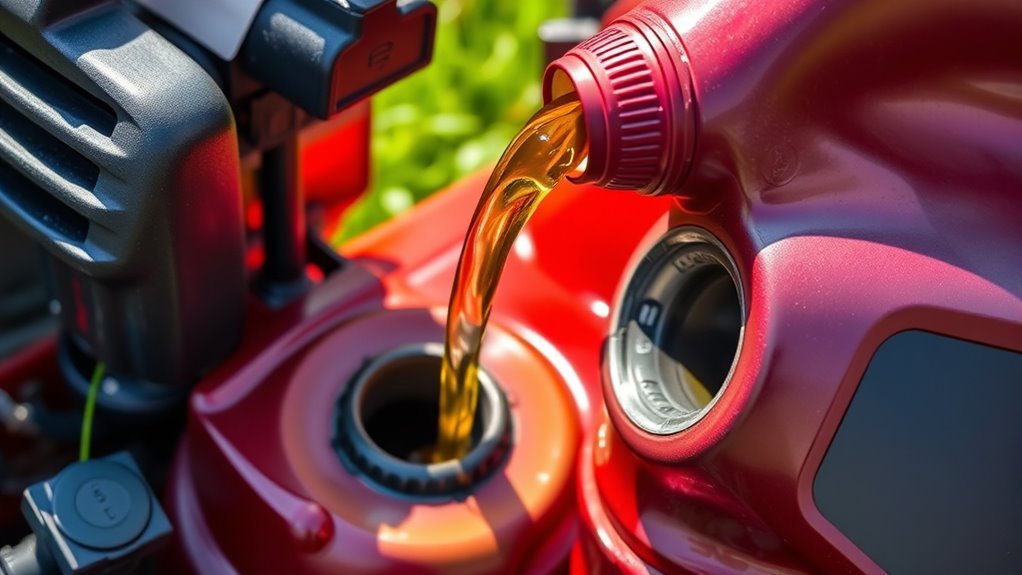
You can use car engine oil in many four-stroke lawn mowers, as long as the oil weight matches the mower’s requirements.
But be careful—some automotive oils have additives that may cause carbon buildup and affect your mower’s performance over time.
Knowing these potential issues helps you choose the right oil to keep your mower running smoothly.
Four-Stroke Engine Use
When selecting oil for a four-stroke lawn mower, you can often use car engine oil as long as it matches the recommended grades like SAE 30, 10W-30, or 5W-30.
Car oil is generally compatible with four-stroke engines, but it’s essential to check your owner’s manual to confirm the specific oil type your mower requires.
Some manufacturers suggest using small engine oils for better performance and longevity.
While car oil works, avoid oils with friction modifiers, as they can harm your mower’s engine.
Regular oil changes with the proper oil type keep your four-stroke engine running smoothly and efficiently.
Potential Oil Issues
Since car engine oil often contains additives designed for larger engines, it can sometimes cause carbon buildup and other issues in small lawn mower engines.
When you use car engine oil as lawn mower oil, you need to choose the right weight—like SAE 30 or 10W-30—to avoid performance problems.
Using the wrong oil, especially in two-stroke engines, can lead to overheating, engine damage, and difficulty starting.
Always check the oil type recommended for your mower.
Small engine oil has formulations tailored to these machines, minimizing risks.
If you notice excessive smoke or a burning oil smell, it’s a sign you might have used the wrong oil.
To keep your mower running smoothly, avoid guessing and stick to oils specifically made for small engines.
Potential Issues With Using Car Motor Oil

Although car motor oil might seem like a convenient choice, using it in your lawn mower can cause several problems.
Car motor oil is formulated for large automotive engines and often contains additives that don’t suit small engines. This mismatch can lead to lubrication issues, causing your mower’s engine to overheat and suffer from poor performance.
The oil thickness in car motor oil may be too heavy or too light for your mower, resulting in excessive smoke and even engine damage.
Overfilling with car motor oil can make your mower smoke, run rough, or stall. You might notice a burning oil smell, difficulty starting, and visible smoke—all signs that the oil isn’t right for your mower’s small engine, impacting its longevity and efficiency.
Special Oil Requirements for Two-Stroke Engines
Car engine oil isn’t suitable for two-stroke engines because these engines rely on a specific oil-fuel mixture for proper lubrication.
Two-stroke engines require small engine oil, which is lighter than car oil and designed to handle high RPMs and heat.
Ignoring the specific oil requirements can cause improper lubrication and engine damage. Always consult your owner’s manual for correct mixing ratios, usually between 30:1 and 50:1.
| Engine Type | Oil Type | Typical Mixing Ratio |
|---|---|---|
| Two-Stroke | Small Engine Oil | 30:1 to 50:1 |
| Four-Stroke | Motor Oil | Separate lubrication |
| Two-Stroke | Car Engine Oil | Not Recommended |
Following the owner’s manual guarantees you avoid costly damage and maintain your mower’s performance.
Choosing the Right Oil Grade for Your Lawn Mower
How do you know which oil grade suits your lawn mower best?
Start by checking the owner’s manual—it provides the exact oil grade recommended to keep your engine running smoothly.
For most four-stroke lawn mowers, SAE 30 works well in warmer weather.
On the other hand, 10W-30 adapts better to changing temperatures, making it a versatile choice.
If you face extreme temperatures or want improved cold starts, synthetic oils like 5W-30 offer enhanced protection.
Using the wrong oil grade can harm your mower, causing overheating or poor engine performance.
So, stick to the specified oil grade in your owner’s manual to maintain ideal engine performance and avoid damage.
Choosing the right oil grade guarantees your lawn mower runs efficiently and lasts longer.
Tips for Maintaining Proper Oil Levels and Quality
You should regularly check your lawn mower’s oil level with the dipstick to keep it between the full and add marks.
Using high-quality oil that matches your mower’s specifications helps protect the engine and guarantees smooth operation.
Staying on top of these steps will keep your mower running efficiently season after season.
Checking Oil Levels
Before checking your lawn mower’s oil level, always park it on a flat surface to get an accurate reading.
Start by removing the dipstick, wiping it clean, and reinserting it fully.
Pull it out again to see where the oil level falls between the “full” and “add” marks.
If the oil level is low, add the right oil in small amounts to avoid overfilling.
Regularly checking oil levels helps prevent engine issues and keeps your mower running smoothly.
Refer to the owner’s manual for recommended oil types and when to change the oil—typically every 20 to 50 hours of use.
Also, watch for oil that might look milky or contaminated, as this signals a problem needing attention to maintain engine health.
Choosing Quality Oil
Although choosing the right oil might seem straightforward, using the proper type guarantees your lawn mower runs efficiently and lasts longer.
The best place to start is your owner’s manual, which specifies the type of oil recommended for your model. Always use a high-quality detergent oil classified SF or higher to keep your engine clean and lubricated.
When considering car engine oil, pick SAE 30, 10W-30, or 5W-30 weights, but avoid additives harmful to small engines.
Don’t forget to regularly check your oil level with the dipstick on a level surface to verify it’s between full and add marks.
To maintain peak performance, change the oil every 20 to 50 hours of use, depending on your mowing needs and mower type.
Following these steps guarantees you use the best engine oil for your mower.
Frequently Asked Questions
Can You Put Engine Oil in a Lawn Mower?
Yes, you can put engine oil in a lawn mower, but only if it’s a four-stroke engine.
Make sure you use the right oil type and weight recommended in your mower’s manual to avoid damage.
How Much Engine Oil Do I Need?
You’ll need about 15 to 18 ounces of oil for push mower engines.
For riding mowers, you’ll require 48 to 60 ounces.
Always check your manual for the exact amount to avoid overfilling or damaging the engine.
Can I Put 5w20 in My Lawn Mower?
You can use 5W-20, but you shouldn’t.
It’s thinner, so your mower might struggle in heat, risking wear.
Stick to 10W-30 or what your manual recommends to keep your engine running smoothly.
What Weight Oil for Riding a Lawnmower?
You should use SAE 30 oil for riding lawn mowers in warmer temperatures above 40°F.
If you want a wider temperature range, go for 10W-30 instead.
Always check your owner’s manual to be sure.
Conclusion
You might be tempted to pour car engine oil into your lawn mower,
but it’s best to think twice—like a trusty knight wouldn’t swap his sword for a spoon.
Lawn mowers need specific oils, especially if they have two-stroke engines, to keep running smoothly.
Using the right oil grade and maintaining proper levels guarantees your mower works like a charm.
Stick to the recommended oil, and your mower will thank you with a perfect cut every time.
In conclusion, while it might seem convenient to use car engine oil, doing so can harm your lawn mower’s performance.
Each mower has unique oil requirements, particularly for two-stroke engines.
So, always refer to your user manual for the correct oil specifications.
Choosing the right oil ensures your mower operates efficiently and lasts longer, giving you that perfect cut every time.