What Does Your Car Engine Oil Color Chart Reveal About Oil Condition?
Your car engine oil color chart reveals essential insights about your oil’s health and overall engine performance. Fresh oil is typically clear, amber, and translucent—indicating it is clean and effectively doing its job.
However, if you notice dark brown to black oil, this could signal contamination or that it’s time for an overdue change, which can be harmful to your engine.
Another concerning sign is milky or frothy oil, which suggests that coolant is mixing in. This situation requires immediate attention to prevent further damage.
Don’t forget to check the texture and smell of your oil as well; these factors can help you spot potential problems early on.
By keeping a close eye on your oil condition, you’ll gain a better understanding of how to protect your engine effectively.
Key Takeaways
– Fresh engine oil is clear, translucent amber.
This indicates clean, effective lubrication and good engine health.
– Dark brown or black oil signals contamination.
It often means there’s soot buildup and overdue oil changes requiring attention.
– Milky or frothy oil reveals coolant contamination.
This needs immediate inspection to prevent engine damage.
– A gritty texture or burnt smell in oil suggests engine wear or overheating.
This is a clear indicator that you need an oil change.
– Regularly monitoring oil color and condition helps detect engine issues early.
Doing so can maintain optimal performance of your vehicle.
Importance of Monitoring Engine Oil Color

Anyone keeping an eye on their car’s health knows that monitoring engine oil color is crucial.
The oil color gives you significant clues about the internal engine’s condition and helps you spot problems early.
If you notice your oil turning dark brown or black, it’s a sign that contaminants have built up, and you’re overdue for regular oil changes.
Ignoring this can harm engine performance and lead to costly repairs.
Milky or frothy oil signals coolant contamination, which demands immediate attention to prevent engine damage.
By regularly checking the oil color, you can detect issues like coolant leaks or air contamination before they escalate.
Staying proactive with oil monitoring guarantees your engine runs smoothly and lasts longer, saving you time and money.
Characteristics of Fresh Engine Oil
Keeping an eye on your engine oil’s color helps you catch problems early.
But understanding what fresh oil looks like sets the foundation for accurate assessments.
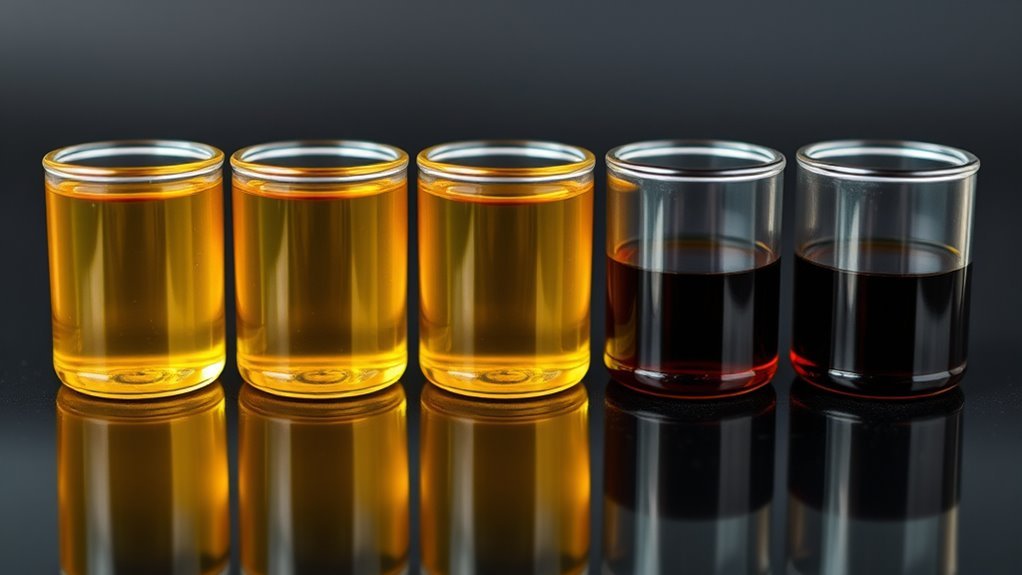
Fresh engine oil usually has a clear, translucent amber color, resembling honey straight from the bottle.
This clarity means the oil is clean and ready to lubricate properly, protecting your engine efficiently.
High-quality oils maintain this amber hue longer, resisting oxidation and contamination.
By knowing the ideal color of fresh oil, you can better track changes over time.
This way, you can decide when to follow the recommended oil change interval.
Any significant darkening from this baseline amber color could signal contamination or wear.
That’s when you need to prompt timely maintenance to keep your engine running smoothly.
Interpreting Dark Brown to Black Oil
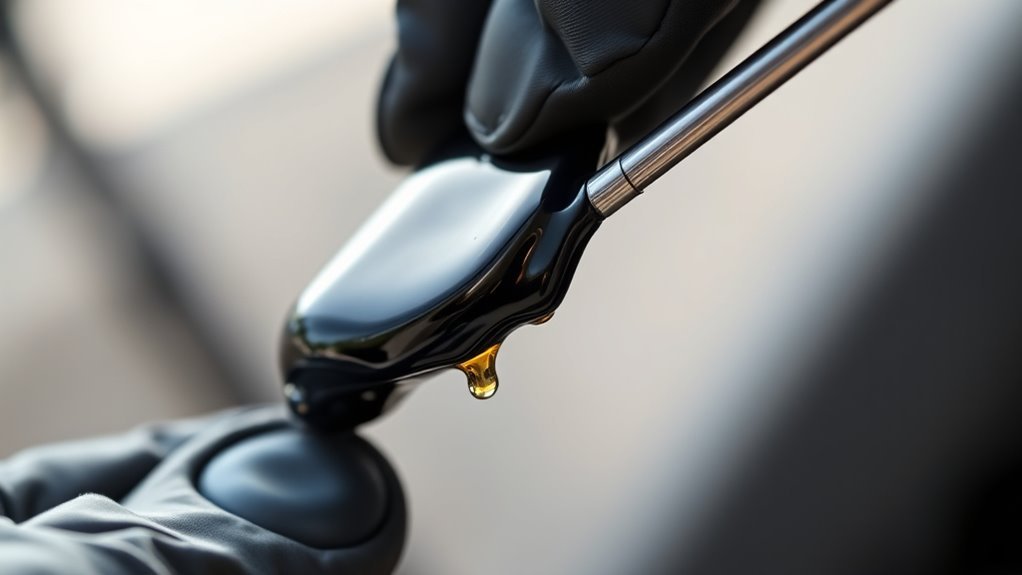
When your engine oil turns dark brown to black, it usually means contaminants and soot have built up over time.
This can reduce engine performance and signal that it’s time for an oil change.
Keep an eye on the oil’s texture and smell to catch any serious issues early.
Causes of Dark Oil
Although dark brown to black engine oil often signals normal aging, it can also point to issues like excessive soot from incomplete combustion or worn engine parts.
You should monitor your oil regularly because dark oil may indicate problems that affect engine performance.
For example, a coolant leak can cause the oil to look milky or frothy, signaling serious engine trouble.
Ignoring darkened oil risks costly repairs down the line.
- Excessive soot buildup from incomplete combustion
- Worn engine components releasing metal particles
- Coolant leaks contaminating oil
- Overdue oil changes causing thick, black sludge
Risks of Black Oil
Dark brown to black oil usually means your engine oil is overdue for a change, having collected soot and contaminants over time.
When you see thick, pitch-black oil, it can signal excessive carbon buildup that harms engine performance by reducing proper lubrication.
If the black oil looks milky or frothy, this often points to coolant leaks mixing with your oil—something that needs immediate professional attention to avoid serious damage.
Finding metallic or sparkly particles in the black oil could indicate engine wear, signaling internal damage that requires diagnostics and repairs.
Ignoring these signs increases the risk of accelerated engine wear and costly failures.
To protect your engine, don’t delay an oil change when you notice black oil, and consider regular oil analysis to monitor its condition.
When to Change
Since engine oil darkens as it collects contaminants and soot, you should change it once it reaches a dark brown or black color.
This color shift is a clear sign that your engine oil’s effectiveness is declining, and it’s time to act. Ignoring this can lead to engine wear or overheating.
Keep an eye on both the color of your oil and the oil level to maintain ideal engine health.
Here’s what to watch for when deciding when to change:
- Dark, thick oil indicates overdue changes and possible carbon buildup.
- Sudden color darkening may signal overheating or combustion issues.
- Milky or foamy oil suggests coolant leaks needing immediate attention.
- Regular oil checks help catch problems before costly repairs occur.
Indicators of Contaminated or Damaged Oil
If you notice milky or frothy oil, it could mean coolant is leaking into your engine. This definitely needs urgent attention.
Spotting metallic or sparkly particles? That signals internal engine wear, so you should get it checked right away.
Thick, pitch-black oil shows serious degradation and clogs. This means it’s definitely time for an oil change.
Milky or Frothy Oil
One common sign you shouldn’t ignore is milky or frothy engine oil.
This usually means coolant has mixed with your oil.
This coolant contamination often results from a blown head gasket or a cracked engine block.
When water mixes with oil, it compromises the oil’s lubricating properties, putting your engine at serious risk.
If you spot milky oil, act quickly to prevent costly engine damage.
Regular checks can catch coolant leaks early and save you from expensive repairs.
- Milky or foamy texture signals water in oil.
- Common causes: blown head gasket, cracked engine block.
- Compromised lubricating properties risk engine damage.
- Immediate professional evaluation is essential for proper diagnosis.
Metallic or Sparkly Particles
Metallic or sparkly particles in your engine oil signal internal engine wear or damage that demands immediate attention.
These metallic particles often come from worn engine components like bearings, piston rings, or camshafts. If left unchecked, this wear can cause significant engine damage and costly repairs.
Poor lubrication results when oil breaks down, allowing friction to increase and accelerate deterioration.
Regular oil analysis helps you identify the type and concentration of metallic particles, giving you valuable insight into which parts need care.
By monitoring these particles and your oil’s condition, you can catch problems early and protect your engine.
Don’t ignore sparkly particles—they’re a clear warning that your engine’s health is at risk.
Thick and Pitch Black
Thick, pitch black engine oil signals that your oil changes are overdue and contaminants have built up.
When engine oil turns this dark and thick, it usually means soot, carbon, and other contaminants are clogging your system.
This buildup can seriously affect engine performance and may indicate overheating or combustion issues.
Ignoring this warning can lead to costly repairs.
Watch for these signs in your engine oil:
- Excessive darkening due to contaminants
- Thick, sludgy texture indicating poor lubrication
- Milky or frothy appearance suggesting coolant leaks
- Rapid oil darkening pointing to internal engine wear
Stay on top of your oil changes to protect your engine and maintain smooth performance.
Beyond Color: Oil Texture and Smell
Several subtle clues in your engine oil’s texture and smell can alert you to potential problems before they become serious.
Pay close attention to oil texture; if it feels gritty, dirt or metal shavings might be present, signaling engine wear.
A burnt smell means the oil has likely degraded due to overheating and needs changing.
If you notice milky oil, it’s a strong sign of coolant contamination, which demands immediate inspection to avoid major damage.
Additionally, an oil sample with a gasoline smell suggests fuel leakage into the oil, potentially indicating combustion issues.
Best Practices for Regular Oil Checks
How often do you check your engine oil?
Regular oil checks are essential to keep your engine parts running smoothly and monitor engine health.
Here are best practices to follow:
- Perform oil checks at least once a month to assess oil color and consistency.
- Park on a level surface and let the engine cool for 10-15 minutes before using the dipstick.
- Observe the oil’s texture and smell; burnt or gritty oil signals problems needing immediate oil change.
- Keep a log of oil changes and conditions to track engine health over time.
Fresh oil is clear, golden, or amber, while darker oil usually means it’s time for an oil change.
Staying consistent with regular oil checks helps you catch issues early and protects your engine’s longevity.
Frequently Asked Questions
What Color Should My Engine Oil Be When I Check It?
Your engine oil should be clear, golden, or light amber when you check it.
If it’s dark, thick, or milky, you’ll want to get it changed or inspected to avoid engine problems.
What Is the Lifespan of Engine Oil?
You can expect your engine oil to last between 3,000 and 7,500 miles.
This really depends on whether you use synthetic or conventional oil, your driving habits, and environmental conditions.
Regular checks help you know when to change it.
Why Is My Oil a Red Color?
Think of your engine oil as a clear river; if it turns red, it’s like a warning flare signaling contamination—likely from transmission fluid mixing in.
You’ve got to fix this quickly to avoid serious damage.
Why Is My Car Oil Brown?
Your car oil’s brown color means it’s aging and accumulating contaminants.
If it’s dark or gritty, it’s time for a change.
Regular checks help you avoid engine damage and costly repairs.
Conclusion
Checking your engine oil color might seem like a small detail, but it tells you a lot about your car’s health.
You might think only professionals can interpret it, but with a simple oil color chart, you can spot issues early—like contamination or wear—that save you costly repairs.
Remember, don’t rely solely on color; also check oil’s texture and smell.
Regular checks keep your engine running smoothly and extend its life.
In conclusion, monitoring your engine oil color can provide valuable insights into its condition.
By using an oil color chart and paying attention to texture and smell, you can detect problems before they escalate.
This proactive approach helps ensure your vehicle remains in optimal health, ultimately saving you time and money in the long run.
So, make it a habit to check your engine oil regularly and keep your car running efficiently!