7 Best Cheapest Car with Best Gas Mileage: Top Picks Reviewed
Many drivers want to save money at the pump without giving up daily comfort. That search often leads to the cheapest car with best gas mileage, a category that matters to commuters, students, and budget-minded families.
It is for buyers who need simple transportation, steady mileage, and low running costs. We will cover the main fuel-saving features, cabin comfort, safety points, and value for the price.
You will also see how it performs for city driving, highway trips, and everyday use.
Cheapest Cars With Top Gas Mileage
| Image | Product | Price |
|---|---|---|
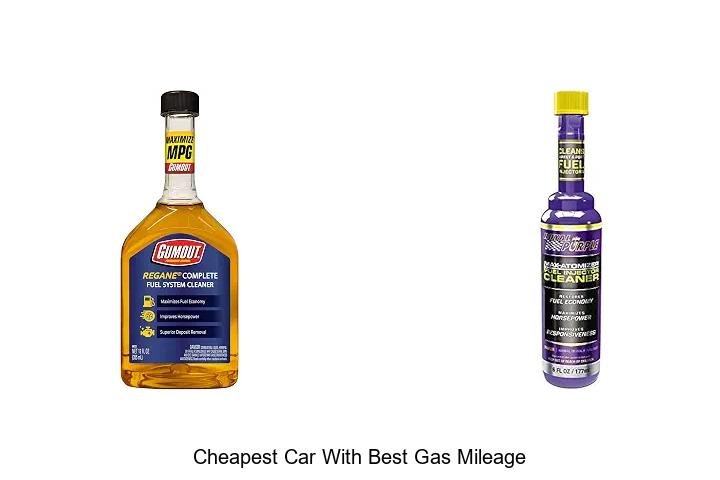
Pick 1  | Gumout Regane Complete PEA Fuel System Cleaner | Check Price On Amazon |
Pick 2  | Royal Purple Fuel Injector Cleaner | Check Price On Amazon |
Pick 3  | Mobil 1 Advanced Fuel Economy 0W-20 Motor Oil | Check Price On Amazon |
1. Gumout Regane Complete PEA Fuel System Cleaner
Fuel system cleaning can make a real difference in everyday drivability. Gumout Regane Complete PEA Fuel System Cleaner focuses on removing carbon deposits and conditioning fuel for smoother operation.
It uses PEA, PIBA, and a third detergent to clean injectors, intake valves, and combustion chambers. That broader cleaning approach can help restore horsepower, improve fuel economy, and reduce emissions.
It is also designed for GDI, turbocharged, supercharged, and port injection engines. The liquid formula is simple to use.
Add the full bottle to a nearly empty tank, then fill with gasoline. The bottle treats up to 21 gallons, and the suggested interval is every 3,000 miles.
For drivers who want cleaner fuel delivery and easier starts, it offers a practical maintenance step. It also helps fight ethanol and water corrosion in the tank. That makes it a solid pick for drivers who want smoother running and better efficiency.
Pros
- Uses PEA, PIBA, and a third detergent.
- Helps clean injectors, valves, and combustion chambers.
- Simple pour-in treatment for routine maintenance.
Cons
- Works best when used on a regular schedule.
- Requires timing with a nearly empty tank.
- Benefits may vary by engine condition.
Who Should Buy It?
Drivers who want a fuel additive for regular maintenance should consider it. It suits people with GDI, turbocharged, supercharged, or port injection engines. Anyone hoping for cleaner fuel passages, smoother starts, and better fuel economy may like its cleaning approach.
It also fits drivers who want a simple pour-in treatment with broad fuel-system coverage.
Key Specifications
| Specification | Details |
|---|---|
| Brand | Gumout |
| Product Type | Fuel System Cleaner |
| Fuel Economy Benefit | Helps maximize fuel economy |
| Engine Compatibility | GDI, turbocharged, supercharged, and port injection engines |
| Liquid Volume | 12 oz |
| Pack Size | 1 |
| Special Features | PEA-powered, CarbonClear Technology, corrosion conditioning |
| Use Case | Fuel system cleaning, carbon deposit removal, fuel injector cleaning |
| Rating | Not provided |
The 12-ounce liquid bottle is sized for a single treatment. It is poured into a nearly empty gasoline tank before refilling. The formula can treat up to 21 gallons of gasoline. That makes the dosage straightforward for routine use. The one-bottle pack also keeps storage simple in a garage or trunk. Since it is an unscented liquid, handling stays uncomplicated. Drivers who want a clear maintenance step can use it without special tools or setup.
Its fuel-system focus matters for engines that need cleaner flow paths. The formula targets carbon deposits in injectors, intake valves, and combustion chambers. It also conditions fuel against ethanol and water corrosion. Those features can help with smoother running, easier starting, and steadier performance over time. Because it works across GDI, turbocharged, supercharged, and port injection engines, many drivers can use it. People who want regular maintenance for fuel economy and cleaner combustion will benefit most.
2. Royal Purple Fuel Injector Cleaner
A cleaner fuel system can help an engine feel more responsive. Royal Purple 18000 focuses on that goal with a concentrated formula.
It restores fuel economy while stabilizing ethanol in gasoline blends. The formula also aims to maximize horsepower and improve responsiveness.
That makes it a practical add-on for drivers wanting better engine performance from regular maintenance. It works in both gasoline and diesel engines, which broadens its usefulness. The universal fit makes it simple to use across many vehicles.
Its compact 6 fl. oz. bottle is easy to store and handle. The concentrated formula suggests a small amount can serve a useful purpose. Build quality is straightforward and utility-focused, with a compact bottle and clear application scope.
For everyday drivers, it offers strong value by targeting fuel system cleanliness rather than cosmetic extras. It suits owners who want a simple maintenance product for mixed fuel setups.
Pros
- Restores fuel economy support
- Works with gasoline and diesel engines
- Concentrated formula in compact bottle
Cons
- Not a full engine repair solution
- No detailed dosage instructions provided
- Focuses on maintenance, not dramatic changes
Who Should Buy It?
Drivers wanting a simple fuel-system additive should consider this option. It suits people with gasoline or diesel vehicles who want help restoring fuel economy and improving responsiveness. The universal fit makes it practical for many setups, especially for routine upkeep.
Owners using ethanol blends may also value its stabilizing focus.
Key Specifications
| Specification | Details |
|---|---|
| Brand | Royal Purple |
| Product Type | Fuel Injector Cleaner |
| Fuel Economy Benefit | Restores fuel economy |
| Engine Compatibility | Gasoline and diesel engines |
| Liquid Volume | 6 fl. oz. |
| Pack Size | 1 bottle |
| Special Features | Concentrated; stabilizes ethanol; improves responsiveness |
| Use Case | Fuel system maintenance |
Royal Purple 18000 is a concentrated fuel injector cleaner in a 6 fluid ounce bottle. The smaller liquid volume makes it easy to store in a garage, glove box, or workbench. Its universal fit means it is designed for broad use rather than a single vehicle type. The formula targets fuel economy support, ethanol stabilization, and responsiveness. In everyday use, that points to a maintenance product meant for straightforward fuel system care.
Compatibility with gasoline and diesel engines makes this cleaner practical for mixed vehicle households. The concentrated formula suggests a focused treatment rather than a bulky additive bottle. That can appeal to drivers who want simple maintenance without extra clutter. Since it aims to restore fuel economy and improve horsepower response, it suits owners who want regular upkeep benefits. People managing ethanol blend fuel may value the stabilization feature most.
3. Mobil 1 Advanced Fuel Economy 0W-20 Motor Oil
Fuel savings start with the right motor oil, and Mobil 1 targets that need directly. Its full synthetic formula is built for low-viscosity protection and everyday efficiency.
Mobil 1 Advanced Fuel Economy 0W-20 is a full synthetic motor oil made for cars and trucks. The formula is designed to improve gas mileage and help increase engine efficiency.
It also supports hybrid vehicles, which makes it a practical fit for modern drivetrains. The oil uses additives that help fight sludge and keep engines running like new.
Its 0W-20 viscosity suits vehicles calling for lighter oil flow, especially in colder starts. The 5-quart bottle gives a convenient supply for many routine oil changes. Mobil also lists 10,000-mile protection and 15,000-mile guaranteed protection.
That combination makes it appealing for drivers who want premium protection and better fuel economy in one bottle. It suits commuters, hybrid owners, and anyone maintaining a compatible engine with a focus on efficiency.
The bottle format keeps pouring simple and storage straightforward. For drivers who want strong brand backing and fuel-focused performance, it feels well matched.
Pros
- Supports improved gas mileage.
- Designed for hybrid vehicles.
- Helps fight sludge buildup.
Cons
- Only fits engines requiring 0W-20.
- Single 5-quart bottle only.
- Protection claims depend on vehicle use.
Who Should Buy It?
Buyers with cars or trucks that specify 0W-20 should consider it. Hybrid drivers may also value its fuel-economy focus. It suits people who want full synthetic oil with sludge protection and long protection claims.
Drivers who prioritize engine efficiency and simple bottle packaging will find it practical for routine maintenance.
Key Specifications
| Specification | Details |
|---|---|
| Brand | Mobil |
| Product Type | Full Synthetic Motor Oil |
| Fuel Economy Benefit | Improves Gas Mileage |
| Engine Compatibility | Car, Truck, Hybrid vehicles |
| Viscosity Grade | 0W-20 |
| Liquid Volume | 160 fluid ounces |
| Pack Size | 5 Quart |
| Special Features | Enhanced Fuel Economy, 10,000-Mile Protection, Triple Action Formula, sludge-fighting additives |
| Use Case | Routine oil changes for compatible vehicles |
| Rating | Best premium |
The 0W-20 viscosity grade means the oil is made for lighter-flow engines. That matters during start-up and regular driving. The 5-quart bottle gives enough volume for many standard oil changes. Since it is full synthetic, the oil is formulated for modern engines that call for synthetic protection. The listed compatibility includes cars, trucks, and hybrid vehicles. For drivers following their owner’s manual, these specifications point toward a straightforward maintenance choice. The bottle format also makes handling and storage simple during garage use.
Its special features focus on fuel economy, engine cleanliness, and longer protection intervals. The triple action formula and sludge-fighting additives support cleaner running over time. The 10,000-mile protection claim speaks to drivers who prefer fewer oil changes within the recommended interval. In everyday use, that can matter for commuters and hybrid owners seeking efficiency with protection. The low-viscosity design may also help engines operate more freely. People with vehicles requiring 0W-20 will benefit most from its matching specification set.
4. Auto Mileage Log Book A5 Black

Keeping mileage records gets easier with a simple notebook built for everyday driving. The black A5 format gives drivers a compact place to log trips, expenses, fuel use, and maintenance details. JUBTIC made it with leather material and a concise layout that stays readable during routine use.
The book includes 128 pages and space for 1,674 mileage entries, which supports long-term record keeping. It also adds emergency contacts, insurance information, and maintenance records in one place. A pen loop helps keep writing tools close by for quick notes after each drive.
The medium size fits easily in a glove box, bag, or desk drawer. Its clear structure suits drivers who want organized records without extra complexity. Professional drivers may use it for reimbursement tracking, while personal drivers can track vehicle habits more closely.
It feels practical for anyone who prefers paper logs over app-based tracking.
Pros
- Compact A5 size fits easily in a car
- Space for mileage, expenses, and maintenance notes
- Leather cover adds durability and a neat look
Cons
- Paper logging takes manual effort after each trip
- Black color may show wear over time
- No digital backup or app syncing features
Who Should Buy It?
Drivers who track mileage for taxes, reimbursement, or maintenance should consider it. It suits people who prefer a paper log over phone apps. Fleet drivers, commuters, and owners who want clearer vehicle records may also benefit.
The compact size and built-in sections make it useful for organized, regular note taking without extra setup.
Key Specifications
| Specification | Details |
|---|---|
| Brand | JUBTIC |
| Product Type | Mileage log book |
| Fuel Economy Benefit | Tracks mileage and fuel consumption records |
| Engine Compatibility | Universal for cars and other vehicles |
| Viscosity Grade | Not applicable |
| Liquid Volume | Not applicable |
| Pack Size | 1 log book |
| Special Features | Leather cover, pen loop, emergency contacts, maintenance records, insurance information |
| Use Case | Mileage tracking, taxes, vehicle maintenance, expenses, gas logging |
| Rating | Not provided |
The A5 size measures 5.8 by 8.3 inches, so it stays portable in daily use. Its 128 pages provide room for 1,674 mileage entries, which suits regular drivers well. The leather material adds a more durable feel than basic paper covers. A pen loop also helps keep writing supplies nearby, so logging trips feels quicker after fuel stops, commutes, or service visits. The concise layout keeps records organized without crowding the page.
These specifications support drivers who need steady, handwritten tracking over time. The compact size makes storage easy in a glove box or bag, while the page count supports long record histories. Extra sections for emergency contacts, insurance information, and maintenance records help keep vehicle details together. That setup benefits drivers handling taxes, expenses, or upkeep notes. It also works well for anyone who wants one practical book for routine car records.
5. STP Gas Treatment 6 Pack

Cleaner fuel can help a car waste less gas over time. STP Gas Treatment aims at that goal with a simple six-bottle pack. Each 5.25-ounce bottle treats up to 21 gallons and helps keep the fuel intake system clean.
It also works to prevent deposit buildup and help remove moisture from the fuel system.
The formula is made for gas engines and fits cap-less fuel tanks. It also helps prevent fuel line freeze, which matters in cold weather driving.
STP says the treatment improves gasoline quality and helps save gas by keeping parts cleaner. The bottle format makes it easy to pour during regular fill-ups.
Build quality is straightforward and practical for routine use. The pack gives drivers multiple treatments for repeated maintenance across several fill-ups. It suits people who want a simple fuel additive rather than a complex mechanic task.
For commuters and older vehicles, it offers a low-effort way to support fuel-system cleanliness and consistent performance.
Pros
- Treats up to 21 gallons per bottle
- Helps remove moisture from fuel systems
- Works with cap-less fuel tanks
Cons
- Only for gas engines
- Needs repeated use for ongoing maintenance
- No dosing flexibility beyond bottle size
Who Should Buy It?
Buy it if you want a simple fuel treatment for routine maintenance. It suits drivers who regularly fill up and want help keeping the fuel intake system clean. Commuters, owners of gas engines, and drivers in colder areas may appreciate the moisture removal and fuel-line freeze help.
It also fits people who prefer a bottle-based additive with easy use at the pump.
Key Specifications
| Specification | Details |
|---|---|
| Brand | STP |
| Product Type | Fuel treatment pack |
| Fuel Economy Benefit | Helps save gas by keeping fuel intake system clean |
| Engine Compatibility | Gas engines |
| Liquid Volume | 5.25 fluid ounces |
| Pack Size | 6 pack |
| Special Features | Treats up to 21 gallons, removes moisture, prevents deposit buildup, compatible with cap-less fuel tanks, helps prevent fuel line freeze |
| Use Case | Automotive fuel system maintenance |
Each bottle holds 5.25 fluid ounces and treats up to 21 gallons. That makes the product easy to use during regular fill-ups. The six-pack format gives several treatments for ongoing maintenance. STP designed it for automotive use, and the bottle packaging keeps handling simple. Drivers who want a quick additive for gasoline can pour it in without extra tools. The cap-less tank compatibility also helps on newer vehicles with simpler fuel doors.
The listed features point to cleaner fuel delivery and less buildup inside the system. Removing moisture can help during cold weather, while deposit control supports steady operation over time. Since it is made for gas engines, it fits many everyday cars and trucks using gasoline. The treatment may benefit drivers who want routine fuel-system care. People with cap-less fuel tanks or frequent fill-ups may find the bottle pack especially practical and easy to manage.
6. Pennzoil High Mileage 5W-20 Motor Oil

Older engines often need gentler care, and this oil targets that need directly. Pennzoil High Mileage 5W-20 is a synthetic blend made for engines past 75,000 miles.
It aims to help stop leaks and reduce oil consumption in worn engines. The formula also helps prevent sludge and other damaging deposits.
It offers proven wear protection for engine parts, which suits daily driving and long-term use. The 5W-20 viscosity supports modern vehicles that call for this grade.
It also fits modern turbocharged engines needing low-speed pre-ignition protection. The bottle size provides five quarts for a typical oil change.
It meets API SP-Resource Conserving, ILSAC GF-6A, and several OEM specifications. Drivers wanting high-mileage support with broad compatibility should find it useful.
Pros
- Formulated for engines with over 75,000 miles
- Helps reduce leaks and oil consumption
- Meets several modern industry specifications
Cons
- Only suits engines that call for 5W-20
- Not a full synthetic oil
- Focused on high-mileage vehicles, not all engines
Who Should Buy It?
Buyers with older vehicles and higher mileage should consider it. It suits drivers wanting extra support against leaks, oil consumption, and sludge. The 5W-20 grade also works for cars and trucks that call for that viscosity.
People maintaining modern turbocharged engines may value its low-speed pre-ignition protection as well.
Key Specifications
| Specification | Details |
|---|---|
| Brand | Pennzoil |
| Product Type | Engine oil |
| Fuel Economy Benefit | API SP-Resource Conserving; ILSAC GF-6A |
| Engine Compatibility | Cars, trucks, and UTVs; high-mileage engines over 75,000 miles |
| Viscosity Grade | 5W-20 |
| Liquid Volume | 160 fluid ounces |
| Pack Size | 1 bottle |
| Special Features | Helps stop leaks, reduce oil consumption, prevent sludge, and protect against wear |
| Use Case | High-mileage engine protection and modern turbocharged engines |
| Rating | Meets API SP-Resource Conserving and ILSAC GF-6A |
The 5W-20 viscosity grade means the oil is made for engines that require that exact thickness. In everyday use, that helps the engine circulate oil properly during cold starts and normal driving. The 160 fluid ounces give you five quarts in one bottle. That amount suits many standard oil changes for cars, trucks, and UTVs. The synthetic blend formula is aimed at worn engines needing extra care.
Its high-mileage focus matters most for vehicles with more than 75,000 miles. The formula is designed to help stop leaks and reduce oil consumption. It also helps prevent sludge and other damaging deposits inside the engine. Proven wear protection helps support engine parts during regular use. Drivers of older cars and modern turbocharged engines may benefit from those traits when choosing an oil that matches their vehicle’s required specifications.
7. Valvoline MaxLife 5W-30 Motor Oil

High-mileage engines often need extra care, and Valvoline MaxLife targets that need well. It adds seal conditioners, stronger wear protection, and friction-fighting additives for aging motors. Valvoline MaxLife High Mileage 5W-30 Synthetic Blend Motor Oil is made for engines with 75,000 miles or more, yet it also works for new and rebuilt engines.
Its extra detergents help fight sludge, corrosion, and deposits, which can support cleaner operation over time. The formula also aims to reduce oil leaks and lower oil consumption, which matters in older vehicles that may burn oil faster. Advanced additives help maximize performance and improve fuel efficiency, which fits a roundup focused on economy-minded driving.
The 5W-30 viscosity suits many cars and trucks, and the 5-quart bottle gives enough oil for a full service on many vehicles. It meets or exceeds several API and ILSAC standards, which adds confidence for everyday use. Drivers who want added protection for an aging engine will find the strongest value here.
Pros
- Designed for engines with 75,000 miles or more
- Helps reduce leaks and oil consumption
- Supports fuel efficiency and engine cleanliness
Cons
- Not specifically a fuel-savings product alone
- Only one viscosity grade option listed
- Best suited to engines needing high-mileage care
Who Should Buy It?
Drivers with aging cars, trucks, or higher-mileage engines should consider it. It suits vehicles that may need help with oil leaks, consumption, sludge, or wear. It also fits owners who want a 5W-30 oil meeting modern API and ILSAC standards.
New and rebuilt engines can use it too, but high-mileage vehicles stand to benefit most.
Key Specifications
| Specification | Details |
|---|---|
| Brand | Valvoline |
| Product Type | Motor Oil |
| Fuel Economy Benefit | Advanced friction-fighting additives help maximize performance and improve fuel efficiency |
| Engine Compatibility | Cars and trucks with 75,000 miles or more; also new and rebuilt engines |
| Viscosity Grade | 5W-30 |
| Liquid Volume | 160 fluid ounces |
| Pack Size | 5 qt (Pack of 1) |
| Special Features | Seal conditioners, extra detergents, wear protection, sludge defense, leak reduction |
| Use Case | High-mileage engine maintenance and protection |
| Rating | Meets or exceeds ILSAC GF-7A, API SQ, API SP, API SN with SN PLUS, Resource Conserving |
The 5W-30 viscosity means the oil flows well in cold starts and stays stable when warm. The 160-fluid-ounce bottle equals five quarts, which suits many routine oil changes. Valvoline designed it for cars and trucks with 75,000 miles or more. It also works in new and rebuilt engines. Those details matter for owners who want one oil choice for regular service and higher-mileage needs.
Seal conditioners help reduce leaks, while extra detergents fight sludge and deposits. Wear protection and friction-fighting additives help support cleaner running and better fuel efficiency. The listed API and ILSAC standards show broad compatibility with modern gasoline engines. Drivers with older engines benefit most, since they often face oil consumption and internal buildup. That makes the formula practical for everyday commuting, longer trips, and routine maintenance.
Cheapest Car with Best Gas Mileage: Smart Picks for Maximum Savings
Budget and total ownership costs
Budget and total ownership costs go far beyond the sticker price, because a vehicle that is inexpensive upfront can still become costly if it lacks the right tech features and room for future upgrades that fit your daily needs. Purchase price vs. long-term value matters most when a low initial cost is balanced against durability, resale value, and the convenience of features that support modern driving habits.
It is also wise to factor in insurance, taxes, and registration, as these ongoing charges can vary widely based on vehicle type, trim, and location, sometimes making one affordable model more expensive overall than another with a slightly higher sticker price.
Fuel economy ratings and realworld mpg
Fuel economy ratings are only part of the story, because a vehicle’s everyday use depends on how well it fits your driving routine and future needs. A model may post impressive EPA estimates, yet still fall short if most of your miles are spent in stop-and-go traffic, on long highway commutes, or in mixed conditions that differ from the test cycle.
City and highway mileage can vary widely, so it helps to compare both numbers and think about which one reflects your regular trips. EPA ratings provide a useful baseline for comparison, but real-world driving conditions such as weather, traffic, cargo load, terrain, and driving style can lower those figures. It is also wise to think beyond the sticker numbers and check for useful tech features, charging or accessory options, and flexible cargo or roof solutions, because these can make the vehicle easier to live with as your needs change.
In short, a fuel-sipping car is more valuable if its efficiency holds up in daily use and it offers practical room to adapt over time.
Reliability and maintenance costs
Reliability has a direct impact on long-term ownership costs, especially in fuel-efficient vehicles that are meant to save money over time. A model with a strong track record for durability can reduce the chance of unexpected breakdowns, while a poor reputation often leads to higher repair bills and more time spent at the shop. It also helps to compare routine maintenance expenses, since affordable oil changes, brake service, and tire replacements can make a big difference in the overall budget.
- Brand and model reliability: A proven history of dependable performance usually means fewer surprises and steadier ownership costs.
- Routine maintenance expenses: Lower service costs help keep the vehicle affordable beyond the initial price.
- Repair frequency and parts availability: Easy access to parts and fewer repairs make maintenance simpler and less expensive.
Interior space and practicality
Passenger comfort and flexible storage often matter as much as fuel efficiency, because a highly economical vehicle still has to fit real life. Interior space and practicality should be evaluated for how well the cabin supports daily commuting needs, from enough legroom and supportive seating to easy access to controls during stop-and-go traffic. A larger or better-shaped cargo area can make errands, grocery runs, and weekend trips far easier, especially if you regularly carry work bags, sports gear, or strollers.
It also helps to think about how the rear seats fold and whether the trunk opening is wide enough for everyday items. A smart layout can turn a small, efficient car into a far more useful companion for both short city drives and longer routines.
Safety features and driver assistance
Fuel-efficient vehicles can save money over time, but a low price and great mileage matter less if the car falls short on protection and useful technology. Strong crash test ratings show how well a vehicle shields occupants in real-world impacts, while standard safety equipment such as airbags, stability control, and anti-lock brakes provides essential protection from day one.
A model that balances low running costs with solid safety and helpful assistance is often the smarter long-term value.
- Crash test ratings: Check independent results to gauge overall occupant protection.
- Standard safety equipment: Confirm that key safety systems come included, not only in higher trims.
- Driver-assist technology: Compare optional and standard features that can improve awareness and confidence.
New vs used car considerations
Depreciation affects a vehicle’s value fastest in the first few years, so a model with strong resale appeal can help reduce long-term ownership costs and make future trade-in decisions easier. Warranty coverage also plays a major role, since a longer factory warranty can protect against unexpected repair bills and add peace of mind during the earliest years of ownership.
A used vehicle deserves extra attention because vehicle history and condition reveal how well it was maintained, whether it was in an accident, and if any hidden issues may lead to costly repairs later. Reviewing service records, mileage, wear patterns, and inspection reports helps show whether the lower upfront price is truly a good value. Together, these factors make it easier to compare a new model with a pre-owned one in a way that balances cost, reliability, and long-term value.
How Long Budget Cars Usually Last
A cheap car with great gas mileage can be a smart buy, but its life span depends on care, mileage, and past use. Many small, fuel-saving cars can last well past 150,000 miles when they get regular oil changes, new filters, and timely repairs. Some can run much longer with careful ownership.
Fuel economy does not decide how long a car lasts by itself. A simple engine, a clean transmission, and good service records matter more. A car that saves fuel but has missed maintenance may wear out sooner than a less efficient car that was cared for well.
Watch for signs that replacement may be near. These include rising repair bills, rough shifting, warning lights that keep coming back, oil burning, or rust that affects safety. When repair costs start to be close to the car’s value, it may be smarter to move on.
A basic rule can help:
- Keep the car when repairs are small and spaced out.
- Replace it when major parts fail often.
- Think about trading it in when rust, transmission trouble, or engine problems get worse.
- Check mileage, service history, and overall condition before making a choice.
For a budget-friendly gas saver, the best value often comes from a car that is not just cheap to buy, but also cheap to keep. A well-maintained model can give many years of service, while a neglected one may need replacing much sooner.
FAQ’s
What Are The Cheapest Cars With The Best Gas Mileage In 202
Some of the cheapest cars with the best gas mileage in 2024 include the Toyota Corolla Hybrid, Hyundai Elantra Hybrid, and Kia Forte, which all offer great fuel economy at relatively low prices. If you want the absolute best MPG for the money, also consider the Toyota Prius and Hyundai Accent if available in your market.
Which Fuel-Efficient Car Offers The Lowest Total Cost Of Ownership?
The **Toyota Prius** is often one of the fuel-efficient cars with the **lowest total cost of ownership** thanks to its excellent gas mileage, strong reliability, and low maintenance costs. Depending on your driving habits and local prices, a **hybrid compact like the Honda Civic Hybrid or Toyota Corolla Hybrid** may also be a strong low-cost choice.
Are Hybrid Cars Cheaper To Buy And Better On Gas Than Gas-Only Cars?
Hybrid cars are usually more expensive to buy than gas-only cars, but they often get much better gas mileage. Over time, the fuel savings can help offset the higher upfront cost.
What Small Cars Get The Best Mileage For The Lowest Price?
Some of the best-value small cars for mileage and low price are the **Hyundai Elantra**, **Kia Rio**, and **Mitsubishi Mirage**, since they’re usually affordable and fuel-efficient. If you want the absolute cheapest running costs, also check used **Toyota Corolla** or **Honda Civic** models for strong gas mileage and reliability.
How Can I Find An Affordable Car That Saves The Most Money On Fuel?
Look for a fuel-efficient used or new compact car with a high MPG rating, and compare total costs like price, gas mileage, and maintenance. You can also use car comparison tools and check for hybrids if they fit your budget.
Final Verdict
For buyers focused on the cheapest car with best gas mileage, the right pick depends on what part of fuel economy matters most. Gumout Regane Complete PEA Fuel System Cleaner is the best overall choice for drivers who want a practical way to help keep the fuel system clean and maintain efficiency over time. Royal Purple Fuel Injector Cleaner is the best value option for shoppers who want a lower-cost maintenance product that targets injector cleanliness without spending much.
Mobil 1 Advanced Fuel Economy 0W-20 Motor Oil is the best premium pick for drivers who want a higher-end oil formulated with fuel economy in mind, especially for vehicles that call for that viscosity. Auto Mileage Log Book A5 Black is the best choice for fuel tracking, since careful recordkeeping can help drivers spot habits that affect mileage and plan fuel-related maintenance. Each product suits a different buyer, from budget-minded upkeep to more detailed mileage management.
Choose Gumout for the best all-around fuel-system maintenance, Royal Purple for value, Mobil 1 for premium engine care, or the log book if tracking mileage is your priority.