10 Best Car Loan Refinance Rates: Top Choices Reviewed
Rising monthly payments can make car ownership harder than it should be. Many drivers start looking for a better way to lower their auto costs.
This review focuses on best car loan refinance rates and the lenders that offer them. It is written for drivers who want a lower payment, a better term, or a simpler loan setup.
It also helps readers who may want to improve cash flow without changing cars. You will see how each option compares on rate, fees, loan terms, and approval rules. The review also points out which borrowers may get the most value from each lender.
By the end, you will have a clear sense of which refinance choices deserve a closer look.
Compare the Best Car Loan Refinance Rates Today
| Image | Product | Price |
|---|---|---|
Pick 1  | Car Loan Payments Log Book | Check Price On Amazon |
Pick 2  | Car Loan Payment Tracker | Check Price On Amazon |
Pick 3  | Monthly Payment Amortization Tables | Check Price On Amazon |
1. Car Loan Payments Log Book
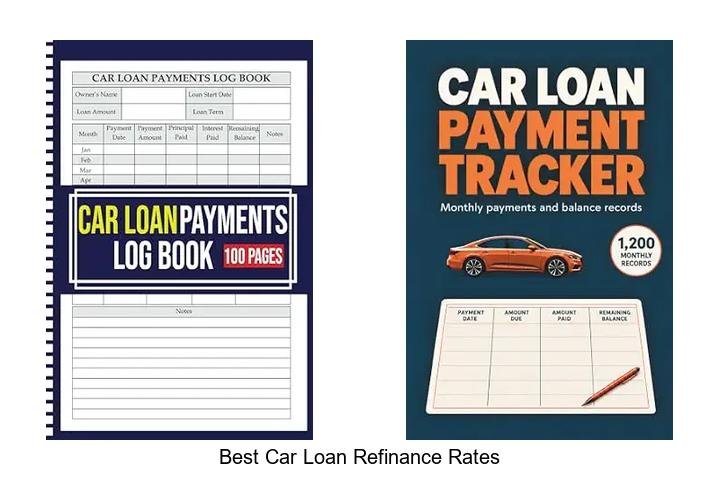
Keeping auto loan payments organized can save time and reduce mistakes. This log book gives drivers a simple paper record for monthly payment tracking.
The book is designed for recording monthly payment, principal, interest, and balance details. Its 100 pages provide room for repeated entries across many payment cycles. The 6 x 9 inch size makes it easy to store in a glove box, desk drawer, or filing area.
Published independently in English, it is set up as a straightforward financial organizer rather than a digital tool. The paperback-style format suits users who prefer writing details by hand and keeping records in one place.
Build quality details are limited, but the 102-page print length suggests a compact, practical notebook. The page count and lighter 7.4-ounce weight support easy carrying. It works well for people who want a clear manual system for loan tracking.
Anyone monitoring auto loan balances, payment timing, or principal progress may find it useful. It is especially suited to organized borrowers who want a simple, low-tech way to keep loan records accessible.
Pros
- Tracks payment, principal, interest, and balances
- Compact size fits easily in storage spaces
- Useful for handwritten loan record keeping
Cons
- No digital tracking features
- Limited to manual entry only
- Not suited for users wanting automation
Who Should Buy It?
People who prefer handwritten payment records should find it useful. It suits borrowers tracking auto loan balances, monthly payments, and interest changes. The compact size helps keep records close at hand.
It also fits users who want a simple paper organizer instead of apps or spreadsheets.
Key Specifications
| Specification | Details |
|---|---|
| Title | Car Loan Payments Log Book: Track Monthly Payment, Principal, Interest, and Balances with Ease – Perfect Financial Organizer for Auto Loans. 100 Pages, 6″x9″ Inch. |
| Author/Publisher | Independently published |
| Format | Paperback |
| Publication Date | January 25, 2025 |
| Language | English |
| Print Length | 102 pages |
| Dimensions | 6 x 0.23 x 9 inches |
| Item Weight | 7.4 ounces |
The 6 x 9 inch size feels familiar and easy to handle. It offers enough space for writing payment details without becoming bulky. The 102-page length gives room for many monthly entries before replacement. A 7.4-ounce weight keeps it light for carrying between home, office, or car storage. English language formatting makes it straightforward for daily use. People who like simple paper records will likely appreciate the clear, physical layout.
Independent publication usually means a focused, narrow purpose, and that fits this log book well. The paperback format and modest size make it easy to store beside bills or receipts. The publication date of January 25, 2025 places it among recent releases. With no digital setup required, it suits users who want immediate use after opening. Drivers who track auto loan progress by hand may benefit most from these practical specifications.
2. Car Loan Payment Tracker
Keeping auto loan records organized can make yearly tracking much easier. A simple payment book helps drivers record payments without digital clutter.
Car Loan Payment Tracker focuses on yearly auto loan management in a compact paperback format. Published independently in English, it offers 100 pages for logging payment details across the year.
The 6 x 9 inch size keeps it easy to store in a glove box, desk drawer, or filing bin. Its 7.2 ounce weight makes it light enough to carry between home and car.
The layout suits people who prefer handwritten tracking over apps or spreadsheets. It gives borrowers a clear place to note payment dates, balances, and related loan information.
The paperback build feels practical for repeated use during regular payment tracking. Its simple presentation supports quick updates without extra setup or technical steps. Because it is built for yearly record keeping, it suits drivers who want steady loan oversight.
It also works well for users who manage one vehicle loan at a time. For anyone wanting a physical record book, it offers focused, low-fuss organization.
Pros
- Compact size fits easily in a car or desk.
- 100 pages support steady yearly payment records.
- Lightweight paperback format is easy to carry.
Cons
- No digital syncing or automated reminders.
- Limited to handwritten record keeping only.
- ISBN details were not provided.
Who Should Buy It?
People who prefer handwritten financial records should consider this book. It suits drivers tracking one auto loan across the year. It also fits anyone who wants a physical backup for payment history.
The compact size works well for home filing or car storage. Buyers wanting app-based tracking or automation should choose another option.
Key Specifications
| Specification | Details |
|---|---|
| Title | Car Loan Payment Tracker: Yearly Payment Record Book for Auto Loan Management |
| Author/Publisher | Independently published |
| Format | Paperback |
| Publication Date | September 8, 2024 |
| Language | English |
| Print Length | 100 pages |
| Dimensions | 6 x 0.23 x 9 inches |
| Item Weight | 7.2 ounces |
The title shows a focused record book for yearly auto loan management. Its paperback format means the pages are ready for handwritten entries. One hundred pages give room for repeated payment notes across many months. The six by nine inch size is small enough for easy storage. English language content keeps the book straightforward for readers who use it daily. Together, these specifications point to a compact paper tool for organized loan tracking.
The publication date, September 8, 2024, makes it a recent release. At 7.2 ounces, it stays light when moved between locations. The thin 0.23 inch profile helps it fit into bags or drawers. These details suit people who want a portable record keeper without extra bulk. The format and size favor users who like simple manual systems. It works well for drivers who want a private, physical payment history.
3. Monthly Payment Amortization Tables
Small-loan payment math gets a lot easier with this compact reference. It gives buyers and sellers a quick way to compare monthly payment outcomes. The book focuses on amortization tables for specific amounts, terms, and interest rates.
That makes it useful when checking car loans and similar financing situations. Meritz Press publishes 124 pages in a small paperback format. The 5 x 0.28 x 8 inch size makes it easy to store or carry.
Its 4.7-ounce weight also keeps it light for frequent reference. The tables suit students, investors, and home buyers who need clear payment guidance.
It will appeal most to readers who prefer printed lookup tools over calculators. The layout should feel straightforward, with a reference style built for quick checks.
It is a practical fit for anyone comparing loan terms without extra complexity.
Pros
- Clear reference for payment lookups
- Compact size for easy storage
- Useful for multiple loan scenarios
Cons
- Limited to printed table references
- Not interactive like a calculator
- Focused on small loan amounts
Who Should Buy It?
People who want a printed amortization reference should find it useful. It suits car buyers, home buyers, students, and investors. Readers who compare specific loan amounts, terms, and interest rates will benefit most.
The compact size also helps anyone who wants a portable lookup book for quick payment checks.
Key Specifications
| Specification | Details |
|---|---|
| Title | Monthly Payment Amortization Tables for Small Loans: Simple and easy to use reference for car and home buyers and sellers, students, investors, car … a specific amount, term, and interest rate. |
| Author/Publisher | Meritz Press |
| Format | Paperback |
| Publication Date | March 15, 2016 |
| Language | English |
| Print Length | 124 pages |
| Dimensions | 5 x 0.28 x 8 inches |
| Item Weight | 4.7 ounces |
| ISBN-10 | 0692670548 |
| ISBN-13 | 978-0692670545 |
The title points to a focused reference for monthly payment planning. It covers small loans and specific combinations of amount, term, and interest rate. That makes it useful when someone wants fast paper-based comparisons. The paperback format and 124-page length suggest a concise handbook rather than a large textbook. English language text should make the tables easy to read for many buyers and sellers who need straightforward loan calculations.
The dimensions and light weight make the book easy to keep nearby. At 5 x 0.28 x 8 inches and 4.7 ounces, it fits neatly on a desk or in a bag. That portability helps when comparing loan options away from a computer. The ISBN numbers also make the edition easy to identify. Readers who want a simple printed aid for loan math will get the most use from these details.
4. Car Loan Payments Log Book

Keeping every loan payment organized can make refinancing feel far less messy. A simple paper log gives you a clear place to record principal, interest, and balances each month.
Car Loan Payments Log Book is built for monthly auto finance tracking. Its 100-page format gives drivers a dedicated space to record payment details over time. The compact 6 x 0.23 x 9 inch size makes it easy to store in a glove box, desk drawer, or work bag.
At 7.2 ounces, it stays light enough for everyday use without adding bulk. The English-language layout suits straightforward recordkeeping, while the independently published format keeps the focus on practical tracking pages.
It works well for borrowers who want a manual way to monitor loan progress, compare payment history, and stay organized during refinance planning. The book suits people who prefer handwritten notes over apps and want a clear monthly system they can keep using.
Pros
- Dedicated space for principal, interest, and balances
- Compact size fits easily in small storage spaces
- Lightweight format supports regular monthly use
Cons
- Manual logging requires consistent upkeep
- No digital features or automatic calculations
- Limited to paper-based recordkeeping only
Who Should Buy It?
People who want a simple paper system for monthly loan tracking should consider it. It suits borrowers who prefer handwriting payment details and keeping records in one place. Drivers managing an auto refinance plan may like having a steady monthly log for principal, interest, and balances.
It also fits anyone who wants a compact tracker that travels well and stays easy to store.
Key Specifications
| Specification | Details |
|---|---|
| Title | Car Loan Payments Log Book: Monthly Auto Finance Tracker for Recording Principal, Interest, and Balances |
| Author/Publisher | Independently published |
| Format | Log book |
| Publication Date | July 21, 2025 |
| Language | English |
| Print Length | 100 pages |
| Dimensions | 6 x 0.23 x 9 inches |
| Item Weight | 7.2 ounces |
The title explains the book’s main purpose clearly. It is a monthly auto finance tracker for recording principal, interest, and balances. That makes it practical for anyone who wants structured payment notes instead of scattered reminders. The 100-page length gives room for repeated monthly entries. English language pages make the format easy to follow for most readers. The log book format suggests a straightforward layout built around writing down loan progress by hand.
The compact 6 x 0.23 x 9 inch size makes storage simple. It can sit in a car, bag, or office drawer without taking much room. The 7.2 ounce weight keeps it light for carrying between home and work. Since it is independently published, the focus stays on practical use rather than extra extras. People who want a portable paper record will benefit most, especially those tracking loan payments month after month.
5. Car Loan Payment Tracker

Keeping track of car loan payments can feel messy fast. A simple paper log helps organize every monthly payment in one place.
Car Loan Payment Tracker is a 110-page log book for recording monthly car loan payments. It focuses on straightforward financial organization, giving owners one dedicated place to track payment history over time.
The book is published independently and comes in an English-language paperback format with large, practical dimensions. Its 8.5 x 11-inch size gives room for clear writing, while the 0.25-inch thickness keeps it easy to store. The format suits drivers who prefer handwritten records over apps or spreadsheets.
The layout is aimed at basic loan management rather than advanced financial planning. That makes it a practical choice for anyone who wants a simple paper record for monthly obligations.
The print length offers enough space for regular use without feeling bulky. Its lighter weight also makes it easy to keep in a glove box, desk drawer, or filing stack. People who want a low-tech system may appreciate the straightforward setup.
It suits borrowers who value clarity, routine, and easy access to payment notes.
Pros
- Simple format for tracking monthly car loan payments
- Large 8.5 x 11-inch pages offer writing space
- Compact enough for easy storage
Cons
- Paper log offers no digital tracking features
- Focuses on logging, not financial analysis
- No ISBN information was provided
Who Should Buy It?
Buyers who want a paper-based way to record car loan payments should consider it. It suits people who prefer handwriting notes, keeping payment dates, or organizing basic loan details in one book. Drivers who want a simple, low-tech log for monthly financial records will likely find it useful.
It fits personal use, home filing, or keeping a backup record beside digital tools.
Key Specifications
| Specification | Details |
|---|---|
| Title | Car Loan Payment Tracker: Simple Log Book for Managing and Tracking Your Monthly Car Loan Payments For Better Financial Management |
| Author/Publisher | Independently published |
| Format | Paperback |
| Publication Date | February 23, 2024 |
| Language | English |
| Print Length | 110 pages |
| Dimensions | 8.5 x 0.25 x 11 inches |
| Item Weight | 12.2 ounces |
The title explains the book’s purpose clearly and directly. It is a simple log book for monthly car loan payments. The paperback format and 110 pages suggest a practical notebook for repeated use. English language text makes it easy for many readers to follow. The large 8.5 x 11-inch dimensions provide room for neat handwriting and organized entries. At 12.2 ounces, it stays light enough for home storage or travel use.
These specifications point to an easy, low-maintenance record keeper. The paperback build usually suits frequent page use and simple filing. Its slim 0.25-inch profile helps it fit in drawers, bags, or shelves. The 110-page length gives enough space for ongoing payment tracking without becoming bulky. The size supports clear entry fields and comfortable writing. People who want a physical loan record, rather than app-based tracking, will benefit most from these practical details.
6. WAIT. READ THIS. Before You Sign a Car Loan

Dealer financing often hides extra cost in plain sight. This short guide helps buyers pause before signing and compare terms with more confidence. It focuses on a 48-hour strategy for beating dealer interest rates, which suits shoppers who want quick, practical guidance before finalizing a loan.
The book is a 30-page English ebook with Word Wise, screen reader support, enhanced typesetting, and page flip features. Those details make it easy to read on different devices.
The main strength is its narrow focus. It does not try to cover every auto finance topic. Instead, it targets the moment before signing, when small decisions can matter most.
The concise length may appeal to readers who want a fast read rather than a long manual. File size is only 158 KB, so downloading should be simple. It seems best for buyers who already have a loan offer and want a clearer check before agreeing.
Readers seeking broad refinance education may want more depth elsewhere.
Pros
- Focused on pre-signing loan advice
- Short, quick to read format
- Supports screen readers and Word Wise
Cons
- Very limited length and scope
- Not a full refinance handbook
- No author listed in the provided data
Who Should Buy It?
Buyers who already have a dealer loan offer will benefit most. It suits readers who want fast, focused advice before signing papers. The short format works well for people who need a simple checklist-style read.
It also helps anyone who prefers an ebook with screen reader support and Word Wise features.
Key Specifications
| Specification | Details |
|---|---|
| Title | WAIT. READ THIS. Before You Sign a Car Loan: The 48-Hour Strategy to Beat Dealer Interest Rates |
| Author/Publisher | Not provided |
| Format | Kindle ebook |
| Publication Date | August 13, 2026 |
| Language | English |
| Print Length | 30 pages |
| Dimensions | Not provided |
| Item Weight | Not provided |
| ISBN-10 | Not provided |
| ISBN-13 | Not provided |
The 30-page length means the guide stays brief and focused. Readers can likely finish it quickly, which suits last-minute review before signing loan papers. The English language setting makes it straightforward for a wide audience. Word Wise support may help with reading flow on compatible devices. Screen reader support also broadens access for users who prefer audio tools or assistive technology.
Enhanced typesetting and page flip support improve everyday reading on Kindle devices. The small 158 KB file size should download quickly and use little storage space. That makes it convenient for buyers who want a fast reference on a phone, tablet, or e-reader. Because it is short, it likely works best for readers seeking direct guidance, not long-form background. It suits people who want quick preparation before a loan decision.
7. The New Car Buyer’s Playbook

Buying a car can feel confusing, especially when financing terms start appearing. Clear guidance on loans, credit scores, and rates can make choices easier. The New Car Buyer’s Playbook offers a practical introduction to auto loan basics.
It explains financing success, interest rates, and negotiation tips in plain language. The book is 50 pages long and uses enhanced typesetting for easier reading. Word Wise and page flip support can also help during quick study sessions.
Screen reader support makes the file more accessible across devices. The guide suits readers who want a short, focused starting point. It is especially useful for new buyers learning financing language for the first time.
The content stays practical, with a clear emphasis on deal-making basics. Its compact file size may also suit readers who prefer lightweight digital books.
Overall, it offers simple education for shoppers who want more confidence before financing a vehicle.
Pros
- Covers auto loans, credit scores, and interest rates
- Short 50-page format is easy to finish
- Enhanced typesetting and page flip improve reading
Cons
- Not a detailed reference for advanced buyers
- No print dimensions or physical build details
- Focuses on basics, not complex financing strategies
Who Should Buy It?
New buyers who want a simple financing primer should consider it. It suits readers learning auto loan terms, credit score basics, and interest rate concepts. The short length works well for quick reading before visiting a dealership.
Digital reading features also help anyone who wants a flexible, lightweight guide.
Key Specifications
| Specification | Details |
|---|---|
| Title | The New Car Buyer’s Playbook: Essential Tips for Financing Success: A Practical Guide to Auto Loans, Credit Scores, Interest Rates, and Negotiating the Best Deal |
| Author/Publisher | Not provided |
| Format | Kindle ebook |
| Publication Date | August 20, 2026 |
| Language | English |
| Print Length | 50 pages |
| Dimensions | Not provided |
| Item Weight | Not provided |
| ISBN-10 | Not provided |
| ISBN-13 | Not provided |
The 50-page length signals a short, focused read. That works well for buyers who want quick basics without a large time commitment. The English language format keeps the advice easy to follow. Enhanced typesetting can make paragraphs cleaner on many screens. Word Wise may help readers handle unfamiliar terms more easily. Screen reader support also broadens access for people using assistive tools.
A compact Kindle ebook format usually fits busy schedules well. Page Flip can make it easier to revisit earlier sections quickly. The 8.3 MB file size suggests a light download for most devices. Since no physical dimensions or item weight are listed, the value here is digital convenience. Readers who want straightforward financing help will benefit most. Those seeking a fast introduction before buying a car may appreciate it most.
8. The Complete Guide to Car Loans

Car loan refinancing can feel confusing, especially with dealer financing terms. This guide focuses on borrowing, refinancing, equity, and payoff in plain language.
It covers dealer financing and smarter borrowing, giving readers a practical overview of how auto loans work. The book is part of the Inside the Car Dealership Series, and it spans 205 pages. Word Wise and screen reader support add reading flexibility.
Enhanced typesetting and page flip support make the ebook easier to use. The file size is 2.3 MB, so it should load quickly on most devices. It suits readers who want a structured refinance guide without technical clutter.
Pros
- Covers refinancing, equity, and payoff together
- Screen reader support helps accessibility
- Word Wise aids easier reading
Cons
- Focused on car loans, not broader finance
- Ebook format only, not print-based
- No detailed author information provided
Who Should Buy It?
People who want a clear refinancing guide should consider it. It suits readers who want to understand dealer financing, smarter borrowing, equity, and payoff. The ebook format works well for quick study on phones, tablets, or e-readers.
It also fits anyone who prefers a structured explanation over scattered loan advice.
Key Specifications
| Specification | Details |
|---|---|
| Title | The Complete Guide to Car Loans: An Insider’s Guide to Dealer Financing, Smarter Borrowing, Refinancing, Equity, and Payoff (Inside the Car Dealership Series Book 7) |
| Author/Publisher | Not provided |
| Format | Kindle eBook |
| Publication Date | July 28, 2026 |
| Language | English |
| Print Length | 205 pages |
| Dimensions | Not provided |
| Item Weight | Not provided |
| ISBN-10 | Not provided |
| ISBN-13 | Not provided |
The publication date shows when the guide became available to readers. Its 205-page length suggests a focused handbook rather than a long reference book. English language support makes it suitable for general readers in the U.S. and other English-speaking markets. The Kindle ebook format means readers can open it on compatible devices without carrying a print copy. File size also matters, since 2.3 MB usually downloads quickly and takes little storage space.
Accessibility features matter in daily use. Screen Reader support helps users who rely on spoken reading, while Word Wise can make loan terms easier to understand. Enhanced typesetting improves the look of text on small screens, and Page Flip helps move between sections faster. These details make the book friendlier for mobile reading and study sessions. Readers who want quick access to refinancing information will benefit most from these format choices.
9. Loan Tracker Log Book

Keeping debt organized can make repayment feel more manageable. A clear payment log also helps track extra principal and remaining balances. Loan Tracker Log Book is built for that purpose, with a five-year payment schedule journal for personal car, student, and mortgage debt.
Its pages record due dates, payment amounts, interest rates, extra principal, and remaining balances. The 140-page paperback format offers plenty of room for ongoing tracking.
At 8.5 by 11 inches, the larger page size supports neat entries and easy weekly review. The independently published format suits buyers who prefer a simple paper planner over digital tools.
It works best for people who want a structured way to stay organized during debt payoff.
Pros
- Tracks due dates, balances, and extra principal clearly.
- Large pages leave room for detailed payment records.
- Useful for car, student, and mortgage debt.
Cons
- Paper format requires manual updates.
- No ISBN information is provided.
- Not suited for automated budgeting.
Who Should Buy It?
People who want a paper-based debt payoff planner should consider it. It suits borrowers tracking car, student, or mortgage payments in one place. The layout fits anyone who likes writing out due dates, balances, and extra principal amounts.
It also works well for users who prefer a physical record beside refinance paperwork.
Key Specifications
| Specification | Details |
|---|---|
| Title | Loan Tracker Log Book: 5-Year Payment Schedule Journal and Debt Payoff Planner to Record Due Date Amount Interest Rate Extra Principal and Remaining Balance for Personal Car Student and Mortgage Debt |
| Author/Publisher | Independently published |
| Format | Paperback |
| Publication Date | December 11, 2025 |
| Language | English |
| Print Length | 140 pages |
| Dimensions | 8.5 x 0.32 x 11 inches |
| Item Weight | 15 ounces |
The title explains the planner’s purpose very clearly. It covers a five-year payment schedule, debt payoff tracking, and record keeping. The book is meant for personal car, student, and mortgage debt. That means users can follow one format across several loan types. The 140-page count gives enough space for repeated entries, while the English language makes the layout easy to use for many readers who want a straightforward paper system.
The paperback format and 8.5 by 11 inch size affect everyday use. Larger pages usually leave more room for notes, which helps when tracking amounts and balances. The 0.32-inch thickness and 15-ounce weight suggest a portable notebook that still feels substantial. Independently published books often appeal to buyers who want a simple organizer without extra features. People who prefer handwriting loan details may benefit most from these specifications.
10. When Rates Go Up: American Debt Handbook

Rising rates can make debt feel harder to manage, and this handbook speaks directly to that pressure. Its main appeal is practical help, with ten online calculators and clear debt payoff guidance.
When Rates Go Up: The American Debt Handbook focuses on paying off credit card debt, HELOCs, car loans, and mortgages faster. It also aims to cut interest and guide readers toward becoming debt free after the 2026 Fed hike. The book is digital, with 170 pages, enhanced typesetting, Word Wise support, and page flip features.
Screen reader support adds useful accessibility for more readers. At 660 KB, the file stays light and easy to store on devices. The content appears built around tools and action steps, which suits readers who want numbers, not theory.
Its calculator-based approach may help organize repayment choices across several debts. The format should feel simple to use for quick reference and repeated planning. It suits borrowers who want a structured, self-guided resource for refinancing-related debt decisions.
Pros
- Includes 10 online calculators for debt planning
- Covers car loans, mortgages, HELOCs, and credit cards
- Screen reader support helps accessibility
Cons
- Digital-only format may not suit every reader
- Focuses on planning, not personalized financial advice
- Publication date may feel future-dated
Who Should Buy It?
People with multiple debts may find this handbook useful, especially those comparing repayment choices for car loans and mortgages. It suits readers who want calculator-based guidance in an easy digital format. Borrowers who prefer self-paced planning and clear, practical steps should benefit most from its focused approach.
Key Specifications
| Specification | Details |
|---|---|
| Title | When Rates Go Up.: The American Debt Handbook With 10 Online Calculators: Pay Off Credit Card Debt, HELOCs, Car Loans and Your Mortgage Faster, Cut Interest and Get Debt Free After the 2026 Fed Hike |
| Author/Publisher | Not provided |
| Format | Digital book |
| Publication Date | October 5, 2026 |
| Language | English |
| Print Length | 170 pages |
| Dimensions | Not provided |
| Item Weight | Not provided |
| ISBN-10 | Not provided |
| ISBN-13 | Not provided |
The digital format keeps the handbook easy to store and open on supported devices. A 170-page length suggests enough space for calculators and repayment guidance without feeling bulky. English language content makes it straightforward for a wide audience to read. The October 5, 2026 publication date places it around the period referenced in the title. Since it is file-based, readers can access it without carrying a printed copy.
Enhanced typesetting and page flip support can make reading feel cleaner and more organized. Word Wise may help with unfamiliar terms, while screen reader support broadens access for users who need it. A 660 KB file size is small, which helps with downloads and device storage. These features suit readers who want quick reference tools and simple setup. People who prefer digital reading and accessible layouts may benefit most from these specifications.
Best Car Loan Refinance Rates: How to Find the Lowest Offers and Save More
Refinance rate factors
Refinance rate factors are shaped by more than just the advertised APR, because lenders also review credit score requirements, loan term length, and the vehicle’s age and mileage before approving an application. A stronger credit profile can open the door to lower rates, while a shorter or longer term changes both the monthly payment and the total interest paid over time.
Reviewing these details side by side helps you avoid surprises and makes it easier to compare offers that truly fit your budget and the car’s current value.
Eligibility and lender criteria
Eligibility and lender criteria determine whether a refinance application can move forward at all, so checking these details early helps avoid wasted time and repeated credit pulls. Many lenders set a minimum loan balance, and loans below that amount may not qualify for refinancing even if the payment history is strong. Current lender restrictions can also limit options, since some original lenders charge prepayment penalties or place rules on early payoff that reduce potential savings.
Income and employment verification matters just as much, because lenders use it to confirm that the borrower can handle the new payment responsibly. A quick review of these requirements makes the process smoother and helps narrow the field to lenders that actually fit the loan profile.
- Minimum loan balance: Confirms whether the remaining amount is high enough to meet lender requirements.
- Current lender restrictions: Reveals any fees or rules that could affect refinancing value.
- Income and employment verification: Shows proof of repayment ability and supports approval chances.
Fees and total cost
Application and origination fees can change the real cost of a refinance more than many borrowers expect, so it is wise to review every charge before committing. Some lenders advertise attractive rates but offset them with upfront fees, while others build smaller costs into the loan balance, which can make the offer seem cheaper than it really is.
Closing costs and hidden charges, such as appraisal fees, title fees, document fees, and administrative add-ons, may appear small on their own but can add up quickly. A clear fee breakdown helps you compare offers on equal terms and avoid a deal that looks favorable at first glance but becomes expensive over time.
- Application and origination fees: Check how much is charged upfront and whether these costs are negotiable.
- Prepayment penalties: Confirm whether early payoff triggers an extra fee.
- Closing costs and hidden charges: Review the full estimate for service fees, paperwork costs, and other add-ons.
Loan terms to compare
Loan terms to compare matter because the rate structure, monthly payment, and repayment length can change the total cost of a refinance by a large margin. A fixed APR stays the same over time, which makes budgeting easier, while a variable APR may begin lower but can rise and increase your payments later. The monthly amount also deserves careful attention, since a lower payment can be appealing at first, yet it may come with a longer term and more interest overall.
Repayment term options should be reviewed side by side as well, because shorter terms usually save money on interest, while longer terms can reduce strain on your budget but extend the time you stay in debt.
- Fixed vs. variable APR: Fixed rates offer stability; variable rates can move up or down over time.
- Monthly payment amount: Make sure the payment fits comfortably within your budget without stretching your finances.
- Repayment term options: Compare shorter and longer terms to balance total interest paid against monthly affordability.
Reviewing these details together helps you avoid a deal that seems attractive at first but becomes costly later, and it gives you a clearer view of the long-term value of the refinance.
Best features to look for
Locking in a rate before it changes can save a borrower money, and the ability to manage a loan digitally often makes repayment simpler and more flexible over time. A strong refinance option should offer ratelock availability so the quoted rate stays protected while the application is processed, especially in a shifting rate environment.
Online account management matters as well because it allows borrowers to review balances, track payment history, update details, and make extra payments without extra hassle. Together, these features improve convenience, help control costs, and give borrowers more confidence in how the loan will function after it is finalized.
How to evaluate the offer
A refinance offer can save money only if the total interest reduction outweighs any fees and temporary effects on your credit profile, so a breakeven savings calculation should come first. Adding up the new monthly payment, closing costs, and any prepayment penalties shows how many months it will take to recover the upfront expense, while a careful review of your credit report helps you understand whether the lender’s hard inquiry or account changes may cause a short-term dip.
- Breakeven savings calculation: compare total fees against the monthly savings to confirm the deal truly lowers long-term costs.
- Impact on credit: check whether the application and new account terms may affect your credit score in the short term.
- Customer service reputation: review ratings, complaints, and support quality to gauge how efficiently the lender handles the process.
Ways to Use a Refinance Safely
A car loan refinance can lower your monthly payment or total interest, but the best rate is only helpful if the new loan fits your budget. Compare the APR, loan term, fees, and any prepayment rules before you sign. A lower rate with a much longer term can still cost more over time.
Check how the lender handles your old loan payoff. The new lender usually pays it off, but you should still confirm the old balance reaches zero. Keep making payments on the old loan until you get written confirmation that it is closed. This helps avoid late fees and credit problems.
It also helps to know when refinancing makes sense. A better rate may be easier to get if your credit score has improved, your income is steady, or your car still has good value. Many lenders have age and mileage limits, so a very old car may not qualify for the best offers.
Watch for these common mistakes:
- Refinancing only for a smaller monthly payment without checking the full loan cost
- Taking cash out unless you really need it
- Skipping the fee details, such as title or origination charges
- Choosing a term that is so long that interest adds up fast
Before you apply, gather your vehicle info, current loan balance, and proof of income. Having these ready can make it easier to compare offers from several lenders. A little prep can help you spot a good refinance rate and avoid a deal that looks cheap at first but costs more later.
FAQ’s
What Factors Affect The Best Car Loan Refinance Rates Available To Borrowers?
The best car loan refinance rates depend on your credit score, income, debt-to-income ratio, the car’s age and mileage, and the remaining loan balance. Lenders also consider current market rates and whether your vehicle qualifies under their loan terms.
How Can I Qualify For A Lower Car Loan Refinance Rate?
To qualify for a lower car loan refinance rate, improve your credit score, reduce your debt-to-income ratio, and make sure your vehicle has enough value and equity. You can also shop around with multiple lenders and consider shortening your loan term to get a better rate.
Which Lenders Typically Offer The Most Competitive Car Loan Refinance Rates?
Credit unions and online lenders typically offer the most competitive car loan refinance rates. Banks can also be competitive, but the best rate usually depends on your credit score, loan term, and vehicle age.
Is It Worth Refinancing A Car Loan For A Better Interest Rate?
Yes, it can be worth refinancing a car loan if you can get a meaningfully lower interest rate and the fees don’t outweigh the savings. It’s especially helpful if your credit has improved or your loan term is still fairly long.
How Do Credit Score And Loan Term Impact Car Loan Refinance Rates?
A higher credit score usually helps you qualify for lower car loan refinance rates because lenders see you as less risky. Shorter loan terms often come with lower rates than longer terms, though monthly payments may be higher.
Final Verdict
These picks fit different refinance shoppers, not all drivers chasing the best car loan refinance rates need the same kind of help. Car Loan Payments Log Book is the best overall choice for buyers who want a simple way to track payments and stay organized after refinancing. WAIT.
READ THIS. Before You Sign a Car Loan is the best value pick for people who want clear pre-signing guidance before agreeing to new loan terms.
Choose Car Loan Payments Log Book for payment tracking, or WAIT. READ THIS. Before You Sign a Car Loan if you want the most useful pre-signing advice before refinancing.