
Why Is My Wheel Shaking When I Drive
If your steering wheel shakes while driving, it can be quite concerning.
This shaking is often caused by several factors, including unbalanced or damaged tires, uneven tire wear, or misaligned wheels.
Additionally, worn suspension parts like ball joints and tie rods can contribute to a loose and shaky steering feel.
Sometimes, warped brake rotors or worn motor mounts can transfer vibrations to the wheel, amplifying the issue.
These problems can significantly affect your safety and comfort on the road.
So, understanding what’s behind the shaking is important to ensure a smooth and secure driving experience.
Key Takeaways
- Unbalanced or misaligned wheels commonly cause steering wheel shaking at speeds between 50-70 mph.
- Worn suspension parts like ball joints or tie rods can create a loose, shaky steering feel.
- Warped brake rotors often cause vibrations, especially noticeable during braking.
- Damaged or unevenly worn tires lead to noticeable wheel vibrations while driving.
- Worn motor mounts allow engine vibrations to transfer to the steering system, causing shaking.
Common Causes of Steering Wheel Shaking

If your steering wheel shakes while you’re driving, it’s often due to unbalanced wheels. This issue typically causes vibrations, especially between 50 to 70 mph.
Shaking or vibrations may also stem from uneven wear on your tires or poor tire balance.
Uneven tire wear or poor balance can cause noticeable shaking or vibrations while driving.
Common causes include misaligned wheels, often resulting from driving on rough roads or hitting potholes. This misalignment can lead to steering wheel shaking.
Worn suspension components like ball joints or tie rods can create a loose steering feel, and vibrations may signal the need for a professional inspection.
Additionally, warped brake rotors might cause intermittent shaking during braking. The uneven surfaces disrupt smooth contact when you apply the brakes.
Addressing these issues promptly helps guarantee safer, smoother driving. Plus, it prevents further damage to your vehicle’s steering and suspension systems.
Tire and Wheel Issues That Lead to Vibrations

Tire and wheel issues often cause the vibrations you feel through the steering wheel while driving.
Steering wheel vibrations commonly stem from balancing issues, where uneven weight distribution around the tire creates shaking at higher speeds.
Damaged tires, like those with bulges, cracks, or flat-spotted tires from hard braking, also lead to a vibrating steering wheel, threatening your safety.
Uneven tire wear, such as cupping or feathering, signals potential misalignment, further worsening vibrations.
A bent wheel can compromise wheel integrity, causing significant shakes, especially at speed.
To catch these problems early, perform a visual inspection regularly, checking tires and wheels for damage.
While these tire and wheel concerns directly cause your vibrating steering wheel, issues with the suspension system will be covered separately.
Suspension and Steering Component Wear
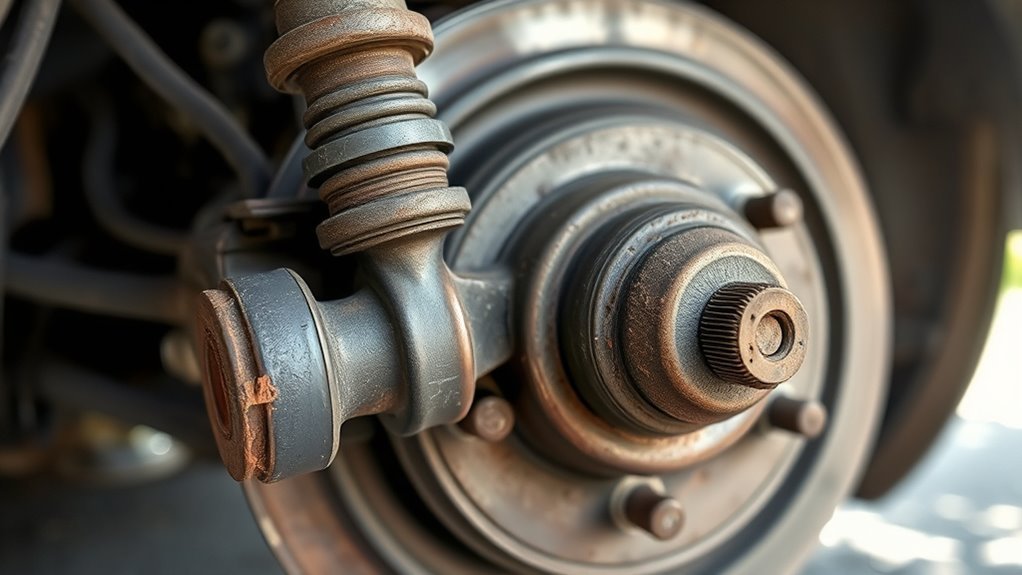
While tire and wheel problems often cause steering wheel vibrations, worn suspension and steering components can also play a major role.
If your vehicle’s steering feels shaky or vague, worn components like ball joints and tie rod ends might be the common reasons behind it. These parts support smooth steering and control; when they wear out, they cause noticeable shaking.
So, what should you watch for?
Here are some signs of suspension and steering wear:
- Uneven tire wear indicating misalignment or loose parts
- Clunking noises when driving over bumps
- Excessive play in the steering wheel
- Reduced shock absorber effectiveness leading to vibrations
Regular inspections help catch worn components early.
This not only prevents further damage but also keeps your vehicle safe and stable on the road.
Brake System Problems Affecting Steering Stability
Because brake system problems directly affect how your vehicle handles, they can cause noticeable shaking in your steering wheel, especially during braking.
Warped brake rotors create uneven contact with brake pads, leading to vibrations.
A sticking brake caliper can apply pressure unexpectedly, causing steering wheel shaking when you slow down.
Even worn brake components can cause vibrations without active braking, signaling the need for inspection and replacement to maintain steering stability.
| Brake System Issue | Effect on Steering Stability |
|---|---|
| Warped Brake Rotors | Uneven brake pad contact, vibrations |
| Sticking Brake Caliper | Unexpected pressure, steering shake |
| Worn Brake Pads | Reduced braking efficiency, vibrations |
| Dirty/Clogged Calipers | Pressure buildup, shaking |
| Lack of Inspection | Missed replacements, instability |
Regular brake maintenance guarantees safe, smooth steering.
Drivetrain and Motor Mount Concerns
If you notice your steering wheel shaking during acceleration or at higher speeds, worn motor mounts might be the culprit.
They allow engine vibrations to transfer directly to the steering system.
Besides motor mounts, imbalances or damage in drivetrain components can also cause vibrations that increase as you drive faster.
These issues can compromise vehicle handling and safety features, affecting your overall driving experience.
So, keep an eye out for:
- Excessive engine vibrations linked to worn motor mounts.
- Steering wheel shaking that worsens with speed.
- Unusual noises like clicking or growling from drivetrain components.
- Regular maintenance gaps that let drivetrain wear go unchecked.
Addressing these concerns promptly helps maintain smooth vehicle performance.
This way, you can prevent safety risks caused by drivetrain and motor mount problems.
Impact of Road and Weather Conditions on Steering
Uneven road surfaces and changing weather conditions can cause your steering wheel to shake unexpectedly.
When you drive over potholes or rough terrain, your tires may lose consistent contact with the ground, leading to steering wheel vibration.
Cold weather can lower tire pressure, affecting handling and causing your steering wheel to shake.
Ice buildup on your wheels creates imbalances that worsen this vibration.
Additionally, driving over debris or rough terrain can damage your suspension system and tires, making the shaking more persistent.
To keep your vehicle safe and your handling smooth, schedule regular vehicle inspections.
These checks help identify any damage caused by road or weather conditions, ensuring your steering system stays in prime condition and reducing the chances of steering wheel vibration during your drives.
Frequently Asked Questions
How Much Does It Cost to Fix a Shaking Wheel?
You’ll likely spend between $50 and $150 for tire balancing.
For alignment, expect to pay around $75 to $100.
If you need brake rotor replacement, it can cost you up to $800.
Suspension repairs can range from $150 to over $1,000, depending on parts and labor.
Is It Safe to Drive When Your Car Is Shaking?
You shouldn’t drive when your car shakes; imagine losing control on a highway.
Shaking often signals serious issues that can worsen quickly.
Why Is My Car Shaking When I’m Driving Over 45 Mph?
Your car shakes over 45 mph because your tires might be unbalanced,
your wheels misaligned, or suspension parts worn out.
Check for warped brake rotors or damaged tires too—
these issues cause vibrations and affect your driving safety.
Why Does My Car Shake When I’m Driving at 30 Mph?
You might think your car’s just being quirky, but shaking at 30 mph usually means your tires are unbalanced or your wheels are misaligned.
You’ll feel that wobble because the road isn’t meeting your tires evenly.
It’s definitely something to pay attention to!
Conclusion
When your wheel starts shaking, it feels like your car’s heartbeat is out of sync—each vibration a warning pulse beneath your hands.
Don’t ignore this unsettling rhythm.
Whether it’s worn tires, loose steering parts, or brake issues, addressing these problems keeps your drive smooth and safe.
Imagine the calm steadiness of a quiet road.
Fixing the shake lets you reclaim that peace, turning every journey into a confident, controlled ride.
In conclusion, if your wheel is shaking, it’s crucial to investigate the cause.
Worn tires, loose components, or brake problems can lead to a dangerous driving experience.
Don’t let these vibrations disrupt your travels.
By taking action, you can ensure a smooth and safe ride.
Remember, addressing these issues not only enhances your comfort but also your safety on the road.