What Causes Tire Cupping and How to Prevent It?
Tire cupping is a common issue that occurs when your tires wear unevenly. This can be caused by several factors, such as worn suspension parts, misaligned wheels, or unbalanced tires, which lead to vibrations and bumps while driving.
To help prevent tire cupping, it’s important to regularly check your suspension system. Ensuring that your wheels are properly aligned and balancing your tires after rotations is also crucial.
Additionally, maintaining the correct tire pressure can make a significant difference.
Neglecting these maintenance tasks can result in noisy rides and unsafe handling.
If you want to keep your tires in good shape, understanding these essentials is key. It can help you avoid costly damage and improve your driving safety.
Key Takeaways
– Tire cupping is caused by suspension issues, wheel misalignment, tire imbalance, poor road conditions, and neglecting regular maintenance.
Worn shocks, struts, or springs disrupt tire contact, leading to uneven tread wear and cupping.
Regular wheel alignment and tire balancing prevent uneven wear and reduce vibrations causing cupping.
Routine tire pressure checks and rotations every 5,000 to 6,000 miles promote uniform tread wear.
Inspecting suspension components and replacing damaged parts early helps maintain proper tire contact and prevents cupping.
What Is Tire Cupping?
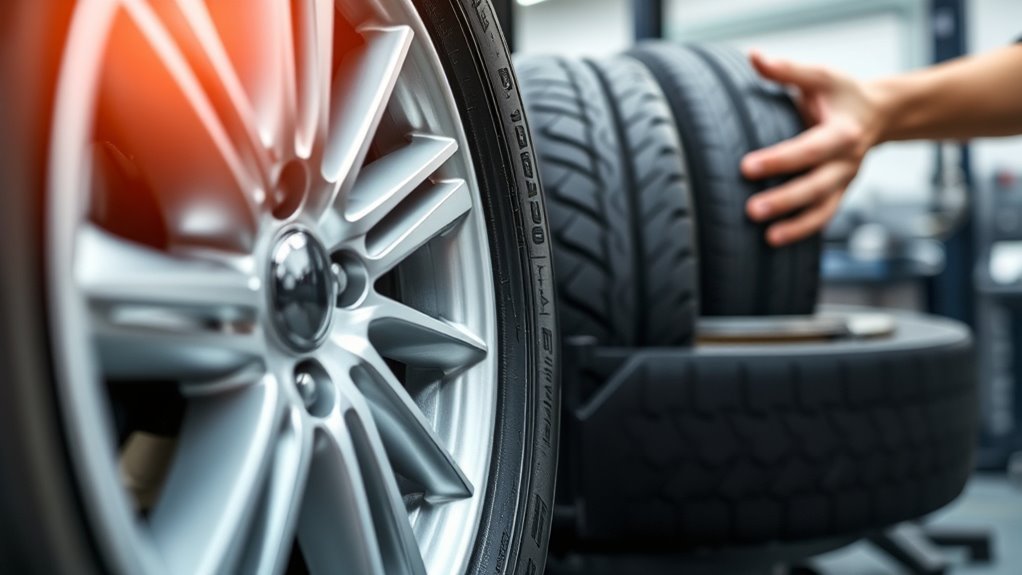
Tire cupping, also known as tire scalloping, appears as irregular dips or scooped-out sections on your tire tread every few inches.
This irregular wear indicates that your tires aren’t making consistent contact with the road.
It often hints at issues with your suspension, alignment, or tire balance.
When you drive with cupped tires, you’ll likely notice increased tire noise and vibrations through the steering wheel.
These vibrations can affect how your vehicle handles.
Ignoring these signs of uneven tire wear can reduce your traction and extend your stopping distances, putting you at risk.
Plus, if you don’t address tire cupping promptly, you’ll face premature tire replacement, which can cost you more in the long run.
Keeping an eye on your tires helps maintain safety and saves you money.
Common Causes of Tire Cupping
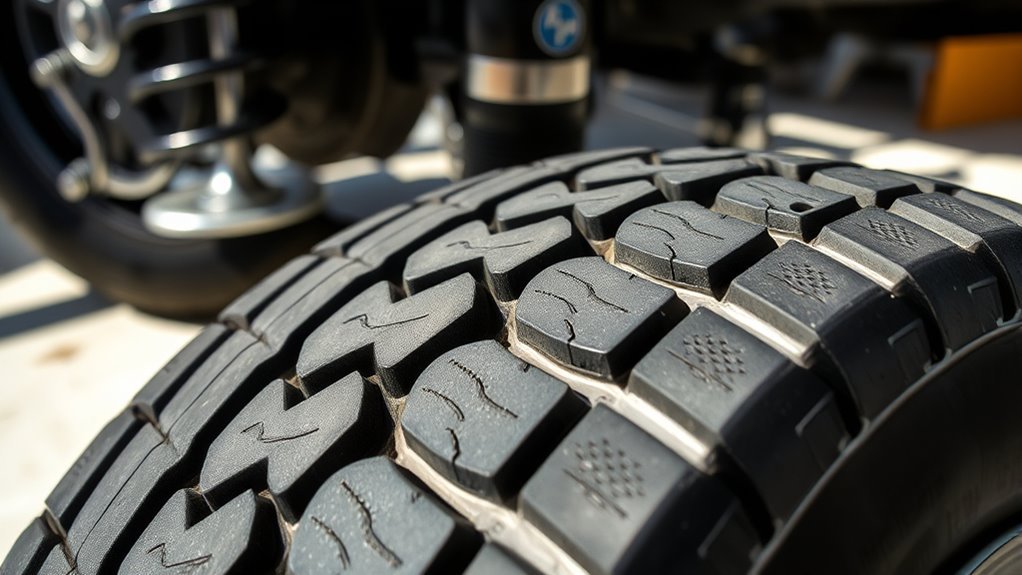
You’ll often find tire cupping linked to suspension problems that prevent your tires from staying firmly on the road.
Wheel alignment issues can cause uneven pressure, wearing down specific parts of your tires faster.
Plus, if your tires aren’t balanced properly, they’ll bounce and wear unevenly, making cupping worse.
Suspension Problems
When your vehicle’s suspension components wear out or get damaged, they can’t absorb road imperfections effectively. This causes your tires to lose consistent contact with the surface.
As a result, you end up with uneven tire contact, which leads to an irregular tread wear pattern, including tire cupping. Faulty suspension parts like shocks, struts, or springs can cause your tires to bounce excessively, increasing tire damage and reducing tire life.
While misalignment of wheels also contributes to wear, addressing worn suspension parts is essential for maintaining tire performance.
To prevent cupping, focus on:
- Inspecting suspension parts regularly for wear or damage.
- Replacing worn shocks, struts, and springs promptly.
- Ensuring proper suspension function to avoid uneven tire contact.
- Scheduling regular inspections to extend tire life and safety.
Keeping your suspension in good shape not only protects your tires but also improves your driving safety.
Wheel Alignment Issues
Although suspension issues often cause tire cupping, wheel alignment problems play an equally significant role.
When your tires aren’t aligned to the vehicle manufacturer’s specs, it causes uneven tire wear patterns that lead to tire cupping.
Wheel alignment issues often result from hitting potholes, accidents, or regular wear and tear, putting extra strain on parts of your tire tread.
You might notice your vehicle pulling to one side or a steering wheel that’s off-center while driving straight—clear signs of improper alignment.
Since your vehicle’s suspension and alignment work closely together, neglecting alignment can worsen suspension wear and causes tire cupping.
To prevent this, have your alignment checked at least once a year or every 12,000 miles to keep your tires wearing evenly and smoothly.
Tire Imbalance
Wheel alignment problems don’t just cause uneven wear—they often coincide with tire imbalance, another common culprit behind tire cupping.
Tire imbalance happens when the weight distribution around the tire and wheel assembly is uneven. This leads to vibrations and uneven tread wear patterns, which can accelerate tire cupping.
To prevent tire cupping caused by tire imbalance, you should:
- Check for vibrations at certain speeds.
- Inspect for lost or damaged wheel weights.
- Balance tires after tire rotation or new installation.
- Monitor uneven tread wear patterns closely.
Signs and Symptoms of Cupped Tires
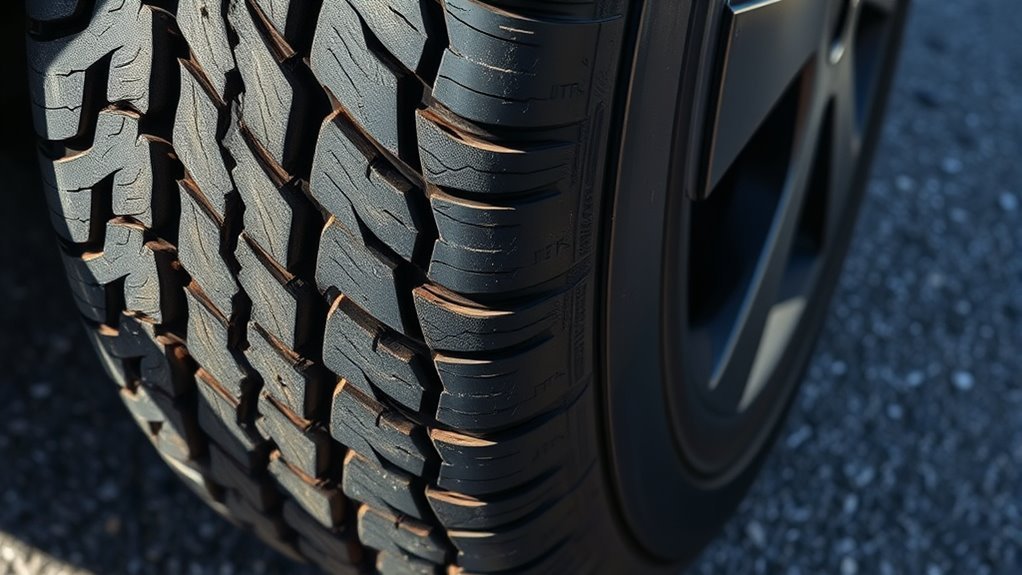
Uneven tread wear with dips or scalloped sections clearly signals tire cupping, showing that your tires aren’t making consistent contact with the road.
You might hear unusual tire noise like rhythmic rumbling, especially at higher speeds.
Excessive vibrations through the steering wheel or seat often accompany tire cupping, impacting your vehicle’s comfort.
If your vehicle pulls to one side, alignment issues tied to cupped tires may be the cause.
A thorough visual inspection revealing uneven wear patterns confirms these signs of tire problems.
| Sign/Symptom | Description | What to Do |
|---|---|---|
| Uneven wear | Dips or scallops in the tread | Visual inspection |
| Tire noise | Rhythmic rumbling or grinding sound | Check tires at different speeds |
| Excessive vibrations | Steering wheel or seat shaking | Inspect tires and suspension |
| Vehicle pulling | Car drifts to one side | Assess alignment and tires |
| Visual inspection | Visible dips and high spots | Replace or rotate tires |
Risks of Driving on Cupped Tires
When you drive on cupped tires, you risk losing control due to reduced traction and uneven handling.
These tires also cause excessive vibrations that can distract you and wear down your suspension faster.
Ignoring cupped tires shortens their lifespan and increases the chance of dangerous blowouts on the road.
Safety Hazards
Because cupped tires reduce traction, you’re at a higher risk of skidding or losing control, especially on wet or slippery roads.
Tire cupping creates uneven tread patterns that compromise vehicle safety and cause steering challenges.
You might notice your car pulling to one side or experiencing uneven braking distances, both of which increase safety hazards.
Additionally, the vibrations from tire wear due to cupping can lead to suspension damage, further impacting your vehicle’s performance.
To keep yourself and others safe, watch for these signs:
- Increased vibration and noise while driving
- Pulling to one side during normal driving
- Longer stopping distances in emergencies
- Premature tire wear and visible tread irregularities
Addressing tire cupping promptly helps maintain traction and overall vehicle safety.
Handling and Control
Beyond safety hazards, cupped tires also impact your vehicle’s handling and control.
Tire cupping causes unevenly worn patches that reduce traction, making sharp turns or sudden maneuvers riskier.
You might notice your vehicle pulling to one side, which forces you to make constant corrections that can distract you from the road.
Excessive vibrations from cupped tires create discomfort and fatigue, making it harder to maintain focus during long drives.
Additionally, uneven tire wear affects stopping distances, increasing the chance of collisions.
Improper tire pressure and misalignment often contribute to tire cupping, so keeping these in check helps preserve smooth handling.
Addressing tire cupping promptly guarantees your vehicle maintains proper control and traction, keeping you safer behind the wheel.
Tire Longevity Impact
Although you might not notice it immediately, driving on cupped tires can drastically shorten their lifespan and lead to costly repairs.
Tire cupping causes irregular tire wear patterns, which reduce tire longevity and demand earlier tire replacement.
Ignoring these tire issues often means poor alignment or suspension problems go unresolved, worsening the damage.
To avoid this, you need to address the underlying cause promptly and maintain regular tire rotation.
Let’s break down some key impacts of cupped tires:
- Increased vibrations and noise affecting comfort and focus.
- Compromised traction leading to longer stopping distances.
- Accelerated wear causing premature tire failure.
- Reduced fuel efficiency due to higher rolling resistance.
Taking care of your tires is essential!
How to Prevent Tire Cupping
To prevent tire cupping, you need to maintain your tires and suspension regularly.
Make sure to rotate your tires every 5,000 to 6,000 miles to promote even wear and prevent cupping.
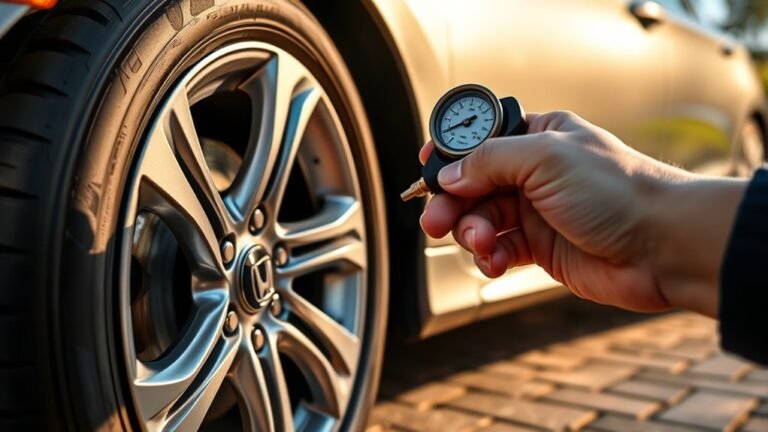
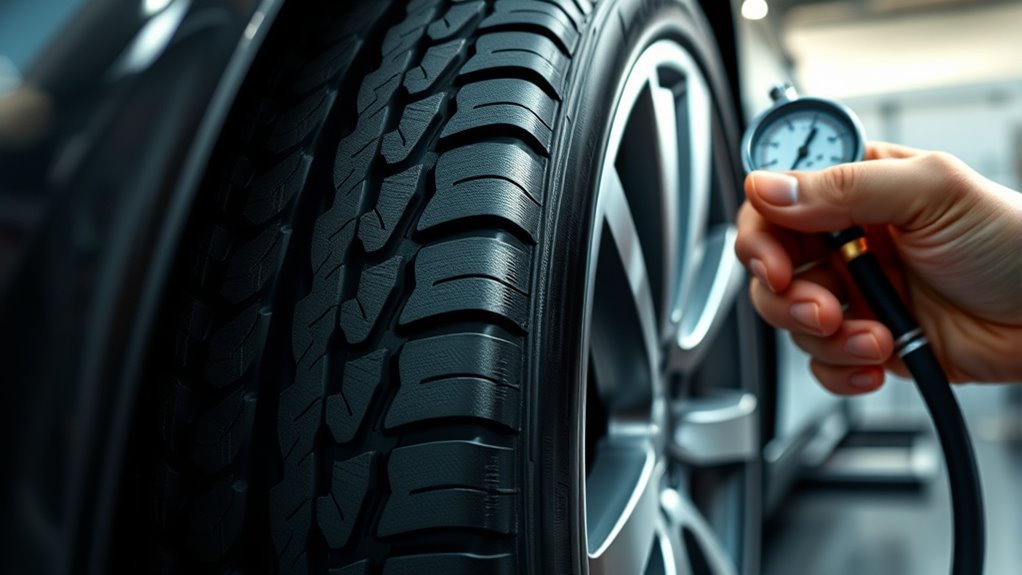
Also, check your tire pressure monthly and keep it at the manufacturer’s recommended levels to avoid uneven wear.
Don’t forget to schedule wheel alignment checks at least once a year, as misalignment can cause uneven wear that leads to cupping.
Inspect your suspension components periodically for signs of wear or damage, since worn shocks or struts can contribute to this problem.
Lastly, try to avoid aggressive driving habits like hard cornering and sudden braking, which can increase tire stress and wear.
When to Seek Professional Tire Inspection
Regular maintenance can go a long way in preventing tire cupping.
But sometimes, you’ll need a professional’s eye to catch problems early.
If you experience excessive vibrations, hear unusual noises, or spot uneven wear patterns on your tires, it’s time to schedule a professional tire inspection.
A qualified technician will examine your suspension system, check tire balance, and assess wheel alignment to identify issues causing tire cupping.
Don’t ignore these signs, as they can lead to unsafe driving and costly repairs.
Watch for these indicators to seek help promptly:
- Noticeable excessive vibrations while driving
- Uneven wear patterns on tire tread
- Loud or unusual noises from tires
- Poor handling or steering responsiveness
Early professional inspections protect your tires and enhance safety.
Frequently Asked Questions
How to Stop Cupping on Tires?
You can stop tire cupping by regularly rotating your tires.
Checking and maintaining proper tire pressure is also crucial.
Balancing tires when needed helps ensure even wear.
Aligning your wheels annually is another important step.
Finally, inspecting your suspension to fix any worn parts promptly can make a big difference.
Taking these steps can help prolong the life of your tires!
Is It Safe to Drive With Cupped Tires?
You shouldn’t drive long on cupped tires; they cause vibrations, noise, and unsafe handling.
If the cupping is mild and tread’s good, short drives might be okay.
But replace them soon to avoid accidents and damage.
Will Tire Cupping Fix Itself?
No, tire cupping won’t fix itself—you can’t just wait it out.
You’ll need to fix alignment or suspension issues and replace or rotate tires to stop the damage.
Keeping your ride smooth and safe is essential!
What Is the Most Common Cause of Tire Cupping?
The most common cause of tire cupping is wheel misalignment, which makes your tires wear unevenly.
You should regularly check alignment to avoid this problem and keep your tires wearing smoothly and evenly over time.
Conclusion
Tire cupping isn’t just annoying—it affects about 20% of drivers at some point, leading to uneven wear and noisy rides.
By keeping your tires balanced, aligned, and properly inflated, you can avoid this costly problem.
Regular inspections help catch issues early, so you don’t have to deal with premature tire replacement or unsafe driving conditions.
Stay proactive, and your tires will stay smooth and safe for the road ahead.
In conclusion, tire cupping can be a real headache for drivers, but with a little diligence, you can prevent it.
By ensuring your tires are well-balanced, correctly aligned, and inflated to the right pressure, you can maintain a smoother ride and extend the life of your tires.
Don’t forget to schedule regular inspections to catch any potential problems early.
Taking these steps ensures your tires remain safe and efficient on the road, giving you peace of mind and a better driving experience.