7 Essential Suspension Care Tips for Cars Near the Ocean
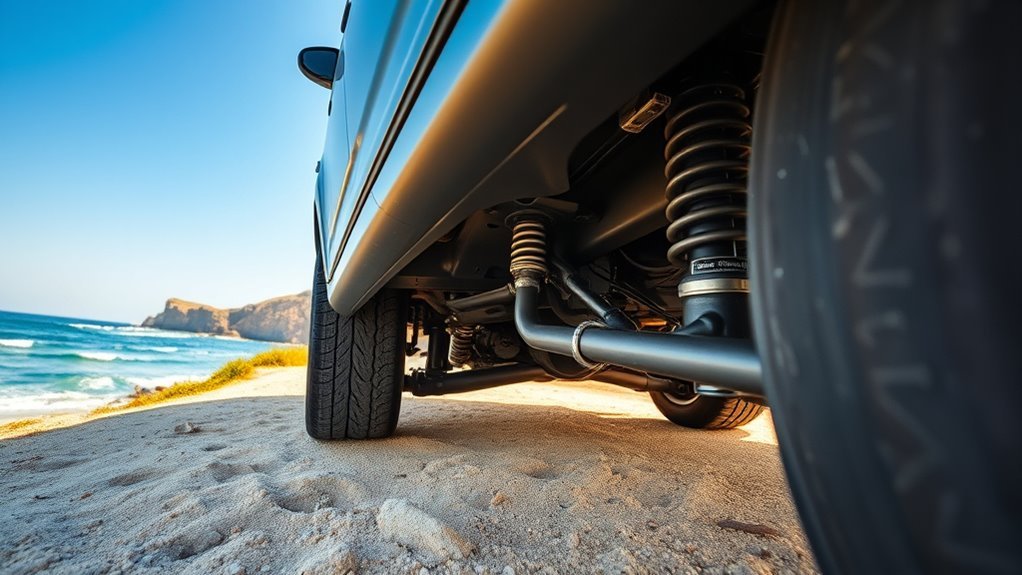
If you drive near the ocean, taking care of your car’s suspension is essential to ensure its longevity and performance. The salty air and sandy environment can wreak havoc on your vehicle, causing wear and tear that may not be immediately noticeable.
Regular inspections for signs of wear, like bouncing or unusual noises, are key to keeping your suspension in top shape.
Make sure to wash the undercarriage often to remove any salt and sand that can lead to rust.
After washing, consider applying protective coatings to metal parts for added defense against corrosion.
Keeping your tires aligned and properly inflated can help prevent uneven wear on your suspension components.
If you notice any worn parts, replace them promptly to avoid further issues.
Also, adjust your driving habits to minimize sudden stops or heavy loads, which can stress your suspension.
Stick with these smart care tips, and you’ll find even more ways to maintain your suspension’s health.
Key Takeaways
– Regularly wash and rinse the undercarriage to remove salt and sand that accelerate suspension corrosion near the ocean.
Keep in mind that this is especially important if you live near the coast.
– Inspect suspension parts annually for rust, cracks, or wear, especially in coastal environments with high humidity and salt exposure.
Don’t wait for something to go wrong—make it a part of your routine.
– Apply marine-grade rust inhibitors or protective coatings to metal suspension components every six months to prevent corrosion.
It’s a simple step that can save you a lot of trouble down the line.
– Maintain proper tire pressure and alignment to reduce uneven wear and protect suspension parts from coastal road conditions.
Your tires and suspension work together, so keep them in sync!
– Adjust driving habits by avoiding sudden stops, sharp turns, and heavy loads to minimize suspension stress on sandy or uneven coastal roads.
Treat your car gently to ensure it lasts longer in those tough conditions!
Inspect Suspension Components Regularly
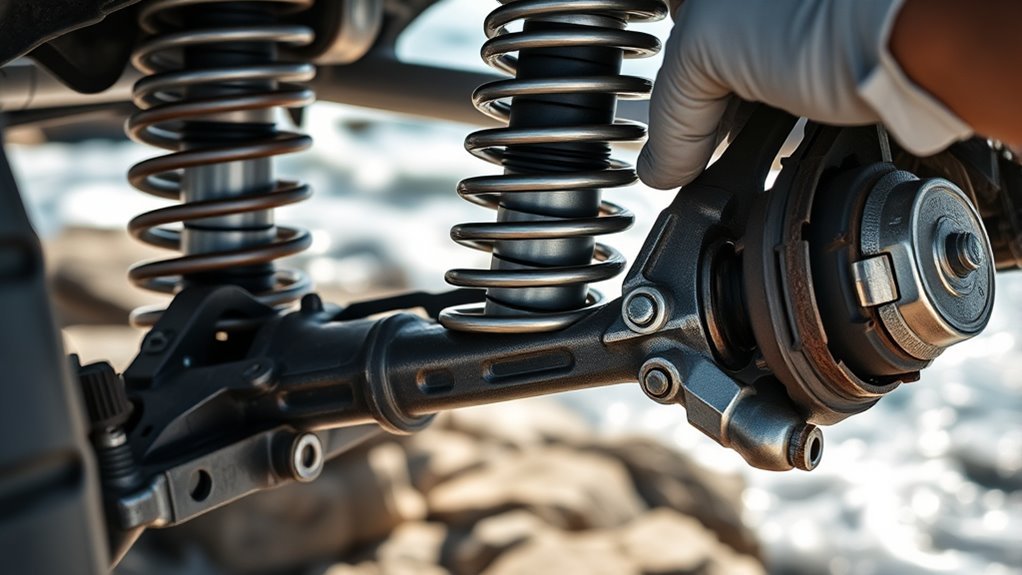
Although it’s easy to overlook, you should inspect your suspension components—like shock absorbers, struts, and control arms—at least once a year.
This is especially important if you live near the coast where salt can speed up corrosion.
When you inspect suspension components, watch for signs of suspension trouble such as excessive bouncing, knocking noises, or uneven tire wear.
These signs often indicate worn bushings or ball joints, which are vulnerable to damage from salty air.
You should also check for cracks or degradation in these parts.
Don’t forget to have your suspension alignment checked regularly, as misalignment causes uneven tire wear and affects vehicle stability.
Clean the Undercarriage Thoroughly
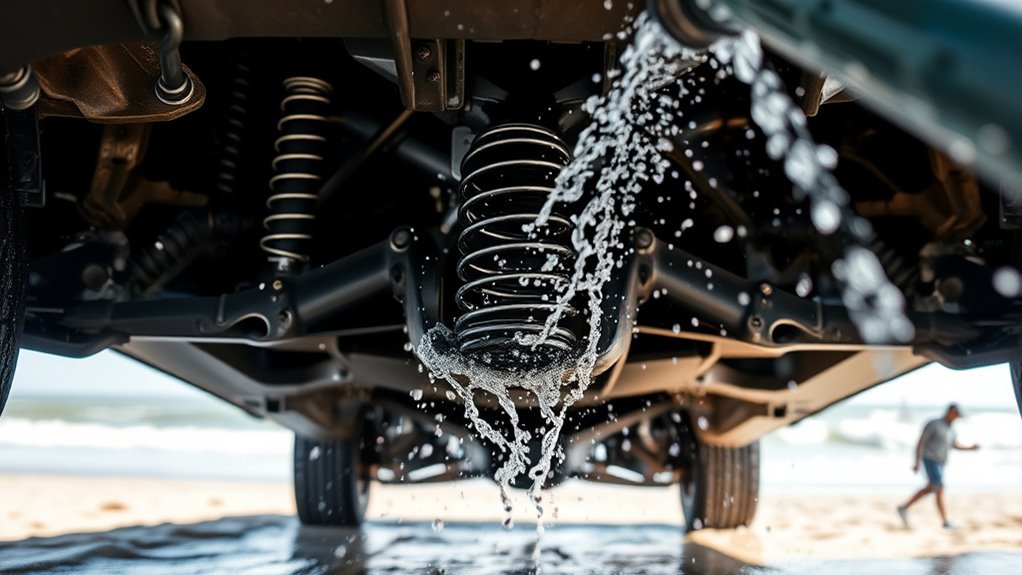
You’ll want to wash the undercarriage regularly to remove salt and sand that can cause corrosion.
Focus on suspension parts like control arms and bushings, as they’re most at risk.
Use a fresh water rinse or pressure washer to get rid of buildup effectively.
Salt and Sand Removal
Because salt and sand can quickly cause corrosion, you should clean your car’s undercarriage regularly.
Salt and sand removal is essential to protect your suspension systems and other vulnerable parts from rust.
Use a high-pressure washer or hose nozzle to thoroughly rinse the undercarriage, focusing on areas like the frame, suspension components, and brake lines where salt tends to accumulate.
After washing, inspect for any signs of rust or damage and address them promptly to avoid further deterioration.
Applying a protective undercoating can also help shield these parts from salt and moisture exposure.
Aim to clean the undercarriage at least once a month during beach season or more often after heavy storms to keep your suspension systems in good shape and prevent costly repairs.
It’s worth the effort to maintain your vehicle!
Focus on Suspension Parts
When you clean your car’s undercarriage thoroughly, you protect key suspension parts like control arms, bushings, and shock absorber seals from harmful salt and sand buildup.
This routine maintenance prevents corrosion and extends the life of your suspension system.
Focus on hard-to-reach areas around suspension joints and springs where debris collects.
After cleaning, inspect for rust or damage to catch issues early.
| Area | Issue Prevented | Maintenance Tip |
|---|---|---|
| Control Arms | Corrosion | Rinse with high-pressure water |
| Bushings | Wear and cracking | Check seals regularly |
| Shock Absorbers | Seal failure | Clean debris promptly |
| Suspension Springs | Salt buildup | Apply protective coating |
Keep your suspension system in top shape by giving it the attention it needs.
Use Fresh Water Rinse
Although it might seem tedious, rinsing your car’s undercarriage with fresh water after driving near the ocean removes corrosive salt and sand that can damage key components.
A regular fresh water rinse prevents corrosion by washing away salt buildup, especially around vulnerable parts like brake lines, control arms, and bushings.
You should rinse the undercarriage at least once a week during beach season to stop rust from forming, which often starts after about five years of salt exposure.
Using a high-pressure hose helps dislodge stubborn debris from hard-to-reach areas, protecting your suspension system and other essential components.
Apply Protective Coatings to Metal Parts
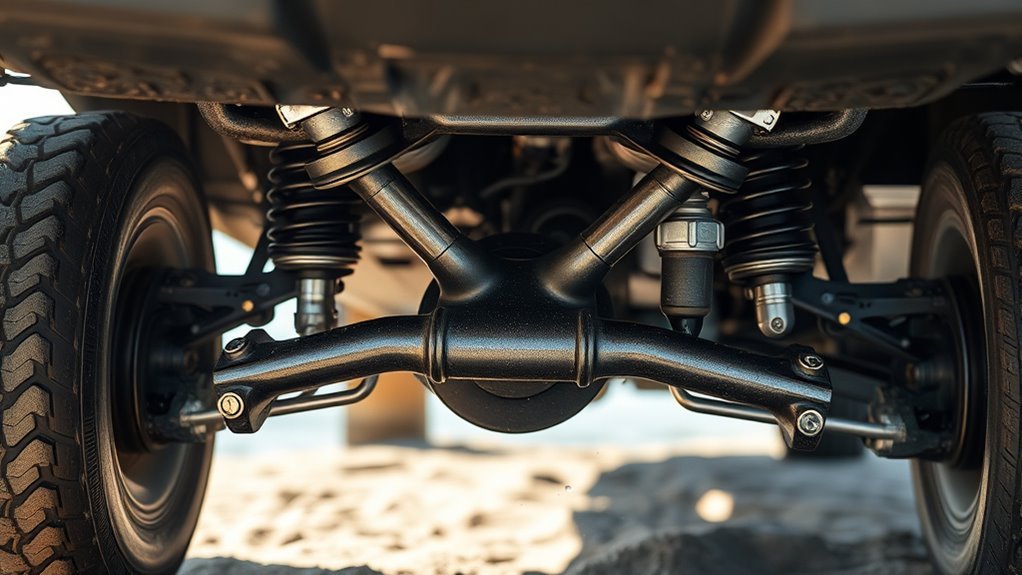
To protect your suspension system from the harsh effects of salt and moisture, you should apply high-quality protective coatings to its metal parts.
These coatings act as a barrier, preventing corrosion caused by salt exposure in coastal environments.
Protective coatings create a barrier that shields your suspension from salt-induced corrosion in coastal areas.
Focus on vulnerable areas like control arms, strut mounts, and shock absorber mounts.
Before applying, clean these components thoroughly to guarantee the coating adheres properly.
Use marine-grade rust inhibitors or sealants designed specifically for automotive parts for the best results.
Regular maintenance is key—inspect and reapply protective coatings every six months to maintain effective protection.
Monitor for Unusual Noises and Handling Changes
You should listen carefully for clunking or squeaking sounds while driving, as they often point to worn suspension parts.
Notice if your car sways more than usual or pulls to one side when steering—that’s a sign something’s off.
Catching these changes early helps you avoid costly repairs down the road.
Clunking and Squeaking Sounds
When your car starts making clunking or squeaking sounds, pay close attention—they often signal worn suspension parts like control arms or bushings.
To keep your vehicle safe and comfortable, regularly inspect your vehicle’s suspension by:
- Listening carefully for clunking noises over bumps. This may indicate failing shock absorbers or struts.
- Noticing squeaks during turns, which are often caused by dry or worn bushings.
- Checking for early signs to avoid costly repairs that stem from neglected suspension issues.
- Addressing unusual sounds promptly to maintain proper alignment and prevent uneven tire wear.
Stay vigilant and take action if you notice these sounds!
Increased Body Sway
Clunking and squeaking sounds often point to worn suspension parts, but increased body sway can be an even clearer signal that something’s off.
When your car leans excessively during turns or feels unstable on sudden stops, it’s often due to worn shock absorbers or struts within the suspension system.
These components typically need replacement every 50,000 to 100,000 miles.
You should also watch for uneven tire wear, as it can indicate misalignment or failing suspension parts causing that body sway.
To keep things safe and smooth, schedule professional inspections every 12,000 to 15,000 miles.
These checkups catch early wear signs that contribute to increased body sway, helping you avoid costly repairs and maintain your vehicle’s handling and stability near the ocean or anywhere else.
Steering Pull Detection
How can you tell if your car’s steering is off balance?
Steering pull detection is key to spotting issues early and preventing costly damage.
Keep an eye on your suspension system by following these steps:
1. Listen for unusual noises like clunking or squeaking when turning.
These sounds may indicate suspension problems affecting alignment.
2. Notice if your vehicle pulls to one side.
This could signal possible uneven tire wear or misaligned suspension components.
3. Regularly inspect tires for uneven wear patterns.
These patterns can hint at suspension issues causing steering instability.
4. Perform routine checks on control arms and bushings.
This helps guarantee your suspension system supports proper steering.
Address any steering pull immediately to maintain safety and avoid further suspension damage.
Maintain Proper Tire Alignment and Pressure
Because coastal driving exposes your car to salty air and sandy roads, you should regularly maintain proper tire alignment and pressure to protect your suspension.
Proper tire alignment prevents uneven tire wear caused by these harsh conditions, extending tire life and safeguarding your suspension components.
Proper tire alignment extends tire life and protects your suspension from coastal wear and tear.
Check your tire alignment every 6,000 miles or as your vehicle’s manufacturer suggests.
This is especially important if you often drive on sandy or uneven surfaces.
Additionally, monitor tire pressure closely since humidity and temperature changes near the ocean can cause fluctuations.
Under-inflated tires increase rolling resistance, which reduces fuel efficiency and puts extra strain on suspension components.
Keeping your tires properly aligned and inflated improves vehicle stability and handling.
This makes your coastal drives safer and more comfortable.
Replace Worn or Damaged Suspension Parts Promptly
If you notice excessive bouncing, unusual noises, or oily shocks, it’s time to inspect your suspension components closely.
Promptly replacing worn or damaged parts is key to suspension repair and helps extend the life of your vehicle.
To address issues effectively, follow these steps:
- Regularly check for signs like clunking noises or visible leaks.
- Replace shock absorbers and struts every 50,000 to 100,000 miles.
- Always replace components in pairs to maintain balanced handling.
- Act quickly on warning signs to prevent uneven tire wear and safety risks.
Adjust Driving Habits to Reduce Suspension Wear
Since your driving habits directly affect your suspension’s lifespan, adopting smoother techniques can greatly reduce wear.
To protect your suspension, adjust driving habits by avoiding sudden stops and sharp turns, which put extra stress on components.
Adjust your driving by steering clear of sudden stops and sharp turns to reduce suspension stress.
Drive at moderate speeds over bumps and potholes to guarantee a smooth ride and minimize impact.
Regularly check tire pressure and maintain proper alignment, especially on coastal roads, to prevent uneven wear.
Also, limit heavy loads, as excess weight strains the suspension and accelerates wear, particularly near the beach.
Being mindful of road conditions and adjusting your driving accordingly helps preserve shocks and struts.
Frequently Asked Questions
What Is the 30-60-90 Rule for Cars?
The 30-60-90 rule means you check your car every 30, 60, and 90 days.
At the 30-day mark, you inspect fluids and tires to ensure everything is in good shape.
After 60 days, it’s time to check the battery and filters.
Finally, at 90 days, you focus on the brakes and suspension to keep it running smoothly.
Following this simple schedule can help maintain your vehicle’s performance!
What Is the $3000 Rule for Cars?
The $3000 rule means if your car’s repair costs go beyond $3000 or half its value, you should consider buying a new one instead.
It helps you avoid overspending on an aging vehicle.
What Color Car Is Least Stolen?
You might think black cars blend in, but white cars are least stolen since they’re more noticeable.
Choosing lighter or uncommon colors like yellow helps you avoid theft by making your vehicle stand out and harder to disguise.
What Can I Lubricate My Suspension With?
You can lubricate your suspension with silicone-based lubricants for bushings.
Lithium grease is great for shock mounts, while graphite-based lubricant works well for leaf springs.
For ball joints and tie rod ends, regular grease is the way to go.
This ensures smooth, corrosion-free operation.
Conclusion
Taking care of your car’s suspension near the ocean isn’t just a good idea—it’s essential to keep things running smoothly.
Staying on top of inspections, cleaning regularly, and adjusting your driving habits will help you avoid letting small issues snowball into costly repairs.
Remember, a stitch in time saves nine, so don’t wait until problems get out of hand.
By keeping your suspension in tip-top shape, you’ll ensure a smoother ride every time you hit the road.
In conclusion, regular maintenance and vigilance are key to preserving your car’s suspension, especially in coastal environments.
Don’t let salt and sand take a toll on your vehicle.
With these essential tips, you can enjoy reliable performance and peace of mind while driving near the ocean.