7 Signs to Replace Your Car Suspension
You should replace your car suspension if you notice difficulty steering or if the vehicle pulls to one side.
These issues can significantly affect your control on the road.
Keep an eye out for uneven or excessive tire wear, as worn shocks are often the culprit behind this problem.
Fluid leaks near the shocks and unusual noises—like clunking or squeaking when you hit bumps—are also strong indicators that something’s off.
If your car continues to bounce after hitting a bump or leans to one side, those are clear warnings that your suspension may need attention.
Stay tuned to learn more about these signs and keep your ride safe and smooth!
Key Takeaways
– Difficulty steering, along with a shaky or stiff steering wheel, signals that the shocks or struts may be worn and in need of replacement.
It’s important to pay attention to how your vehicle feels when you drive.
– Excessive or uneven tire wear is another clear sign that points to suspension misalignment or potential component failure.
Regularly checking your tires can save you from bigger issues down the road.
– If you notice fluid leaks near the shocks or struts, that’s a red flag.
It indicates seal failure, and you should get it inspected immediately.
– Excessive bouncing after you press down on the vehicle can also indicate worn suspension components.
You want a smooth ride, not a bumpy one!
– Lastly, if your vehicle is leaning or tilting, it suggests there could be damaged springs or failing struts.
This can seriously affect stability, so don’t ignore it!
Difficulty Steering and Handling
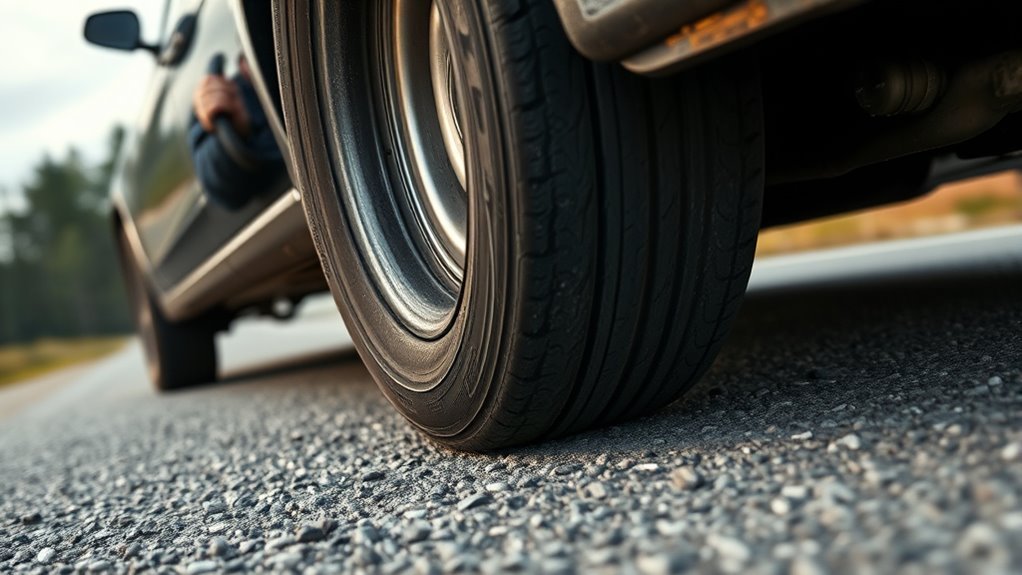
How well your car responds when you steer can tell you a lot about its suspension.
If you experience difficulty steering—whether your steering wheel feels shaky, loose, or stiff—it’s a clear sign that worn shocks and struts might be affecting your steering performance.
Abnormal steering responses, like excessive swaying or nosediving when braking, also point to potential suspension issues.
Excessive swaying or nosediving when braking signals possible suspension problems needing immediate attention.
These symptoms shouldn’t be ignored because they often signal underlying suspension failures that compromise control and safety.
Scheduling a suspension inspection as soon as you notice these problems is essential.
Addressing difficulty steering early helps prevent more severe damage and keeps your vehicle handling smoothly and safely on the road.
Vehicle Pulling to One Side
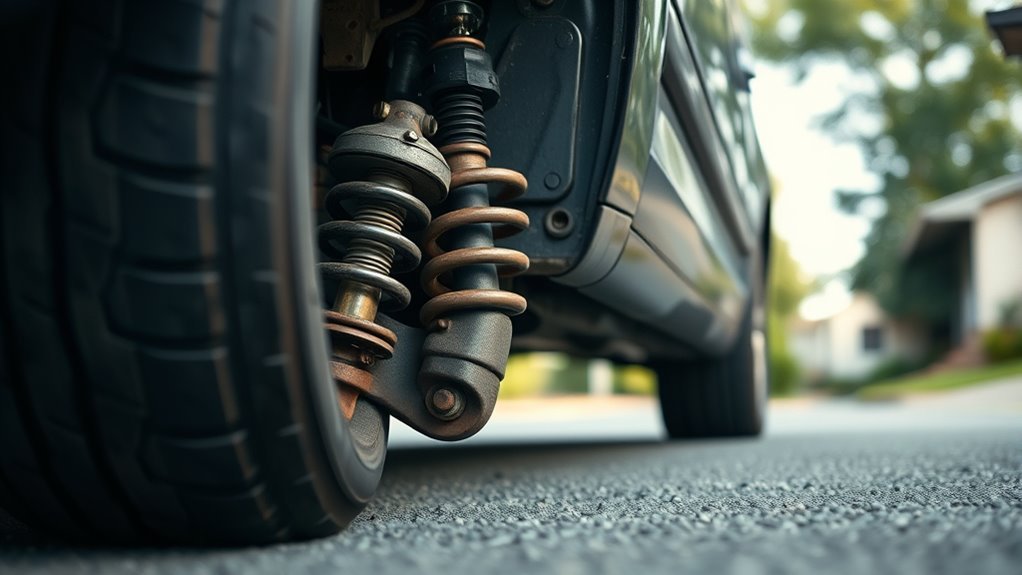
Experiencing difficulty steering often comes hand-in-hand with your car pulling to one side while driving.
When you notice your vehicle pulling, it’s likely due to misaligned or failing suspension components that affect your steering response.
Ignoring this can put extra stress on suspension parts, leading to more severe issues and safety risks down the road.
While uneven tire wear may contribute to the pulling, it often signals deeper suspension problems.
Quickly inspecting suspension springs and control arms helps pinpoint the root cause.
Addressing a vehicle pulling to one side with timely repairs not only improves your driving comfort but also enhances overall vehicle stability and safety.
Don’t wait—fixing suspension-related pulling early prevents costly damage.
Excessive and Uneven Tire Wear
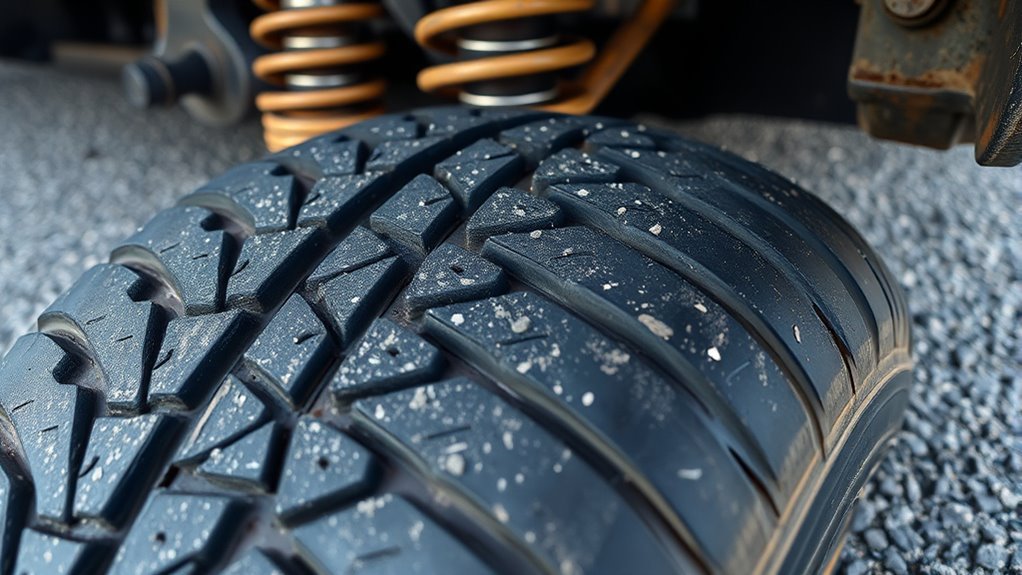
If you notice uneven or excessive tire wear, it’s a clear sign your suspension might be causing problems.
Worn shocks or misaligned components can create abnormal tire patterns like cupping or ridges.
Paying attention to these wear patterns helps you catch suspension issues before they lead to bigger repairs.
Tire Wear Patterns
Uneven or excessive tire wear, like cupping or scalloping, usually signals worn shocks or struts that need your attention.
These tire wear patterns often stem from suspension issues that compromise suspension performance.
When shocks or struts fail, they affect how your tires contact the road, causing uneven tire wear and increasing stress on other vehicle components.
Regularly checking your tires for uneven wear helps you catch suspension problems early, preventing costly damage.
Also, maintaining proper tire inflation is essential.
Incorrect air pressure can worsen tire wear and hint at suspension troubles.
Addressing these issues promptly improves vehicle stability, extends tire life, and keeps you safer on the road.
Don’t ignore unusual tire wear patterns—they’re one of the clearest signs your suspension needs replacing.
Suspension Impact on Tires
Tire wear patterns do more than just show signs of aging rubber—they reveal how well your suspension keeps your tires in contact with the road.
When your suspension system suffers wear and tear, especially from bad shocks or struts, you might notice excessive bouncing that causes uneven tire wear.
Cupping or ridges on your tires often signal suspension problems, as the shocks fail to absorb impacts properly. This leads to improper weight distribution.
Regularly checking tire wear patterns helps you spot these issues early before they worsen.
Also, maintaining correct tire pressure is vital because under- or over-inflation can worsen uneven wear tied to suspension faults.
Addressing suspension problems promptly not only extends tire life but also improves your vehicle’s stability and handling.
Fluid Leaks Around Shocks or Struts
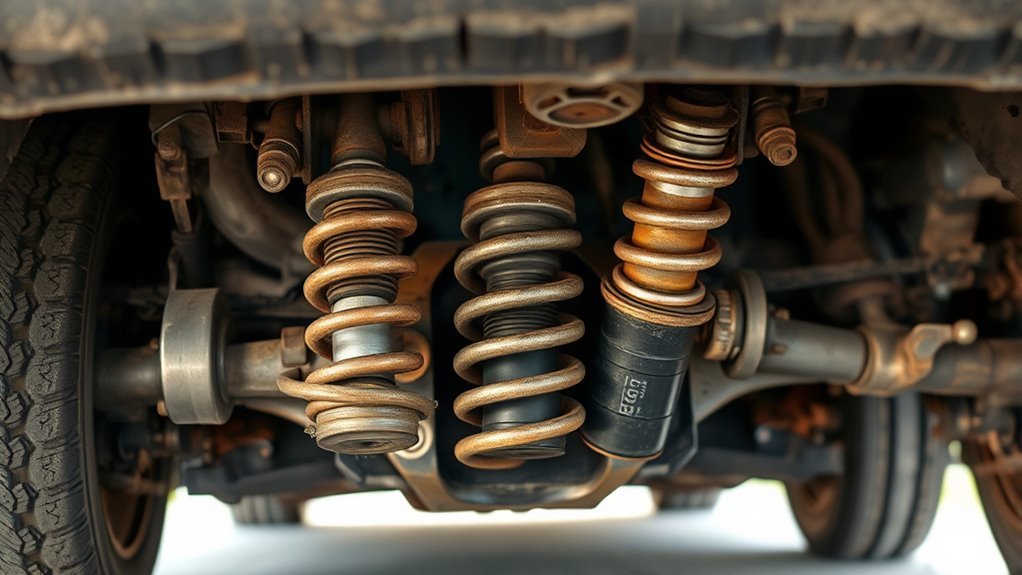
If you see fluid leaking around your shocks or struts, it likely means the seals have failed and hydraulic fluid is escaping.
This leak can hurt your suspension’s performance, making your car less stable and harder to stop safely.
Don’t ignore these signs—getting your suspension checked and repaired quickly can prevent bigger problems down the road.
Identifying Fluid Leaks
When you spot fluid leaking around your shocks or struts, it usually means the seals have failed.
This can seriously affect your suspension’s performance and safety.
Fluid leaks are clear signs of bad shocks or struts and indicate hydraulic fluid loss in your suspension systems.
You might notice wetness or streaks on the shock body or pooling fluid near the tires.
Regular checks help catch these issues early.
| Symptom | What It Means | Action to Take |
|---|---|---|
| Wetness on shocks | Seal failure, fluid leaks | Inspect and replace parts |
| Dripping fluid | Hydraulic fluid escaping | Immediate professional check |
| Pooling fluid | Serious leak, damaged seal | Urgent suspension evaluation |
| Rough ride | Reduced shock absorption | Test suspension system |
Risks of Leaking Suspension
Because leaking fluid around your shocks or struts compromises their seals, your suspension won’t perform as it should. This puts your ride comfort and safety at risk.
Fluid leaking from a shock or strut is one of the common signs you shouldn’t ignore. When your suspension plays a key role in vehicle stability, such leaks can reduce braking efficiency and affect steering control, creating serious warning signs.
You might notice fluid pooling near tires or on the shock bodies themselves. This signals that immediate inspection is necessary.
Ignoring these warning signs can lead to increased wear on suspension and steering components, making your ride unsafe.
Regularly checking for fluid leaks helps catch problems early. This ensures your suspension stays reliable and your driving remains safe.
Prompt Repair Importance
Although fluid leaks around your shocks or struts might seem minor, you shouldn’t delay getting them checked.
These leaks often signal a damper failure that compromises your suspension’s performance and handling. The hydraulic fluid inside shocks is crucial for absorbing road impacts, so visible leaks mean your ride comfort and safety are at risk.
Ignoring fluid leaks can cause further damage, leading to more expensive repairs down the line.
Regular maintenance and inspections help catch these issues early, preventing bigger problems. If you notice wet or oily shocks, schedule prompt repair to restore your suspension’s effectiveness.
Addressing leaks quickly guarantees your vehicle remains safe and comfortable, avoiding unnecessary costs and hazards on the road.
Don’t wait—fluid leaks demand immediate attention.
Unusual Noises When Driving Over Bumps
Unusual noises like squeaking, clunking, or knocking as you drive over bumps often mean your suspension components are worn or damaged.
These unusual noises typically come from failing shock absorbers or struts, which are essential for vehicle stability and ride comfort. Ignoring them risks more severe damage and unsafe handling.
Regular inspections help catch these issues early.
| Noise Type | Possible Cause | Impact on Vehicle |
|---|---|---|
| Squeaking | Worn bushings | Reduced comfort |
| Clunking | Loose suspension parts | Compromised stability |
| Knocking | Faulty shock absorbers | Poor handling |
If you notice worsening sounds, get a professional check to protect your suspension and safety.
Car Continues to Bounce After Hitting a Bump
If your car keeps bouncing more than two or three times after hitting a bump, your shocks or struts are probably worn out and not absorbing impacts properly.
When the car continues to bounce, it means the suspension components have lost their elasticity. This can harm your ride quality and vehicle control.
To check, perform a bounce test by pressing down on the rear bumper. If it keeps bouncing, it’s time for a replacement.
Ignoring worn shocks can lead to uneven tire wear and further suspension damage. Trust me, that will cost you more in repairs down the line!
Addressing this issue promptly helps maintain safety and guarantees your car handles bumps smoothly. No one wants excessive bouncing or instability while driving!
Vehicle Leaning or Sitting Lower on One Side
A vehicle leaning or sitting lower on one side often signals damaged or weakened springs that affect your car’s balance and safety.
When suspension components fail, uneven weight distribution occurs, causing driving instability and increased tire wear.
If struts are going bad, you’ll notice your car tilting, which demands immediate attention to avoid further suspension damage.
Ignoring this sign risks accidents and costly repairs.
| Issue | Effect |
|---|---|
| Vehicle Leaning | Uneven weight distribution |
| Struts Going Bad | Reduced shock absorption |
| Suspension Damage Ignored | Increased driving instability |
Address leaning promptly to maintain control and prolong suspension life.
Frequently Asked Questions
How Do I Know if My Suspension Needs Replacement?
You’ll know your suspension needs replacing if your car bounces excessively, nose dives when braking, or if tires wear unevenly.
You might also notice fluid leaks or the vehicle swaying or leaning during turns.
Don’t ignore these warning signs!
How Much Does It Usually Cost to Fix Your Suspension?
Fixing your suspension usually costs between $300 and $1,000 per axle.
But wait—if you drive a luxury or sports car, that price can skyrocket to $4,000.
Don’t forget labor and alignment fees adding up too.
Can You Still Drive With Bad Suspension?
You can drive with bad suspension, but you really shouldn’t.
It compromises control, safety, and comfort.
This increases the risk of accidents and costly repairs.
Fix it promptly to avoid more damage and keep your driving smooth and secure.
How Much Will It Cost to Replace Suspension?
You know what they say, “You get what you pay for.”
Replacing your suspension can cost anywhere from $1,000 to $5,000.
Labor often makes up half or more of that total expense.
Conclusion
If you notice any of these signs, don’t wait until it’s too late—your car’s suspension is the backbone of a smooth, safe ride.
Ignoring these issues is like playing with fire; it can lead to costly repairs or even accidents.
Stay ahead of the game by addressing suspension problems early.
Keeping your suspension in top shape guarantees you’re always in control and driving comfortably, no matter the road conditions.
So remember, if your vehicle is showing signs of suspension trouble, it’s crucial to take action.
Delaying repairs can escalate the situation, resulting in more significant damage and expense.
Prioritize your safety and the longevity of your vehicle by staying vigilant and proactive about your car’s suspension.
Maintaining your suspension not only enhances your driving comfort but also ensures a safer ride for you and your passengers.