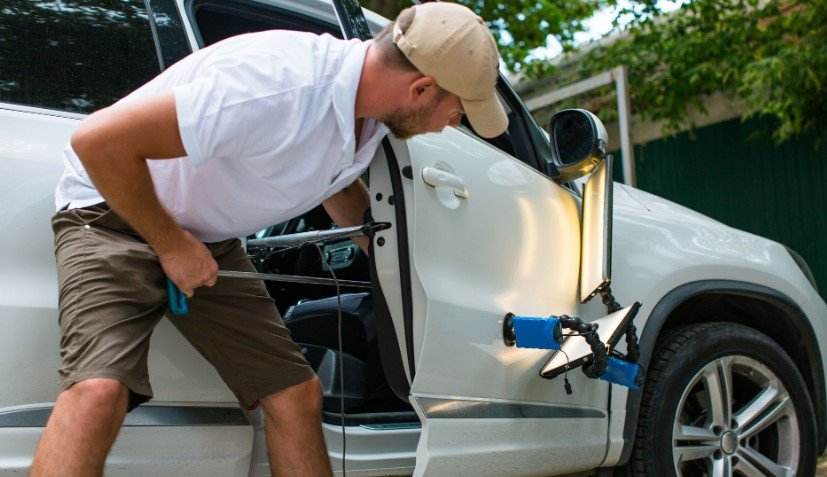
Best Techniques for Paintless Dent Removal
Vehicle dents are almost unavoidable. Whether it’s a shopping cart, a careless parking lot incident, or a minor bump, dents can affect both the appearance and value of your vehicle. Fortunately, not every dent requires expensive bodywork or a complete repaint.
Paintless Dent Removal (PDR) has become one of the most effective and affordable repair methods for fixing minor dents, while preserving your vehicle’s original factory finish.
Unlike traditional body repair, PDR doesn’t involve sanding, body filler, or repainting. Instead, trained technicians carefully reshape the damaged metal using specialized tools and proven techniques. It’s a low cost practice that yield fast result. And, the finishing – it looks like as though the damage never happened.
What Is Paintless Dent Removal (PDR)?
Paintless Dent Removal is a repair process that restores a dented metal panel to its original shape without damaging the factory paint. Instead of replacing body panels or applying fillers and paint, technicians carefully manipulate the metal until the dent disappears.
PDR works best when the paint remains intact and the metal has not been excessively stretched. Small to medium-sized dents, door dings, and hail damage are often the cases for this repair method.
Because the original paint remains untouched, the vehicle retains its factory finish, which helps preserve its appearance and resale value.
Why Paintless Dent Removal Is So Popular?
One of the biggest reasons drivers choose Paintless Dent Removal is that it avoids unnecessary bodywork. Traditional dent repairs often involve sanding, applying filler, priming, painting, and blending adjacent panels. These steps increase both cost and time.
Paintless Dent Removal is much simpler. Since there is no repainting, repairs can often be completed within a few hours rather than several days.
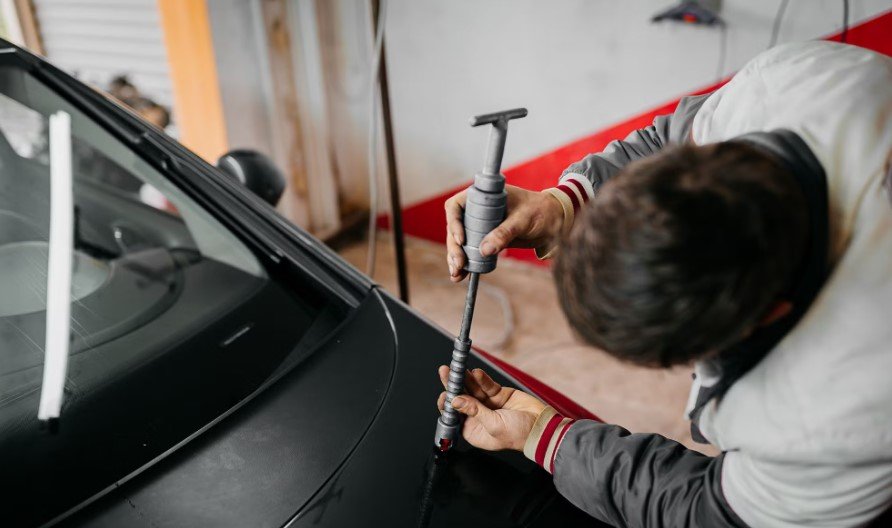
Another advantage is cost. Fewer materials and less labor generally make PDR more affordable than conventional repairs.
PDR is also environmentally friendly because it eliminates the need for paint, solvents, and chemical fillers that are commonly used in body shops.
Most Common Paintless Dent Removal (PDR) Techniques
Professional technicians use several different techniques depending on the dent’s location, size, and accessibility. The following methods are the ones technicians mostly apply.
- Metal Rod Technique
The metal rod technique is the most widely used Paintless Dent Removal method.
Technicians access the backside of the damaged panel by removing trim pieces, interior panels, or other components if necessary. Using specially designed steel rods of various shapes and lengths, they gently massage the dent outward.
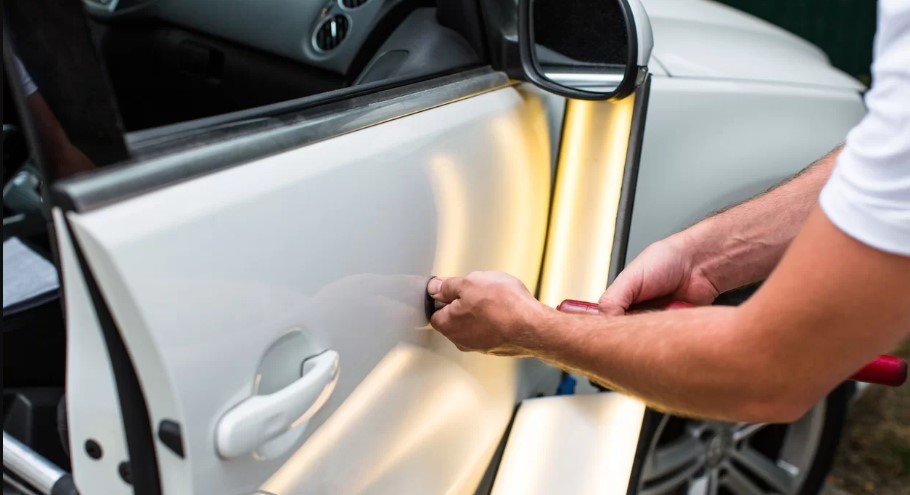
Rather than applying excessive force, technicians make hundreds of tiny adjustments until the metal gradually returns to its original position.
This method provides exceptional precision and is ideal for dents where the back of the panel is accessible.
- Glue Pulling Technique
Not every dent can be reached from behind. In these situations, technicians often use the glue pulling technique.
A specially designed plastic tab is attached to the center of the dent using a removable hot glue. A pulling device then applies controlled pressure to lift the dent outward.
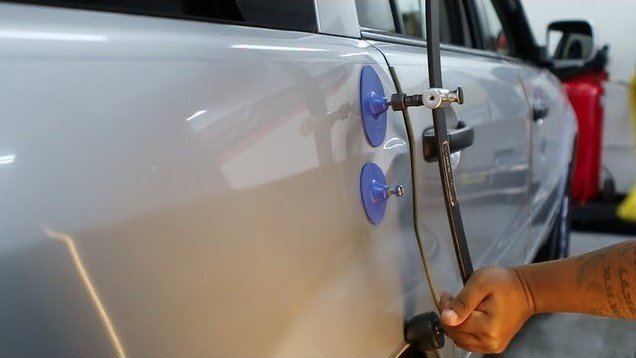
Once the dent has been raised, the glue is safely removed without damaging the factory paint.
Glue pulling is especially useful for repairing roof panels, quarter panels, and other areas where direct rear access is limited.
- Tap Down Technique
Repairing a dent doesn’t always end after pushing or pulling the metal outward.
Sometimes tiny high spots remain around the repaired area. Technicians use tap-down tools with soft plastic or polished tips to carefully level these raised areas.
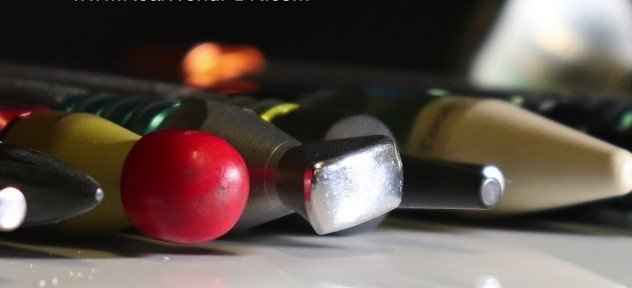
This finishing process ensures the repaired panel blends perfectly with the surrounding metal, creating a smooth and nearly invisible repair.
Without proper tap-down work, even a successfully removed dent may still reflect light unevenly.
- Heat-Assisted Dent Removal
Heat is another valuable tool during certain PDR repairs.
Some vehicle panels, particularly aluminum, are less flexible than traditional steel. Applying controlled heat softens the metal slightly, making it easier to reshape while reducing the risk of paint cracking.
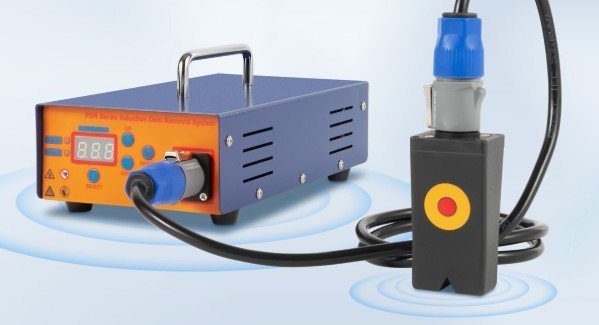
Heat-assisted repair is also beneficial during cold weather, when automotive paint becomes more brittle.
Professional technicians carefully monitor temperature throughout the repair process to avoid damaging the paint or metal.
- Knockdown and Blending Technique
After the main dent has been removed, technicians often perform blending to perfect the repair.
Using specialized knockdown tools, they smooth tiny imperfections and blend repaired areas into the surrounding panel.
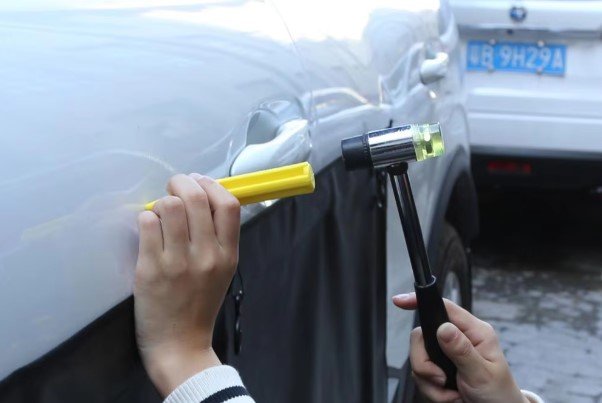
This final step requires considerable skill because even the smallest imperfections become visible under bright lighting.
When completed correctly, the repair becomes nearly impossible to detect.
Essential Tools Used in Paintless Dent Removal
Professional PDR technicians rely on specialized equipment designed specifically for dent repair.
Dent rods: Usually available in many shapes and sizes, allowing technicians to reach difficult areas inside body panels.
Glue tabs and mini lifters: These two make it possible to repair dents that cannot be accessed from behind.
Reflection boards and LED lights: These two help technicians identify even the slightest surface distortion. By observing how light reflects across the panel, they can precisely locate high and low spots during the repair.
Tap-down tools: Usually used to eliminate raised areas and refine the final surface.
Heat guns: Used for aluminum panels and help protect paint during repairs in colder temperatures.
These tools allow professionals to restore damaged panels with remarkable accuracy.
Comparison of Common Paintless Dent Removal Techniques
| Technique | Best Used For | Main Advantage |
| Metal Rod Technique | Dents with rear panel access | Highly precise repairs |
| Glue Pulling | Areas with limited rear access | No need to remove body panels |
| Tap Down Technique | Eliminating high spots | Smooth, invisible finish |
| Heat-Assisted Repair | Aluminum panels and cold weather | Reduces risk of paint damage |
| Knockdown & Blending | Final surface refinement | Professional-looking results |
When Paintless Dent Removal Works Best
Paintless Dent Removal is an excellent solution for many types of minor vehicle damage.
It works especially well for door dings caused by nearby vehicles, shopping cart impacts, hail damage, and small dents from everyday driving.
As long as the factory paint remains intact and the metal has not been severely stretched, PDR often restores the panel to its original appearance.
Many insurance companies also recommend Paintless Dent Removal for hail damage because it preserves the vehicle’s original finish while reducing repair costs.
When Traditional Dent Repair Is Necessary
Although Paintless Dent Removal is highly effective, it isn’t suitable for every situation.
If the paint has cracked or chipped, repainting will usually be required after the dent is repaired.
Large collision damage, sharp creases, torn metal, and severely stretched panels typically require conventional bodywork involving filler, sanding, and painting.
In these situations, a professional body shop can determine the most appropriate repair method after inspecting the damage.
DIY vs Professional Paintless Dent Removal
Many DIY dent repair kits are available online, but they often produce mixed results.
Simple dents on flat panels may be improved using basic glue-pull kits, but achieving professional-quality repairs requires experience, patience, and specialized lighting.
Professional technicians spend years learning how different metals respond to pressure and how to manipulate damaged panels without creating additional imperfections.
Attempting complex repairs without proper training can make the dent worse or even damage the paint, leading to more expensive repairs later.
For valuable vehicles or noticeable dents, professional Paintless Dent Removal is usually the safest investment.
Frequently Asked Questions
Can every dent be repaired with Paintless Dent Removal?
No. PDR works best on minor dents where the paint remains undamaged and the metal hasn’t been excessively stretched.
Will Paintless Dent Removal damage my paint?
When performed correctly by trained technicians, PDR preserves the original factory paint.
How long does Paintless Dent Removal take?
Many minor repairs can be completed within one to three hours, although larger dents may require additional time.
Is Paintless Dent Removal less expensive than traditional repairs?
Yes. Because PDR eliminates sanding, fillers, and repainting, it is often significantly more affordable.
Can aluminum body panels be repaired with PDR?
Yes. Aluminum panels can often be repaired using specialized techniques, although they generally require greater skill than steel panels.
Final Thoughts
Paintless Dent Removal has transformed the way minor vehicle dents are repaired. By preserving the factory paint and eliminating the need for fillers and repainting, PDR provides an efficient, affordable, and environmentally friendly solution for many types of damage.
Professional technicians use a combination of metal rods, glue pulling, tap-down tools, heat-assisted repairs, and blending techniques to restore damaged panels with remarkable precision.
However, if your vehicle has suffered a small dent but the paint is still intact, consulting a qualified PDR specialist can save you time, money, and help maintain your car’s original appearance and resale value.