What Role Does Electric Cars Have in Radiators?
In your electric car, the radiator plays an essential role in keeping the battery and electronics cool by managing heat efficiently.
It circulates coolant that absorbs and dissipates heat, preventing overheating and damage. This helps maintain battery performance, safety, and charging speed.
You’ll also find cooling system components like pumps and sensors working together to optimize temperature.
If you want to understand how to keep these systems running smoothly and avoid costly issues, there’s plenty more to explore.
Key Takeaways
- Electric cars use radiators to cool batteries and electronic components, preventing overheating and maintaining performance.
- The radiator coolant absorbs heat from the battery and motor, then dissipates it via radiator fans for efficient temperature control.
- Proper radiator function ensures battery safety, enhances charging efficiency, and extends battery life in electric vehicles.
- Radiators are part of the EV thermal management system, working alongside pumps, thermostats, and sensors for precise cooling.
- Regular radiator maintenance in electric cars prevents overheating, system failures, and ensures optimal thermal regulation.
The Function of Radiators in Electric Vehicles

Although electric vehicles don’t have traditional engines, their radiators play an essential role in keeping the battery and electronic components cool.
You rely on the radiator coolant circulating through the system to absorb heat generated by the battery and motor.
This coolant then flows to the radiator, where fans help dissipate heat efficiently, especially when you’re driving hard or charging.
The radiator coolant maintains the best temperature, ensuring your EV runs smoothly and prevents overheating that could damage components.
Radiator coolant keeps your EV at the ideal temperature, preventing overheating and protecting vital components.
You should regularly inspect and clean the radiator to avoid buildup that reduces cooling efficiency.
This is crucial for protecting your vehicle’s range and performance.
Sensors continuously monitor temperatures, allowing the radiator to adjust coolant flow.
This way, your EV’s battery and electronics stay in optimal condition.
Key Components of EV Thermal Management Systems
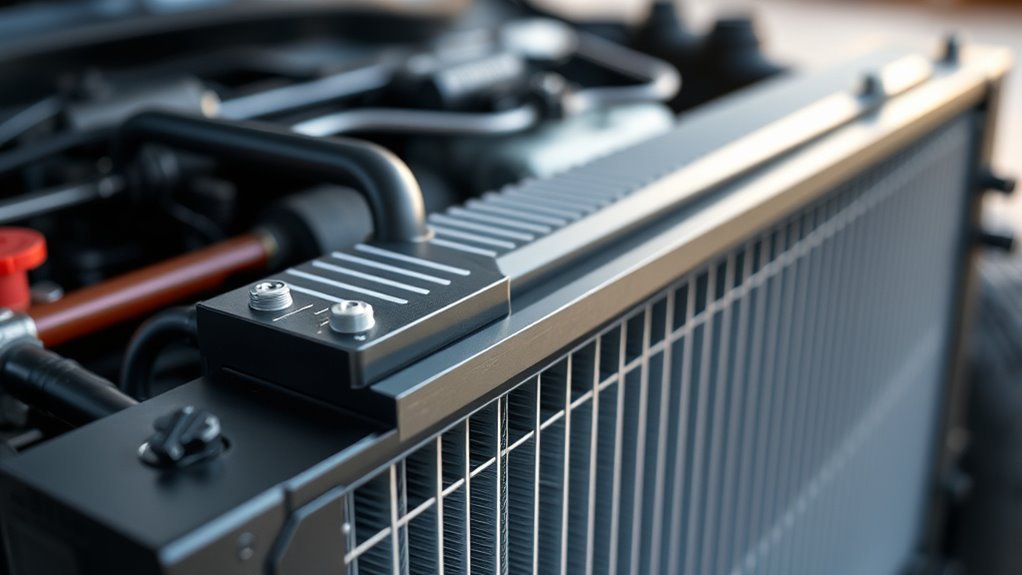
A well-designed thermal management system relies on several key components—such as the radiator, coolant pump, and thermostat—that work together to regulate your EV’s temperature.
The radiator’s job is to dissipate heat generated by the battery and motor, preventing overheating and ensuring your vehicle runs efficiently.
Alongside the radiator, the coolant pump circulates coolant through the system. The thermostat controls the flow based on temperature readings.
Sensors constantly monitor operating temperatures to maintain precise control.
Key components include:
- Radiator: Dissipates heat to maintain ideal temperature
- Coolant pump: Circulates coolant throughout the system
- Thermostat: Regulates coolant flow based on temperature
Regular maintenance of these parts is essential to keep your EV’s thermal system reliable and efficient.
How Radiators Enhance Battery Performance and Safety

Understanding the role of radiators in your EV’s thermal management system highlights how they directly impact battery performance and safety.
Radiators play an essential role by dissipating heat generated during battery operation, keeping temperatures within safe limits. This prevents overheating, which can damage the battery and reduce its lifespan.
By maintaining ideal temperature, radiators also boost charging efficiency. This means you can charge faster and improve your EV’s range.
Sensors work with the radiator to monitor and adjust cooling as needed, ensuring consistent performance. If the radiator fails to manage heat properly, you risk safety issues and diminished battery life.
Essential Maintenance Practices for EV Radiators
You should regularly inspect your EV radiator and hoses to catch any wear or damage early.
Following the manufacturer’s coolant replacement schedule keeps your cooling system running smoothly.
Don’t forget to clean the radiator fins to remove debris and improve heat dissipation.
Regular Radiator Inspections
Regular inspections of your EV’s radiator play an essential role in spotting wear, leaks, or damage early.
This can save you from costly repairs and ensure your thermal management system runs efficiently.
By performing regular inspections, you maintain proper coolant flow and prevent overheating of critical components like the battery and motor.
During these checks, pay attention to radiator hoses and clean the radiator fins to improve heat dissipation.
Also, listen for unusual noises that might signal cooling system issues before they worsen.
To keep your EV running smoothly, focus on:
- Inspecting radiator hoses and connections for leaks or cracks
- Cleaning radiator fins to enhance cooling efficiency
- Monitoring for abnormal sounds or performance changes
Regular inspections help maximize your EV’s range and protect its crucial thermal system.
Coolant Replacement Schedule
Along with keeping an eye on your EV’s radiator condition, sticking to a proper coolant replacement schedule helps maintain the system’s ability to regulate battery and motor temperatures.
Manufacturers generally recommend changing the coolant every 3 to 5 years or based on mileage, depending on your EV model and the coolant type.
Regularly replacing the coolant prevents contaminants from building up in the cooling system components, which can reduce heat dissipation efficiency and cause overheating.
By monitoring coolant levels and condition, you guarantee the cooling system operates at peak performance.
Following this schedule not only protects your EV’s thermal management system but also extends the lifespan of key components.
This way, you keep your electric car running smoothly and efficiently throughout its life.
Radiator Cleaning Techniques
Maintaining your EV’s radiator cleanliness plays an essential role in preventing overheating and guaranteeing efficient battery performance.
To keep your radiator functioning properly, focus on these key cleaning techniques:
- Use compressed air or a soft brush to clear dirt and debris from radiator fins. This promotes better airflow and cooling.
- Inspect radiator hoses for cracks or leaks. Also, verify coolant levels are topped up to maintain maximum thermal management.
- Flush the cooling system periodically with a water and manufacturer-recommended coolant mixture. This helps remove buildup and prevent clogs.
You should clean and inspect your radiator at least once a year.
However, do it more often if you drive in dusty conditions. Keeping radiator hoses and components in good shape helps avoid overheating and keeps your EV running smoothly.
Risks of Ignoring Radiator and Cooling System Care
If you ignore your electric car’s radiator and cooling system, you risk overheating that can seriously damage the battery and motor, leading to expensive repairs.
Neglecting radiator and cooling care reduces efficiency, shortens range, and increases energy use.
Blocked airflow from dirty components worsens heat dissipation, risking system failure.
Corrosion from old coolant and unnoticed leaks also threaten safety and durability.
| Risk | Consequence |
|---|---|
| Overheating | Battery/motor damage |
| Reduced efficiency | Lower range and higher costs |
| Blocked airflow | Poor heat dissipation |
| Corrosion buildup | Cooling system failure |
| Leaks and damage | Safety hazards, breakdowns |
Paying attention to your radiator and cooling system keeps your EV safe, reliable, and efficient.
Educating EV Owners on Radiator Upkeep and Benefits
Because your electric vehicle relies heavily on its radiator to keep the battery and motor cool, understanding how to care for this component is essential.
Educating yourself on radiator upkeep helps you catch potential issues early and maintain peak performance.
Use the right tools to inspect and clean your radiator regularly. Here’s what you should focus on:
- Check for unusual noises or drops in performance that may signal radiator problems.
- Clean radiator fins carefully to improve heat dissipation and extend system life.
- Follow the recommended maintenance schedule, including timely coolant changes, to prevent overheating and costly repairs.
Keeping an eye on these details can really make a difference!
Frequently Asked Questions
Why Do Electric Vehicles Have Radiators?
You need radiators in electric vehicles to cool the battery and motor, preventing overheating.
This keeps your EV running efficiently and extends its life.
Plus, it avoids performance drops or safety issues caused by excessive heat.
What Is the Biggest Problem With Electric Cars?
The biggest problem you’ll face with electric cars is battery overheating.
It can reduce performance and pose safety risks if the thermal management system, including radiators, isn’t properly maintained.
Do Electric Cars Still Need a Radiator?
Yes, you still need a radiator in an electric car.
It cools the battery and electrical components, preventing overheating.
Keeping it maintained helps your EV run efficiently and safely, avoiding costly damage or breakdowns.
How Hot Is Too Hot for Electric Cars?
If your electric car’s battery hits 60°C or higher, you’re in danger.
That heat can damage it, reducing lifespan and efficiency.
Don’t wait—your car’s cooling system kicks in to keep things safe and smooth.
Conclusion
You might picture a roaring engine needing a radiator, but in electric cars, radiators quietly safeguard your battery’s heartbeat.
While combustion engines blaze with heat, your EV’s radiator cools with silent precision, ensuring power flows smoothly and safely.
Ignoring this essential system is like leaving a candle burning unattended—what starts cool can quickly overheat.
By caring for your EV radiator, you keep your ride efficient, reliable, and ready for every journey ahead.
So, remember, the radiator in your electric vehicle is crucial for battery health and performance.
Regular maintenance can prevent overheating and ensure that your electric car runs at its best.
In conclusion, looking after your EV’s radiator is key to keeping your electric car efficient and dependable, allowing you to enjoy a smooth ride every time you hit the road.