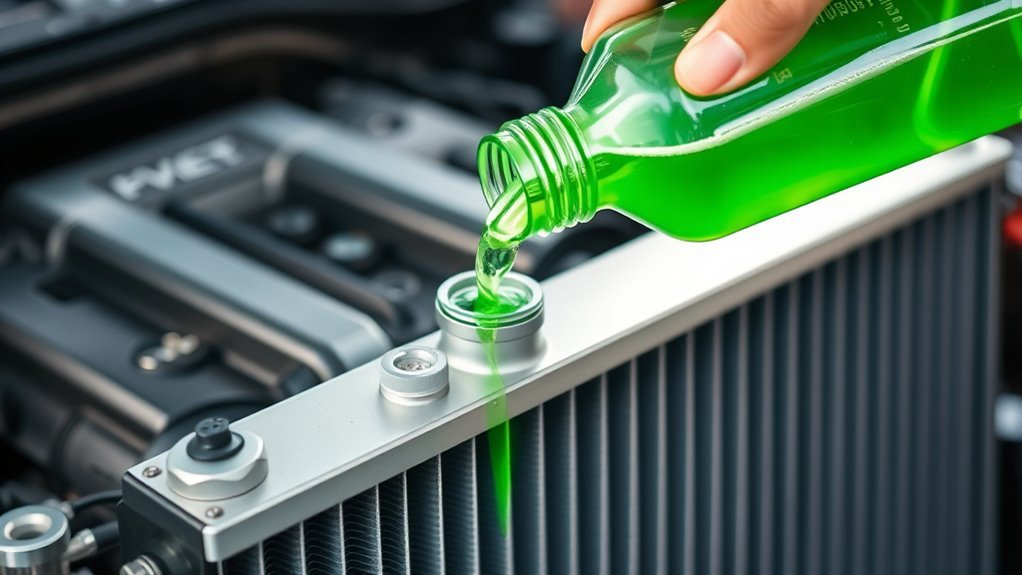
Choosing the Right Fluid for Your Car Radiator
You should pick the right radiator fluid to keep your engine cool and prevent corrosion.
Most cars need a 50/50 mix of antifreeze and water.
It’s crucial to know your coolant type—like IAT, OAT, or HOAT—since each suits different engines and lasts for varying miles.
Check levels often and watch for leaks or discoloration.
Using the proper fluid and maintenance boosts performance and avoids costly repairs.
Keep going to understand how to match fluids and care for your cooling system.
Key Takeaways
– Identify your vehicle’s recommended coolant type: IAT, OAT, or HOAT, based on manufacturer specifications and engine compatibility.
It’s crucial to use the right type for optimal performance.
– Use a 50/50 antifreeze-to-water mixture for balanced freezing and boiling protection.
Adjust this ratio for your specific climate as needed.
– Regularly inspect coolant for discoloration, debris, or low levels to detect leaks or contamination early.
Catching these issues early can save you from bigger problems down the road.
– Follow your owner’s manual for coolant change intervals, typically every 2-3 years or as specified.
Staying on top of this will help keep your engine running smoothly.
– Ensure hoses, belts, and the radiator are in good condition to maintain proper coolant circulation.
This is key to preventing overheating and ensuring your vehicle operates efficiently.
Understanding Engine Coolant and Antifreeze
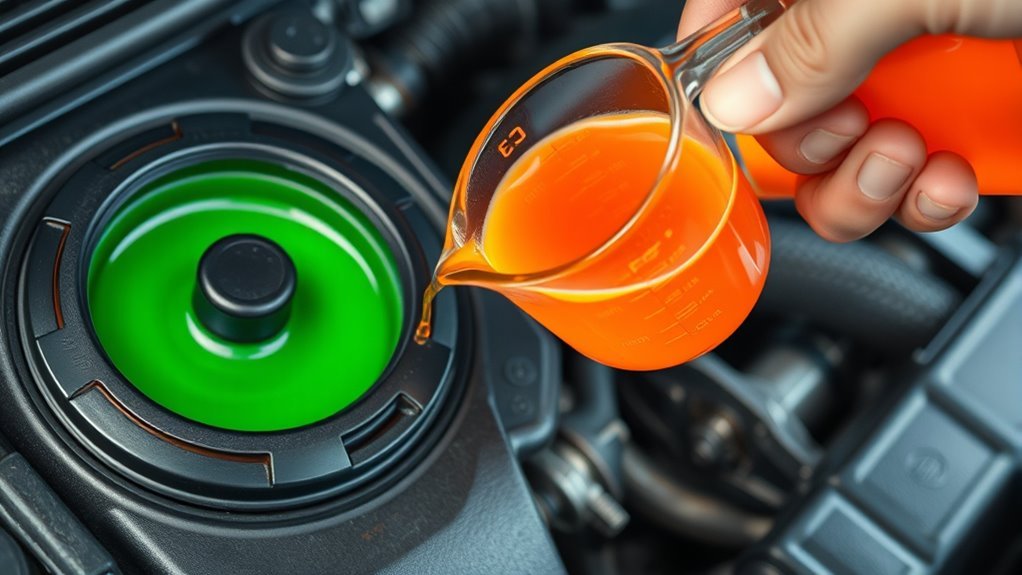
Engine coolant combines antifreeze and water—usually in a 50/50 mix—to keep your engine from overheating.
Engine coolant mixes antifreeze and water, typically half and half, to prevent engine overheating.
This radiator fluid circulates through your cooling system, regulating temperature and preventing damage caused by extreme heat or cold.
Antifreeze, mainly made from ethylene glycol, lowers the freezing point of water, protecting your engine in cold weather.
Both coolant and antifreeze contain additives that guard against corrosion and maintain your cooling system’s integrity.
For peak performance, you need to perform routine maintenance by checking and replacing the engine coolant as recommended.
Depending on the type, coolant lifespan varies from 30,000 miles to five years.
So, staying on top of this schedule helps avoid overheating and costly repairs.
Understanding these basics guarantees you choose and maintain the right radiator fluid for your vehicle.
Types of Coolants and Their Benefits
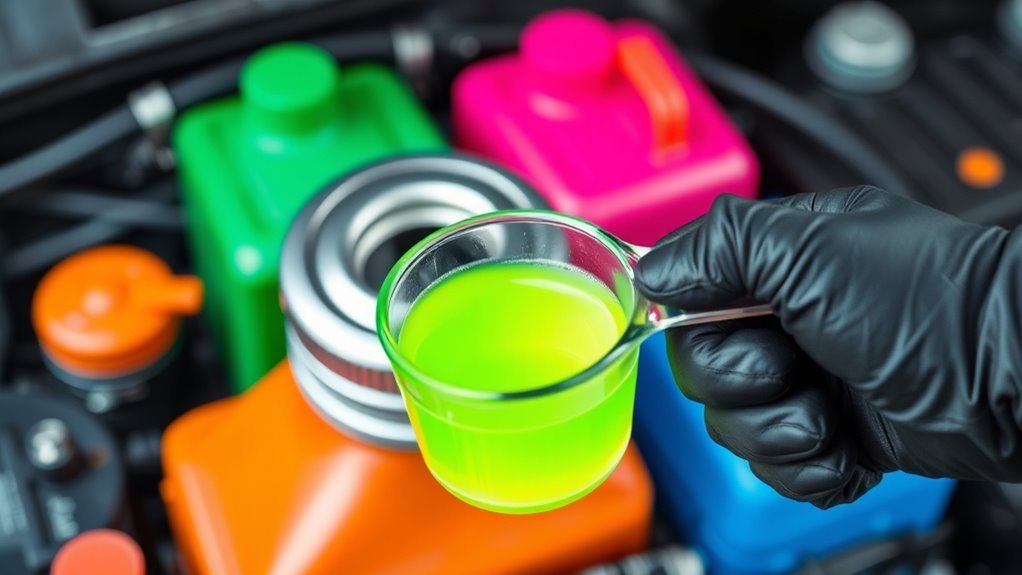
Choosing the right coolant for your vehicle means understanding the different types available and how they protect your engine.
There are three main types of coolant: Inorganic Acid Technology (IAT), Organic Acid Technology (OAT), and Hybrid Organic Acid Technology (HOAT).
IAT coolants need more frequent replacement, roughly every 30,000 miles, and can be prone to corrosion.
On the other hand, OAT coolants last longer, up to 150,000 miles, but may offer less corrosion resistance.
HOAT combines the best of both, providing excellent corrosion resistance and longevity.
Selecting the correct type of coolant guarantees your coolant system functions properly, helping to prevent overheating and maintain peak engine performance.
Regular coolant flushes are essential to remove contaminants and keep these benefits intact.
Importance of Proper Coolant Mixture
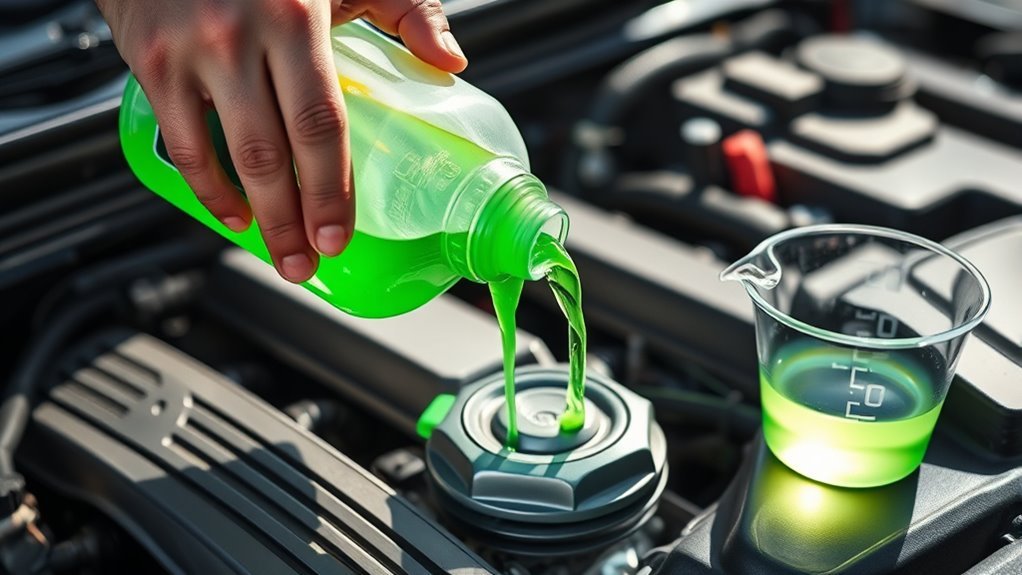
You’ll want to get the coolant-to-water ratio just right, usually a 50/50 mix, to protect your engine from freezing and overheating.
Depending on where you live, you might need to adjust that ratio—more antifreeze in colder climates and more water in hotter ones.
Checking this balance regularly helps keep your engine running smoothly and avoids costly damage.
Coolant-to-Water Ratios
Although it might seem straightforward, getting the coolant-to-water ratio right is vital for your car’s cooling system to work effectively.
The ideal mix typically balances coolant and antifreeze at 50/50. This lowers the freezing point of water and raises the boiling point, preventing engine damage from freezing or overheating.
Using the proper coolant mixture guarantees efficient heat transfer and reduces corrosion inside your radiator.
To maintain your vehicle properly, check your owner’s manual for the recommended coolant-to-water ratio, as it can vary by manufacturer.
Sticking to this ratio helps your engine run cooler and last longer.
Avoid guessing—incorrect mixtures can lead to poor cooling performance and costly repairs.
Climate-Based Mixture Adjustments
When temperatures shift throughout the year, adjusting your coolant mixture becomes essential to keep your engine running smoothly.
The standard 50/50 ratio of antifreeze to water suits most conditions, but colder weather calls for a higher antifreeze concentration—up to 70%—to protect your engine from freezing.
During routine maintenance and repairs, check the coolant reservoir and adjust the mixture according to your climate.
Too much antifreeze can cause overheating, while too little increases freezing risk and corrosion.
Follow your vehicle manufacturer’s guidelines to maintain the ideal balance.
Signs of Coolant and Radiator Fluid Issues
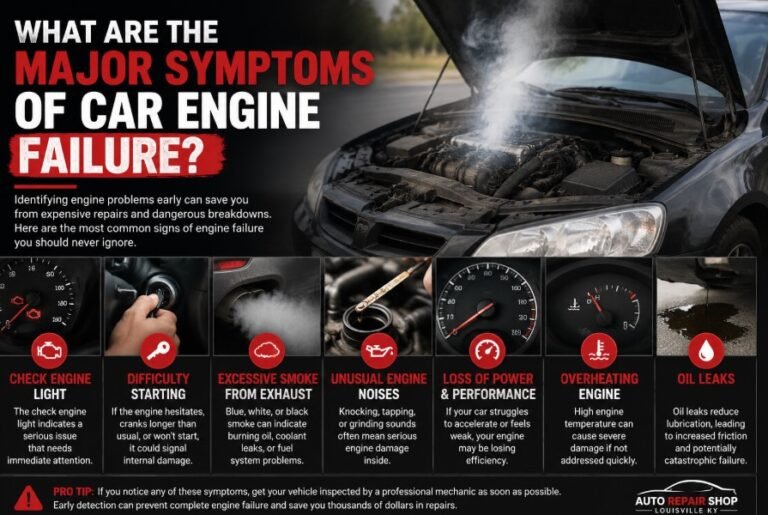
If your temperature gauge starts climbing, it’s a clear sign your coolant might be struggling to keep things cool.
Spotting a sweet-smelling syrup under the hood often means there’s a leak you need to fix fast.
Also, don’t ignore rust or debris in the reservoir—they can clog your radiator and reduce its efficiency.
Overheating Temperature Indicators
How can you tell your car’s cooling system is struggling before serious damage occurs?
Start by watching the temperature gauge on your dashboard—if it rises steadily, it’s a clear overheating temperature indicator.
Check the fluid level in your radiator and coolant reservoir regularly; low levels often signal leaks or issues.
Rust and other forms of contamination in the coolant can reduce its ability to cool the engine effectively, causing the engine to overheat.
Also, inspect radiator hoses for brittleness or cracks, and be alert for steam under the hood.
These signs mean the coolant in the engine isn’t circulating properly, putting your car at risk.
Catching these symptoms early helps you avoid costly repairs and keeps your engine running smoothly.
Coolant Leak Symptoms
Recognizing coolant leak symptoms early can save you from costly engine damage.
If you notice a sweet-smelling syrup or puddles of radiator fluids under your car, it’s a clear sign of a coolant leak.
Keep an eye on your dashboard temperature gauge—if it rises unusually, your engine might be overheating due to low coolant levels.
Frequent need to top off coolant indicates a possible leak or cooling system issue.
Also, check for hard, brittle radiator hoses or steam escaping from under the hood; these signals require immediate attention.
Don’t ignore rust or discoloration in the coolant reservoir, as it compromises the cooling system’s integrity.
If you spot any of these symptoms, consult a professional mechanic promptly to prevent severe engine damage.
Contamination and Corrosion Signs
When your radiator fluid shows signs of contamination or corrosion, your engine’s health is at risk.
Contaminated coolant can cause overheating and lead to serious engine damage if ignored.
You should watch for these key signs:
- Rust or brownish discoloration in the coolant reservoir, indicating corrosion and degraded coolant.
- A sweet smell or visible coolant leaks under the hood, which can cause fluid loss and overheating.
- Frequent need to top off coolant levels, suggesting leaks or internal issues needing immediate attention.
Ignoring these warning signs jeopardizes your car maintenance efforts and can lead to costly repairs.
Regularly inspect your coolant system to catch contamination or corrosion early.
This will ensure your engine runs smoothly and stays protected from damage.
Maintenance Tips for Cooling System Health
Although choosing the right fluid is essential, maintaining your cooling system is equally important to keep your engine running smoothly.
Regularly check coolant levels—ideally every month—to guarantee your engine stays within a safe temperature range and avoid overheating.
Make a habit of inspecting the coolant for discoloration or debris. If it looks rusty or contaminated, replace it immediately.
Follow your vehicle’s recommended schedule to flush the cooling system every 2-3 years. This helps in removing old coolant and preventing corrosion buildup.
Don’t forget to inspect hoses and belts for cracks or leaks, as these issues can lead to coolant loss.
Always consult your owner’s manual for specific coolant and maintenance guidelines. This will help ensure peak cooling system health and long-term engine protection.
Selecting the Best Radiator Fluid for Your Vehicle
How do you know which radiator fluid suits your vehicle best?
Start by consulting your owner’s manual to identify the right type of radiator fluid — whether it’s IAT, OAT, or HOAT. This step is crucial for keeping your engine running smoothly.
Ethylene glycol-based coolants are common, but make sure the mixture is a proper 50/50 blend with water for peak performance.
During regular maintenance, keep an eye out for discoloration or contamination. These signs indicate that a coolant flush might be due.
Consider these points when selecting fluid:
- Match coolant specifications to your car service guidelines.
- Choose the correct type of radiator fluid that’s compatible with your engine.
- Maintain a balanced antifreeze and water mix to avoid overheating or freezing.
Following these tips can help you avoid costly repairs and extend the life of your cooling system.
Frequently Asked Questions
Does It Matter What Antifreeze You Put in Your Car?
Yes, it matters a lot.
You’ve got to use the antifreeze your car’s manual recommends to avoid corrosion, overheating, or damage.
Mixing types can cause sludge, so always flush before switching fluids to keep your engine safe.
What Are the Ingredients in Antifreeze?
Antifreeze mainly contains ethylene or propylene glycol, plus corrosion inhibitors like silicates and borates.
You’ll also find dyes, foam inhibitors, and pH stabilizers.
Always check your manual to pick the right mix for your car.
What Happens if You Use the Wrong Coolant?
If you use the wrong coolant, you’ll risk sludge buildup, corrosion, overheating, or freezing.
It can damage your engine and reduce cooling efficiency.
Plus, it may even void your warranty, leading to costly repairs you definitely want to avoid.
How Much Radiator Fluid Do I Put In?
You’ll need between 6 to 16 quarts, depending on your car’s engine size.
Check your owner’s manual for exact capacity, and always fill to the “full” line on the overflow tank to avoid issues.
Conclusion
Choosing the right fluid for your car radiator is vital to keep your engine running smoothly.
Did you know that nearly 30% of vehicle breakdowns are linked to cooling system failures?
By understanding coolant types and maintaining the proper mixture, you can avoid costly repairs and overheating issues.
Stay proactive with regular checks and use the best radiator fluid for your vehicle.
This will guarantee long-lasting engine health and reliable performance on the road.
In conclusion, selecting the appropriate radiator fluid is essential for your car’s longevity.
Regular maintenance and understanding your coolant options can prevent expensive breakdowns and maximize your engine’s efficiency.
Make it a habit to check your coolant levels and mixture, ensuring you choose the right type for your vehicle.
Investing a little time in this will save you from potential headaches and keep your ride smooth for years to come!