How Long Does It Take to Replace a Wheel Bearing
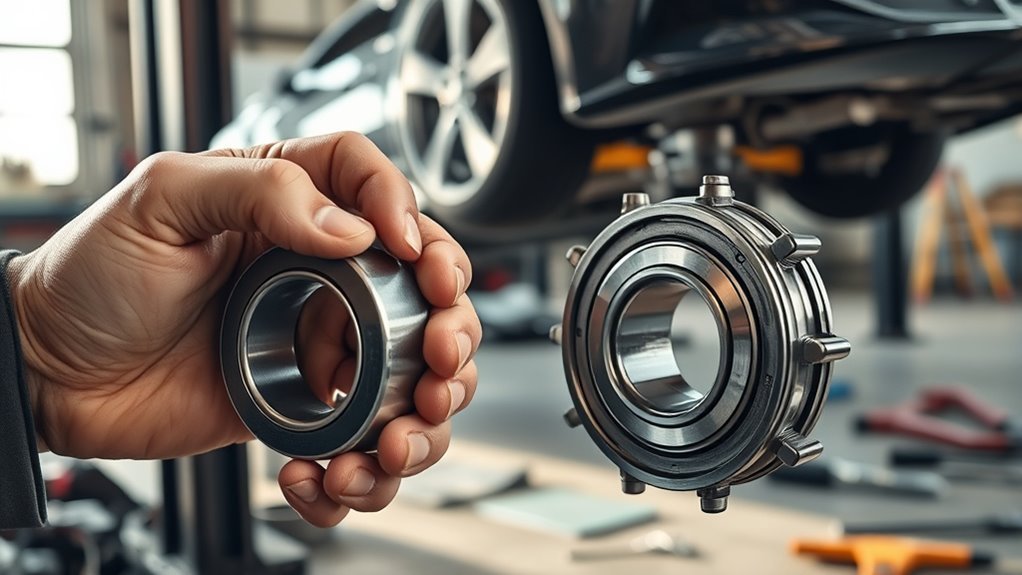
Replacing a wheel bearing is a crucial maintenance task that can prevent further issues with your vehicle’s performance.
Typically, it takes between 1.5 to 2.5 hours for front wheel bearings and 1 to 2 hours for rear wheel bearings.
However, the time required may increase if the bearings are pressed-in or if there is rust present, as these complications can make removal more challenging.
Corrosion, especially in harsh weather conditions, can add an hour or more to the job.
Additionally, factors such as your vehicle’s design and the technician’s experience can significantly influence the time needed for the replacement.
If you want to dive deeper into how these details affect the job, keep exploring the topic!
Key Takeaways
- Front wheel bearing replacement typically takes 1.5 to 2.5 hours, while rear replacements usually require 1 to 2 hours.
- Sealed hub assemblies generally take less than 2.5 hours. However, pressed-in bearings can take 2.5 to 4+ hours.
- Keep in mind that rust and corrosion can add 30 to 90 minutes or more, depending on severity and vehicle condition.
- Experienced technicians with the right tools can usually complete replacements faster, especially on bolt-on hub designs.
- Also, replacing both front and rear bearings may not double the time due to overlapping repair steps.
Average Labor Time for Wheel Bearing Replacement
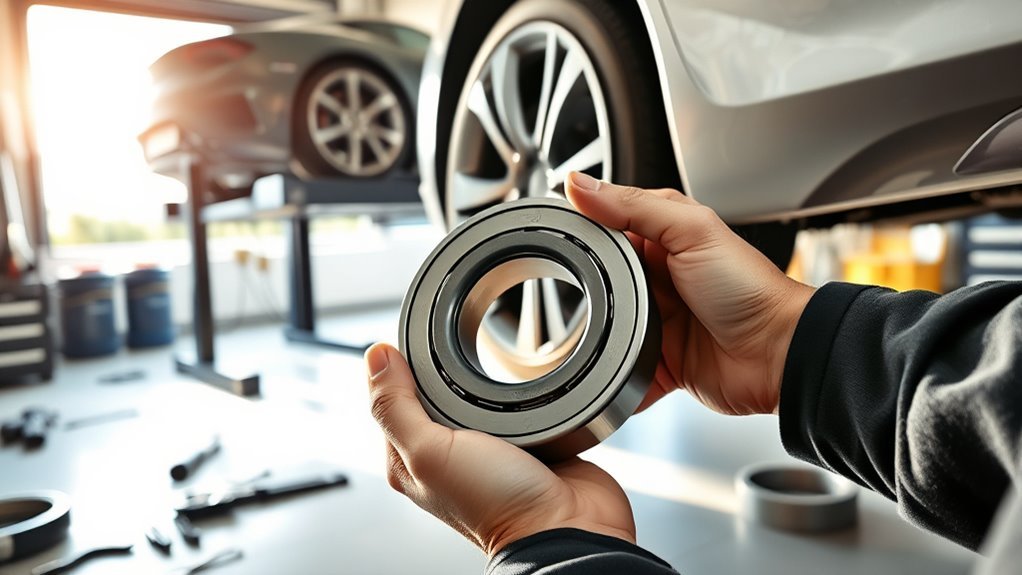
While the exact time can vary, you can generally expect a front wheel bearing replacement to take between 1.5 and 2.5 hours.
A rear wheel bearing usually requires about 1 to 2 hours.
The average labor time depends on whether your vehicle uses sealed hub assemblies or pressed-in bearings.
Labor time varies significantly between sealed hub assemblies and pressed-in wheel bearings due to their differing installation complexities.
Sealed hubs typically take less than 2.5 hours, while pressed-in designs can take 2.5 hours or more due to their complexity.
Interestingly, rear wheel bearings tend to be quicker to replace, often falling on the lower end of the labor time range.
Keep in mind that replacing both front and rear bearings won’t necessarily double the time since some steps overlap.
Understanding the average labor time helps you set realistic expectations for your wheel bearing replacement.
Factors Influencing Replacement Duration
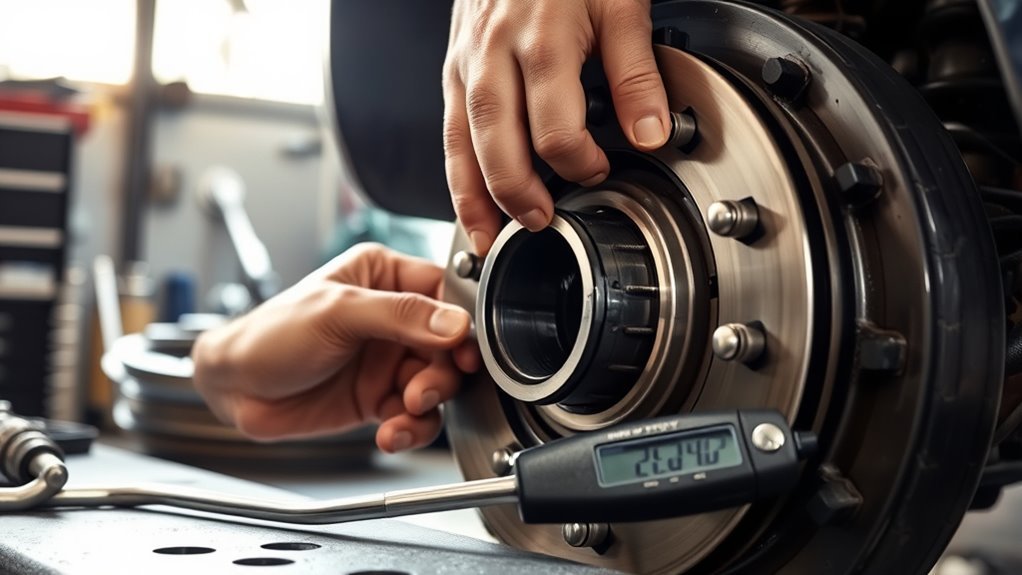
How long it takes to replace your wheel bearing depends a lot on your vehicle’s design—bolt-on hubs are quicker than pressed-in ones.
If rust has set in, expect the job to take longer since parts can be tougher to remove.
Plus, an experienced technician with the right tools will usually get the job done faster and smoother.
Vehicle Design Impact
Because vehicle design varies widely, the time it takes to replace a wheel bearing can differ markedly.
The bearing and hub assembly style plays a major role in replacement cost and labor time. Here’s what you should consider:
- Pressed-in bearings often take 2.5 to 4+ hours due to complex removal and installation.
- Bolt-on hub assemblies typically require under 2 hours, making them quicker and cheaper.
Older vehicles and compact cars usually have pressed-in designs, which can increase labor time.
Plus, technician skill and available tools can speed up or slow down the process.
The make and model, along with the condition of nearby parts, may also add complexity, affecting replacement duration.
Knowing your vehicle’s design helps you anticipate the time and cost involved in wheel bearing replacement.
Corrosion and Rust
Even if you know your vehicle’s design, corrosion and rust can still add significant time to replacing a wheel bearing.
When you face corrosion, especially in rear wheel bearing replacement, expect delays caused by seized components.
Technicians often apply penetrating oil, heat, or slide hammers to tackle rust, turning a simple 2-hour job into one lasting over 3.5 hours.
Harsh weather and road salt increase the risk of corrosion, affecting not only the bearing but surrounding parts, complicating the process further.
| Condition | Time Added (minutes) | Common Tools Used |
|---|---|---|
| Light corrosion | 30 | Penetrating oil |
| Moderate rust | 45 | Slide hammer |
| Severe rust | 90 | Heat, slide hammer |
| Harsh weather areas | 60 | Combination of tools |
| Affected surrounding parts | 30-60 | Multiple tools |
Technician Experience Level
Corrosion and rust can slow down a wheel bearing replacement, but the technician’s experience often makes the biggest difference in how quickly and smoothly the job gets done.
When you choose a technician with a high experience level to replace a wheel, you benefit from:
- Faster completion, often under 2 hours for bolt-on hub assemblies.
- Familiarity with specific vehicle models for efficient problem-solving.
- Use of advanced tools like hydraulic presses to speed up pressed-in bearing removal.
- Expertise in handling rust and corrosion, preventing extra delays.
- Higher quality repairs that guarantee safety and durability.
Your technician’s experience level directly impacts both the time it takes and the reliability of the repair.
This makes it a vital factor in replacing a wheel bearing effectively.
Differences Between Front and Rear Wheel Bearings
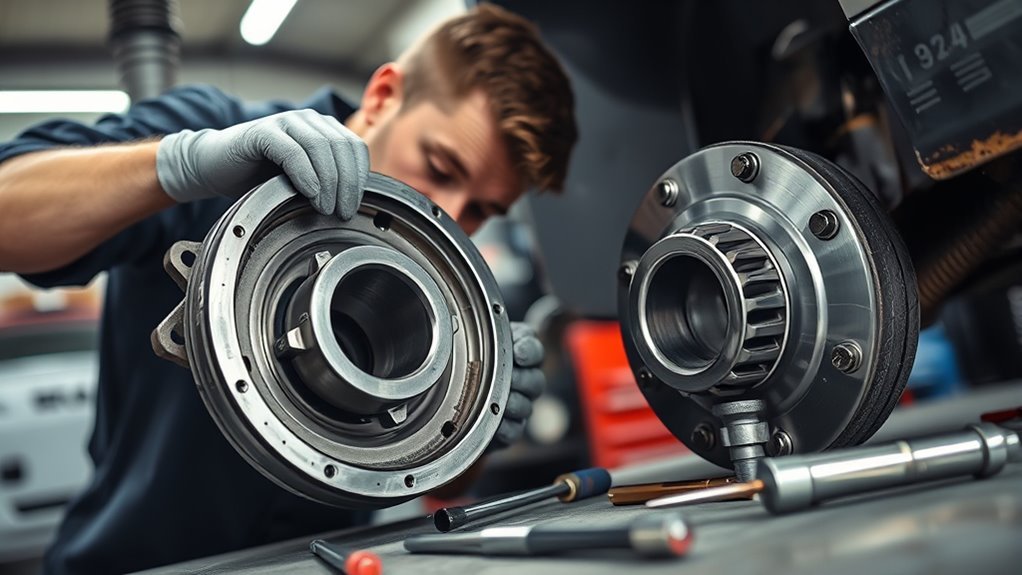
When you replace front wheel bearings, expect the job to take longer than rear ones due to the complexity of removing the knuckle and related parts.
Front wheel bearings often come in sealed hub assemblies, which can speed up replacement despite this complexity.
In contrast, rear wheel bearings may use pressed-in designs that take less time overall but can be more labor-intensive to remove.
Both front and rear wheel bearings can experience extended labor times if corrosion or rust is present, especially in harsh climates, adding 30 to 90 minutes.
Generally, replacing front wheel bearings costs more due to the longer labor involved, typically ranging from $150 to $450 per wheel.
Rear wheel bearings usually cost less, reflecting their shorter replacement times and simpler assembly.
Impact of Bearing Assembly Type on Repair Time
You’ll notice that replacing a bolt-on hub assembly usually takes less time—around 1.5 to 2.5 hours—compared to pressed-in bearings, which can take over 4 hours.
Corrosion can make any job tougher, adding up to 90 minutes if parts are seized.
Knowing your vehicle’s assembly type helps you set realistic expectations for repair time.
Bolt-On Vs Pressed-In
Although the type of wheel bearing assembly you’re dealing with can vary, it directly affects how long the replacement will take.
Here’s what you should know about bolt-on hub assemblies versus pressed-in bearings:
- Bolt-on hub assemblies, common in modern vehicles, usually take under 2 hours to replace.
- Pressed-in bearings, often in older or compact cars, require removing the knuckle and a hydraulic press.
- Replacement with pressed-in bearings can take 2.5 to 4+ hours due to complexity.
- Bolt-on assemblies offer quicker turnaround and simpler installation.
- Labor time differs considerably because of the design and construction of the bearing assembly.
Understanding which type you have helps you set realistic expectations for repair duration.
Corrosion Effects on Timing
Since corrosion can seize wheel hubs and components, it often adds 30 to 90 minutes or more to the replacement process.
If your vehicle has a pressed-in bearing, corrosion can make the job more complex, pushing replacement times beyond 4 hours.
Bolt-on hub assemblies usually let the repair shop finish quicker, often under 2 hours, but heavy rust can still cause frustrating delays.
Technicians tackle corrosion using penetrating oil, heat, and specialized tools like slide hammers. This can extend what’s normally a straightforward job to over 3.5 hours.
When you bring your car in, remember that the extent of corrosion and the type of bearing assembly directly impact how long your repair will take.
Challenges Posed by Rust and Corrosion
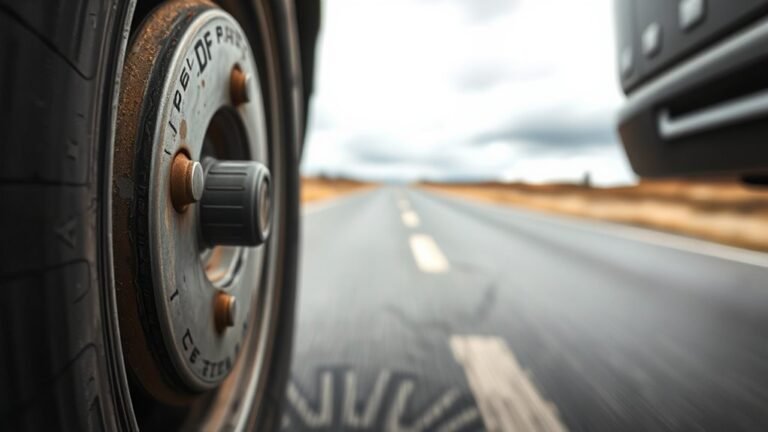
When rust and corrosion affect your vehicle, they can quickly turn a routine wheel bearing replacement into a time-consuming challenge.
Rust can seize parts, making replacing a wheel bearing far more complex than usual. Here’s what you might face:
- Rusted bearing races stuck on the hub.
- Need for penetrating oil and heat to loosen parts.
- Use of slide hammers to free seized components.
- Extra labor adding 30 to 90 minutes to the job.
- Corrosion on surrounding parts complicating removal and installation.
In rust-prone areas, this added difficulty can stretch a standard 2-hour replacement to over 3.5 hours.
Knowing these challenges helps you prepare for potential delays when replacing a wheel bearing affected by corrosion.
Understanding the Risks of Driving With a Faulty Bearing
How dangerous can it be to drive with a faulty wheel bearing?
A bad wheel bearing can cause grinding noises, vibrations, and steering instability, putting your safety at risk.
Ignoring these signs means bearings need immediate replacement to avoid catastrophic failure like wheel separation.
Plus, damaged bearings can harm the hub, steering knuckle, and ABS wiring, leading to costly repairs.
| Symptom | Risk Level | Action Needed |
|---|---|---|
| Humming noise | Moderate | Schedule inspection |
| Vibrations | High | Replace bearings soon |
| Grinding noise | Severe | Stop driving immediately |
| Steering issues | Critical | Seek emergency repair |
Don’t wait—address bad wheel bearings promptly for safer driving and to prevent extensive damage.
Frequently Asked Questions
Is Replacing Wheel Bearings a Big Job?
Yes, replacing wheel bearings is a big job.
You’ll need patience, proper tools, and skills since it involves key suspension and braking parts.
It often takes a few hours, especially with rust or complex designs.
Can I Drive on a Bad Wheel Bearing?
You shouldn’t drive on a bad wheel bearing.
It causes noise, vibrations, and instability, risking serious damage or accidents.
Get it fixed promptly to stay safe and avoid expensive repairs to other parts.
Is It Okay to Replace Only One Wheel Bearing?
Like fixing one shoe of a pair, it’s better to replace both wheel bearings together.
You’ll avoid uneven wear, save money on labor, and keep your ride smooth and safe.
Don’t settle for just one!
What Is the Average Cost to Replace a Wheel Bearing?
You can expect to pay between $300 and $800 to replace a wheel bearing.
But, if you have a luxury or AWD vehicle, the cost might go over $1,000.
Labor usually runs between $150 to $450, depending on your car and the shop rates.
Conclusion
So, you’re wondering how long it takes to replace a wheel bearing?
Ironically, the quicker you get it fixed, the less chance you have of your car turning into an unexpected roadside sculpture.
While it might seem like a hassle now, delaying the repair only risks more time, money, and stress later.
So, don’t wait for that ominous noise to become a full-blown disaster—handle it before your wheel decides it’s done spinning.
In conclusion, replacing a wheel bearing is a task that shouldn’t be ignored.
The time it takes can vary, but addressing the issue promptly can save you from more significant problems down the road.
Stay proactive about your vehicle maintenance to avoid unnecessary stress and expenses.
Remember, the sooner you tackle that noise, the smoother your ride will be!