How Long Does Wheel Alignment Take
You can expect your wheel alignment to take between 30 and 90 minutes, depending on your vehicle and the type of alignment needed.
A simple front-end alignment usually takes around 30 to 45 minutes.
On the other hand, a full four-wheel alignment may require up to an hour and a half.
Factors like your vehicle’s suspension condition and the technician’s experience also affect the time.
So, whether you’re getting a front-end alignment or a full four-wheel alignment, it’s good to know what to expect.
Keep exploring to understand the process and benefits more thoroughly!
Key Takeaways
- Wheel alignment typically takes between 30 to 90 minutes depending on the vehicle and type of alignment needed.
- Front-end alignment usually requires 30 to 45 minutes to complete.
- On the other hand, a four-wheel alignment commonly takes 60 to 90 minutes due to increased complexity.
- Just keep in mind that additional repairs or suspension issues can extend the alignment duration.
- Fortunately, experienced technicians and specialized equipment ensure efficient and accurate alignment adjustments.
What Is Wheel Alignment?
Wheel alignment adjusts your vehicle’s wheels to the manufacturer’s specifications, ensuring they sit perpendicular to the ground and parallel to each other.
This alignment service focuses on correcting the angles of your wheels—specifically camber, toe, and caster—to optimize handling and safety.
When your wheels are properly aligned, your steering feels centered, and your tires wear evenly.
Without regular wheel alignment, you risk uneven tire wear, which can shorten tire life and affect driving comfort.
Misaligned wheels may also cause your car to pull to one side, leading to increased fuel consumption.
Getting an alignment service after installing new tires or after any significant impact helps maintain smooth driving and extends your tires’ lifespan.
It really is an essential part of vehicle maintenance!
Signs That Indicate You Need an Alignment
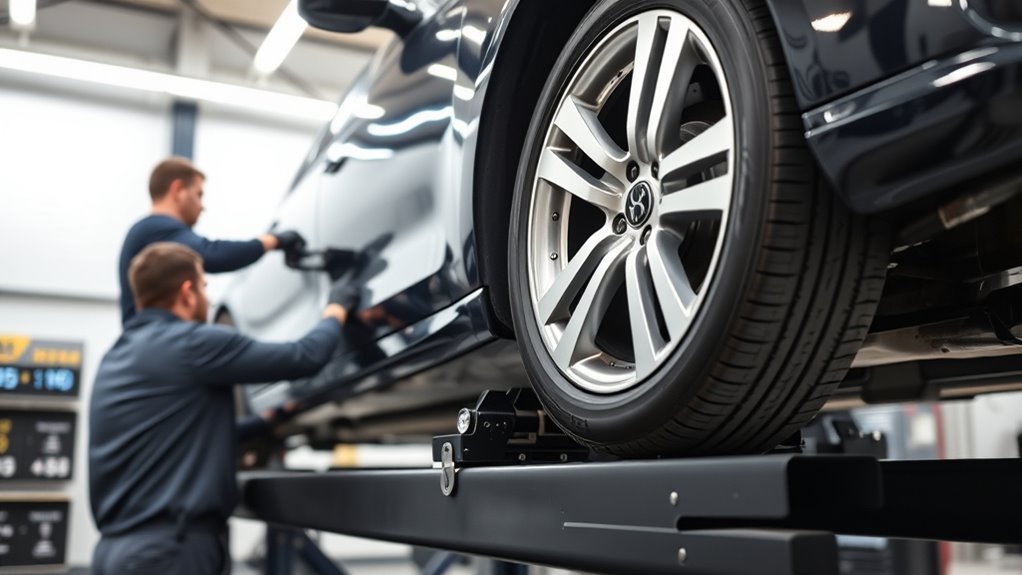
If your steering wheel feels off-center when driving straight, it’s a clear sign your wheels might be misaligned.
You might also notice your vehicle pulling to one side without you turning the wheel.
Keep an eye out for uneven tire wear, especially on the edges, since that usually means it’s time for an alignment.
Steering Wheel Off-Center
When you notice the steering wheel feels off-center while driving straight, it’s a clear sign that your vehicle needs a professional wheel alignment.
Misaligned wheels often cause this steering issue, forcing you to constantly adjust the wheel to keep your car on track.
Not only does this increase driver fatigue, but it also creates potential safety hazards.
You might also feel vibrations through the steering wheel, which often accompany misalignment problems.
Ignoring these signs can lead to uneven tire wear, especially on the inner or outer edges.
This reduces your tires’ lifespan and fuel efficiency.
Vehicle Pulls Sideways
Even a slight pull to one side while driving should catch your attention.
It often signals that your vehicle’s wheels need realignment.
When you notice your car pulling to one side, it’s likely misaligned wheels are causing uneven forces on the tires, making driving less safe and efficient.
During the wheel alignment process, technicians adjust the angles of the wheels to meet your car manufacturer’s specifications.
This helps eliminate pulling issues.
Misaligned wheels can cause:
- Constantly fighting the steering wheel to keep straight
- An off-center steering wheel when driving straight
- Vibrations in the steering wheel
- Tire squeal when turning corners
Addressing pulling to one side early helps maintain control and extends tire life.
Uneven Tire Wear
Although uneven tire wear might seem like a minor issue, it’s a clear sign that your wheels need alignment.
When tires are unevenly worn—especially on inner or outer edges—it often points to alignment problems.
Ignoring this can cut your tire’s life by up to 12,000 miles.
You might spot bald spots or patches, or notice your steering wheel feels off-center.
Getting a proper alignment guarantees even tire wear and smooth driving.
Check your tires regularly to catch issues early and avoid costly replacements.
| Tire Area | Wear Pattern |
|---|---|
| Inner edge | Excessive wear |
| Outer edge | Excessive wear |
| Center tread | Normal wear |
| Bald spots | Visible patches |
| Steering feedback | Off-center wheel |
The Wheel Alignment Process Explained
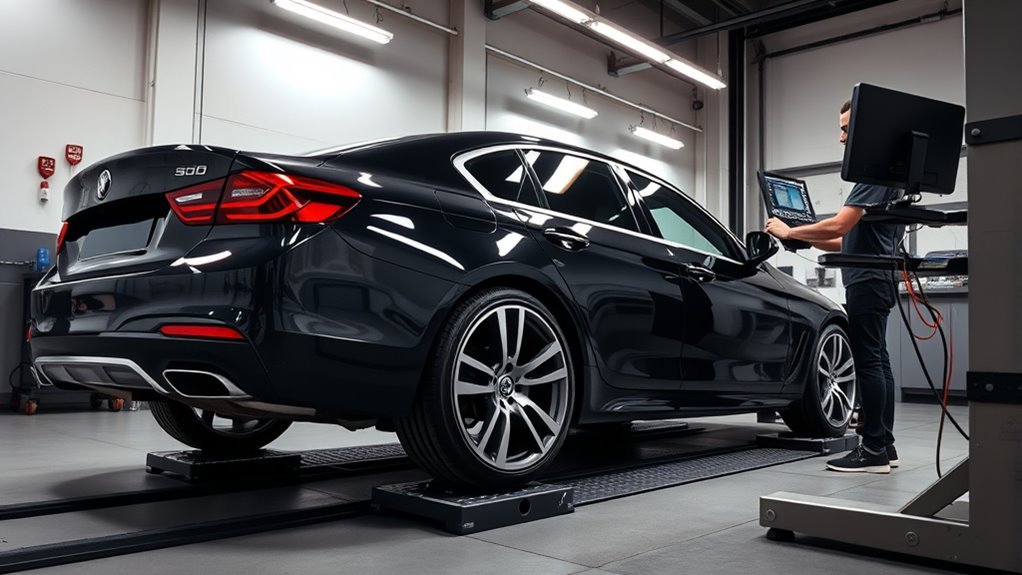
Before starting the actual alignment, technicians carefully inspect your vehicle for any damaged parts that could affect the process.
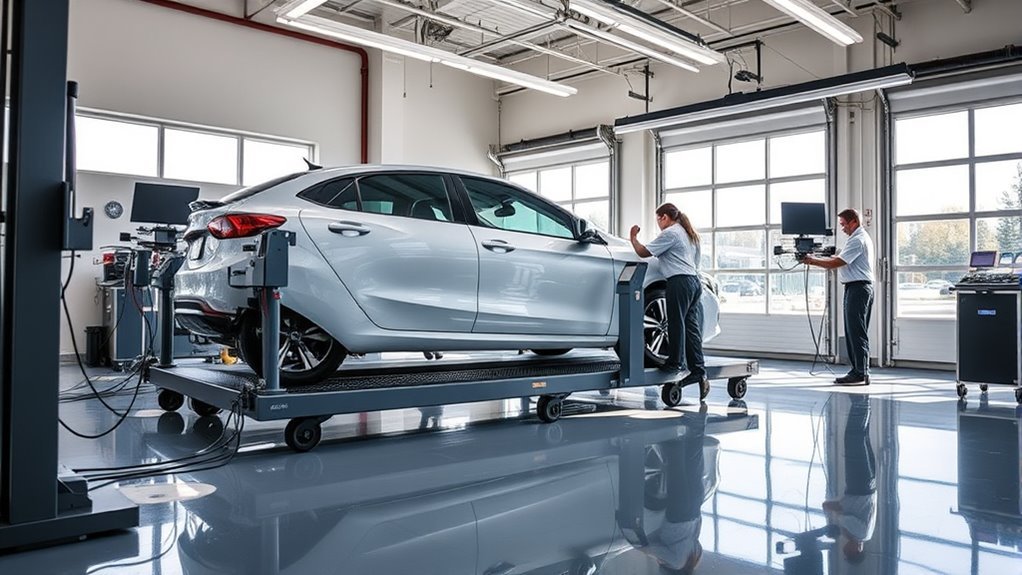
The wheel alignment process uses specialized machines with sensors to measure each wheel’s position. This guarantees precise alignment services tailored to your car’s manufacturer specs.
Specialized machines and sensors ensure each wheel aligns precisely to your car’s manufacturer specifications.
Whether you need a quick two-wheel or a thorough four-wheel alignment, adjustments focus on key angles like camber, toe, and caster.
Here’s what happens during the process:
- Initial vehicle inspection for damage
- Sensor measurements for wheel positioning
- Adjustments of camber, toe, and caster angles
- Final checks and a test drive to confirm proper handling
This careful process guarantees your vehicle drives smoothly and your tires wear evenly.
Factors Influencing Alignment Duration
Since wheel alignment involves various technical steps, several factors can influence how long the process takes.
The type of vehicle you drive plays a big role—larger or performance vehicles often require more time due to their complex suspension systems.
If your suspension is worn or damaged, repairs must come first, which adds to the overall duration.
The alignment type you choose also matters; four-wheel alignments usually take longer than two-wheel ones because they’re more involved.
Finally, the technician’s experience with your specific make and model can speed things up or slow them down.
Types of Wheel Alignments and Their Time Requirements
When you get a front-end alignment, expect it to take about 30 to 45 minutes. This is because it only adjusts the front wheels.
Now, if you’re considering a thrust angle alignment, which includes the rear axle, it usually takes around an hour.
For the most thorough check, a four-wheel alignment is the way to go. This can take between 60 to 90 minutes to ensure all wheels meet manufacturer specs.
Front-End Alignment Duration
Although wheel alignments vary in complexity, a front-end alignment typically takes about 30 to 45 minutes to complete since it adjusts only the front two wheels.
This alignment duration suits many standard vehicles, focusing on correcting the front wheels’ angles for better handling and tire wear.
Here’s what affects front-end alignment duration:
- The type and size of your vehicle, as larger or performance models may need extra time.
- The condition of suspension components, which might require repairs before alignment.
- The technician’s experience and equipment efficiency.
- Whether any additional adjustments or checks are necessary during the service.
Thrust Angle Alignment
If your vehicle’s rear axle isn’t perfectly centered, you’ll want a thrust angle alignment to keep your front wheels properly aligned with it.
This type of alignment focuses on adjusting the front wheels while ensuring they track straight with the rear axle.
That’s essential for maintaining proper vehicle handling. A thrust angle alignment typically takes about one hour to complete.
It helps prevent uneven tire wear and improves stability, especially when turning or driving at higher speeds.
You should consider getting a thrust angle alignment after any significant impact or when installing new tires to maintain ideal performance.
Four-Wheel Alignment Time
Because a four-wheel alignment adjusts all wheels to the manufacturer’s specifications, it usually takes between 60 and 90 minutes to complete.
The exact time can vary based on your vehicle type and the condition of its suspension system.
Using an advanced alignment machine, technicians measure and adjust the camber, caster, and toe angles on all four wheels.
This process is especially important for vehicles with independent rear suspensions or complex steering systems.
Consider these factors that affect four-wheel alignment time:
- Complexity of your vehicle’s suspension and steering
- Condition of suspension components requiring repairs
- Precision adjustments needed for all four wheels
- Calibration and setup time with the alignment machine
This thorough service guarantees peak handling and even tire wear.
Benefits of Maintaining Proper Wheel Alignment
When you keep your wheels properly aligned, you not only extend your tire life by up to 12,000 miles but also improve fuel efficiency by as much as 3%.
Proper alignment guarantees even tire wear, which means you won’t have to replace tires as often.
It also reduces rolling resistance, helping your engine run more efficiently and save fuel.
Beyond saving money, maintaining proper alignment enhances your vehicle’s handling, making steering more predictable and preventing your car from pulling to one side.
This leads to a safer, smoother ride and lowers the risk of costly suspension damage.
By investing in regular alignment checks, you protect your vehicle’s performance and avoid expensive repairs down the road.
Frequently Asked Questions
Can an Alignment Be Done in 20 Minutes?
You probably can’t get a full alignment done in just 20 minutes since it usually takes longer.
Unless it’s a quick minor adjustment, expect to spend at least half an hour for a proper, thorough alignment.
Is $100 for an Alignment Good?
Yes, $100 for a wheel alignment is reasonable.
You’ll find prices usually range from $75 to $100.
If your vehicle’s suspension is standard, you’re likely getting a fair deal for proper service and accuracy.
Will My Car Drive Better After Alignment?
Absolutely, your car will drive like it’s on clouds after alignment!
You’ll notice straighter tracking, less steering effort, smoother rides, and even tire wear.
It’s like giving your ride a whole new life!
Do I Need 2 or 4 Wheel Alignment?
You need a two-wheel alignment if your car’s front wheels are misaligned and it’s front-wheel drive.
Choose a four-wheel alignment if you have all-wheel or rear-wheel drive, or if your tires wear unevenly or pull.
Conclusion
Now that you know what wheel alignment involves and how long it typically takes, you can keep your ride running smoothly without breaking the bank.
Don’t wait until your tires are crying wolf—taking care of alignment early saves you time and money down the road.
Remember, a little maintenance goes a long way when it comes to your vehicle’s health.
Stay ahead of the curve and enjoy a safer, smoother drive every time.
Taking the time for regular wheel alignment not only enhances your vehicle’s longevity but also boosts overall safety on the road.
So, don’t overlook this essential maintenance task.
By addressing alignment issues promptly, you can prevent uneven tire wear and potentially costly repairs in the future.
Keep your car in top shape; it’s worth the effort!