What Is Tire Feathering and How Does It Affect Your Vehicle?
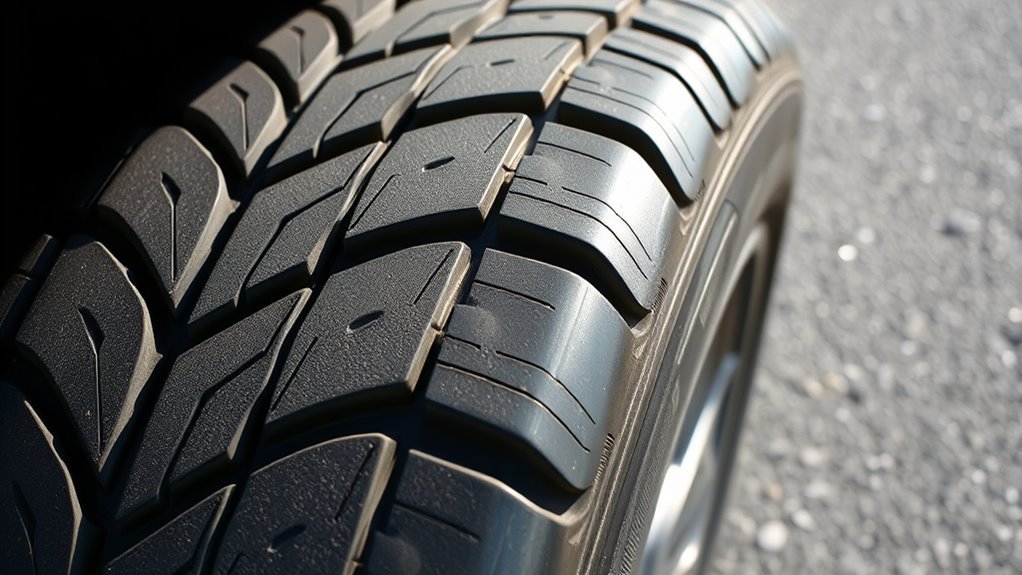
Tire feathering is a common issue that occurs when your tires wear unevenly. This typically results from wheel misalignment or worn suspension parts.
When tire feathering happens, it creates a rough edge on the tread. This can lead to vibrations, noisy humming, and poor handling.
As a result, your vehicle can become less safe and harder to control. You might notice loose steering or that your braking distances are increasing.
To prevent tire feathering, it’s important to keep your tires properly aligned and to regularly check your suspension.
In this article, we’ll explore how to spot the signs of tire feathering and the steps you can take to fix it.
Keeping your ride smooth and safe is essential for your driving experience!
Key Takeaways
- Tire feathering is uneven tread wear that causes jagged edges on tires. This often occurs due to wheel misalignment or worn suspension parts.
- When you have feathered tires, you might hear humming or whining noises that become more pronounced as you speed up. This is a sign of uneven contact with the road.
- The uneven tread wear from feathering can reduce traction, which leads to poor handling and longer braking distances.
- If you notice vibrations and loose steering, especially between 40 and 70 mph, it’s a good indication that your tires are feathered.
- To prevent feathering, make sure to schedule regular wheel alignments, tire rotations, and suspension maintenance. This helps ensure even tire wear and keeps your vehicle running smoothly.
Understanding Tire Feathering
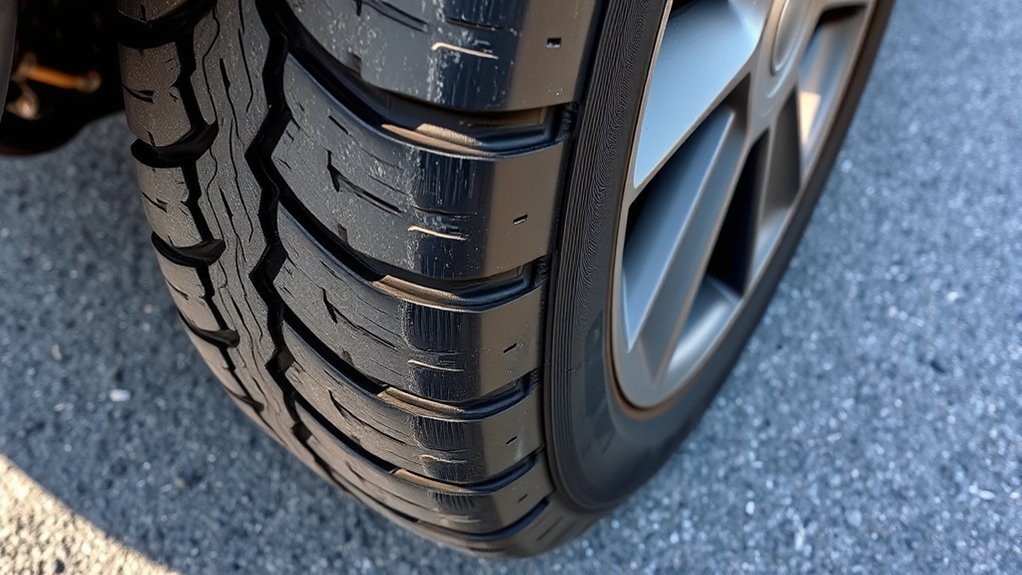
Tire feathering occurs when uneven tread wear creates a jagged edge on one side of your tire, resembling a feather’s texture.
This uneven tread wear signals that your tires aren’t gripping the road properly, often due to misaligned wheels.
When wheels are out of alignment, your tires hit the road at awkward angles, accelerating wear on certain tread sections.
Worn suspension components can also contribute by failing to keep your tires steady.
Your driving habits play a role, too—aggressive cornering and hard braking increase stress on tires, encouraging feathering.
To keep tire feathering at bay, regular maintenance is essential.
Routine wheel alignment checks, tire rotations, and inspections of suspension components help you maintain smooth, even tread wear and improve your vehicle’s performance and safety on the road.
Causes of Tire Feathering
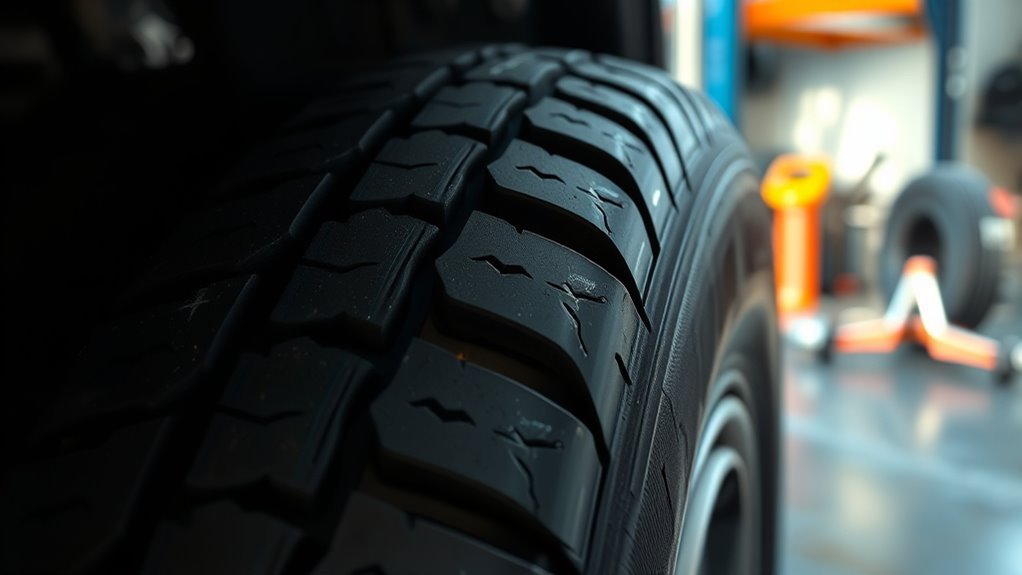
You’ll often find tire feathering starts when your wheels are out of alignment, causing uneven tire contact with the road.
Worn suspension parts can make things worse by creating inconsistent pressure on your tires.
Plus, if you drive aggressively, sharp turns and sudden stops can speed up this uneven wear.
Wheel Misalignment Effects
Although wheel misalignment might seem minor, it can cause significant uneven wear on your tires, leading to feathering.
When your wheels deviate from the manufacturer’s specs, the tires don’t sit evenly on the road, causing uneven tire wear and tire feathering — those diagonal scuff marks that reduce tread life.
Misalignment often results from hitting potholes or curbs, or from gradual suspension issues.
Even if your tire pressure is correct, misaligned wheels will still wear tires unevenly.
To prevent this, you should get regular alignment checks, ideally every six months.
Keeping your wheels aligned not only minimizes tire feathering but also extends tire lifespan, improves fuel efficiency, and guarantees safer handling.
Don’t overlook wheel misalignment—it’s a key factor in tire health and vehicle performance.
Suspension Component Wear
Misaligned wheels often go hand-in-hand with worn suspension components. Both issues can speed up uneven tire wear, like feathering.
When suspension parts, such as shock absorbers, struts, bushings, or ball joints wear out, they disrupt the tire’s contact with the road. This can lead to a bouncy ride that damages your tires.
Worn components can also shift key alignment angles like caster, camber, and toe. This only worsens feathering and contributes to uneven tire wear.
If you notice reduced handling stability or a rougher ride, your suspension might be the culprit. Regularly inspecting and maintaining your suspension can help prevent these problems.
Driving Habits Impact
Since your driving habits directly affect tire wear, understanding their impact on feathering is essential.
Aggressive cornering and frequent hard braking increase lateral forces on your tires, causing uneven wear that leads to tire feathering.
Overloading your vehicle also adds pressure, worsening this uneven wear.
Poorly maintained roads can damage your suspension system, resulting in misalignment that accelerates feathering.
Consistently driving with improper tire pressure—whether overinflated or underinflated—further contributes to uneven contact and wear patterns.
To combat tire feathering caused by these driving habits, maintain proper tire pressure, avoid harsh driving, and perform regular tire rotations.
Keeping your suspension system in good shape and adjusting your driving style can help prevent uneven wear and extend the life of your tires.
How Tire Feathering Impacts Vehicle Performance
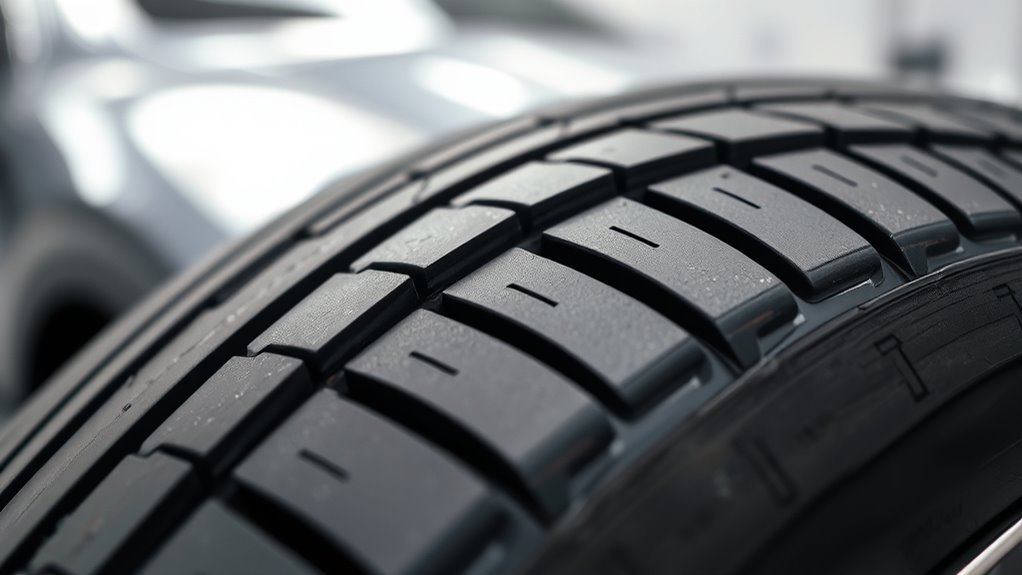
When your tires develop feathering, you’ll notice uneven tread wear with one side sharp and the other rounded. This directly reduces traction and handling.
Tire feathering often results from worn suspension components, which can lead to poor handling and a reduced contact with the road.
This uneven tread forces you to make constant steering corrections, especially during turns. It also increases your braking distance, ultimately compromising safety.
| Impact | Effect |
|---|---|
| Uneven Tread | Reduced traction and grip |
| Poor Handling | Steering imprecision, vibrations |
| Increased Braking Distance | Longer stopping times |
Identifying the Signs of Feathered Tires
Noticing changes in how your vehicle feels and sounds can help you catch tire feathering early.
Tire feathering creates uneven tread wear where one side of the tread rib feels sharp while the other rounds off, forming a jagged edge. You might hear a humming or whining noise that grows louder with speed.
Pay attention to your steering response; if it feels loose or unpredictable during turns, feathered tires could be the cause.
Loose or unpredictable steering during turns may indicate feathered tires affecting your vehicle’s handling.
Additionally, vibrations that worsen between 40 and 70 mph often point to uneven tread issues related to worn suspension or alignment problems.
Running your fingers over the tire surface can reveal rough edges, signaling feathering.
If you notice any of these signs, schedule a professional inspection promptly to prevent further damage and maintain safe driving.
Preventing Tire Feathering
To prevent tire feathering, you should keep your wheels properly aligned and rotate your tires regularly.
Don’t forget to maintain your suspension components, as worn parts can cause uneven wear.
Staying on top of these tasks helps your tires wear evenly and last longer.
Regular Tire Alignment
Because hitting potholes or curbs can throw off your wheel alignment, you should have your tires checked every six months or as your vehicle’s manual suggests.
Regular tire alignment prevents uneven wear patterns like tire feathering by ensuring proper alignment of caster, toe, and camber angles.
This keeps all tires making even contact with the road, which extends tire lifespan and improves handling.
Misalignment often stems from worn suspension components, so timely checks are essential.
After rotating tires, aligning them helps maintain uniform wear and prevents feathering.
Here’s a quick look at alignment benefits:
| Aspect | Benefit | Impact on Vehicle |
|---|---|---|
| Proper Alignment | Even tire contact | Extended tire lifespan |
| Suspension Check | Prevents misalignment | Reduces uneven wear |
| Regular Checks | Maintains manufacturer specs | Improves handling |
| Tire Rotation | Uniform wear | Prevents tire feathering |
| Fuel Efficiency | Reduced rolling resistance | Saves fuel costs |
Suspension Component Maintenance
While keeping your tires properly aligned plays a big role in preventing feathering, worn suspension components often cause that misalignment in the first place.
To prevent tire feathering, you need to perform regular inspection of critical suspension parts like ball joints and tie rods.
These components wear down over time, leading to uneven tire contact and feathering. Worn shock absorbers also contribute by causing a bouncy ride and uneven tire pressure distribution, worsening the issue.
By routinely checking and replacing damaged suspension parts before they cause misalignment, you’ll maintain proper handling and extend tire life.
Staying proactive with suspension component maintenance guarantees your tires wear evenly and your vehicle drives safely.
This helps you avoid costly repairs down the road.
Proper Tire Rotation
Even if your suspension is in top shape, neglecting proper tire rotation can lead to uneven wear and feathering.
Regular tire rotation every 5,000 to 7,500 miles guarantees even tread across all tires. This helps prevent feathering and uneven tread patterns that can compromise your safety.
Following your vehicle manufacturer’s recommendations for tire rotation not only extends your tire lifespan but also improves handling by maintaining balanced wear.
Cross-rotating tires is especially helpful for front-wheel-drive vehicles or those with heavy front ends, as it helps balance wear effectively.
Consistent tire rotation is a crucial part of vehicle maintenance. It supports proper suspension function and alignment.
Solutions and Maintenance for Feathered Tires
To prevent feathered tires from worsening, you should regularly rotate your tires every 5,000 to 7,500 miles.
Also, keep your wheel alignment in check, especially after impacts like potholes.
Maintaining proper tire pressure is equally important, as incorrect PSI can cause uneven wear that leads to feathering.
Proper tire pressure is crucial to prevent uneven wear and feathering on your tires.
And don’t overlook your suspension components; worn shocks or struts can misalign your wheels and contribute to feathered tires.
Regularly inspect these parts and seek professional evaluations for an accurate diagnosis.
Mechanics can assess both your suspension system and tire condition to recommend effective solutions.
Addressing these maintenance tasks promptly will not only extend your tire life but also improve your vehicle’s handling and safety on the road.
Frequently Asked Questions
Can Tire Feathering Be Fixed?
Yes, you can fix tire feathering by getting a proper wheel alignment.
Replacing worn suspension parts is also important.
Additionally, rotating and balancing your tires regularly helps maintain their condition.
Don’t forget to keep an eye on your tire pressure as well.
In severe cases, you might need to replace the tires.
Is It Okay to Drive on Feathered Tires?
You shouldn’t drive on feathered tires—they compromise safety and handling.
As the saying goes, “a stitch in time saves nine,” so get them inspected and fixed promptly.
This can help you avoid costly damage or accidents down the road.
What Are the Signs That My Car’s Tires Are Feathering?
You’ll notice uneven tread edges,
a humming noise increasing with speed,
vibrations through the steering wheel and seats.
Less precise steering and constant corrections are also common.
These signs indicate your tires might be feathering and need inspection.
How to Prevent Feathering on Tires?
You can prevent feathering by regularly checking your tire alignment.
Maintaining proper tire pressure is also essential.
Rotate your tires every 5,000 to 7,500 miles to ensure even wear.
Additionally, inspect suspension parts regularly.
Avoid aggressive driving habits like hard braking and sharp cornering to prolong tire life.
Taking these steps will help keep your tires in good shape!
Conclusion
Tire feathering affects your ride, your safety, and your wallet.
It causes uneven wear, leads to noisy drives, and compromises handling.
To keep your vehicle running smoothly, you need to spot feathering early.
Address alignment issues promptly and maintain regular tire care.
Don’t ignore the signs.
Don’t delay inspections, and don’t skip necessary repairs.
By taking these steps, you protect your tires and your vehicle’s performance.
In conclusion, staying on top of tire feathering is crucial for your safety on the road.
Regular checks and timely repairs not only extend the life of your tires but also ensure a smoother, quieter ride.
Investing in tire maintenance and alignment can save you money in the long run.
So, be proactive—keep your tires in top shape to safeguard yourself and your vehicle.