What Role Do Radiators Have in Electric Cars ?
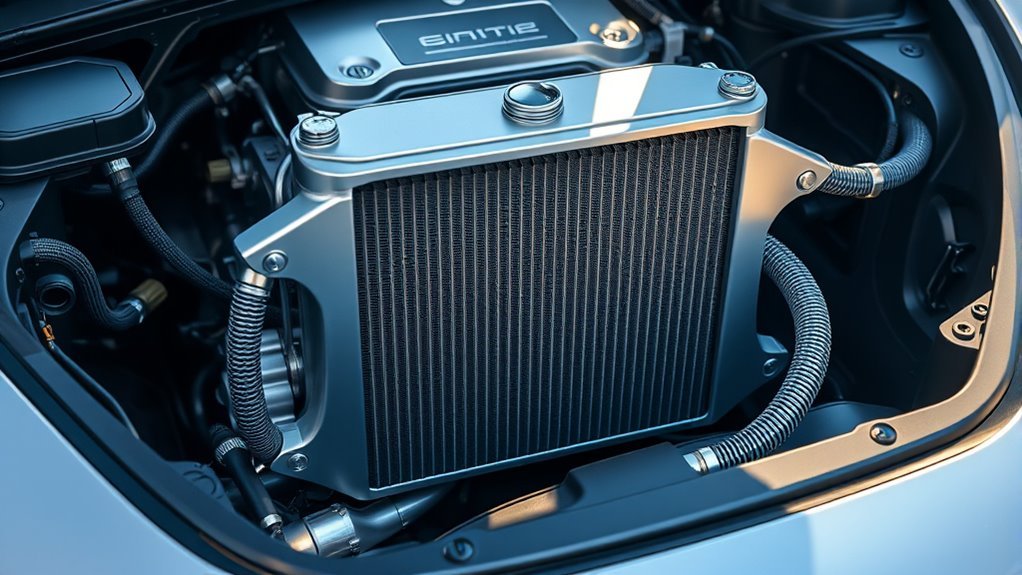
In electric cars, radiators play a crucial role in maintaining optimal temperatures for essential components such as the battery, motor, and power electronics. They manage approximately 5kW of heat, which is vital for ensuring peak performance and extending the lifespan of these critical parts.
Unlike traditional combustion engines that require larger cooling systems, electric vehicles utilize smaller radiators. These are specifically designed to operate within lower temperature ranges of around 80°C.
It’s interesting to note that these radiators must effectively balance efficient heat dissipation with an aerodynamic design. This balance is key in preserving the overall efficiency of the vehicle.
If you’re curious about how this intricate balance is achieved, there’s much more to explore!
Key Takeaways
- Radiators cool essential components like battery packs, power electronics, and electric motors to maintain optimal operating temperatures around 80°C.
- They dissipate approximately 5kW of heat, which is significantly less than what combustion engines require. This allows for smaller and more efficient cooling systems.
- The radiator’s efficiency, measured by the K factor, directly impacts heat dissipation and the overall thermal management of the vehicle.
- Designing a radiator involves balancing a compact size with adequate airflow. This helps minimize aerodynamic drag while ensuring effective heat transfer.
- Proper integration of the radiator can enhance electric vehicle performance and energy efficiency. It also contributes to the longevity of components through optimized thermal control.
Comparing Cooling Needs: Electric Cars vs. Combustion Engines
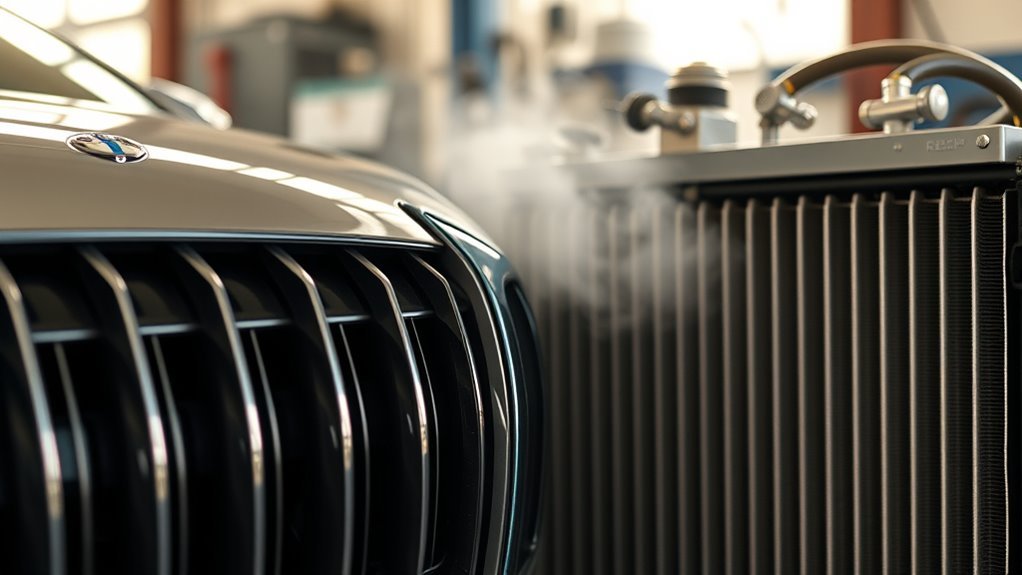
While electric cars and combustion engines both need cooling systems, their requirements differ significantly due to operating temperatures and power conversion.
Your car needs to manage heat efficiently, but electric vehicles operate at lower maximum temperatures—around 80°C—compared to combustion engines, which can reach up to 120°C.
Electric vehicles run cooler, with maximum temperatures near 80°C versus 120°C in combustion engines.
This means the cooling systems for electric cars handle roughly half the thermal load.
For example, a 60kW combustion engine produces about 20kW of heat needing dissipation, while an electric car with 25kW input only generates about 5kW of heat.
Because of this, electric vehicles require smaller, less intensive cooling systems.
Their drivetrain’s higher efficiency and lower delta T reduce radiator size and cooling demands.
Key Components Cooled by Radiators in Electric Vehicles
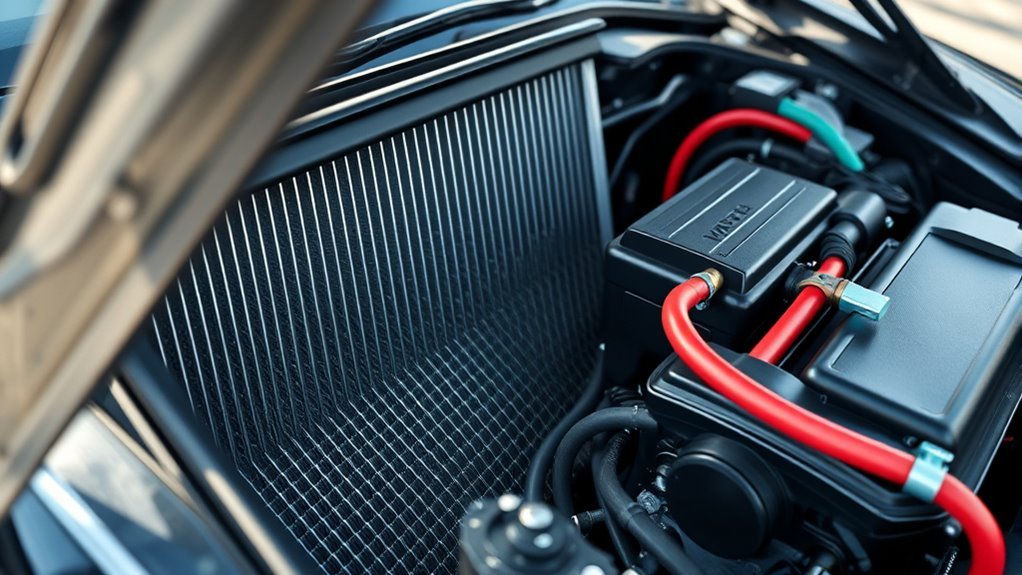
You rely on radiators to keep key components like the battery pack, power electronics, and electric motor cool during operation.
Managing their temperatures prevents overheating and maintains efficiency throughout your drive.
Let’s explore how each of these parts depends on effective radiator cooling.
Battery Thermal Management
Because battery performance hinges on maintaining ideal temperatures, radiators play an essential role in electric cars by managing the heat generated during charging and discharging.
They dissipate excess heat to keep battery temperatures below 80°C, ensuring efficiency and longevity.
You’ll find that the cooling system creates a temperature difference, or delta T, of about 40K, which is critical for optimal thermal management.
Unlike combustion engines, electric vehicles generate less heat, so radiators are smaller and lighter but still effective.
By keeping batteries cool, radiators help prevent overheating and reduce the risk of thermal runaway, enhancing safety and extending your vehicle’s range.
This smart cooling approach means your battery stays reliable and performs at its finest every drive.
Power Electronics Cooling
Efficient heat management plays an essential role in keeping your electric vehicle’s power electronics, like inverters and converters, running smoothly.
These components generate significant heat during operation, and radiators help maintain their temperature around 80°C to prevent overheating and guarantee efficiency.
Since electric drivetrains typically require about 25kW input for a 20kW output, only roughly 5kW needs cooling. This makes radiator systems more compact than those in combustion engines.
The delta T of approximately 40K under standard conditions shapes the radiator design, enabling effective heat dissipation.
By managing this heat efficiently, your radiator supports better overall vehicle performance and aerodynamics.
It also protects vital power electronics from thermal stress.
Electric Motor Temperature Control
While electric motors generate less heat than combustion engines, maintaining their temperature around 80°C is vital for peak performance and longevity.
You’ll find that radiators play a significant role in controlling this temperature by efficiently dissipating the heat produced during operation.
Since electric motors operate at lower temperatures, the cooling demand is much lower—only about 5kW is needed to handle a 25kW input power.
Because of this, electric vehicles use smaller radiators, which still effectively prevent overheating and keep the motor running smoothly.
By managing motor temperature well, radiators help you maintain reliable performance, extend the motor’s lifespan, and guarantee efficient energy conversion.
In short, radiator design directly supports your electric motor’s durability and efficiency.
Understanding Radiator Efficiency and the K Factor
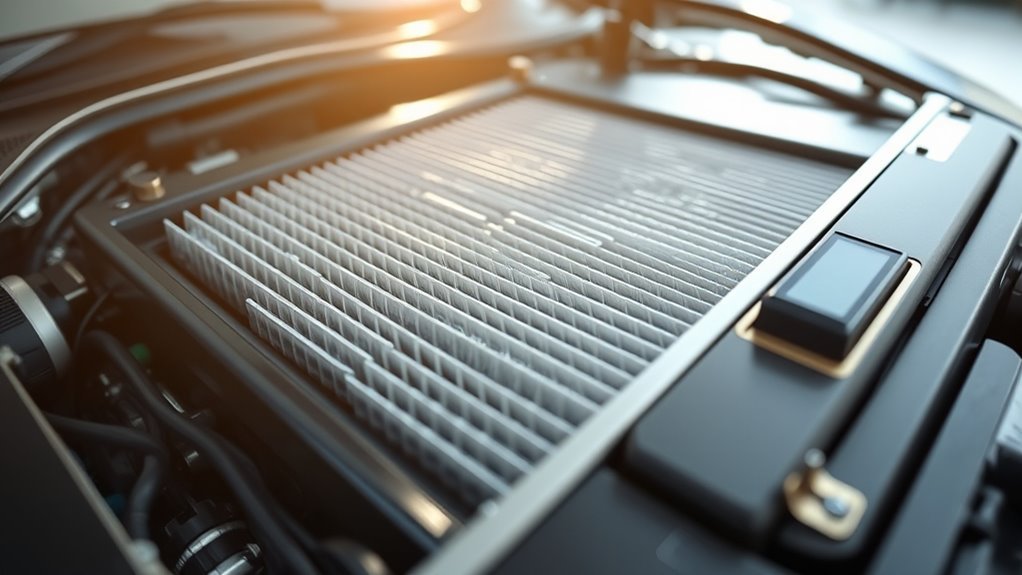
You need to understand radiator efficiency to grasp how well your electric car manages heat.
The K factor plays a key role by measuring how effectively the radiator dissipates heat, with higher values indicating better performance.
Knowing this helps you appreciate why electric car radiators can be smaller yet still effective.
Radiator Efficiency Basics
Because electric cars operate at lower temperatures than combustion engines, understanding radiator efficiency becomes essential for ideal cooling.
You need to grasp how the radiator’s performance hinges on several factors. The cooling power (Qdot) depends on:
- K factor (k): Measures how well the radiator dissipates heat; a higher K means better cooling.
- Surface area (A): The radiator’s net area directly affects heat transfer.
- Temperature difference (dT): The gap between radiator and ambient temperature drives heat flow.
Since electric cars run cooler (max 80°C) and only need to cool about 5kW out of 25kW total power, their radiators are smaller but must balance size and efficiency carefully.
This is crucial to maintain peak temperatures without hurting aerodynamics.
Importance of K Factor
Since electric cars operate at lower temperatures than traditional engines, understanding the K factor is essential to optimizing radiator efficiency.
The K factor measures how well your radiator dissipates heat from the electric motor to the surrounding air.
Because electric vehicles run cooler—peaking around 80°C with a delta T of just 40K—the K factor becomes critical in designing compact, efficient radiators.
A higher K factor means your radiator cools more effectively, allowing you to reduce its size without sacrificing performance.
This balance is important since larger radiators can increase aerodynamic drag, hurting overall vehicle efficiency.
With only about 5kW of the 25kW input power needing cooling, optimizing the K factor helps you maintain effective thermal management while minimizing cooling system bulk and preserving your electric car’s performance.
Temperature Ranges and Their Impact on Radiator Design
Although electric cars operate at lower maximum temperatures of around 80°C compared to combustion engines, their radiator design still plays an essential role in maintaining ideal thermal conditions.
You need to understand how these temperature ranges impact radiator design to guarantee efficient cooling.
Here’s what you should consider:
- Lower Operating Temperatures: Electric cars run cooler, with a delta T of about 40K against ambient temp, reducing cooling demands.
- Reduced Cooling Power: Only about 5kW of cooling is necessary, allowing for smaller, more compact radiators.
- Thermal Management Balance: Radiators must efficiently cool batteries and motors without taking up too much space.
It’s all about finding that sweet spot for optimal performance!
Design Challenges in Electric Car Radiator Systems
When designing radiator systems for electric cars, you must balance compact size with efficient heat dissipation.
This is crucial to meet the lower cooling demands without compromising performance.
Electric radiators handle max temperatures around 80°C and dissipate about 5kW of heat, which is much less than what combustion engines require.
You’ll face challenges ensuring adequate airflow and heat transfer in a smaller radiator while preserving vehicle aerodynamics.
| Challenge | Impact |
|---|---|
| Lower cooling needs | Enables compact radiator size |
Efficient heat dissipation requires optimized designs.
Additionally, you must navigate the trade-off between aerodynamics and airflow.
This means minimizing drag while maximizing cooling efficiency.
Balancing Cooling Performance With Vehicle Efficiency
To balance cooling performance with vehicle efficiency, you must carefully size the radiator to handle the electric car’s modest heat output without compromising aerodynamics.
Since electric vehicles only need about 5kW of cooling, their radiators can be smaller and more efficient.
Here’s how you can achieve the best balance:
- Optimize radiator size to match the 40K delta T, preventing overheating while minimizing drag.
- Use high-efficiency radiator designs with a strong k factor to reduce physical size without losing cooling capacity.
- Integrate the radiator placement into the vehicle’s aerodynamics to lower air resistance and preserve energy efficiency.
This way, you can maintain performance while also keeping efficiency in check.
Frequently Asked Questions
How Do Electric Cars Heat the Cabin?
You heat your electric car’s cabin using resistive heaters or heat pumps, which draw power from the battery.
Heat pumps save energy, and you can precondition the cabin while plugged in to preserve driving range.
What Is the Main Function of a Car Radiator?
The main function of a car radiator is to cool your engine or electric components by dissipating heat.
This prevents overheating and keeps everything running efficiently.
It guarantees your vehicle operates at safe, ideal temperatures during use.
Can I Put Water in the Radiator Instead of Coolant?
You shouldn’t put water in your radiator instead of coolant.
Water can freeze, cause corrosion, and lead to overheating.
Using the proper coolant protects your system and keeps your electric car running smoothly without risking damage.
Do Teslas Have Radiators?
Yes, Teslas have radiators to cool their electric drivetrain and battery systems.
They operate at lower temperatures than traditional engines, using liquid cooling combined with radiators for efficient heat management and performance.
This setup helps maintain optimal operating conditions, ensuring longevity and efficiency in their electric components.
Conclusion
You might be surprised to learn that electric car radiators often operate at temperatures 30% lower than those in combustion engines.
Yet they’re just as essential. They keep key components like the battery and inverter cool, ensuring your car runs efficiently and safely.
Balancing cooling with efficiency is a tricky design challenge. But it’s what helps electric vehicles deliver the performance you expect without overheating or wasting energy.
In conclusion, electric car radiators play a crucial role in maintaining optimal temperatures for key components.
By effectively cooling the battery and inverter, they ensure vehicles operate efficiently and safely. This balance between cooling and efficiency is vital for the performance of electric vehicles, enabling them to meet modern driving expectations without the risk of overheating or energy wastage.