What Is Headlight UV Sealant and How Does It Work?
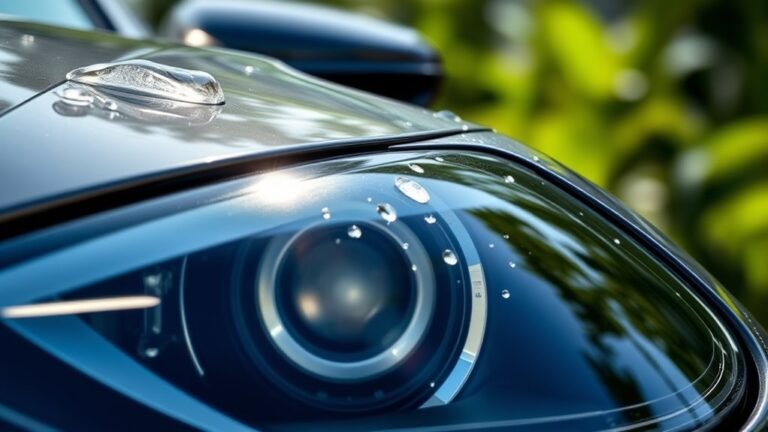
Headlight UV sealant is a protective solution designed to safeguard your vehicle’s headlights from damaging sun rays.
It effectively prevents yellowing, dullness, and other forms of damage.
By forming a durable, clear barrier, this sealant blocks harmful UV light and pollutants.
As a result, your headlights remain bright and clear, enhancing safety during nighttime driving.
To apply headlight UV sealant, start with clean headlights, often smoothing the surface beforehand.
Regular reapplication is key to maintaining optimal protection and clarity.
Keep reading to discover tips on achieving the best results and extending the lifespan of your headlights.
Key Takeaways
- Headlight UV sealant protects plastic lenses from harmful ultraviolet rays by forming a tough, transparent protective layer.
- It prevents oxidation, yellowing, and dullness. This helps maintain the headlights’ optical clarity for safer nighttime visibility.
- The sealant uses polymers, urethanes, and silicones to create a durable barrier against UV damage and environmental pollutants.
- Proper application involves cleaning, optional wetsanding, and evenly spreading the sealant with microfiber towels.
- Don’t forget to allow drying between coats for the best results!
- Regular reapplication every 1-2 years ensures ongoing protection. This prevents degradation and extends the lifespan of headlight lenses.
The Purpose of Headlight UV Sealant
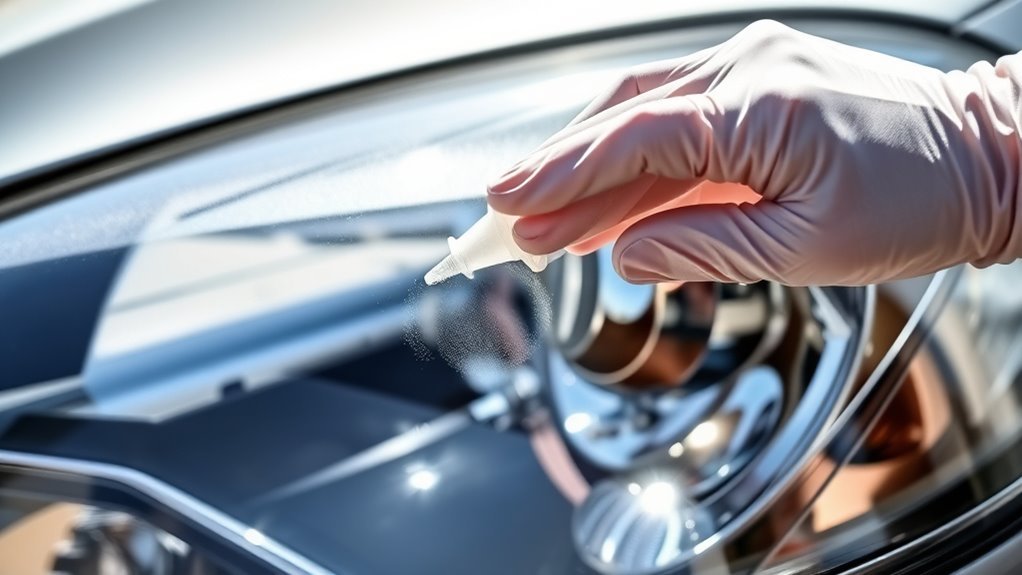
Headlight UV sealant protects your plastic headlight lenses from harmful ultraviolet rays that cause yellowing and damage over time.
When you apply this sealant, it forms a tough, protective layer that blocks UV rays, helping to retain your headlights’ optical clarity.
This means better nighttime visibility and safer driving.
Without this protection, your lenses can oxidize, leading to dullness and discoloration that calls for frequent headlight restoration.
Using UV sealant regularly not only prevents this but also extends the lifespan of your headlights, saving you time and money on replacements.
Regular use of UV sealant protects headlights and extends their lifespan, saving time and replacement costs.
To get the best results, clean your headlights thoroughly before applying the sealant evenly.
This simple step guarantees full UV protection, maintaining your headlights’ clarity and performance longer.
How UV Sealant Protects Headlight Lenses
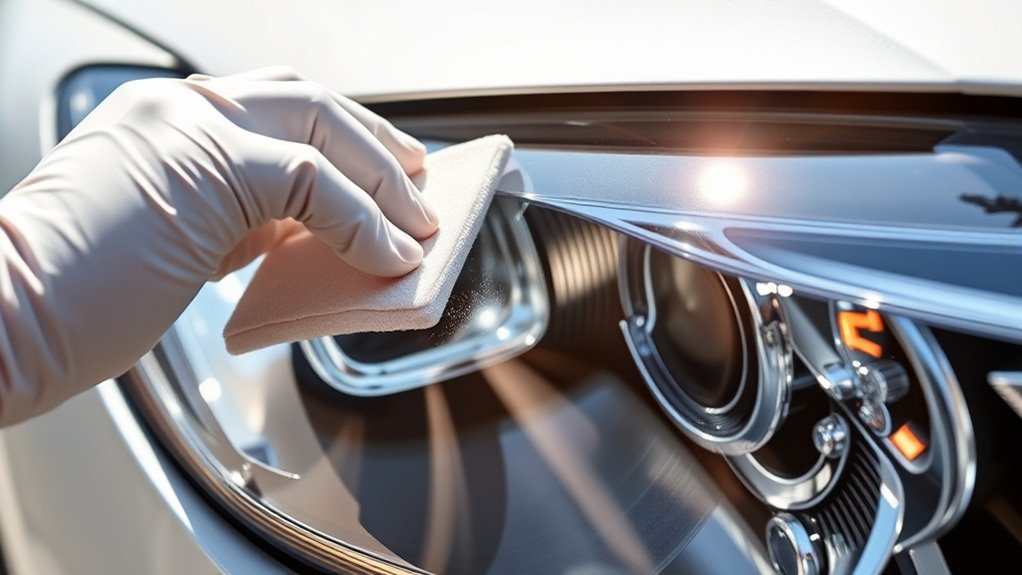
Applying UV sealant creates a durable barrier that shields your lenses from harmful ultraviolet rays and environmental pollutants.
This protective layer prevents yellowing, fading, and degradation, keeping your headlights clear and bright.
Especially if you have new headlights, applying UV sealant helps maintain their optical clarity and guarantees safe nighttime visibility.
UV sealants are designed primarily for polycarbonate lenses, the material used in most new headlights.
They can extend their lifespan by up to two years with regular application.
After restoring your headlights through polishing or wetsanding, applying UV sealant is crucial to lock in that clarity.
Many sealants are user-friendly, allowing you to easily protect your headlights yourself without special tools.
Key Ingredients in UV Sealant Formulas
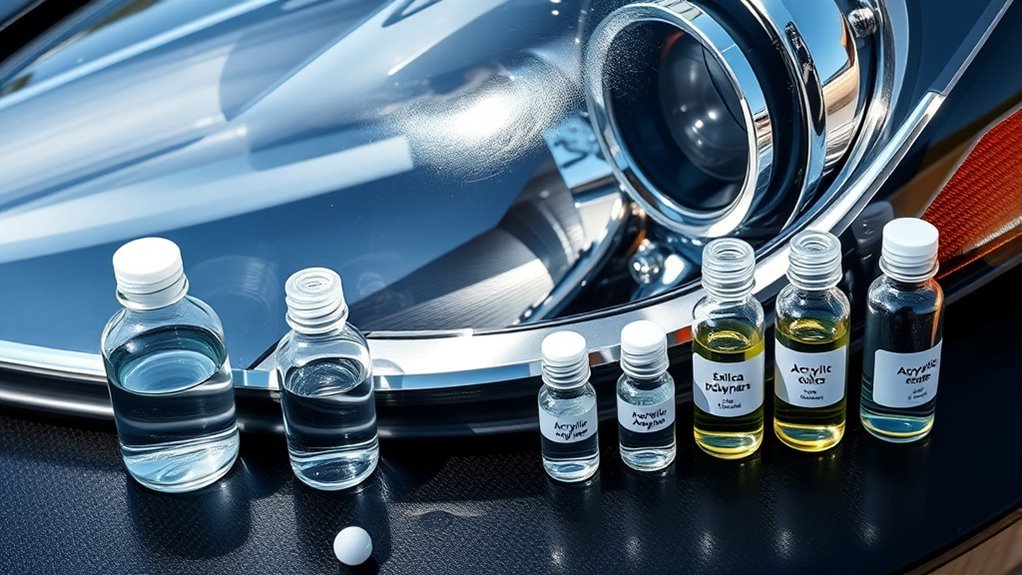
Protective polymers form the backbone of UV sealant formulas, creating a strong barrier against harmful UV rays and environmental damage.
You’ll find urethanes and silicones as key ingredients that boost the sealant’s durability and prevent yellowing or fading over time.
These components work together to maintain your headlights’ clarity, which improves your visibility and safety when driving at night.
Many UV sealants come in easy-to-use spray or wipe-on formats, letting you apply a smooth, even coat effortlessly.
With proper application and upkeep, these sealants can keep your headlights protected and clear for up to two years.
Application Techniques for Best Results
Understanding the key ingredients in UV sealants is just the first step; how you apply the product makes a big difference in the results you get.
Start by thoroughly cleaning your headlight surface. Make sure it’s cool and free from oxidation or yellowing.
Begin with a clean, cool headlight surface, free of oxidation and yellowing, for best results.
For the best clarity, consider wetsanding with progressively finer grits from 400 to 2000 to smooth the surface.
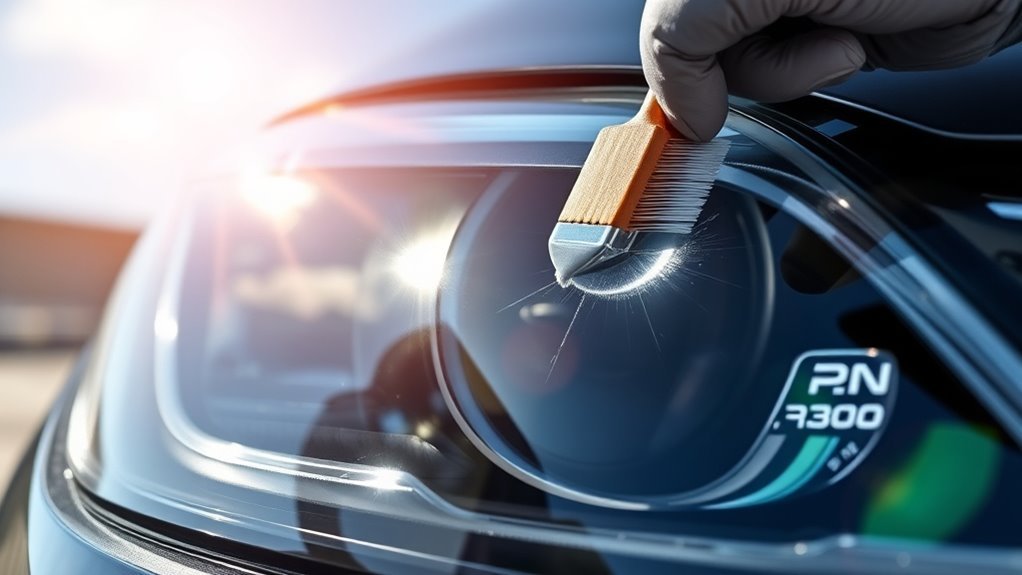
When applying the sealant, use a folded microfiber towel to spread it evenly. And don’t hesitate to add a second coat for extra protection.
Follow the manufacturer’s drying time, usually 10-20 minutes between coats, to let the sealant cure properly.
These steps help you achieve a durable, clear finish that shields your headlights effectively from UV damage.
Maintenance and Longevity of UV Sealants
Though UV sealants provide strong defense against sun damage and pollutants, you’ll need to maintain them regularly to keep your headlights clear and protected.
Start by cleaning your headlights thoroughly before each reapplication to remove dirt and oxidation. This step ensures the sealant adheres properly.
Many sealants resist yellowing and fading, but their protective barrier diminishes over time.
To maximize longevity, reapply the sealant as recommended—usually every year or two, depending on exposure.
Consistent maintenance prevents moisture and UV damage, sustaining clarity and visibility.
By keeping your headlights clean and resealing as needed, you’ll preserve their performance and extend the sealant’s effectiveness.
This way, your headlights can stay bright and safe on the road.
Comparing Popular UV Sealant Products
Keeping your headlights sealed and clear means choosing the right UV sealant for your needs.
Meguiars Keep Clear Headlight Coating offers up to a year of protection, preventing yellowing and fading with a simple application.
Meguiars Keep Clear Headlight Coating provides up to a year of protection against yellowing and fading with ease.
If you want something that forms a tough polymer film for enhanced nighttime visibility, McKees 37 Headlight Protectant Spray is a solid option.
For advanced technology and long-lasting clarity, the 3M clear protector creates a strong barrier against UV damage while keeping your headlights looking sharp.
On a budget? Try Helmsman Spar Urethane mixed with mineral spirits, which provides about two years of protection by guarding against oxidation and yellowing.
Regular use of these sealants after restoration will help maintain your headlights’ clarity and safety.
Frequently Asked Questions
How Long Does UV Protection Last on Headlights?
UV protection on your headlights lasts from six months to two years, depending on the sealant type and conditions.
You’ll want to reapply regularly to keep them clear and protected against yellowing and fading.
What Is the Best UV Headlight Sealant?
You’ll find McKees 37 Headlight Protectant Spray and Meguiar’s Keep Clear Headlight Coating are top choices for UV protection.
They last long, keep clarity, and protect your headlights from yellowing and environmental damage effectively.
Both options are reliable and effective in maintaining the appearance and functionality of your headlights.
Does the Headlight Restoration Spray Really Work?
You’ll see results so clear, it’s like night turning into day!
Headlight restoration sprays do work—they effectively remove haze and yellowing.
But you’ve got to prep properly and apply regularly for lasting brilliance.
What Is the Best Uv-Resistant Clear Coat for Headlights?
You’ll get great results with McKees 37 Headlight Protectant Spray or Meguiars Keep Clear Headlight Coating.
Both products bond well and last up to a year.
They effectively keep your headlights clear and protected from UV damage.
Conclusion
Think of headlight UV sealant as a protective shield, like a clear umbrella shielding your lenses from the harsh sun.
By applying it, you’re not just preserving clarity—you’re guarding your headlights against time’s wear and the sun’s relentless rays.
With the right sealant and proper care, your headlights will shine bright, cutting through darkness like a lighthouse guiding the way.
So, treat your headlights well, and they’ll keep lighting your path for miles to come.
In conclusion, using a headlight UV sealant is essential for maintaining the clarity and longevity of your headlights.
This protective layer not only enhances visibility but also protects from UV damage and oxidation.
By investing in quality sealant and regular maintenance, your headlights will remain effective and bright, ensuring a safer journey ahead.