10 Signs You Need Immediate Car Radiator Repair
If your engine’s temperature suddenly spikes, or you see steam coming from under the hood, you need immediate radiator repair.
These issues can indicate serious problems that could lead to engine damage if not addressed quickly.
Coolant leaks, frequent topping off, or puddles beneath your car are clear warning signs that something isn’t right.
Look for white residue on the radiator cap, unusual noises like hissing or gurgling, and discolored coolant.
Rust on the radiator and a heater that stops blowing warm air are also red flags.
Recognizing these signs early can save you costly repairs.
Keep watching to find out what else to look for!
Key Takeaways
– Sudden spikes in engine temperature above 195°F indicate urgent radiator or coolant system issues requiring immediate attention.
If you notice this happening, don’t wait—get it checked out!
– Steam or vapor coming from the engine bay signals overheating and potential coolant boiling, necessitating prompt radiator inspection.
This is a clear sign that something’s not right, and you should act fast.
– Visible coolant leaks or unexplained puddles under the vehicle suggest damaged hoses, seals, or radiator needing urgent repair.
If you see this, it’s time to address the problem before it worsens.
– White residue around the radiator cap or visible rust on the radiator signals leaks or corrosion compromising cooling efficiency.
These signs indicate that your cooling system might be in trouble.
– Unusual noises like hissing, gurgling, or knocking from the cooling system indicate leaks, air pockets, or low coolant needing fast action.
Don’t ignore these sounds; they could lead to bigger issues down the road!
Sudden Rise in Engine Temperature
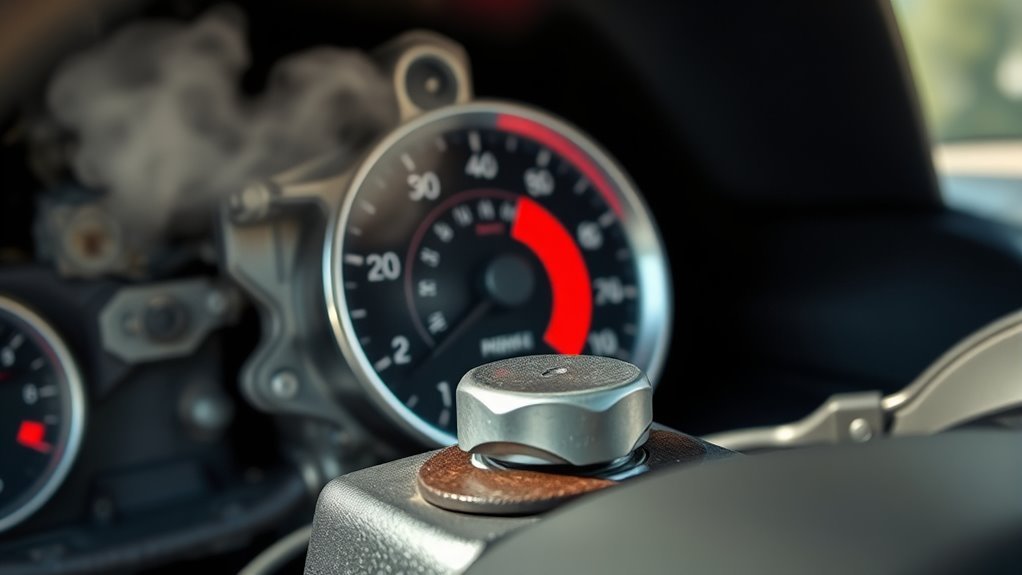
If your engine temperature suddenly spikes above the normal range of 195°F to 220°F, you need to act quickly.
A sudden rise in engine temperature often signals radiator issues or low coolant levels that demand immediate attention.
Watch your temperature gauge closely—if it rapidly nears the red zone, your overheating engine could suffer serious damage within minutes.
Monitor the gauge carefully—approaching the red zone means imminent engine damage risks.
Continuing to drive risks catastrophic engine damage and costly repairs.
So, pull over safely and let your engine cool before investigating.
Also, listen for unusual ticking or knocking sounds, which may indicate radiator malfunction.
Addressing these signs early through radiator repair can save you from expensive fixes and keep your vehicle reliable.
Don’t ignore a sudden rise in engine temperature; timely action is key to protecting your engine’s health.
Visible Coolant Leaks Under the Vehicle
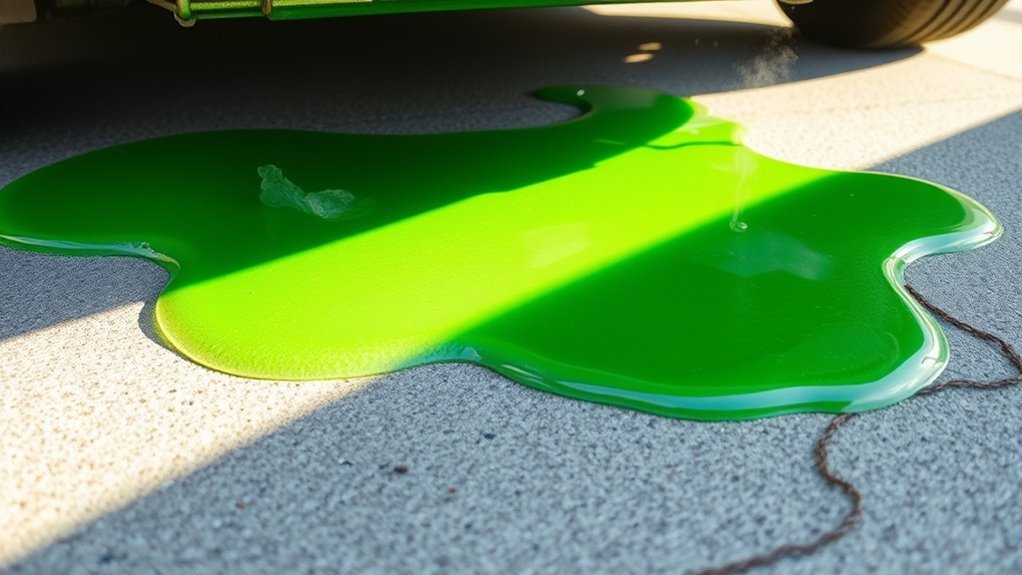
If you spot bright green, orange, or pink puddles under your vehicle, you’re likely dealing with a coolant leak.
These leaks often come from loose caps, cracked seals, or worn hoses. They can cause your engine to overheat quickly.
Catching these leaks early helps you avoid costly repairs and keeps your radiator working properly.
Identifying Coolant Puddles
When you spot bright green, orange, or pink puddles beneath your vehicle, you’re likely dealing with a coolant leak.
Coolant leaks beneath your car often signal radiator or hose issues that need quick attention.
Ignoring visible coolant leaks can cause coolant loss, raising engine temperature and stressing the cooling system.
Here are key signs you need immediate radiator repair:
- Unexplained puddles matching coolant colors under your vehicle.
- Frequent engine overheating despite normal driving conditions.
- Low coolant levels during routine vehicle maintenance.
- Steam or sweet smell near the radiator area.
- Warning lights indicating cooling system problems.
Stay vigilant for these signs to prevent costly engine damage and keep your vehicle running smoothly.
Leak Causes and Risks
Because visible coolant leaks often signal radiator or hose problems, you should take them seriously to protect your engine.
A leak under your vehicle usually means the radiator, seals, or hoses need immediate repair.
Ignoring these leaks raises your engine temperature, increasing the risk of overheating and costly engine damage.
| Leak Cause | Visible Signs | Risk if Ignored |
|---|---|---|
| Loose Radiator Cap | Bright green/orange puddles | Overheating |
| Cracked Seals | Pink coolant pooling | Engine failure |
| Worn Hoses | Coolant dripping | Higher engine temperature |
| Radiator Damage | Continuous coolant loss | Catastrophic engine damage |
Regularly check for leaks to avoid expensive repairs and keep your engine running cool.
It’s always better to be proactive than reactive when it comes to your engine’s health!
Steam or Vapor Coming From the Engine Bay
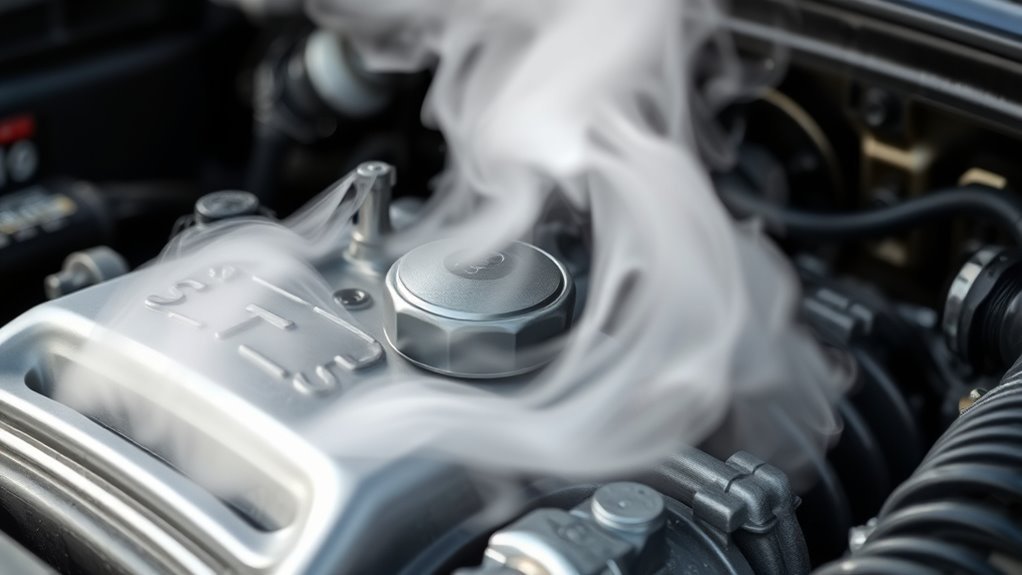
Steam or vapor rising from your engine bay signals that your car’s cooling system is struggling and the engine is overheating.
This steam usually means your coolant is boiling because the engine temperature has spiked past safe limits. Ignoring this can lead to severe engine damage fast.
A faulty water pump often disrupts coolant flow, making overheating worse and producing steam.
When you see steam, act quickly to avoid costly repair.
- Steam indicates coolant boiling and overheating.
- The cooling system isn’t regulating engine temperature properly.
- A failing water pump can cause coolant circulation issues.
- Overheating risks catastrophic engine damage if untreated.
- Pull over, turn off the engine, and seek professional help immediately.
Frequent Need to Top Off Coolant Levels
If you find yourself topping off your coolant more than once a month, your car’s cooling system may be leaking or malfunctioning.
This frequent need to top off coolant levels often signals a hidden leak in the radiator or hoses.
Even small leaks can cause significant coolant loss over time, increasing the risk of overheating by about 90%.
Small leaks gradually drain coolant, dramatically raising the chance of engine overheating and costly damage.
Overheating leads to serious engine damage if left unchecked.
It’s essential to inspect your cooling system promptly when you notice this pattern.
Ignoring these signs can cause small leaks to escalate into major engine issues, resulting in costly repairs.
Don’t wait—addressing coolant loss early guarantees your radiator and engine stay in good shape and prevents avoidable breakdowns down the road.
White Residue Around the Radiator Cap
When you spot white residue around your radiator cap, it usually means coolant is leaking from a damaged seal.
This leakage reduces pressure in the cooling system, causing your engine temperature to rise and increasing the risk of overheating.
To protect your vehicle, keep an eye out for these signs:
- White residue indicates coolant leakage around the radiator cap.
- Damaged seals compromise the cooling system’s efficiency.
- Signs of wear include cracks or deformities on the radiator cap.
- White streaks mean you should replace the radiator cap immediately.
- Ignoring these signs can lead to severe engine overheating.
Act quickly when you notice white residue to maintain proper cooling system pressure and avoid costly engine damage.
Overheating Warning Light on the Dashboard
If your dashboard’s overheating warning light comes on, don’t ignore it—you need to act immediately.
This indicator shows your engine temperature is dangerously high, often pointing to radiator problems.
Pull over safely and check under the hood to prevent serious engine damage.
Dashboard Temperature Indicators
How can you tell if your car’s radiator is failing before it causes serious damage?
Keep an eye on your dashboard temperature gauge. A rising temperature nearing the red zone signals overheating and potential radiator issues.
The temperature warning light is your alert to immediate problems, while consistent high coolant temperature readings indicate something’s wrong.
If the check engine light comes on alongside these signs, don’t ignore it—it might point to broader radiator or engine troubles.
Overheating causes about 30% of engine failures, so watching these indicators is essential.
- Dashboard temperature gauge rising above normal range
- Temperature warning light illuminating suddenly
- Consistently high coolant temperature readings
- Check engine light activating with temperature alerts
- Signs of overheating tied to potential radiator problems
Immediate Action Needed
Although spotting the overheating warning light on your dashboard might feel alarming, it’s an essential signal that demands immediate attention to protect your engine.
This warning light indicates your car’s engine temperature has exceeded safe levels, signaling that your radiator needs urgent inspection.
Ignoring this sign can cause severe engine damage, as overheating accounts for about 30% of engine failures.
When you see the light, pull over safely and check your coolant levels.
Low coolant or radiator issues often cause the problem.
Taking immediate action not only prevents costly repairs but also maintains your vehicle reliability.
Unusual Noises From the Cooling System
When you hear unusual noises coming from your car’s cooling system, such as hissing or gurgling, it’s a clear sign that something isn’t right.
These sounds often indicate coolant escaping under pressure, which points to a potential leak.
Coolant escaping under pressure signals a potential leak that needs immediate attention.
Gurgling sounds may mean air is trapped, disrupting coolant flow and causing an overheating engine.
Low coolant levels or a faulty thermostat can create knocking noises.
Paying attention to these signs allows early detection and prompt repairs, preventing costly damage.
- Hissing: coolant escaping, possible leak
- Gurgling: trapped air, poor circulation
- Knocking: low coolant, overheating engine
- Bubbling or clanking: urgent inspection needed
- Early detection guarantees timely repairs and engine protection
Discolored or Contaminated Coolant
Unusual noises from your cooling system can hint at underlying issues, but changes in your coolant’s appearance offer equally important clues.
If you notice discolored coolant, especially if it looks brown or murky, it signals contaminated coolant mixed with rust or sludge.
This contamination severely reduces coolant functionality, impairing your cooling system’s ability to regulate engine temperature.
Ignoring discolored coolant and simply topping it off can worsen rust buildup, leading to costly repairs.
To prevent damage, you need to inspect the coolant regularly.
Consider flushing the radiator to remove debris and restore peak engine performance.
Addressing discolored or contaminated coolant promptly helps maintain your vehicle’s reliability.
Plus, it avoids extensive radiator and engine problems in the future.
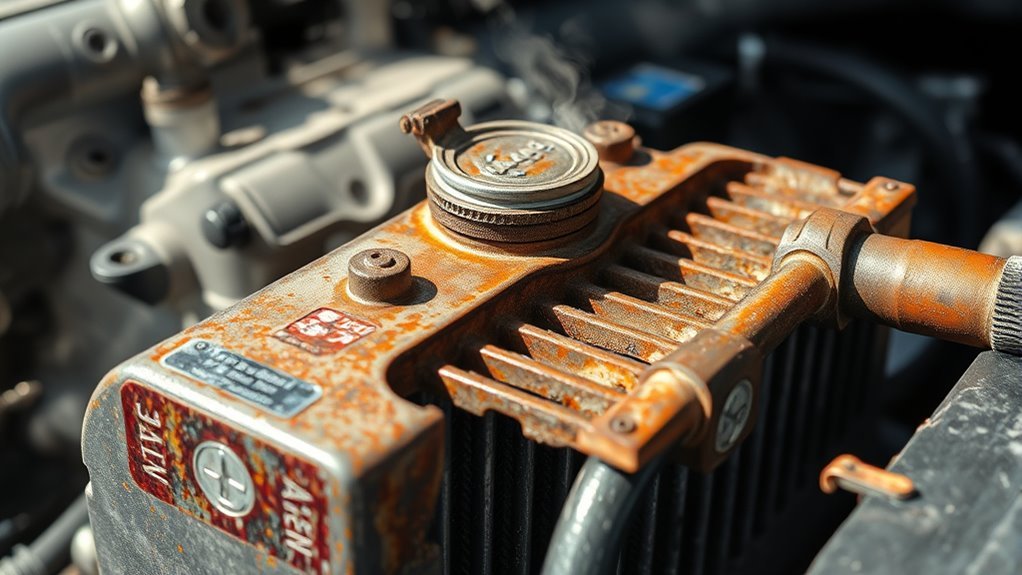
Rust or Corrosion on the Radiator
Rust or corrosion on your radiator signals serious trouble that can affect your entire cooling system.
If you spot rust on the radiator fins or notice coolant contamination, act quickly.
Rust and internal rust buildup can mix with coolant, creating sludge that blocks flow and causes overheating.
Ignoring corrosion leads to costly repairs and potential engine damage.
So, watch for these signs:
- Visible rust or corrosion on radiator fins
- Contaminated or discolored coolant
- Reduced coolant flow or sluggish heater performance
- Frequent engine overheating
- Thick sludge during radiator flushing
Regular inspections help catch rust early and prevent cooling system failure.
If corrosion is present, get radiator repairs promptly to restore efficient cooling and protect your engine.
Dysfunctional Cabin Heater
A dysfunctional cabin heater often points to a clogged radiator that stops heated coolant from flowing properly through the heater core.
If you notice your cabin heater isn’t producing heat, it’s likely due to inadequate coolant flow caused by radiator issues.
A clogged radiator reduces heating efficiency, especially during colder months, making your drive uncomfortable and potentially unsafe.
Problems with your cooling system, including radiator malfunctions, demand immediate attention to prevent further damage.
To avoid these issues, you should schedule regular radiator inspections to catch blockages early and maintain proper coolant circulation.
Addressing radiator problems promptly guarantees your cabin heater works efficiently, keeping you warm and your vehicle running smoothly throughout the year.
Don’t ignore signs of a dysfunctional cabin heater—acting quickly can save you costly repairs.
Frequently Asked Questions
How to Know if a Radiator Needs to Be Replaced?
You’ll know your radiator needs replacing if your car overheats often.
Also, if coolant leaks appear, the fluid looks rusty, or radiator fins are damaged, it’s a sign to take action.
And if your heater stops working properly, that’s another indicator.
Don’t ignore these signs to avoid bigger issues down the road!
Can You Still Drive a Car With a Bad Radiator?
You shouldn’t drive a car with a bad radiator because it can quickly overheat the engine.
If you must, keep trips short and monitor temperature closely.
But getting it repaired immediately is the safest choice to avoid serious damage.
What Is the Average Lifespan of a Car Radiator?
You can expect your car radiator to last about 8 to 12 years, depending on how well you maintain it.
Regular coolant changes and avoiding overheating help you get the most out of its lifespan.
Taking care of your radiator can really extend its life!
Can a Radiator Go Bad Without Leaking?
Can your radiator fail silently?
Absolutely—it can clog or corrode inside without leaking.
If your engine overheats or the temperature gauge rises, don’t ignore it;
those subtle signs demand your immediate attention.
Conclusion
If you notice any of these signs, don’t wait—your radiator could be screaming for help louder than a rock concert!
Ignoring issues like coolant leaks or rising engine temperature can lead to costly repairs and leave you stranded.
Stay ahead by addressing problems immediately, ensuring your car runs smoothly and keeps you safe on the road.
Remember, a healthy radiator means a happy engine and stress-free drives every time you hit the road.
So, keep an eye out for those warning signals.
Taking prompt action will save you time, money, and hassle in the long run.
Essentially, caring for your radiator not only protects your engine but also enhances your overall driving experience.
Don’t let radiator issues ruin your journey—stay proactive and keep your vehicle in top shape!