What Are Auto Tire Chains and How Do They Function?
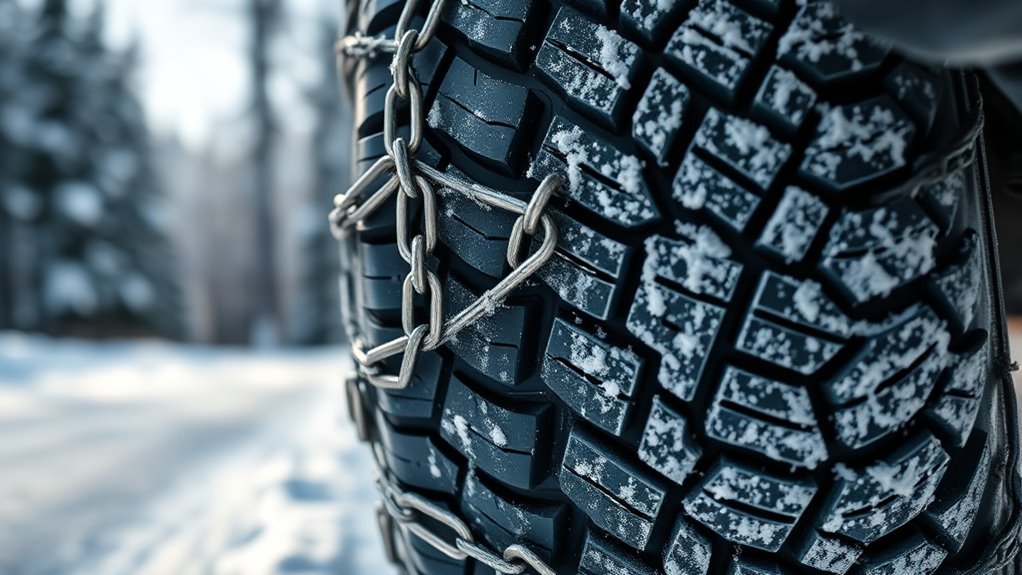
Auto tire chains are essential tools designed to enhance traction on snowy or icy roads, making winter driving safer and more manageable.
These chains deploy automatically from a wheel near your rear suspension, activated by a convenient dashboard switch.
As your wheels begin to spin, centrifugal force swings the chains outward, pressing them against the road’s surface.
This action significantly improves grip and control, allowing you to navigate slippery conditions with confidence.
However, proper positioning of the chain wheel is crucial for both safety and effectiveness.
By ensuring that the chains are correctly aligned, you can maximize their performance and ensure a smoother driving experience.
Keep reading to discover how these innovative chains can optimize your winter driving journey!
Key Takeaways
- Auto tire chains are designed to enhance vehicle traction on snow and ice. They increase grip and help reduce the risks of skidding during winter driving conditions.
- There are various types available, including traditional chains, cable chains, and even automatic chain systems. Each type caters to different vehicle needs and adapts to specific road conditions.
- Automatic chains are quite innovative. They deploy via a dashboard switch, using centrifugal force to extend the chains outward, which dynamically enhances tire grip while you drive.
- To maximize traction effectiveness, it’s crucial to position the chains correctly, about 100 ±20 mm above the road. This balance also helps maintain durability and safety.
- Regular maintenance is key for optimal performance. Make sure to check the tension, alignment, and cleanliness of the chains to prevent any damage during snowy or icy conditions.
Purpose and Benefits of Auto Tire Chains
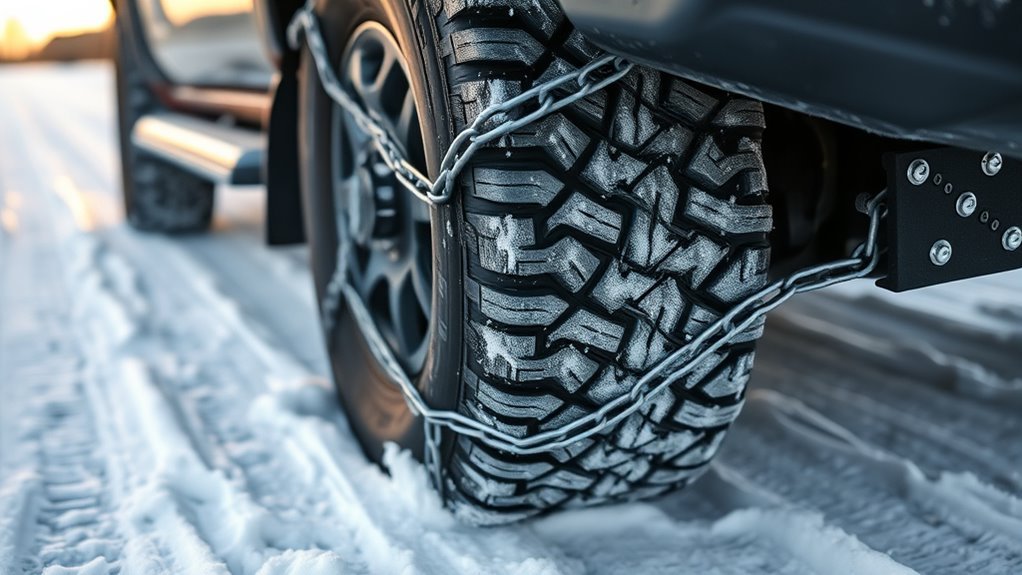
Although driving on snow and ice can be challenging, auto tire chains help you maintain control by digging into slippery surfaces and boosting traction.
When you use snow chains, your vehicle grips the road better, reducing the risk of skidding during winter driving.
These chains improve your stopping distance and overall safety, especially on icy or snow-covered roads.
Many regions have strict laws and regulations that require you to install tire chains when conditions demand it.
So staying compliant keeps you legal and safe.
By fitting durable steel chains to your tires, you’ll find your vehicle handles winter weather hazards more confidently.
Using snow chains isn’t just about safety—it’s about making winter driving manageable and worry-free.
Mechanism of Automatic Chain Deployment
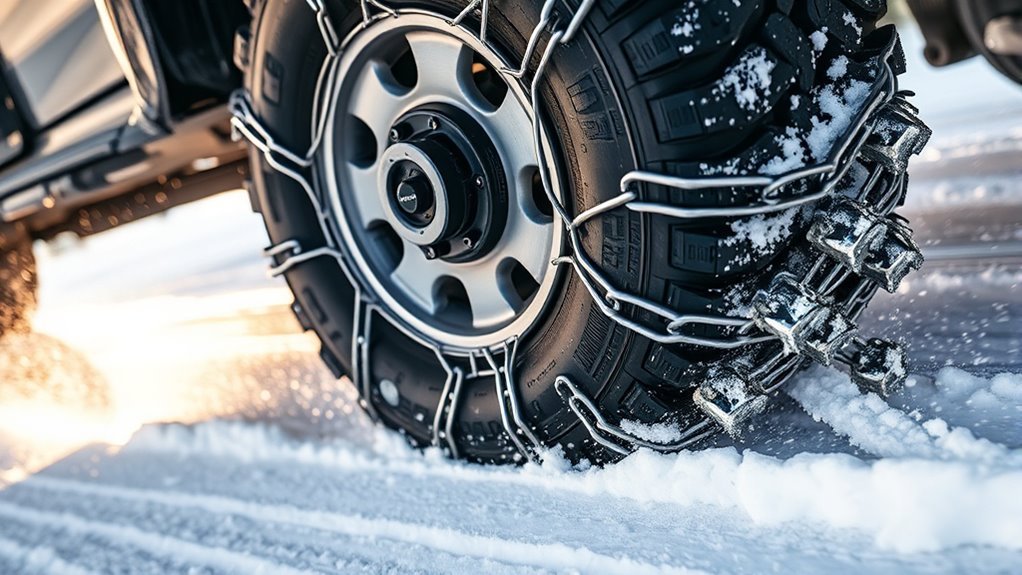
While traditional tire chains require manual installation, automatic chain systems offer a faster, more convenient way to boost traction when you need it.
With automatic tire chains, the deployment mechanism is built into your vehicle’s rear suspension and activates at the push of a dashboard switch.
Automatic tire chains deploy effortlessly from your rear suspension with just a dashboard switch.
This system uses an electric over air solenoid to trigger air cylinders, lowering chainwheels against the tire’s sidewall.
As the wheels rotate, centrifugal force causes the chains to extend outward, instantly increasing grip on snow and ice.
These traction devices provide rapid, reliable assistance in slippery conditions, enhancing your vehicle’s control without delay.
Plus, they require minimal maintenance and fit various buses and vans, making them an efficient solution for anyone driving in winter weather.
Chain Wheel Dynamics and Traction Enhancement
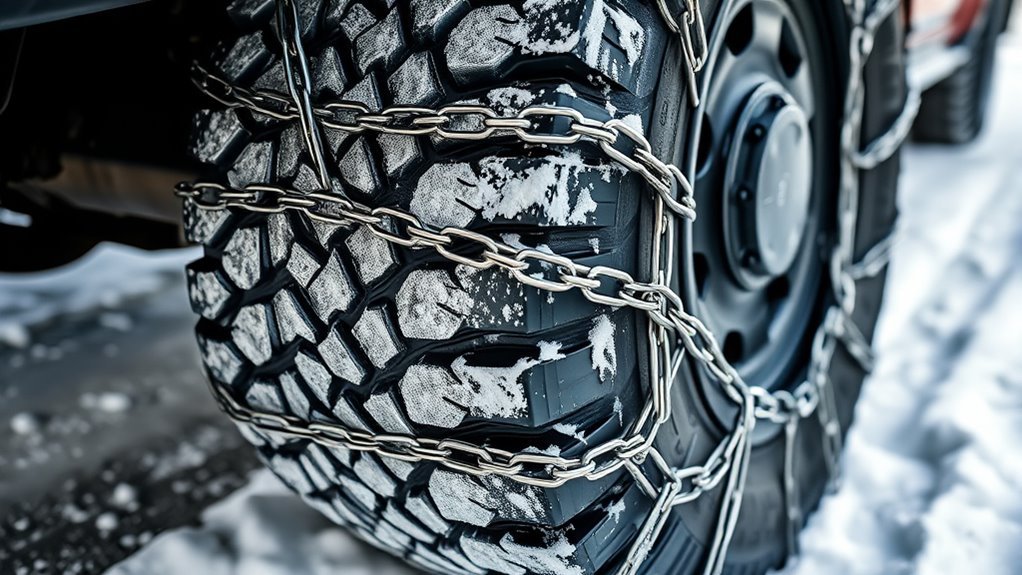
You’ll notice that centrifugal force makes the chains swing outward as the wheel spins. This helps them grip the road better.
The rubber tire presses the chains firmly against the icy surface, boosting friction and traction.
Understanding this interaction is key to improving how auto tire chains perform in slippery conditions.
Centrifugal Force Effects
Because the chain wheel rotates, centrifugal force pushes the chains radially outward, increasing their contact with both the tire and road surface.
These centrifugal forces cause the chains to swing outward, enhancing engagement with the tire tread and icy surfaces, which boosts traction considerably.
When your automatic tire chains activate, the chains get trapped between the rubber tire and the road, improving grip and control.
The chain wheel’s ideal position—about 100 millimeters above the road—ensures the chains deploy effectively without excessive strain.
As your drive wheel rolls, the chains swing back and forth, repeatedly engaging and releasing to maintain traction while reducing wear.
This dynamic action helps you maintain control in slippery conditions and improves stopping distances, making your drive safer and more reliable.
Rubber-Road Friction
When the chain wheel spins, centrifugal force swings the chains outward, increasing their contact with both the rubber tire and the icy road.
This action boosts traction by raising static friction between your rubber tire and slippery icy surfaces.
As the drive wheel rolls, chains repeatedly engage and release, maintaining grip without jerky movements.
Proper chain wheel positioning—about 100 ±20 mm above the ground—maximizes chain contact under the tire, enhancing performance, especially when combined with snow tires.
| Factor | Impact on Traction |
|---|---|
| Chain Wheel Position | Maximizes chain engagement |
| Centrifugal Force | Extends chains radially |
| Chain-Tire Contact | Increases friction |
| Chain-Road Contact | Digs into snow and ice |
| Engagement Frequency | Guarantees smooth traction |
This balance lets you drive safely on icy surfaces with improved rubber-road friction.
Ideal Positioning of Chain Wheels for Optimal Performance
Positioning the chain wheel 100 ±20 mm above the road surface is essential for maximizing your tire chain’s performance.
Proper chain wheel positioning at this height guarantees the best balance between effectiveness and durability.
Placing the chain wheel at the axle center line delivers reliable performance by maintaining comfort and consistent functionality whether you drive forward or reverse.
Now, if you move the chain wheel slightly forward, you can actually increase traction on slippery surfaces.
This happens because more chain gets placed under the tire.
However, be cautious! You need to avoid excessive strain that can occur when part of the chain gets trapped under the tire.
This can damage the mounting and cause jerky motion.
Common Types and Variations of Tire Chains
When choosing tire chains, you’ll encounter chain and cable designs, each offering different traction levels and installation ease.
Some vehicles come with automatic deployment systems you can activate with a button for quick use.
You’ll also want to take into account how the chains tension and fit, since proper installation guarantees safety and performance.
Chain and Cable Designs
Tire chains come in several designs that cater to different driving conditions and vehicle needs.
Traditional chain designs vary in link patterns and thickness, with larger links providing better traction in severe snow and ice.
On the other hand, smaller links offer improved maneuverability.
Cable chains, however, use steel cables instead of links.
This makes them lighter and easier to handle—ideal if your vehicle has limited wheel well clearance.
While automatic deployment systems are another option, they’re a separate category.
These systems use air or electric mechanisms to quickly apply and retract chains without manual effort.
Choosing between chain designs and cable chains ultimately depends on your vehicle type and the severity of the conditions you expect to face.
Automatic Deployment Systems
If you want to enhance traction without stopping to install chains manually, automatic deployment systems offer a smart solution.
These systems attach permanently to your vehicle’s rear suspension and activate with a simple dashboard switch.
Here’s how they work:
- Air pressure powers cylinders that lower chainwheels to the tire sidewall.
- Centrifugal force causes the tire chains to extend outward, gripping snow and ice.
- This instant deployment boosts traction immediately, helping you adapt to slippery conditions safely.
Automatic deployment systems require minimal upkeep and fit various buses and vans, making them practical for many drivers.
By using these tire chains, you can respond quickly to winter hazards without the hassle of manual installation.
This ensures safer travel on snow and ice.
Tensioning and Installation Methods
Securing chains properly is key to maintaining traction and preventing damage during use.
When you install the chains, make sure of tight tensioning to avoid loosening. This can cause failure or harm to your tires.
Automatic chains simplify this by deploying and retracting with a button.
However, regular maintenance checks are essential to keep tensioners and mechanisms reliable.
Common methods include draping chains over tires and fastening at the top or using one-sided mounts for easier installation.
| Method | Description |
|---|---|
| Draping | Chain placed over tire top |
| One-sided Mount | Easier application on one side |
| Cable Chains | Lightweight alternative |
| Automatic Chains | Deploy/retract via button |
| Maintenance Checks | Make sure tension & function |
Safety Considerations and Proper Usage Guidelines
Although you might be enthusiastic to use auto chains in winter conditions, you should only deploy them on snowy or icy roads. This helps prevent damage to both your tires and vehicle.
Proper usage of tire chains involves critical safety considerations to maximize their effectiveness and avoid accidents.
Follow these key guidelines:
- Keep your speed below 30 mph to maintain control and reduce chain wear.
- Regularly check chain tension and alignment during your drive to prevent loosening or damage.
- Practice installing chains before winter hits to guarantee quick, secure fitting under harsh weather.
Also, stay informed about local regulations regarding tire chains. Some areas require them even if you have snow tires.
Observing these safety considerations guarantees your chains perform well and protect your vehicle in winter conditions.
Frequently Asked Questions
Do You Put Chains on All Four Tires?
You don’t always put chains on all four tires.
It depends on your vehicle’s drive type and local laws.
For rear or all-wheel drive, chains go on the drive tires.
Front-wheel drive needs them on the front tires.
What Are the Disadvantages of Snow Chains?
Snow chains can damage tires if used on clear roads. They also make noise and reduce comfort while driving.
Additionally, careful installation is necessary to avoid mechanical issues.
Driving too fast or with loose chains can lead to vehicle damage and safety hazards.
How Much Do Tire Chains Usually Cost?
You’d think tire chains cost a fortune, but they usually range from $30 to $200 per pair.
With automatic systems climbing up to $3,000, you might want to consider your options carefully.
Heavy-duty chains for bigger vehicles can push past $300 easily.
What Should You Never Do When Installing Tire Chains?
You should never install tire chains when they’re rusted or damaged.
Also, avoid driving with them on dry pavement.
Leaving them too loose is another mistake to steer clear of.
Always secure them tightly to avoid damage and guarantee safe, effective use.
Conclusion
Now that you know how auto tire chains grip the road like a mountain climber’s firm hold on a cliff, you can see why they’re essential for safe winter driving.
By automatically deploying and improving traction, these chains keep you steady on icy paths.
Just remember to position them correctly and follow safety guidelines.
This way, you’re always in control, no matter how slippery the journey gets.
Stay prepared and drive confidently!
In conclusion, auto tire chains are vital for navigating treacherous winter roads. They enhance traction and stability, ensuring you can tackle icy conditions safely.
By using them correctly and adhering to safety practices, you can enjoy a more secure driving experience.
So, equip your vehicle with tire chains and drive with peace of mind during those challenging winter months. Stay safe out there!