How Often Should You Change Your Oil Filter?
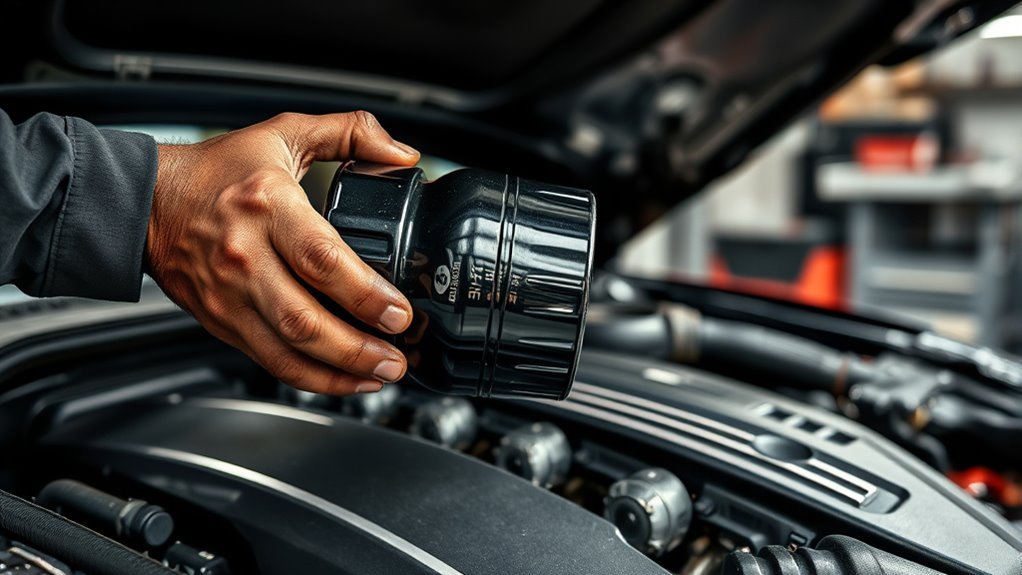
You should change your oil filter every time you change your oil, usually between 5,000 and 7,500 miles.
This practice helps keep your engine running smoothly by trapping harmful contaminants.
It also prevents clogged filters that can restrict oil flow.
Regularly replacing the filter guarantees proper lubrication and reduces engine wear, which ultimately helps you avoid costly repairs.
Even if you have a synthetic or high-mileage engine, timely filter changes are essential for maintaining efficiency.
So, make sure to keep your car in top shape!
There’s always more to know about maintaining your oil filter properly.
Key Takeaways
- Change your oil filter every time you change your oil, typically every 5,000 to 7,500 miles.
- Remember, using synthetic oil doesn’t mean you can extend the oil filter replacement intervals.
- You should still replace filters at the same frequency.
- If you have a high-mileage vehicle, you might need to change the oil filter more often to keep your engine healthy.
- It’s always a good idea to consult your vehicle’s owner manual for the manufacturer-recommended oil filter replacement intervals.
- Regular oil filter changes are essential.
- They ensure clean oil flow, which helps prevent engine wear and maintain performance.
The Importance of Changing Your Oil Filter
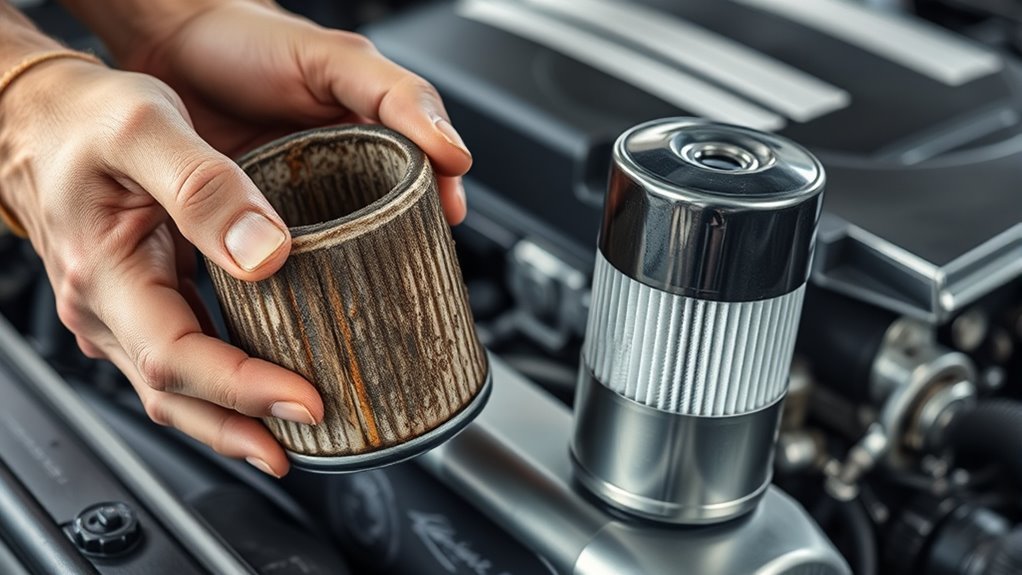
Because your oil filter traps harmful contaminants and combustion by-products, changing it regularly is crucial to keep your engine running smoothly.
Skipping oil filter replacement during oil changes can lead to a clogged filter, which restricts oil flow and causes inadequate lubrication. This increases engine wear and reduces engine performance.
Proper maintenance means you protect the engine by guaranteeing fresh oil passes through a clean filter, removing contaminants effectively.
When the filter is clogged, contaminants recirculate, accelerating damage and risking overheating. Regular oil filter replacement is essential to maintain peak engine efficiency and prolong your vehicle’s lifespan.
Taking care of this simple step helps you avoid costly repairs and guarantees your engine stays protected against harmful particles that degrade performance over time.
Recommended Oil Filter Replacement Intervals
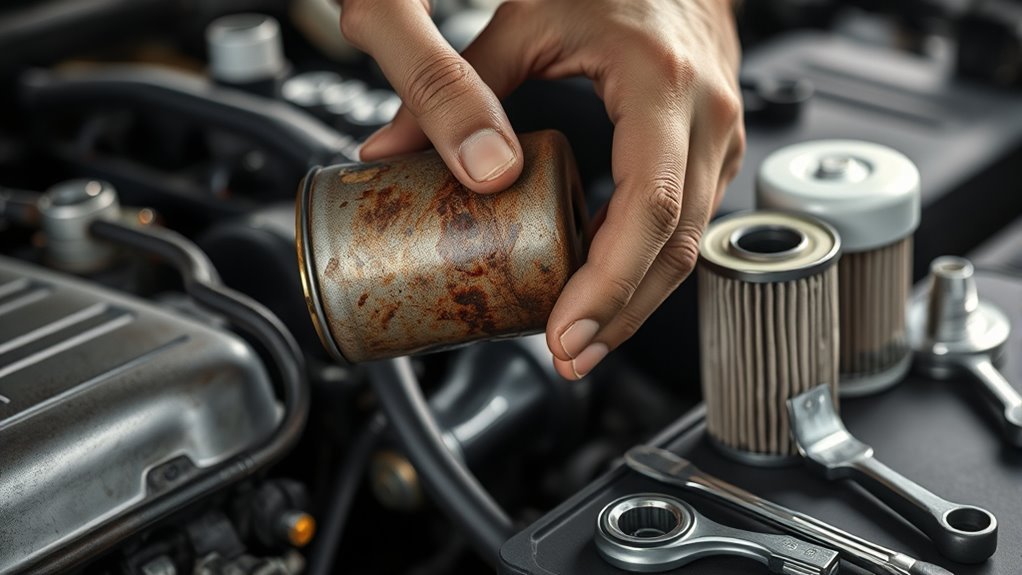
To keep your engine running smoothly, you should replace your oil filter regularly according to recommended intervals.
Most manufacturers advise oil filter changes every oil change, typically between 5,000 to 7,500 miles.
Even if you use synthetic engine oil, the oil filter needs replacement at the same frequency to prevent contaminants from clogging your engine.
Some high-mileage vehicles or tougher driving conditions might require more frequent changes.
Always consult your vehicle’s owner’s manual for specific guidance tailored to your make and model.
Regular maintenance, including timely oil filter replacement, protects your engine by ensuring clean oil circulates freely.
Following these recommended oil filter replacement intervals is essential for your vehicle’s maintenance and long-term performance.
Signs Your Oil Filter Needs to Be Replaced
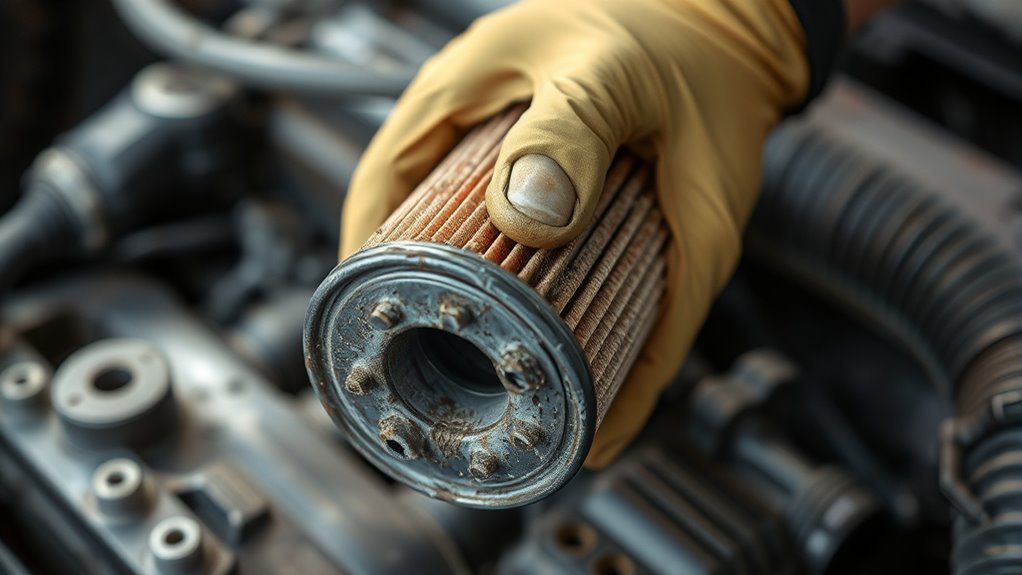
You’ll want to watch for warning lights on your dashboard, especially the oil pressure indicator, as they often signal filter problems.
If your engine starts sputtering or making unusual noises, it could mean the oil filter is clogged and restricting flow.
Paying attention to these signs helps you replace the filter before it causes serious engine damage.
Warning Lights Indicators
When warning lights like the maintenance or check engine light come on, they often signal strain in your oil system. This could mean your oil filter needs replacing.
The maintenance light alerts you to issues that may impact oil life and engine life. It’s a good reminder for timely oil and filter changes.
If the oil pressure warning light activates, it’s a strong sign of a clogged oil filter that’s restricting oil flow.
Low oil pressure can risk engine damage, so don’t ignore this indicator.
You might also notice unusual engine noises caused by insufficient lubrication.
Dark, gritty oil signals the filter isn’t effectively removing contaminants. This means your oil filter needs replacement to maintain peak engine health and prevent costly repairs.
Always address warning lights promptly to protect your engine.
Engine Performance Symptoms
Several engine performance issues can signal that your oil filter needs replacing.
If you notice sputtering or rough idling, it could be due to restricted oil flow caused by a clogged oil filter.
Unusual metallic sounds often mean inadequate lubrication and increased friction between engine parts.
Dark, thick, or gritty oil shows the filter isn’t removing contaminants effectively.
This buildup reduces engine efficiency and power, making your engine work harder and consume more fuel.
Always change your oil filter every time you do an oil change to avoid these problems.
Also, don’t ignore the oil pressure warning light—it often indicates restricted flow from a clogged filter.
Keeping your oil filter fresh guarantees consistent engine performance and protects your engine’s health.
Oil Filter Considerations for Synthetic and High-Mileage Oils
Choosing the right oil filter plays an essential role in maintaining your engine’s health, especially if you use synthetic or high-mileage oils.
Synthetic oil filters are designed to work efficiently with synthetic oil. They offer larger capacities for better filtration and longer intervals between changes.
If your vehicle has over 75,000 miles, a high-mileage oil filter with upgraded materials can better protect aging engine parts.
While most manufacturers recommend changing the oil filter with every oil change, using synthetic oil might allow for extended intervals—just check your owner’s manual for guidance.
Always consult an automotive professional to select the best filter type for your vehicle’s maintenance needs.
Regularly replacing your oil filter guarantees peak filtration, protecting your engine from contaminants that could degrade performance over time.
Potential Risks of Neglecting Oil Filter Changes
While selecting the right oil filter helps maintain your engine’s health, skipping regular filter changes can quickly undo those benefits.
Neglecting the oil filter leads to a clogged filter, restricting oil flow and reducing lubrication. This causes increased engine wear as friction rises between components.
Insufficient lubrication may also cause overheating, risking severe engine damage or failure.
You’ll likely notice declines in fuel efficiency since your engine works harder to pump oil through the restricted pathways.
Ignoring oil filter maintenance can increase the risk of oil leaks, which often result in costly repair costs and potential voiding of warranties.
Staying on top of oil filter changes is essential to avoid these issues and keep your vehicle running smoothly without unexpected breakdowns or added expenses.
Where to Get Professional Oil Filter Service and Replacement
You can trust certified technicians at service centers like Jiffy Lube or Modern Mazda of Burlington to handle your oil filter replacement with expertise.
Many providers also offer convenient online scheduling, so you can easily book your service when it fits your day.
Taking advantage of these options helps keep your vehicle running smoothly and meets manufacturer recommendations.
Certified Technicians Expertise
Because certified technicians have the expertise to inspect and replace your vehicle’s oil filter accurately, they guarantee your engine runs smoothly and efficiently.
When you bring your car in for a routine oil change service, these professionals make certain the oil filters meet manufacturer specifications, protecting your engine from wear and tear.
Certified technicians don’t just swap out the filter; they check for leaks or clogs that could impair your vehicle’s oil flow.
Replacing the oil filter with genuine parts during service maintains peak engine performance and longevity.
Trusting certified technicians means you’re investing in precise care for your engine’s oil system, giving you peace of mind that your oil filter and overall engine health are expertly managed every time.
Convenient Scheduling Options
Certified technicians guarantee your oil filter is replaced correctly.
But finding a convenient time and place for service fits better with your busy schedule. Experts recommend routine maintenance that includes changing your oil and oil filter every 5,000 to 7,500 miles.
To keep your vehicle running efficiently with clean oil, schedule your next service at trusted service centers. Here are some convenient options:
- Jiffy Lube offers quick oil and oil filter changes as part of routine maintenance.
- Modern Mazda of Burlington lets you book appointments online for easy scheduling.
- Tire Tech and Auto Repair Centers in Oakland, NJ, provide skilled technicians for oil filter needs replacement.
- Use certified service centers to guarantee efficient oil care and proper replacement intervals.
These choices help you maintain your vehicle without hassle.
Frequently Asked Questions
What Car Cost $25,000 for an Oil Change?
You might think a $25,000 oil change is a myth, but some luxury cars like the Bugatti Veyron actually demand it.
Their complex engines and premium materials make maintenance outrageously expensive but necessary for peak performance.
It’s mind-boggling to consider how much it costs just to keep these high-end machines running smoothly!
What Is the 30-60-90 Rule for Cars?
The 30-60-90 rule means you perform key maintenance at 30,000, 60, and 90,000 miles.
You’ll change oil and filters, and inspect brakes early.
Then, as miles add up, you tackle transmission fluid, timing belts, and spark plugs.
Staying on top of these maintenance tasks can help keep your car running smoothly for years to come!
Is Synthetic Oil Worth the Extra Cost?
Imagine your engine running smoothly for 10,000 miles without a hitch.
Yes, synthetic oil is worth the extra cost because it protects better, lasts longer, and keeps your engine cleaner.
This ultimately saves you money and stress in the long run.
How Do I Know When to Change the Air Filter?
You should change your air filter when you notice reduced engine performance, lower fuel efficiency, or visible dirt on the filter.
Check it regularly during maintenance and follow your owner’s manual for specific replacement intervals.
Keeping an eye on your air filter can make a big difference!
Conclusion
You might think skipping oil filter changes saves time and money, but ironically, it’s the fastest way to drain both.
Neglecting this simple maintenance can turn your engine into an expensive paperweight.
So, instead of waiting for a costly breakdown, make changing your oil filter a regular habit.
After all, your car’s health depends on it—and you don’t want to be the one stuck on the side of the road, wishing you’d acted sooner.
Regularly changing your oil filter is crucial for maintaining your vehicle’s performance and longevity.
When the filter becomes clogged, it leads to reduced oil flow, which can cause serious engine damage over time.
Don’t let a small task turn into a big problem.
Make oil filter changes part of your routine to keep your engine in top shape and avoid costly repairs down the road.
Your car will thank you for it!