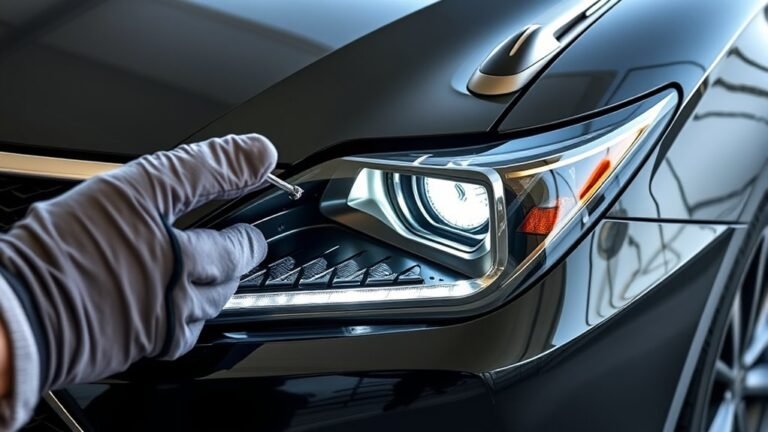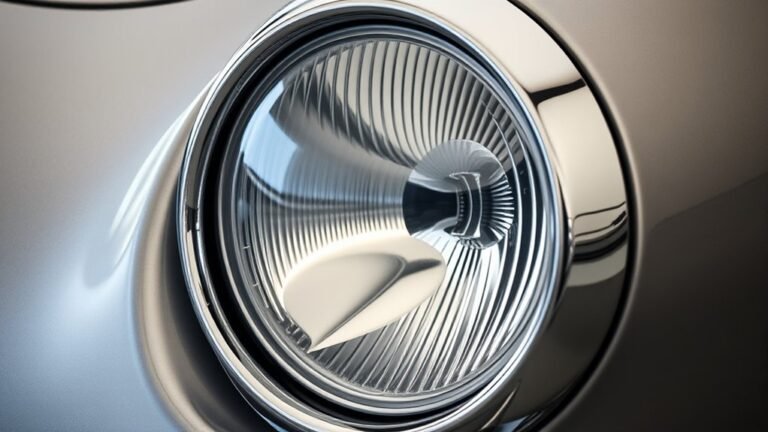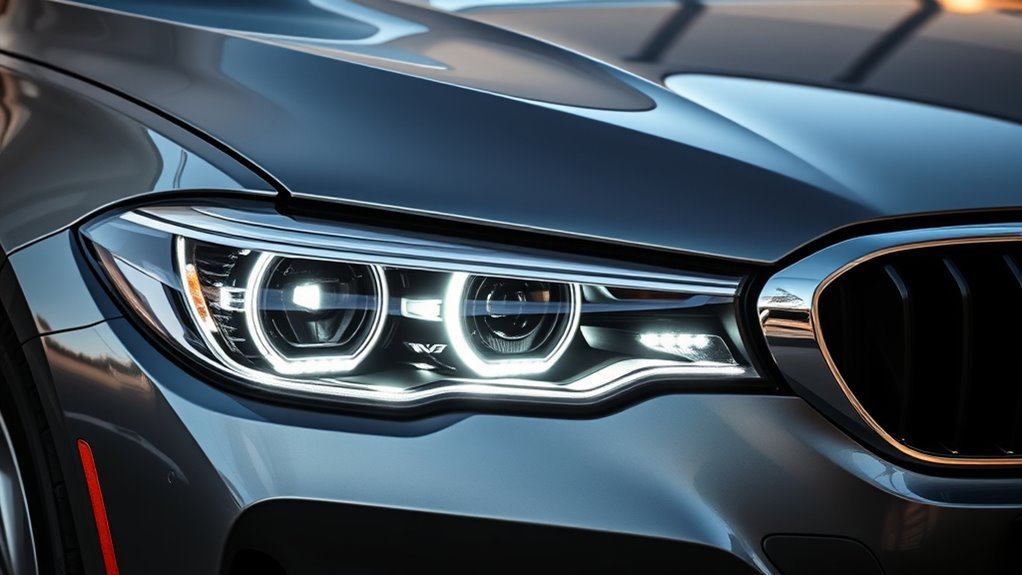
How to Choose the Right BMW Headlight for Your Model
Start by checking your vehicle’s 17-character VIN to identify your exact BMW model and production date. This information is crucial and matters more than your registration year.
Make certain to know if your car is LCI or pre-LCI since their headlights differ significantly.
Don’t mix adaptive with non-adaptive lights—they’re not interchangeable.
Always use OEM headlights with compatible part numbers to avoid fit and function issues.
By keeping these details in mind, you can ensure you get the perfect headlight match for your BMW.
It’s all about precision and compatibility to enhance both safety and style on the road.
Let’s dive deeper into how these factors play a role in your selection process!
Key Takeaways
- Use your BMW’s 17-character VIN to identify the exact original headlight specifications and ensure compatibility.
- Confirm the vehicle’s production date, not just registration year, to match headlights with any mid-cycle design updates.
- Determine if your BMW is an LCI or pre-LCI model to select headlights with the correct mounting points and design.
- Identify whether your vehicle uses adaptive or non-adaptive headlights to avoid functionality issues and electronic incompatibility.
- Verify compatible part numbers through a parts database or VIN lookup to guarantee proper fit and function.
Start With Your Vehicle Identification Number (VIN)
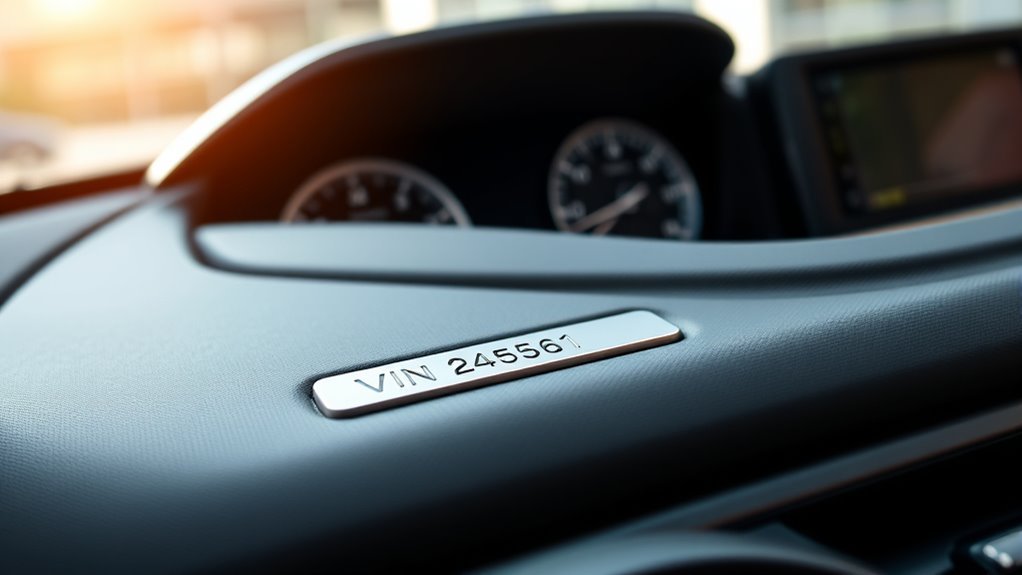
How can you be certain you’re choosing the right BMW headlight?
Start by checking your vehicle’s unique 17-character VIN. This number holds key details about your BMW’s specifications, including the exact headlight originally fitted.
Check your BMW’s 17-character VIN to identify the exact original headlight specifications.
Using the VIN helps you avoid guesswork when searching for BMW headlights and replacement parts.
It reveals your car’s production date, which matters because headlight designs can change during manufacturing cycles.
By providing your VIN to suppliers or manufacturers, you guarantee they match you with headlights that fit perfectly and work seamlessly with your vehicle’s electrical system.
Whether you need a pre-LCI or LCI version, the VIN guides you to the precise replacement parts, saving you time and preventing costly errors.
Why Production Date Matters More Than Registration Year
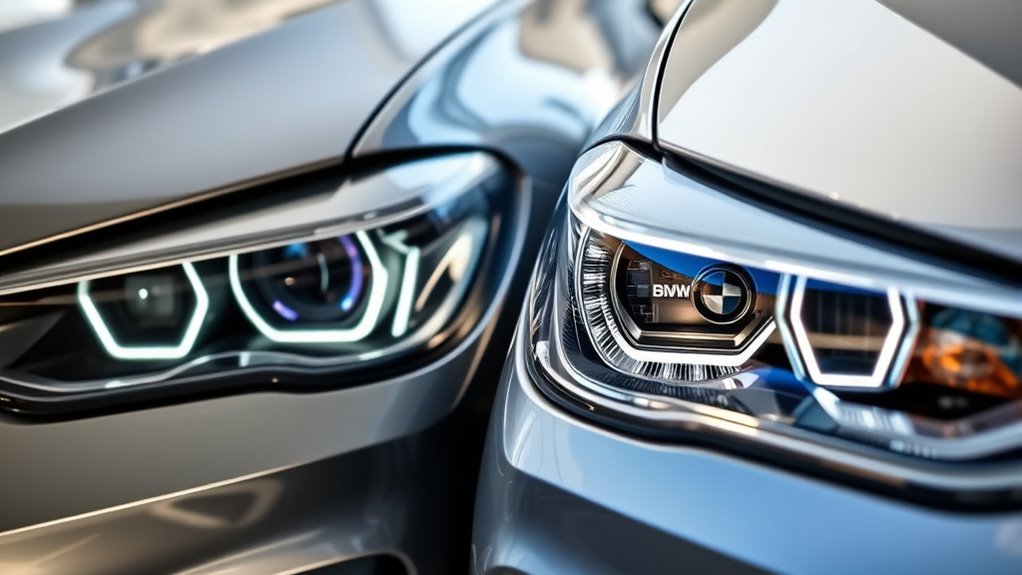
Although your BMW’s registration year provides a general idea of its age, the production date carries far more weight when selecting replacement headlights.
Vehicles registered in the same year can have different production dates, leading to variations in headlight specifications.
Manufacturers often make technical updates during production cycles that don’t affect the model year but do change headlight design and requirements.
To guarantee you get the right headlight, you need to match parts based on the exact production date.
Using your Vehicle Identification Number (VIN) lets you pinpoint this date accurately, eliminating guesswork.
This precision helps you find headlights that perfectly fit your BMW’s specifications, assuring proper function and compatibility every time.
Understanding LCI And Pre-LCI BMW Models
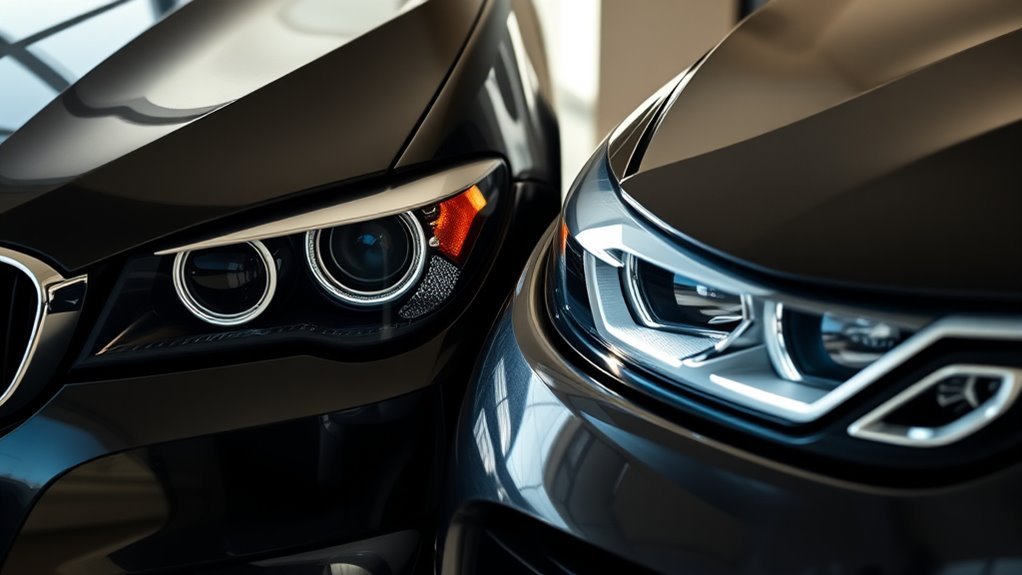
Knowing your BMW’s exact production date helps you determine whether your vehicle is an LCI or pre-LCI model.
This is essential when selecting headlights.
These two versions differ greatly in headlight design and functionality, so mixing them up can cause installation headaches.
Here’s what you need to know:
- LCI models feature updated headlights with different mounting points and wiring compared to pre-LCI.
- Pre-LCI headlights won’t fit LCI models properly, and vice versa, without modifications.
- Correctly identifying your BMW’s LCI status guarantees compatibility and preserves headlight functionality.
Adaptive and Non-Adaptive Headlights Are Not Interchangeable
You’ll find that adaptive and non-adaptive headlights work very differently, with unique electronic modules and wiring.
Trying to swap one for the other can cause functionality problems and warning lights on your BMW.
Always check compatibility carefully before making any headlight changes.
Adaptive Vs Non-Adaptive Differences
Because adaptive headlights adjust their beam based on your vehicle’s movement and road conditions, they differ fundamentally from non-adaptive headlights, which have a fixed illumination pattern.
When choosing headlights for your BMW model, understanding these differences is essential.
1. Adaptive headlights contain advanced electronic modules that enable dynamic beam direction.
Unlike non-adaptive headlights, which have static lighting.
2. The internal components vary considerably, making adaptive and non-adaptive headlights incompatible for direct interchange.
3. Installing the wrong type can trigger warning messages and cause system faults.
Even if adaptive and non-adaptive headlights look similar, don’t assume they’re interchangeable.
Always verify your BMW model’s original headlight type to guarantee you select the correct replacement and maintain ideal functionality.
Compatibility and Installation Challenges
Although adaptive and non-adaptive headlights may look similar, they aren’t interchangeable due to significant differences in their internal components and electronic systems.
If you try to swap one for the other, you’ll face compatibility issues because adaptive headlights adjust their beam based on your car’s movement.
On the other hand, non-adaptive ones provide fixed illumination.
This fundamental difference means installation challenges arise quickly—installing the wrong type can trigger warning messages or faults in your BMW’s system.
These faults can affect safety and performance.
To avoid these problems, you must verify whether your model uses adaptive headlights or non-adaptive ones before purchasing replacements.
Ensuring compatibility upfront saves you from costly mistakes and keeps your BMW’s lighting system functioning correctly without unexpected errors or malfunctions.
Electronic Module Variations
When you consider replacing your BMW’s headlights, understanding the electronic module differences between adaptive and non-adaptive systems is crucial.
Adaptive LED headlights adjust beam direction based on movement, relying on advanced electronic modules, unlike fixed non-adaptive headlights.
Mixing these can cause serious compatibility issues.
Keep these points in mind:
- Adaptive headlights have unique electronic modules not compatible with non-adaptive systems.
- Installing adaptive LED headlights on a non-adaptive vehicle often triggers warning messages or faults.
- Visual similarity doesn’t guarantee compatibility—always verify your model’s specific headlight type.
Compatible Part Numbers Matter More Than People Realise
If you want your BMW headlight replacement to fit perfectly and function as intended, paying close attention to compatible part numbers is crucial.
Each BMW comes with specific part numbers tied to its model year, design updates, and production specifications.
Even small differences in compatible part numbers can cause installation issues or malfunction.
For example, headlights for LCI and pre-LCI models often differ, reflecting design and tech changes.
Factory updates during a model year may also change part numbers, so two headlights that look alike might not be interchangeable.
To avoid problems, use your vehicle’s VIN or consult a reliable parts database to identify the exact compatible part numbers.
This guarantees a seamless fit and keeps your BMW’s lighting performing at its best.
Genuine OEM Headlights Offer The Best Fit
Because genuine OEM headlights are designed specifically for your BMW model, you’ll get a perfect fit and seamless integration that aftermarket options often can’t match.
Choosing genuine OEM headlights guarantees you enjoy peak performance and full compatibility with your vehicle’s electrical systems.
Choosing genuine OEM headlights ensures optimal performance and seamless compatibility with your BMW’s electrical system.
Here’s why they stand out:
- Precise Fit: OEM headlights are tailor-made for your model, eliminating gaps or misalignments.
- Reliability: Built with durable materials, they last longer and reduce replacement frequency.
- Safety & Quality: Manufactured to strict standards, they provide superior lighting and prevent warning light issues.
Investing in OEM means you’re not just getting a part, but a commitment to excellence!
Frequently Asked Questions
Which BMW Headlight Is Best?
The best BMW headlight for you depends on your model and preferences.
OEM LED headlights offer great brightness and longevity, which many drivers appreciate.
On the other hand, HID headlights are perfect for those who love intense brightness.
Always pick headlights compatible with your vehicle’s specs for safety and performance.
This ensures that you get the best out of your BMW while keeping everything in check.
How Do I Know What Headlights My BMW Has?
Think of your BMW’s headlights like puzzle pieces fitting perfectly.
You’ll want to check your VIN and production date.
Then, identify if it’s an LCI or pre-LCI model and if the lights are adaptive or not.
How Do I Know Which Headlights to Buy?
You’ll want to check your BMW’s VIN to confirm exact specs.
This will help you identify if it’s an LCI or pre-LCI model, and see if your headlights are adaptive.
Then, pick genuine OEM parts matching those details for the best fit.
What Is Better, LED or Xenon?
Choosing between LED and Xenon headlights is like picking between a sprinter and a marathoner:
LEDs light up instantly, last longer, and save energy.
Meanwhile, Xenon’s brighter glow takes a moment but dazzles intensely.
Conclusion
Choosing the right BMW headlight isn’t just about picking a part off the shelf—it’s like finding the perfect key for your car’s unique lock.
I once swapped headlights without checking the VIN and ended up with lights that didn’t fit.
Remember, using your VIN and knowing your model’s production date guarantees a perfect match.
Genuine OEM parts might cost a bit more, but they assure your BMW shines just like it should—flawlessly and safely.
So, before making a purchase, take the time to research.
It’ll save you from the hassle of returns and mismatched parts.
In conclusion, always prioritize compatibility by verifying your VIN and production date.
Investing in quality OEM parts will enhance your BMW’s performance and safety, ensuring you enjoy a driving experience that’s both stylish and reliable.
Get the right headlights, and let your BMW shine bright on the road!