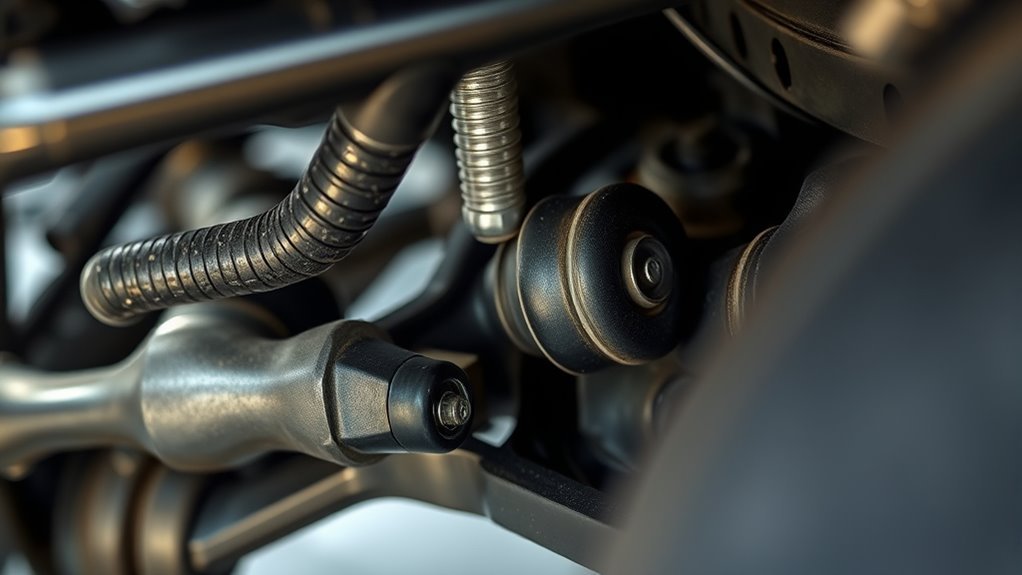
What Are Car Suspension Bushings and Why They Matter?
Car suspension bushings are essential components in your vehicle’s suspension system. They cushion the connections within the system, absorbing shocks and vibrations from the road. This helps keep your ride smooth and stable.
By preventing metal parts from banging together, bushings also reduce noise and wear. Additionally, they play a crucial role in maintaining proper handling and alignment.
If your ride starts feeling rough or noisy, it could be a sign that your bushings are worn.
Keep reading to explore the different types of bushings, signs of wear, and tips on how to choose and maintain the right bushings for your car.
Key Takeaways
- Suspension bushings cushion connections between suspension parts, reducing shocks and vibrations for a smoother ride.
- They also prevent metal-to-metal contact, which minimizes noise and harsh impacts inside the vehicle cabin.
- Different materials, like rubber and polyurethane, affect durability, noise dampening, and handling performance.
- If bushings wear out, you might hear clunking noises or experience loose steering and uneven tire wear.
- This can really impact both safety and comfort while driving.
- Proper maintenance and timely replacement are key.
- They help ensure vehicle stability, alignment, and the overall health of your suspension system.
Definition and Function of Suspension Bushings
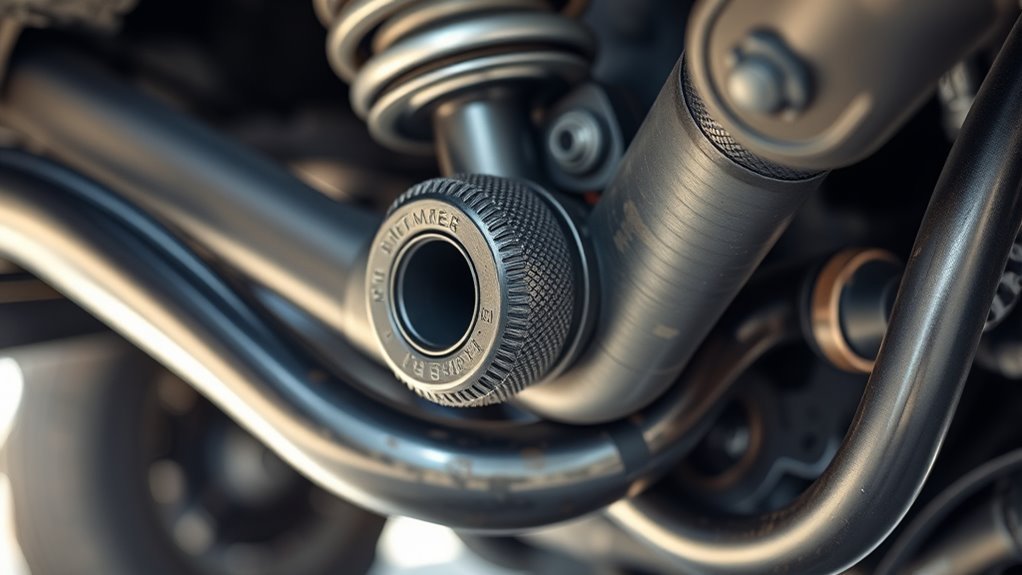
Suspension bushings act as the cushioning interface between your car’s suspension parts, reducing vibrations and noise while ensuring smooth movement.
These rubber or polyurethane components absorb shocks from the road, enhancing your driving comfort and safety.
You’ll find suspension bushings at critical connection points, like where the control arm meets the frame.
The control arm bushing prevents metal-to-metal contact, allowing the suspension to move freely without transmitting harsh impacts to the cabin.
Control arm bushings stop metal contact, letting suspension move smoothly and reducing harsh cabin impacts.
If your bushings wear out, you might notice clunking noises, steering instability, or uneven tire wear.
By regularly inspecting and replacing suspension bushings, you keep your vehicle handling sharp and protect suspension components from premature damage.
This ensures a safer, smoother ride every time you get behind the wheel.
Types of Suspension Bushings and Their Differences
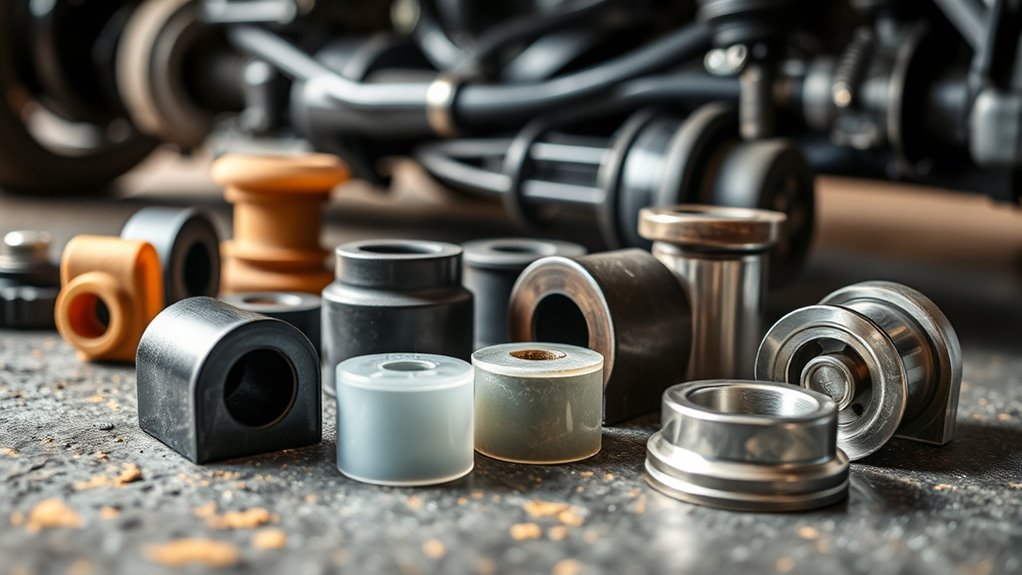
Choosing the right bushings can greatly affect your vehicle’s ride quality and handling.
Among suspension parts, Rubber Bushings are the most common. They are valued for their noise-dampening and comfort, though they tend to wear out faster.
If you’re looking for increased durability and firmer support, polyurethane bushings are a great option. They offer improved handling, making them ideal for sporty driving.
For advanced suspension systems, ball bushings provide enhanced flexibility and better pivoting during travel.
Each type serves a specific purpose: Rubber Bushings prioritize comfort, polyurethane boosts performance, and ball bushings enhance movement.
When selecting suspension bushings, consider load capacity, compatibility, and your driving needs. This will help guarantee your vehicle performs as intended.
Understanding these differences will help you choose the best suspension parts for your ride.
Signs and Symptoms of Worn Suspension Bushings
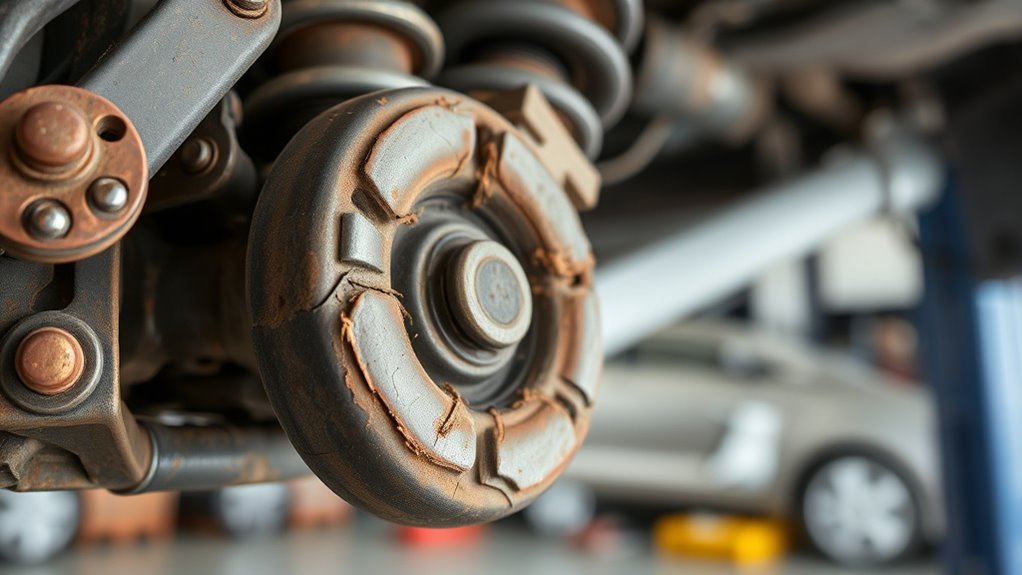
You might notice clanking or rattling noises when driving over rough surfaces or turning sharply.
This often means your suspension bushings are wearing out.
If your steering feels loose or less responsive, that’s another clear sign something’s wrong.
Paying attention to these changes can help you catch issues before they affect your safety and tire wear.
Common Warning Indicators
When you notice clunking or rattling noises over bumps, it’s a strong sign that your suspension bushings aren’t absorbing shocks properly.
You might also feel vague or drifting steering during turns, indicating that the bushings are failing to keep your suspension aligned and controlled.
Keep an eye on your tyres; uneven or premature wear often points to suspension bushing issues affecting your vehicle’s alignment.
Additionally, if your car feels unstable when accelerating or braking, it could mean the bushings have deteriorated.
Regular inspections are essential, especially if your MOT test warns of bushing wear.
Catching these common warning indicators early helps maintain your car’s safety and handling, preventing more costly repairs down the road.
Handling and Noise Changes
Although suspension bushings are small components, their wear greatly affects your vehicle’s handling and noise levels.
When suspension bushes wear out, you might notice clanking or rattling noises over rough roads—these are tell-tale signs that the cushioning between suspension parts is failing.
You may also feel a vague or drifting steering response during turns, signaling reduced stability and control.
Uneven or premature tire wear can occur because worn suspension bushes no longer maintain proper alignment.
Instability during acceleration or braking is another red flag.
Keeping an eye on these handling and noise changes helps you spot worn bushings early.
Regular inspections during servicing guarantee your suspension bushes remain in good shape, preserving your vehicle’s safety and ride comfort.
The Impact of Suspension Bushings on Vehicle Performance
Since suspension bushings play an essential role in absorbing shocks and reducing noise, they directly influence how your vehicle handles and how comfortable your ride feels.
Suspension bushings impact your driving experience by maintaining proper suspension geometry during braking, cornering, and acceleration. This stability preserves tire life and improves fuel efficiency.
If bushings wear out, you might notice clanking noises, vague steering, and uneven tire wear—signs that your vehicle’s handling and safety are compromised.
Choosing the right bushing material also affects performance: rubber bushings prioritize comfort, while polyurethane offers better durability and responsiveness.
Upgrading to performance bushings can enhance advanced damping systems, giving you a smoother ride and improved stability across different driving conditions.
In short, well-maintained suspension bushings are key to maximizing your vehicle’s performance.
Factors to Consider When Selecting Replacement Bushings
When selecting replacement bushings, you need to ensure they fit your vehicle’s suspension system perfectly. This is crucial to avoid any installation issues.
Pay close attention to the material, as it directly affects durability and performance under different driving conditions.
Choosing the right combination will keep your suspension running smoothly and extend the lifespan of your components.
Compatibility and Fit
Choosing the right suspension bushings involves considering several key factors to confirm they fit your vehicle perfectly and perform as expected.
Compatibility is vital—you need bushings that match your vehicle’s suspension system specifications to guarantee proper alignment and fitment.
Always verify the load capacity to handle forces during cornering and braking without deforming.
Your driving conditions also matter; bushings for performance vehicles should prioritize stiffness, while daily drivers benefit from comfort-focused options.
Balancing cost with quality is essential to avoid frequent replacements.
To get it right, consult a Certified Technician who can recommend bushings tailored to your vehicle’s application and confirm a precise fit.
Proper compatibility and fit help maintain suspension integrity and improve your driving experience.
Material and Durability
Confirming your suspension bushings fit perfectly is just one part of the equation; the materials they’re made from play a big role in how long they last and perform.
You’ll typically choose between rubber and polyurethane. Rubber offers excellent noise-dampening but may wear faster under harsh conditions.
Polyurethane, on the other hand, provides increased durability and better handling, making it ideal for spirited driving.
When selecting replacement bushings, consider the material’s load capacity since it must withstand forces during cornering and braking without deforming.
Also, environmental factors like ozone and extreme temperatures can degrade rubber, causing hardening and cracking.
Always refer to OEM specifications for material, durometer, and geometry to confirm your bushings maintain peak durability and compatibility with your vehicle’s suspension system.
Maintenance and Replacement Procedures for Suspension Bushings
Because suspension bushings play an essential role in your vehicle’s safety and handling, you should inspect them regularly for signs of wear like cracking or separation.
Worn bushings can’t absorb shocks effectively, which compromises comfort and control.
Worn bushings reduce shock absorption, leading to decreased comfort and compromised vehicle control.
When it’s time for replacement procedures, you can either swap out the individual bush or replace the entire suspension arm if damage is extensive.
Make sure to use OEM or high-quality aftermarket bushings that match your vehicle’s specs for the best fit and performance.
Since removing and installing bushings often requires specialized tools like a heavy press, it’s wise to have a professional handle the job during routine services or MOT checks.
This will help keep your suspension system in ideal condition.
Frequently Asked Questions
What Happens if Your Bushings Are Bad?
If your bushings are bad, you’ll notice clunking noises, poor handling, and uneven tire wear.
You’ll feel more vibrations, and your ride will be less comfortable.
Ignoring this risks your vehicle’s safety and stability.
How Much Does It Cost to Replace Car Bushings?
Replacing car bushings typically costs you between $100 and $500 each.
Labor varies from $75 to $150 per hour, taking about 2 to 4 hours.
Choosing durable aftermarket options might raise your upfront costs, but it can save you money in the long run.
What’s Better, Rubber or Polyurethane Bushings?
If you want comfort and quiet, go with rubber bushings.
But if you’re after durability and sharper handling, polyurethane’s better.
It costs more but lasts longer and improves performance, especially for spirited driving.
Are Worn Bushes an MOT Fail?
Around 20% of MOT failures involve suspension issues.
Yes, worn bushes can cause an MOT fail if they show cracking, excessive play, or cause instability.
You should replace them promptly to pass and stay safe on the road.
Conclusion
Think of your suspension bushings like the shoes on a runner—they absorb impact and keep everything moving smoothly.
Just like worn-out shoes cause discomfort and slow you down, bad bushings make your ride rough and handling tricky.
In fact, studies show worn bushings can reduce suspension efficiency by up to 30%.
Keeping them in good shape means you’ll enjoy a safer, smoother drive every time you hit the road.
Don’t overlook these small but mighty parts!
In conclusion, suspension bushings play a crucial role in your vehicle’s overall performance. By absorbing shocks and maintaining proper alignment, they ensure a comfortable ride and precise handling. Regularly checking and replacing worn bushings can significantly enhance your driving experience and safety. Remember, neglecting these essential components can lead to increased wear and tear on your suspension system. Prioritize your vehicle’s health by keeping those bushings in top condition!