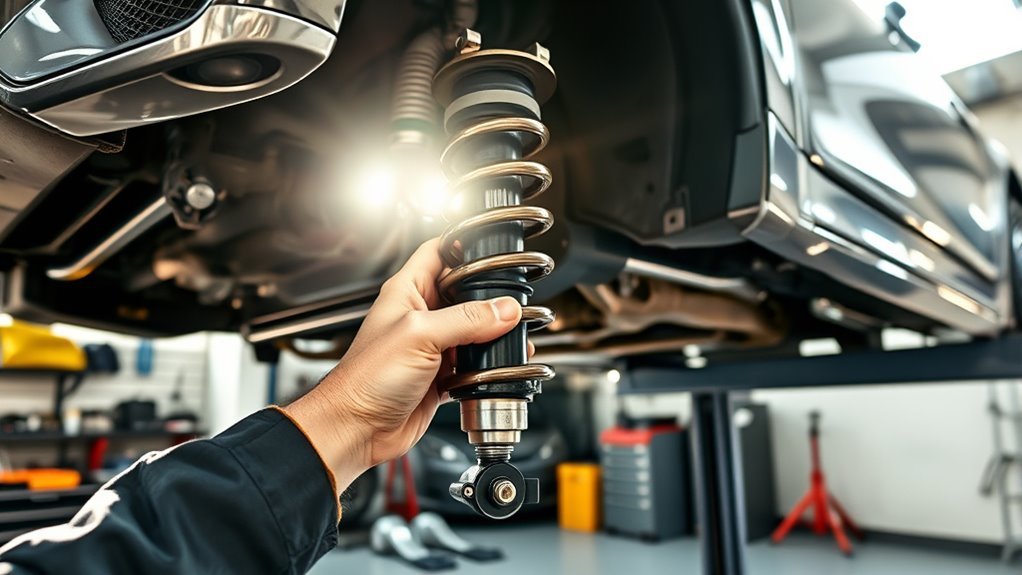
Fix Your Car Suspension With This Step-By-Step Guide
To fix your car suspension, you’ll want to start by safely lifting and securing your vehicle with a jack and stands.
Next, inspect worn parts like shocks or struts. If you find any issues, replace them using the right tools.
After installing new components, make sure to guarantee proper alignment. This step is crucial to prevent uneven tire wear and improve handling.
Don’t forget about routine checks and keeping your tires properly inflated. These practices are key for long-term suspension health.
If you keep going, you’ll discover detailed steps and tips to maintain a smooth, safe ride.
Regular maintenance can save you time and money down the road!
Key Takeaways
- Safely lift the vehicle using a jack and secure it with jack stands before inspecting suspension components for wear or damage.
- Remove worn shocks, struts, or bushings by loosening bolts with appropriate tools.
Replace them with new parts.
- Ensure proper alignment of suspension components and tighten bolts to manufacturer torque specifications during installation.
- After you’ve made the repairs, perform a test drive to identify any handling issues or alignment problems.
- Lastly, schedule a professional wheel alignment and maintain regular suspension checks.
This will help ensure long-term vehicle stability and comfort.
Why Suspension Repair Is Essential
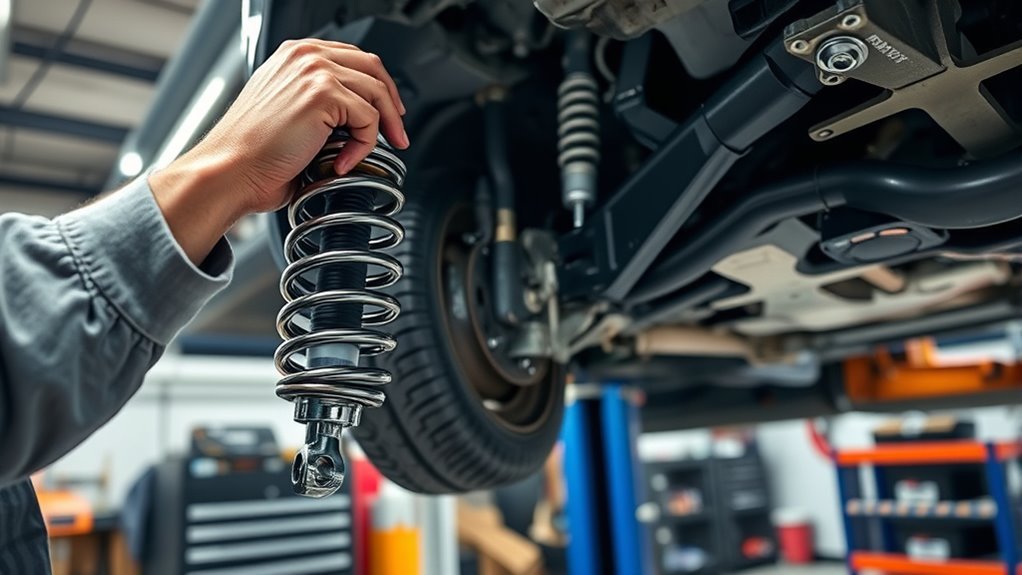
Because your suspension system absorbs shocks from the road, keeping it in good repair is vital for a smooth and comfortable ride.
Suspension repair addresses worn components that cause poor handling and uneven tire wear. Both of these issues compromise safety.
Ignoring suspension problems can lead to decreased ride comfort and unpredictable vehicle handling. This increases the risk of accidents.
By scheduling regular maintenance, you guarantee the suspension system functions properly. This helps prevent minor issues from escalating into costly repairs.
The repair process restores your vehicle’s stability, improves stopping distances, and enhances the overall driving experience.
Keeping your suspension in top shape not only protects your tires but also maintains safety on the road.
This gives you confidence behind the wheel every time you drive.
Identifying Common Suspension Issues
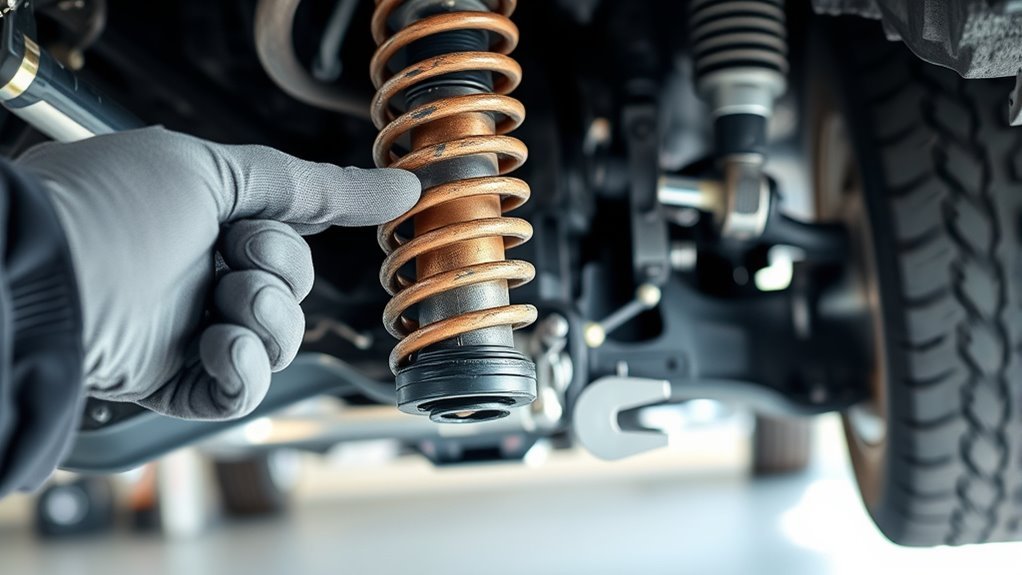
Keeping your suspension in good shape means knowing when something’s wrong.
Common signs of suspension issues include a bumpy ride caused by worn shocks that no longer absorb impacts effectively.
A bumpy ride often signals worn shocks failing to absorb road impacts properly.
You might notice uneven tire wear, which often points to poor alignment or faulty suspension components affecting weight distribution.
If your car pulls to one side, it signals an imbalance in the suspension system.
Excessive bouncing after bumps also indicates worn shocks struggling to stabilize your vehicle.
Difficulty steering or reduced responsiveness can mean suspension damage to critical parts like ball joints or tie rods.
Don’t forget to check tire pressure regularly, as improper inflation can worsen these symptoms.
Recognizing these signs early helps you maintain proper alignment and avoid costly repairs down the road.
Tools and Materials Required for Suspension Repair
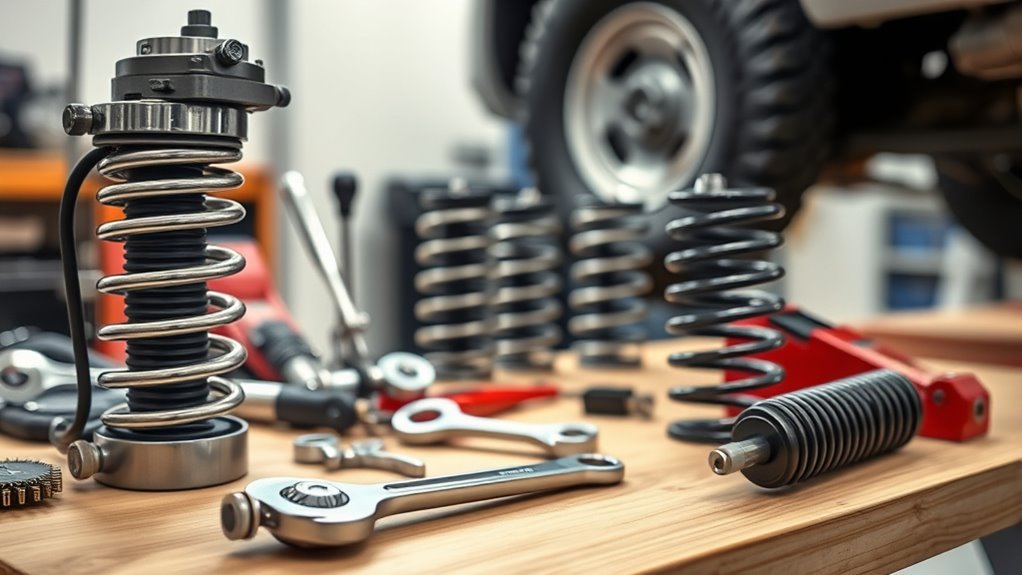
Before you begin repairing your car’s suspension, gather the right tools and materials to work safely and efficiently.
Essential tools include a jack and jack stands to lift and secure your vehicle, along with a lug wrench to remove the wheels.
A socket and wrench set is vital for loosening and removing bolts that hold suspension components in place.
Don’t forget safety gloves to protect your hands during the repair.
Replacement parts, such as shocks, struts, and bushings, are necessary to restore your suspension system’s full functionality.
You’ll also need a torque wrench to install new components according to manufacturer specifications, ensuring proper tightness.
Having these tools and materials ready will make your suspension repair smoother and safer.
Step-by-Step Suspension Repair Process
Before you start, make sure to lift your car safely using a jack and secure it with jack stands.
Next, inspect the suspension components carefully to spot any damage or wear.
Once everything looks clear, you can begin replacing the faulty parts step by step.
Safety Precautions First
Since working on your car’s suspension involves handling heavy parts and tools, you’ll want to take key safety precautions to protect yourself throughout the repair.
Always park your vehicle on a level surface and engage the parking brake to prevent any accidental movement.
After lifting your car with a jack, make sure to use jack stands to work securely underneath.
Wear safety gloves and goggles to guard against sharp edges and debris.
It’s best to wait at least 30 minutes after driving so components cool down, reducing burn risk.
Keep a well-organized workspace with all necessary tools within reach to avoid distractions and stay focused.
Following these safety precautions guarantees you can repair your suspension confidently and without injury.
Suspension Component Replacement
Once you’ve taken all the necessary safety steps, you can start replacing your suspension components.
Begin by lifting your vehicle safely with a jack and securing it on jack stands.
Next, carefully remove the old shocks or struts by loosening the bolts without damaging nearby parts.
This step-by-step guide helps you inspect your suspension for any warning signs like leaks or wear.
Then, install new suspension components, making certain they’re properly aligned and tightened to the right torque specs.
After reassembling everything, lower your car and double-check all bolts.
Take your vehicle for a test drive to spot any alignment issues or unusual handling.
Finally, scheduling a professional alignment guarantees your suspension is properly aligned, promoting better car care and extending the life of your tires.
The Role of Alignment in Suspension Repair
After fixing your suspension, you need to get your wheels properly aligned. This keeps your vehicle handling smoothly and helps avoid uneven tire wear.
Misalignment often happens when worn suspension parts aren’t addressed. So, a thorough inspection can stop problems from coming back.
Staying on top of alignment after repairs is key. It helps protect your tires and keeps your car driving safely.
Alignment-Suspension Relationship
When you repair your suspension, it’s important to understand how closely it ties to wheel alignment. Worn components in the suspension can lead to misalignment, which impacts steering input and overall vehicle performance.
To maintain proper alignment during your suspension repairs, you should first inspect the suspension thoroughly for any worn components before making adjustments.
Next, make sure to adjust camber, caster, and toe angles. This helps correct wheel alignment and prevents uneven tire wear.
Post-Repair Alignment Importance
Why does a professional wheel alignment matter so much after repairing your suspension?
When you replace suspension components like shocks and struts, the wheel position shifts, affecting camber, caster, and toe angles.
This is where the post-repair alignment importance comes in.
Without a proper wheel alignment, you risk uneven tire wear, poor handling, and reduced vehicle stability.
A professional alignment recalibrates these angles to restore ideal driving performance, ensuring your car handles smoothly during daily driving.
Skipping this step not only shortens tire life but also compromises safety and fuel efficiency.
To maintain your suspension repair’s benefits, always schedule a professional alignment.
It’s essential for preserving your vehicle’s stability and giving you a comfortable, predictable ride.
Preventing Repeated Alignment Issues
Because worn suspension parts often cause misalignment, you need to address these components before getting an alignment. This helps prevent recurring issues.
Misalignment affects vehicle handling and causes uneven tire wear, so make sure to replace worn suspension parts promptly.
To prevent repeated alignment issues, follow these steps:
- Conduct a thorough inspection of suspension components for wear, focusing on parts that affect camber, caster, and toe angles.
- Replace suspension components in pairs. This guarantees balanced performance and reduces steering wheel pull.
- Schedule regular alignments to catch and correct misalignment early. This helps preserve tire life and maintain suspension health.
Tips for Maintaining a Healthy Suspension System
To keep your suspension system in top shape, you should regularly inspect it for leaks, cracks, and unusual wear at least twice a year.
This helps you catch wear and visible damage early before it affects ride quality.
Maintaining proper tire pressure and rotating tires as recommended prevents uneven wear that can stress suspension components.
During routine washes, clean suspension parts to remove dirt and debris that reduce performance.
Pay attention to worn components and replace shocks when needed, typically every 50,000 to 100,000 miles, to keep your vehicle handling safely.
Also, avoid overloading your vehicle beyond its GVWR to prevent excessive strain.
Regular maintenance like this guarantees your suspension system lasts longer and performs reliably.
Frequently Asked Questions
How Much Does It Usually Cost to Fix Your Suspension?
You’ll usually pay between $400 and $900 for shocks or struts.
For ball joints, expect to spend around $200 to $700.
And if you’re looking at a full suspension overhaul, it can cost up to $5,000.
Can I Drive if My Suspension Is Bad?
You shouldn’t drive if your suspension is bad.
It compromises handling, safety, and tire wear.
Driving with issues like bouncing or leaking shocks risks accidents and costly repairs.
Get it inspected and fixed promptly.
Is It Worth Fixing the Suspension on a Car?
Yes, it’s worth fixing your suspension because it improves safety, handling, and comfort.
You’ll also save money on tire wear and avoid costly future repairs.
This makes your car more reliable and enjoyable to drive.
What Is the $3000 Rule for Car Repairs?
The $3000 rule says if repairs cost more than half your car’s value, like $3000 for older models, it’s often smarter to replace it.
You’ll save money by avoiding pricey fixes on a fading ride.
Conclusion
If you skip fixing your suspension now, your car could turn into a bouncy, unpredictable mess—think wild rollercoaster rides every time you hit the road!
Don’t let worn-out shocks or sagging springs ruin your driving experience.
Follow this guide, grab your tools, and get your suspension back in shape.
With a little effort, you’ll enjoy smooth, safe rides that feel like you’re gliding on clouds instead of bouncing on a trampoline!
—
In conclusion, addressing suspension issues is crucial for maintaining a comfortable and safe driving experience.
Neglecting your suspension can lead to even bigger problems down the road.
So, take the time to follow this step-by-step guide, and you’ll be back to enjoying those smooth rides in no time.
Remember, a well-maintained suspension not only enhances your comfort but also ensures your safety on the road.