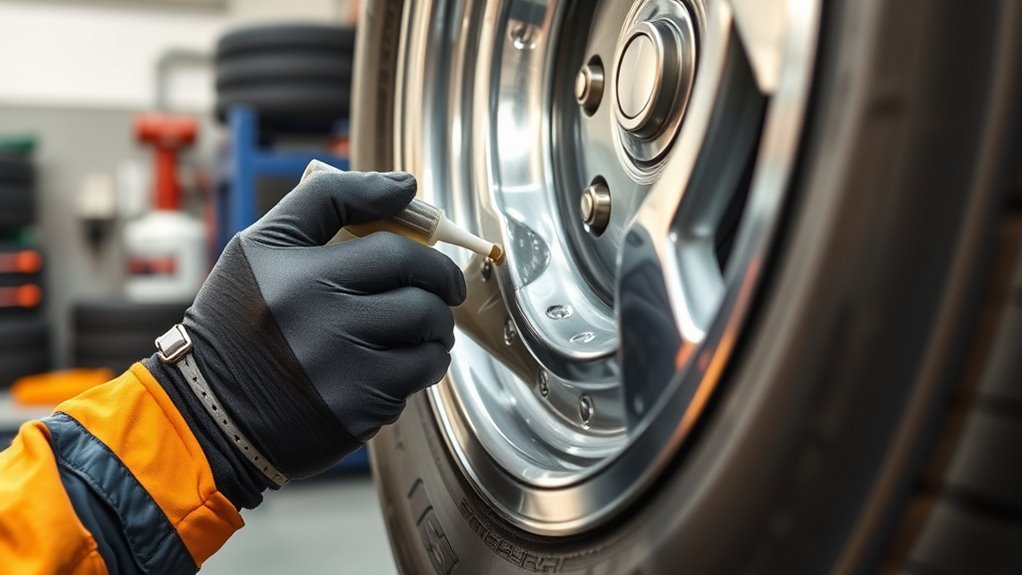
What Is Tire Mounting Lubricant and Why Is It Needed?
Tire mounting lubricant is essential for a smooth tire installation process. It reduces friction between the tire and rim, preventing potential damage and ensuring a secure seal.
This lubricant makes the bead seating easier during inflation, which is crucial for maintaining proper tire function.
Additionally, it helps stop rim corrosion and preserves tire integrity, thereby enhancing safety and performance on the road.
Using the right tire mounting lubricant is not only beneficial for the installation process, but it also protects your tire’s warranty and improves ride quality.
If you’re looking to learn how to choose and apply the best lubricant for your tires, you’re in the right place!
Stick around for valuable tips and insights that will make your tire mounting experience much easier.
Key Takeaways
- Tire mounting lubricant reduces friction between tire beads and rims, facilitating easier and safer tire installation.
- It ensures proper bead seating and airtight seals, preventing air leaks and maintaining tire pressure.
- The lubricant protects tire rubber and wheel surfaces from damage during mounting, preserving tire integrity.
- Using the correct lubricant improves ride smoothness, handling, and fuel efficiency by promoting even tire inflation.
- Purpose-made lubricants prevent rim corrosion and avoid residue that can interfere with tire seating and safety.
Importance of Tire Mounting Lubricant
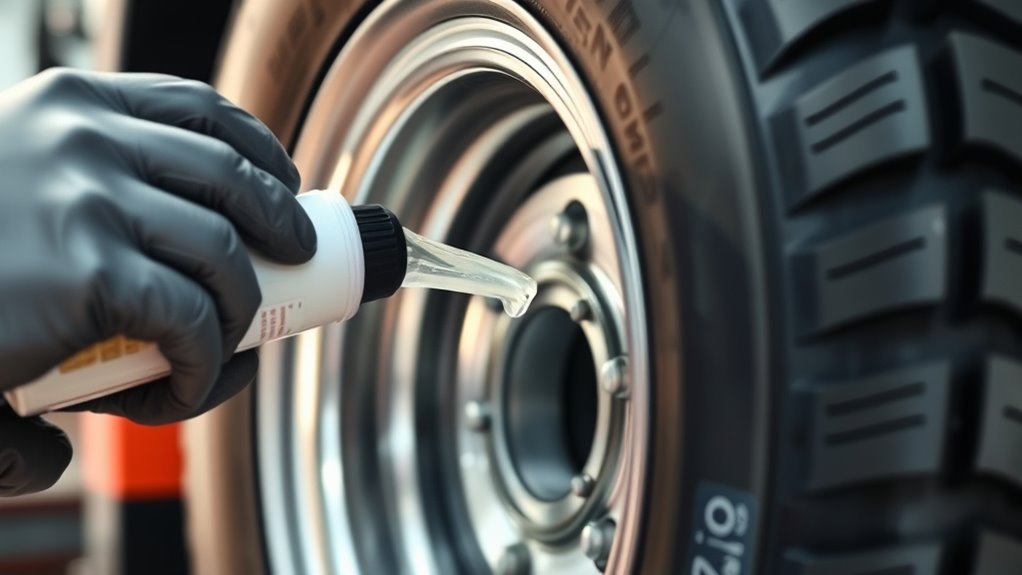
Tire mounting lubricant plays a vital role in making tire installation smoother and safer.
When you apply tire mounting lubricant, it reduces friction, allowing the tire bead to slide easily over the rim during tire installation.
This smooth movement is essential for properly seating the tire, ensuring it fits securely.
Without the right lubricant, you risk damaging the tire bead or rim.
Additionally, tire mounting lubricant helps create an airtight seal between the tire and rim, preventing air leaks that could affect tire performance and safety.
By ensuring a tight, secure fit, the lubricant also protects your wheels from corrosion.
It helps avoid vibrations or hidden damage while driving, making it indispensable for both professionals and DIY enthusiasts.
Key Benefits of Using the Right Lubricant
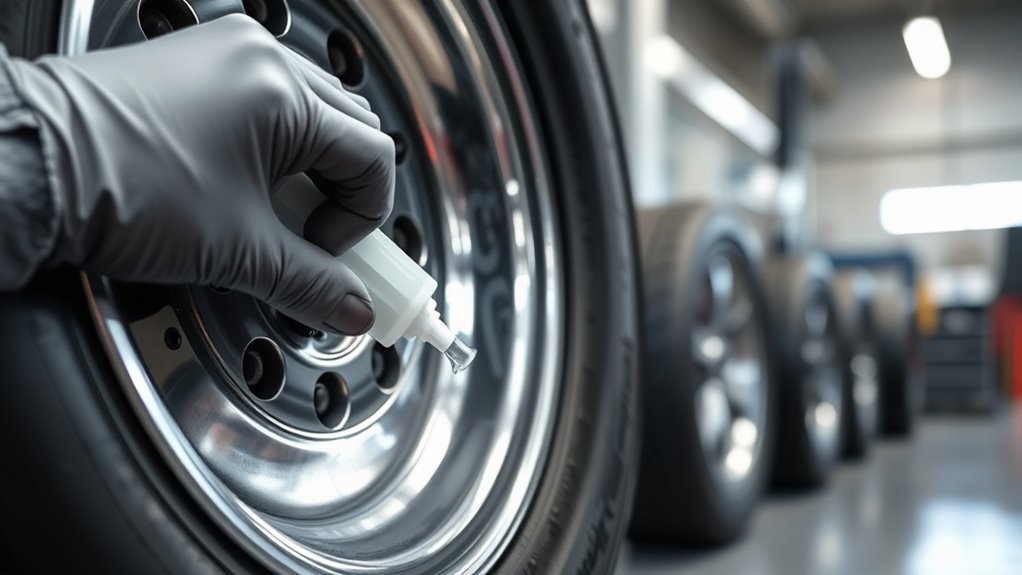
Using the right lubricant makes mounting tires much easier and protects both the tire and rim from damage.
When you use proper tire lube, it reduces friction during mounting tires, preventing harm to delicate rubber compounds and steel rims.
This helps you inspect the bead for a secure fit and guarantees a tight seal, which is essential for maintaining air pressure and preventing leaks.
The right lubricant also contains rust inhibitors that protect rims from corrosion, extending their lifespan.
Using lubricants with rust inhibitors shields rims from corrosion, helping to prolong their durability and performance.
Additionally, correctly lubricated tires minimize vibrations and rolling resistance, improving ride smoothness, handling, and fuel efficiency.
Recommended Practices for Application
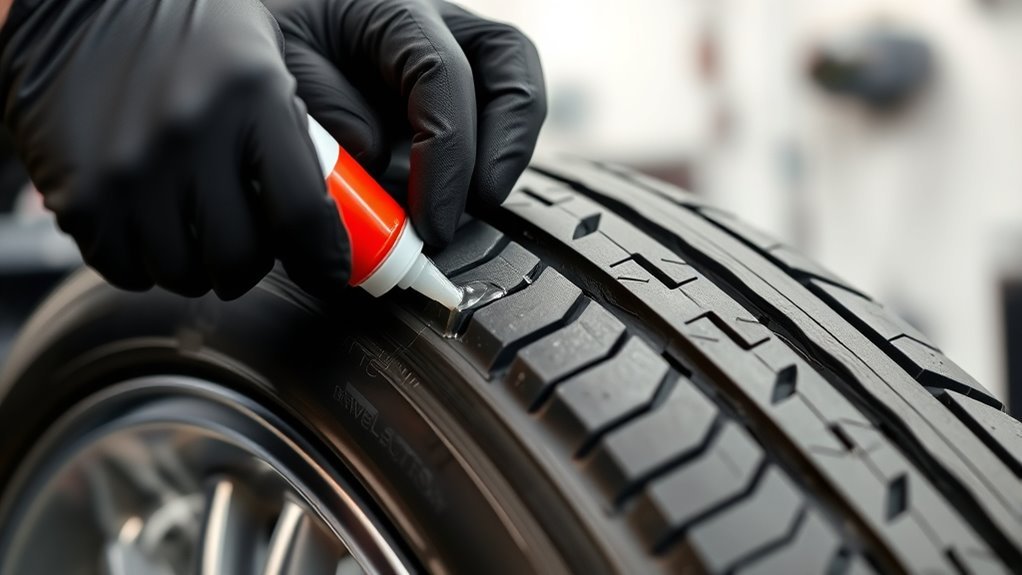
To achieve a smooth and secure tire installation, start by applying lubricant evenly to both the bead and rim flange with a brush or sprayer.
Use a purpose-made tire mounting lubricant without dilution to guarantee consistent coverage.
Before application, clean the rim thoroughly to remove old rubber, dirt, and rust. This helps promote proper sealing and prevents installation issues.
After mounting, rinse off any excess lubricant to avoid residue buildup or corrosion.
Finally, inspect the tire bead for uniform contact to confirm a proper seal and prevent leaks.
Remember these key practices for effective application:
- Apply a thin, even layer of lubricant directly to the tire bead and rim flange.
- Clean the rim completely before lubricant application.
- Rinse off excess lubricant after mounting for long-term performance.
Common Mistakes to Avoid
You’ll want to steer clear of petroleum-based lubricants since they can damage your tires over time.
Avoid using household products like dish soap or silicone sprays because they either trap moisture or create slippery surfaces.
Following the right guidelines helps keep your tires safe and performing well.
Petroleum-Based Lubricants
Although petroleum-based lubricants might seem convenient, they can seriously damage your tires by breaking down rubber compounds and causing premature failure.
Using petroleum jelly or similar oil-based products during tire mounting softens the rubber, leading to long-term deterioration.
These lubricants also promote moisture retention, which can cause rust on rims and weaken tire performance.
Avoid these common mistakes when handling tire mounting lubricants:
- Applying petroleum jelly can leave a tacky residue, interfering with proper tire seating.
- Softening of rubber compounds reduces tire lifespan and safety.
- Moisture retention from petroleum derivatives accelerates rim corrosion.
To protect your tires and rims, always choose water-soluble, purpose-made lubricants designed specifically for tire mounting.
This guarantees durability and peak performance without risking damage.
Inappropriate Household Products
Why risk damaging your tires by using household products during mounting?
Inappropriate household products like dish soap and detergent may seem convenient, but they contain moisture and salts that cause rim corrosion and rubber deterioration over time.
Petroleum-based items like Vaseline soften rubber, leading to long-term tire damage.
Silicone sprays or non-tacky lubricants prevent proper bead adhesion, causing slipping and leaks.
Using water alone lacks enough slip and traps moisture, promoting rust on rims.
Even common soaps such as Murphy Original Oil Soap leave residues that compromise safety and performance.
Instead, you should always use a dedicated tire mounting lubricant designed to protect both tires and rims.
This ensures smooth installation without risking deterioration or failure.
Don’t compromise your tires with inappropriate household products—choose the right lubricant every time.
Impact on Tire Performance and Safety
When you use tire mounting lubricant correctly, you guarantee that the tire seats smoothly and securely on the rim. This directly boosts performance and safety.
Tire mounting lubricant reduces friction, which helps prevent uneven seating that can cause wobbling and vibrations.
This ensures better air pressure retention by creating a tight seal between the tire and rim, reducing the risk of leaks.
Proper lubrication also protects rims from corrosion and damage during installation.
By enhancing tire performance, you improve ride comfort and fuel efficiency.
Key benefits include:
- Smooth, even tire seating that prevents wobbling
- Improved air pressure retention for safer driving
- Enhanced tire performance leading to better fuel economy and longer suspension life
Using the right lubricant means safer, more efficient driving every time.
Choosing the Best Lubricant for Your Needs
When choosing a tire mounting lubricant, you’ll want to take into account the types available and how well they match your specific tires.
Different lubricants offer unique benefits like water solubility or rust inhibition.
So picking the right one can protect your rims and guarantee a smooth installation.
Let’s explore how to find the best fit for your tire needs.
Lubricant Types Overview
Although selecting the right tire mounting lubricant might seem straightforward, choosing one tailored to your tire and wheel type can make installation smoother and prevent damage.
You’ll want to avoid petroleum-based products since they can deteriorate rubber and harm tire integrity over time.
Instead, focus on purpose-made tire mounting lubricants that reduce friction without leaving harmful residues.
Here’s a quick overview of common types:
- Water-soluble lubricants like Hercules Duck Butter offer easy cleanup and are safe for all tire types.
- Thick rubber-based compounds provide extra sealing on corroded rims.
- Dedicated mounting compounds such as Murphy’s Tire and Tube Mounting Compound prevent corrosion and guarantee proper bead seating.
Choosing the right lubricant protects your tires while making the mounting process efficient and secure.
Matching Lubricants to Tires
Selecting the right tire mounting lubricant means matching it to your specific tire type and mounting conditions.
You want lubricants designed for tire mounting that are safe on all tires—passenger, commercial, or off-road.
Avoid petroleum-based products or household items like dish soap since they can damage rubber and oil compounds, harming tire performance.
Instead, choose water-soluble, non-corrosive lubricants with rust inhibitors to protect steel rims and guarantee smooth bead movement.
This helps prevent bead leaks and vibrations, maintaining peak tire performance.
Always follow your tire or lubricant manufacturer’s guidelines to keep warranties intact and promote safety.
Frequently Asked Questions
What Can I Use as a Substitute for Tire Mounting Lube?
You can try talcum powder to prevent sticking,
but it won’t lubricate like proper tire mounting lube.
Avoid household substitutes—they can damage rubber or rims.
It’s best to use a product made specifically for mounting tires.
What Type of Lubricant Should I Use for Mounting Tires?
Don’t use dish soap or petroleum-based lubricants; they damage tires.
Instead, grab a water-soluble, silicone-free tire mounting lubricant like Murphy’s Soap or RU-Glyde.
They protect rims, guarantee proper sealing, and make installation easier.
What Can I Use as a Homemade Lubricant for Tire Mounting?
You can use a mild dish soap diluted with water or talcum powder as homemade lubricants.
But be cautious—they may cause rust or lack proper lubrication.
It’s best to choose purpose-made tire mounting lubricants for safety and durability.
Can You Use WD-40 to Mount Tires?
You shouldn’t use WD-40 for tire mounting—over 70% of rubber materials degrade with petroleum-based products like it.
Instead, choose dedicated tire lubricants to guarantee proper sealing.
This helps avoid damage and keeps your tires safe on the road.
Conclusion
Think of tire mounting lubricant as the oil that greases the gears of a well-oiled machine.
Without it, the mounting process becomes a rough puzzle, risking damage and poor performance.
By choosing the right lubricant and applying it properly, you’re ensuring your tires fit smoothly, just like a key sliding perfectly into a lock.
This simple step protects your safety and boosts your tire’s lifespan—don’t skip it, or you might find yourself stuck in the mud.
In conclusion, tire mounting lubricant is essential for a seamless tire installation.
It plays a critical role in preventing damage and enhancing performance.
So, remember to prioritize this step for your safety and the longevity of your tires.