What Is The Ideal Tire Pressure for Golf Carts
You should keep your golf cart tires inflated between 18 and 22 PSI for the best ride, safety, and tire life.
Proper tire pressure is crucial for ensuring a smooth ride and extending the lifespan of your tires.
Check pressure regularly using a good gauge and adjust with a pump or by releasing air as needed.
Remember, different tire types and terrains may require slight PSI changes, and colder weather can lower pressure.
Keeping your tires properly inflated helps maintain smooth handling and prevents uneven wear.
If you want to optimize your golf cart’s performance, there’s more to reflect on about tire care.
Regular maintenance not only enhances safety but also improves your overall golfing experience.
Key Takeaways
- Ideal tire pressure for golf carts generally ranges between 18 to 24 PSI depending on tire type and terrain.
- For standard 18×8.5-8 tires, you should inflate them to 18-22 PSI for optimal performance and safety.
- It’s important to regularly check tire pressure with a quality gauge.
- Don’t forget to adjust for temperature or terrain changes as needed.
- Underinflated tires can cause poor traction and faster battery drain.
- On the other hand, overinflated tires lead to a bumpier ride.
- Always consult the tire sidewall or your owner’s manual for specific PSI recommendations tailored to your golf cart model.
Understanding Recommended Tire Pressure Ranges
When you check your golf cart tires, you’ll find recommended pressure ranges vary depending on the tire type.
Standard 18×8.5-8 tires usually call for 18 to 22 PSI (Pounds Per Square Inch).
Standard 18×8.5-8 golf cart tires require a pressure range of 18 to 22 PSI for optimal performance.
Meanwhile, street and turf tires need slightly higher pressure, between 20 and 24 PSI.
All terrain tires are best kept at 18 to 20 PSI, balancing performance on rugged surfaces.
Full turf tires typically stay steady at 20 PSI to maintain traction.
To guarantee accuracy, always look at the tire sidewall or consult the owner’s manual for your specific golf cart tires.
Using a tire pressure gauge helps you measure PSI precisely, keeping your tires at ideal pressure for safety and performance.
How to Check and Adjust Golf Cart Tire Pressure
Knowing the recommended tire pressure for your golf cart sets the stage for proper maintenance.
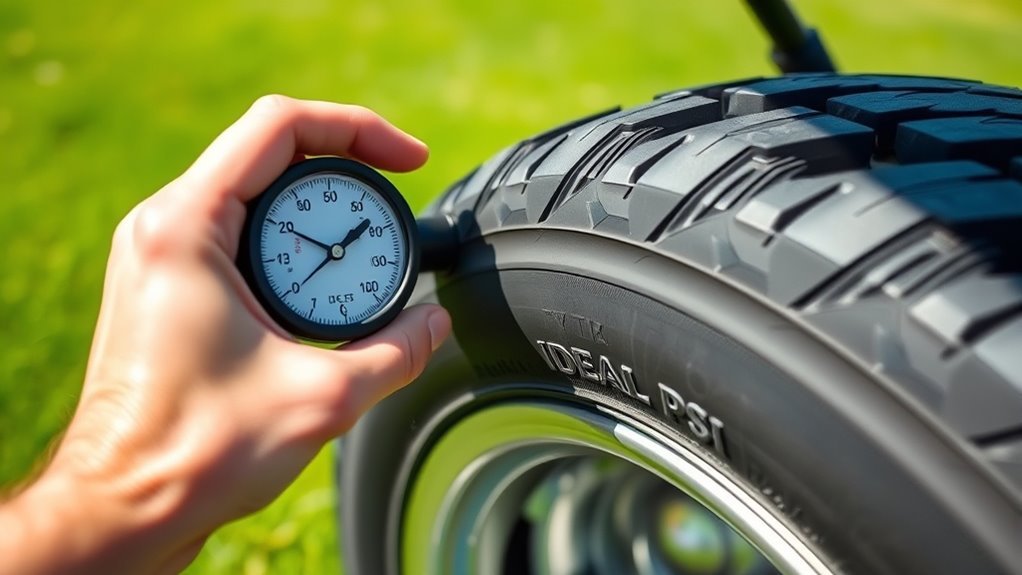
To check your golf cart tire pressure, start by removing the air valve cap and pressing a quality tire pressure gauge firmly onto the valve.
Next, compare the reading to the recommended PSI found in your golf cart owner’s manual or on the tire’s sidewall.
If the pressure is too low, no worries! Just use an electric air pump to add air, then recheck to guarantee it meets the recommended PSI.
On the other hand, if it’s overinflated, simply press the valve stem to release air until you reach the correct level.
Regularly monitoring and adjusting tire pressure helps maintain ideal performance and safety.
This is especially important after temperature changes or if you’ve added extra weight to your cart.
Effects of Incorrect Tire Pressure on Performance
Although it might seem minor, incorrect tire pressure can greatly impact your golf cart’s performance.
Both underinflation and overinflated tires reduce traction, making handling unstable on different terrains.
When your tires are underinflated, rolling resistance increases, causing sluggish control and faster battery drain.
Overinflated tires, on the other hand, lead to a bumpier ride and a higher risk of blowouts, especially on rough paths.
Incorrect tire pressure also results in uneven tire wear, which means you’ll replace tires sooner and face higher maintenance costs.
To summarize, improper tire pressure can cause:
- Reduced traction and unstable handling
- Sluggish performance and faster battery drain due to underinflation
- Bumpy rides and blowout risks from overinflated tires
- Premature tire wear and increased maintenance expenses
Keep your tire pressure right to guarantee smooth, safe rides and long-lasting tires.
Tire Pressure Guidelines for Different Tire Types
You’ll want to adjust your golf cart’s tire pressure based on the tire type for the best performance.
Turf tires usually need around 20 psi to protect grass, while all-terrain tires work well between 18-20 psi depending on the surface.
Street tires generally require slightly higher pressure, typically between 20-24 psi, to maintain safe handling.
Turf Tire Pressure
Turf golf cart tires generally need around 20 PSI to perform best on smooth surfaces.
To get the most from your turf tires, always check the tire sidewall for the recommended pressure, as manufacturer recommendations can vary.
Proper tire pressure prevents uneven wear and guarantees a smooth ride.
Over- or under-inflation impacts traction, comfort, and tire longevity.
Keep these tips in mind:
- Regularly monitor and adjust tire pressure.
- Follow specific manufacturer recommendations.
- Avoid under-inflation to prevent uneven wear.
- Maintain recommended pressure for ideal handling.
All-Terrain Tire PSI
Many all-terrain golf cart tires require between 18 and 20 psi to perform at their best.
Maintaining the correct tire pressure in all-terrain tires guarantees peak performance, especially when traversing uneven surfaces.
You should always check the sidewall for the manufacturer’s recommended psi, as it can vary by brand and model.
Keeping your psi within this range improves ride quality, handling, and traction, which is essential for safety and durability.
Underinflated tires wear out faster and reduce your golf cart’s effectiveness on rough terrain.
Regularly monitoring and adjusting the tire pressure lets you adapt to different conditions, maximizing both the lifespan of your tires and your driving experience.
Don’t overlook tire pressure—it’s fundamental to getting the most from your all-terrain tires.
Street Tire Guidelines
Although street golf cart tires are designed for smooth surfaces, maintaining the correct tire pressure between 20 and 24 psi is essential for peak performance.
Proper inflation of your street tires not only improves ride quality but also boosts handling and overall efficiency.
When managing your golf cart parts, focus on these key points:
- Aim for around 22 psi for standard-sized street tires.
- Check the tire sidewall for specific psi recommendations.
- Avoid overinflating to prevent reduced traction and a rough ride.
- Regularly monitor tire pressure to maintain ideal performance.
Keeping an eye on these details will help ensure your golf cart runs smoothly and safely!
Seasonal and Terrain Influences on Tire Pressure
You’ll notice your golf cart’s tire pressure drops in colder weather because the air contracts inside the tires.
When the temperature dips, it’s a good idea to check your PSI regularly.
Also, when you switch between smooth greens and rougher paths, adjusting your PSI can help keep your ride smooth and your tires lasting longer.
Paying attention to these seasonal and terrain changes guarantees you maintain peak performance and safety.
Temperature Effects on PSI
Because tire pressure rises about 1 psi for every 10°F increase,
you need to adjust your golf cart’s PSI as temperatures change.
Cold weather lowers tire pressure, so regular checks during winter are essential to maintain stability and safety.
Follow these tips to manage tire pressure effectively:
- Consult your golf cart’s owners manual for recommended PSI ranges.
- Monitor tire pressure frequently during seasonal temperature swings.
- Account for weight distribution when your cart is fully loaded.
- Remember that rough terrain can put extra strain on tires, affecting pressure needs.
Terrain-Based Pressure Adjustments
When you navigate different terrains or face seasonal shifts, adjusting your golf cart’s tire pressure becomes essential for maintaining control and performance.
Different terrain demands specific tire pressure adjustments to optimize grip and reduce uneven wear.
For example, turf tires on smooth grass usually need higher pressure, while off-road conditions benefit from lower pressure to absorb shocks.
| Terrain Type | Recommended Tire Pressure (psi) | Performance Benefit |
|---|---|---|
| Grass/Smooth | 15-25 | Better grip, less wear |
| Gravel | 15-20 | Improved traction |
| Off-road | 12-15 | Shock absorption, control |
Regularly checking and adjusting your tire pressure based on terrain helps maintain your golf cart’s performance and extends tire life.
It’s a simple yet effective way to ensure your ride is smooth and safe.
Seasonal Tire Pressure Changes
Adjusting your tire pressure for different terrains is just one part of keeping your golf cart running smoothly.
Seasonal changes also play a big role in how your tire pressure behaves.
Temperature fluctuations can cause tire pressure to drop or rise, affecting performance and safety.
To maintain peak performance, you should focus on:
- Checking tire pressure regularly during seasonal shifts
- Adjusting pressure for colder temperatures (expect a 1 psi drop per 10°F decrease)
- Increasing pressure slightly for heavier loads in peak seasons
- Lowering pressure on wet or muddy terrains for better traction
Regular monitoring helps you adapt to these changes, ensuring your golf cart’s tires last longer and perform safely year-round.
Tips for Maintaining Optimal Tire Pressure
Although tire pressure may seem like a minor detail, maintaining the correct inflation is essential for your golf cart’s performance and safety.
Regularly check tire pressure with a quality gauge to guarantee it stays within the recommended range, typically 15 to 25 PSI depending on your golf cart’s tires and terrain.
Always inflate or deflate tires to the PSI listed on the tire’s sidewall or in the owner’s manual for proper inflation.
Keep in mind that temperature changes can affect tire pressure, so monitor it monthly or with seasonal shifts.
After adjusting, recheck pressure a few hours later to catch any leaks.
Engaging with fellow golf cart owners in forums can provide valuable insights into tire maintenance and help you maintain ideal tire pressure.
Frequently Asked Questions
What Is the 90 Rule for Golf Carts?
The 90 Rule means you keep your golf cart tires at 90% of their max pressure.
This helps you avoid uneven wear and improves handling.
Plus, it boosts efficiency, so you get better performance and longer tire life.
What Is the 4 Psi Rule on Tires?
Think of your tires like balloons that expand or shrink with temperature.
The 4 PSI rule means you should adjust tire pressure by about 1 PSI for every 10°F change.
This helps keep your ride smooth and safe.
What Is the Recommended Tire Pressure for an EZGO Golf Cart?
You should keep your EZGO golf cart tires between 18-24 psi, depending on the tire type.
Check your tire sidewall or manual to find the exact pressure for ideal performance and safety.
What Is the 5 Psi Rule?
You know what they say, “An ounce of prevention is worth a pound of cure.”
The 5 PSI rule means you should keep your tire pressure within 5 PSI of the recommended level for safe, smooth rides.
This little tip can make a big difference in how your vehicle performs.
Conclusion
Now that you know the ideal tire pressure for your golf cart, why settle for a bumpy ride or reduced battery life?
Keeping your tires properly inflated not only boosts performance but also extends their lifespan and improves safety.
Regularly check and adjust pressure based on terrain and season to get the smoothest, most efficient drive every time.
After all, wouldn’t you want every golf outing to be as effortless as possible?
So, keep those tires in top shape!
By maintaining the correct tire pressure, you’re ensuring a comfortable ride, enhancing battery efficiency, and promoting safety on the course.
Don’t overlook this crucial maintenance step.
Make it a habit to monitor your golf cart’s tire pressure, and enjoy every round to the fullest!