What Are Radiator Caps for Cars and Their Importance?
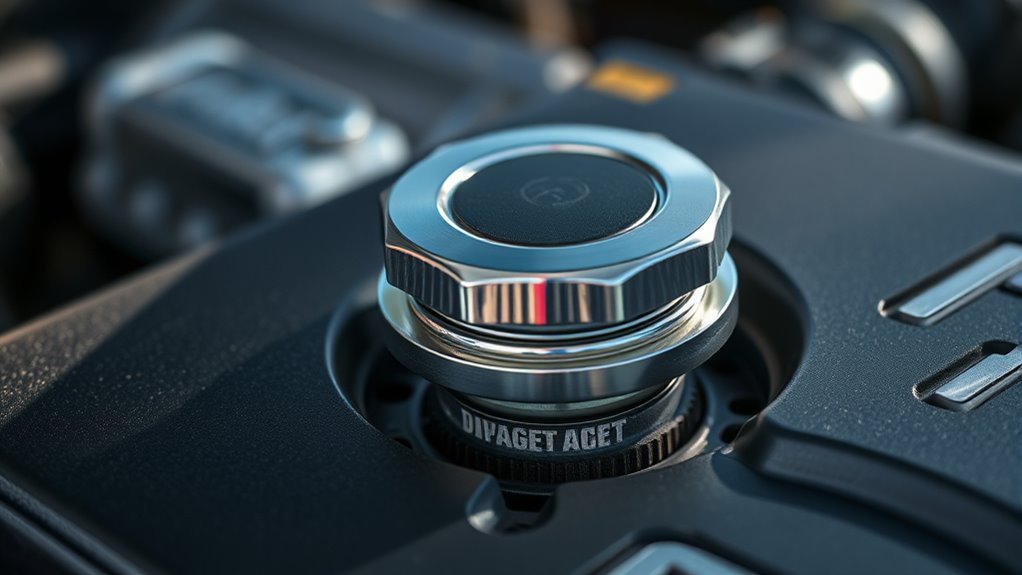
Your car’s radiator cap is a crucial component of the cooling system.
It helps maintain the right pressure, which raises the coolant’s boiling point.
This ensures that your engine stays cool and prevents overheating.
Moreover, it plays a vital role in preventing leaks and ensuring efficient heat transfer.
This is essential for avoiding costly engine damage.
If your radiator cap malfunctions, you might notice signs like overheating or coolant leaks.
Understanding how this small part works can help you spot issues early.
Recognizing the signs of failure is key to maintaining your vehicle’s health and performance.
So, there’s definitely more to learn about keeping your car in top shape!
Key Takeaways
- Radiator caps are crucial for regulating the cooling system pressure. They help raise the coolant’s boiling point and prevent engine overheating.
- These caps maintain specific pressure levels, usually between 13 to 16 psi. This is essential for keeping the engine temperature under control.
- When the cap is working properly, it stops coolant leaks and boiling. This ensures efficient heat transfer and protects the engine.
- On the flip side, a faulty radiator cap can lead to overheating, coolant leaks, and reduced circulation. This can risk severe engine damage, which no one wants!
- That’s why regular inspection and testing of radiator caps are so important. It helps maintain the cooling system’s performance and can save you from costly repairs down the line.
Role of the Radiator Cap in Engine Cooling
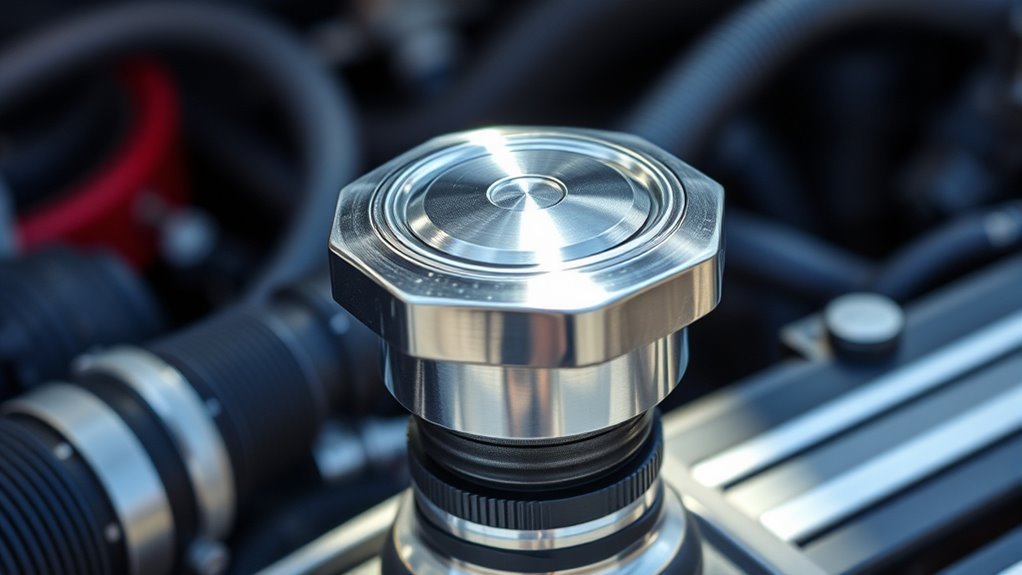
Although you might overlook it, the radiator cap plays an essential role in keeping your engine cool.
It’s a small but crucial part of your engine cooling system, responsible for pressure regulation that helps maintain the coolant’s boiling point.
By keeping the system pressurized, the radiator cap guarantees the coolant can absorb and transfer heat efficiently, preventing overheating.
If the cap fails, coolant can leak or boil over, causing the engine temperature to spike dangerously.
Additionally, the radiator cap has a spring-loaded valve that safely releases excess pressure, protecting the cooling system from damage.
Regularly inspecting and replacing your radiator cap helps maintain proper pressure regulation and keeps your engine running smoothly without the risk of overheating.
How Radiator Caps Regulate System Pressure
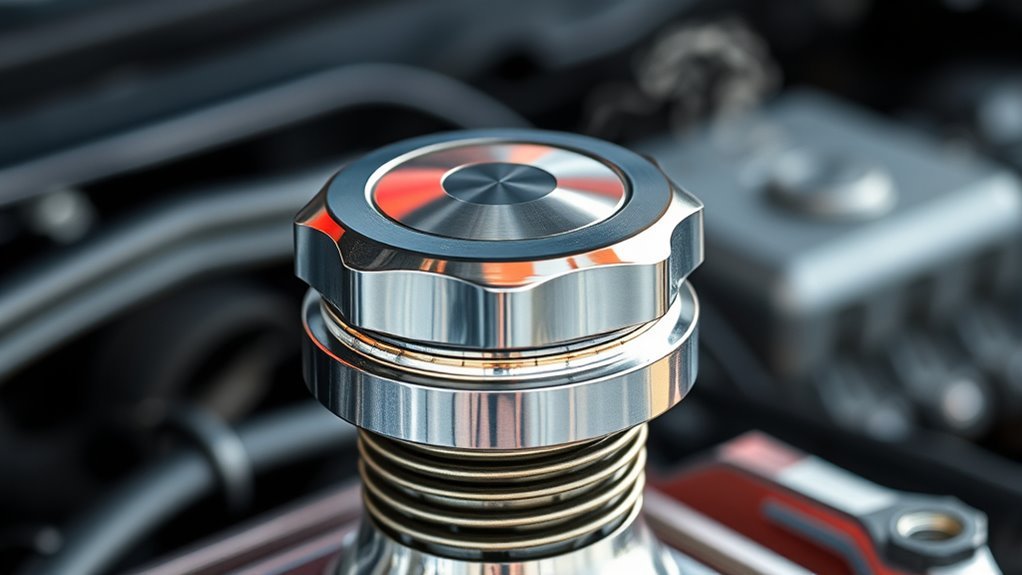
Your radiator cap controls system pressure by using a spring-loaded valve to keep it within a safe range.
This pressure boost raises the coolant’s boiling point, so it can absorb more heat without evaporating.
When pressure gets too high, the valve releases the excess to protect your engine from damage.
Pressure Control Mechanism
When the engine heats up, the radiator cap regulates system pressure by using a spring-loaded valve that opens at a set point, usually between 13 and 16 psi.
This mechanism maintains ideal pressure within the cooling system, preventing coolant from boiling and ensuring efficient heat transfer.
As pressure builds, the valve releases excess coolant into the overflow reservoir, stopping overpressure that could damage components.
When the engine cools, the radiator cap prevents air from entering, avoiding air pockets that compromise cooling.
If you have a faulty radiator cap, it won’t hold the proper pressure, which can cause coolant leaks and increase the risk of engine overheating.
Boiling Point Elevation
Because the radiator cap pressurizes the cooling system, it raises the boiling point of the coolant, allowing your engine to run hotter without the coolant boiling over.
The radiator cap maintains pressure, usually between 13 to 16 psi, which directly increases the boiling point.
This means the coolant can absorb more heat without turning into steam, keeping your engine safe from overheating.
If the boiling point weren’t elevated by this pressure, the coolant would boil off, reducing its ability to transfer heat effectively.
So, the radiator cap plays a critical role in regulating system pressure to prevent engine overheating.
Without proper pressure control, your cooling system won’t work efficiently, and your engine could suffer serious damage due to rising temperatures.
Pressure Release Valve
A radiator cap acts as an essential pressure release valve that keeps your engine’s cooling system running smoothly.
It maintains ideal pressure by operating at specific ratings, usually between 13 to 16 psi. This pressure raises the boiling point of the coolant, preventing it from boiling and evaporating.
When pressure exceeds the set limit, the spring-loaded valve in the radiator cap opens to release excess pressure, allowing the coolant to expand safely.
This regulation prevents damage to your engine and maintains efficient heat transfer.
Additionally, a properly sealed radiator cap stops air from entering the cooling system, avoiding air pockets that cause overheating.
Regular checks guarantee your radiator cap functions correctly, protecting your engine from leaks, overheating, and costly failures.
Impact of Radiator Cap Malfunction on Vehicle Performance
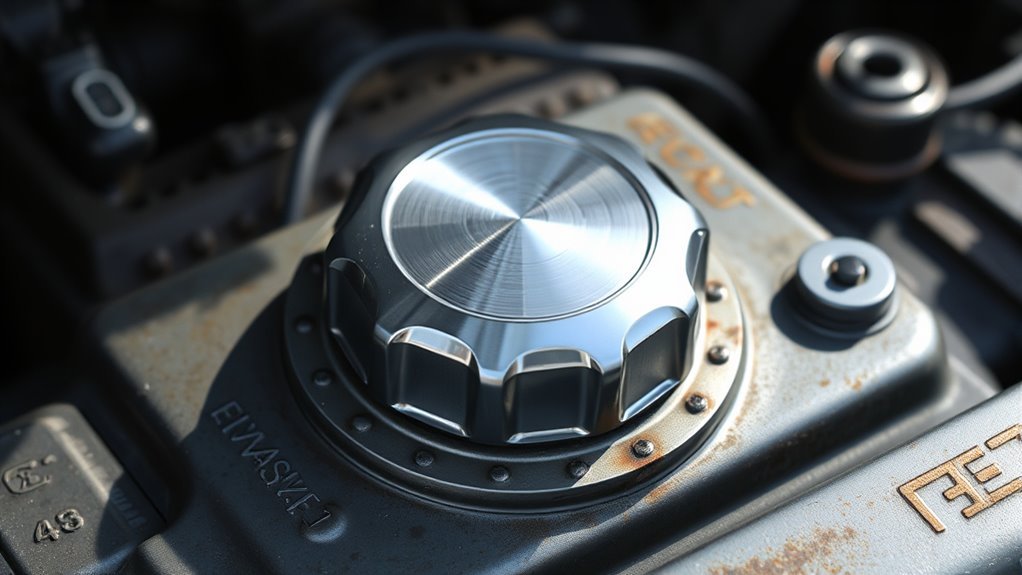
If your radiator cap isn’t working right, you’ll risk engine overheating because it can’t keep the system pressure steady.
You might also notice coolant leaks that reduce cooling efficiency and cause damage.
When pressure regulation fails, air can enter the system, leading to erratic temperatures and further performance issues.
Engine Overheating Risks
Engine overheating poses a serious threat to your vehicle’s performance, especially when the radiator cap malfunctions.
The radiator cap plays an essential role in maintaining the right pressure within the cooling system, allowing coolant to stay at its ideal temperature.
When it fails, you risk engine overheating, which can quickly lead to severe engine damage.
Here’s what happens when your radiator cap isn’t working properly:
- Pressure within the cooling system drops, causing coolant to boil prematurely.
- Coolant circulation becomes inefficient due to air pockets.
- Increased engine temperature causes swelling of the engine block.
- Gasket failure leads to costly repairs.
- Reduced engine lifespan from prolonged overheating.
Regularly checking and replacing a faulty radiator cap helps prevent these risks and keeps your engine running smoothly.
It’s a simple step that can save you from a lot of trouble down the road.
Coolant Leakage Effects
When your radiator cap malfunctions, it often leads to coolant leakage. This seriously undermines your vehicle’s cooling system.
A faulty cap fails to maintain the correct pressure rating, causing coolant to escape and air to enter.
This creates air pockets that disrupt coolant circulation and raise engine temperature.
As coolant leaks persist, you’ll find yourself topping off the system more often, which increases the risk of engine damage.
Additionally, coolant leakage can cause corrosion in other cooling system components. This can lead to costly repairs and reduced performance.
Without the proper pressure, the coolant’s boiling point drops. This makes heat dissipation ineffective.
Addressing a faulty radiator cap promptly helps prevent these issues and keeps your engine running smoothly.
Pressure Regulation Failures
Because a radiator cap controls the pressure within your vehicle’s cooling system, a malfunction can seriously impact performance.
When the radiator cap fails in pressure regulation, it lowers the coolant’s boiling point. This increases the risk of engine overheating.
It can also let air into the cooling system, creating air pockets that disrupt coolant flow and reduce heat dissipation.
You might notice coolant leaks, leading to a drop in coolant level and potential engine damage.
Excessive pressure may even rupture hoses or other components, causing costly repairs.
Keep an eye on your engine temperature gauge for abnormal rises—they often signal radiator cap issues.
Key impacts of radiator cap pressure regulation failure include:
- Lower coolant boiling point
- Air pockets disrupting coolant circulation
- Coolant leaks reducing coolant level
- Excess pressure damaging hoses
- Increased risk of engine overheating
Signs of a Faulty Radiator Cap to Watch For
If your car starts overheating or you notice coolant leaking around the radiator or overflow tank, you might have a faulty radiator cap.
This cap plays a vital role in maintaining pressure within the cooling system, so any pressure loss can cause serious issues.
Look out for white streaks on the radiator, which signal dried coolant from intermittent leaks.
An overflowing reservoir often points to excessive pressure release, another sign the radiator cap isn’t working right.
Additionally, if air enters the system due to a defective cap, it creates air pockets that worsen overheating.
Paying attention to these signs—coolant leaks, overheating, pressure loss—can help you catch a faulty radiator cap early and prevent engine damage.
Choosing the Right Radiator Cap for Your Vehicle
How do you know which radiator cap fits your vehicle best?
Choosing the right radiator cap is essential to maintaining your cooling system’s health and avoiding engine overheating. Each radiator cap is designed to maintain ideal pressure specific to your vehicle’s needs, usually between 13 and 16 psi.
To verify your radiator cap is properly functioning, consider these points:
- Check your vehicle’s manufacturer specifications for pressure requirements.
- Select a high-quality cap from reputable brands like MotoRad®.
- Avoid caps that don’t match your vehicle’s pressure rating.
- Confirm the cap withstands high temperatures and pressure fluctuations.
- Replace the radiator cap promptly if it shows signs of wear.
Using the correct radiator cap keeps your cooling system efficient and prevents costly engine damage.
Routine Maintenance and Testing of Radiator Caps
Anyone who wants to keep their engine running smoothly should regularly inspect and test their radiator cap.
This routine maintenance helps maintain pressure retention in the cooling system, preventing overheating and coolant loss.
Check for cracks, corrosion, and wear.
Also, monitor engine temperature gauges and coolant leaks.
A compression test can confirm if the radiator cap holds proper pressure.
Replace it promptly if faulty and follow manufacturer guidelines for replacement intervals.
| Task | What to Look For | Frequency |
|---|---|---|
| Visual Inspection | Cracks, corrosion, wear | Monthly |
| Compression Test | Pressure retention | Annually |
| Engine Temperature Check | Overheating signs | Weekly |
| Coolant Leak Check | Leaks around cap | Weekly |
| Replacement | Faulty cap or time-based | As recommended |
Frequently Asked Questions
Can You Run an Engine Without a Radiator Cap?
You shouldn’t run your engine without a radiator cap because it breaks the cooling system’s pressure.
This can lead to overheating, coolant loss, and air pockets.
All of these issues can severely damage your engine and result in costly repairs.
Can I Replace the Radiator Cap Myself?
You absolutely can replace the radiator cap yourself—it’s as easy as pie!
Just let the engine cool, twist off the old cap, and twist on the new one.
Don’t forget to check the correct pressure rating!
What Are the Different Types of Radiator Caps?
You’ll find two main radiator caps:
standard caps that maintain pressure and release excess,
and recovery caps that also manage coolant expansion in a reservoir.
Some even have built-in pressure gauges to help you monitor system health.
What Are the Symptoms of a Bad Radiator Cap?
You’ll notice coolant leaks, white streaks, or dried coolant around the filler neck.
Your overflow tank might be overflowing, and air pockets could form, causing your engine to overheat due to a faulty radiator cap.
Conclusion
Now that you know how essential your radiator cap is in keeping your engine cool and running smoothly, don’t overlook it.
Ignoring a faulty cap can lead to overheating and costly repairs—something you definitely want to avoid.
So, what’s the real secret behind maintaining your car’s health?
It’s all in how you choose, check, and care for that small but mighty cap.
Ready to protect your ride?
—
In conclusion, the radiator cap plays a vital role in your vehicle’s cooling system.
By ensuring it’s in good working condition, you can prevent overheating and avoid expensive repairs.
Regular checks and maintenance of the radiator cap are essential for your car’s overall performance and longevity.
So, don’t underestimate this small component; it’s your first line of defense against engine troubles.
Take care of it, and your ride will thank you!