What Makes a Good Dash Cam?
A good dash cam is essential for capturing sharp video both during the day and at night. This ensures you can clearly see details like license plates and road signs, which can be crucial in the event of an incident.
You’ll want features like loop recording, high-endurance storage, and auto-save protection for important clips.
Parking mode is a must for when your car’s unattended, while HDR/WDR technology and strong low-light performance enhance tricky scenes.
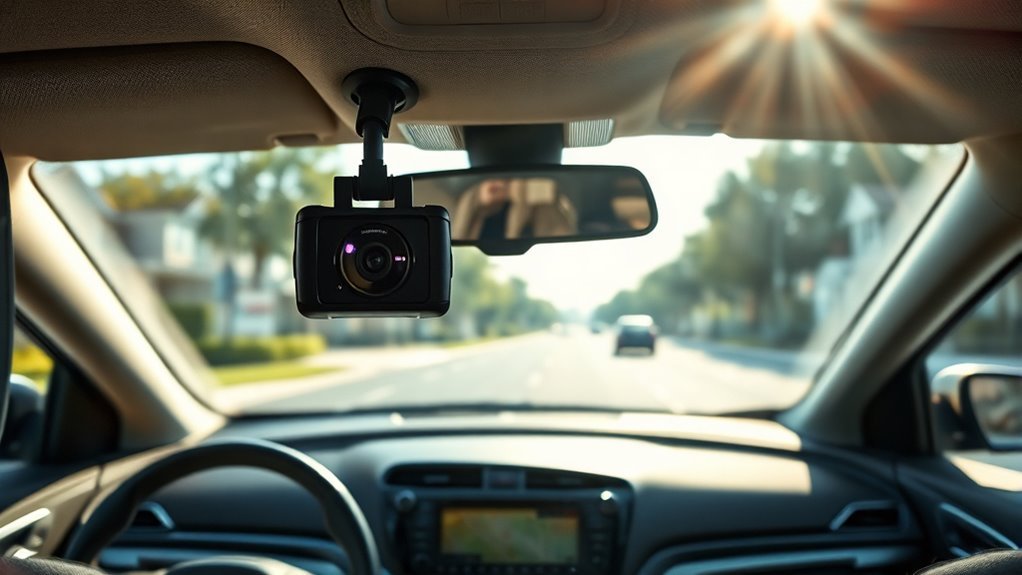
A secure mount is vital for stability, and easy app controls make managing your recordings a breeze.
GPS tagging is another valuable feature that adds context to your footage.
Keep exploring, and you’ll discover which features matter most for your needs!
Key Takeaways
– Choose a dash cam with a minimum resolution of 1080p; ideally, go for 1440p or 4K.
Strong night vision and HDR/WDR features are also a big plus.
– Look for loop recording and adjustable clip lengths to keep your footage organized.
Also, make sure it has high-endurance storage for reliable performance.
– Prioritize parking mode and motion detection with adjustable sensitivity.
This helps capture incidents while reducing those pesky false alerts.
– Pick a model with secure mounting options and flexible power sources.
Whether you prefer hardwiring or using the lighter socket, make sure it suits your driving and parking habits.
– Lastly, choose a dash cam with a clear screen and a user-friendly app.
GPS tagging and easy firmware updates can make reviewing and setting up your dash cam a breeze.
How to Choose a Good Dash Cam
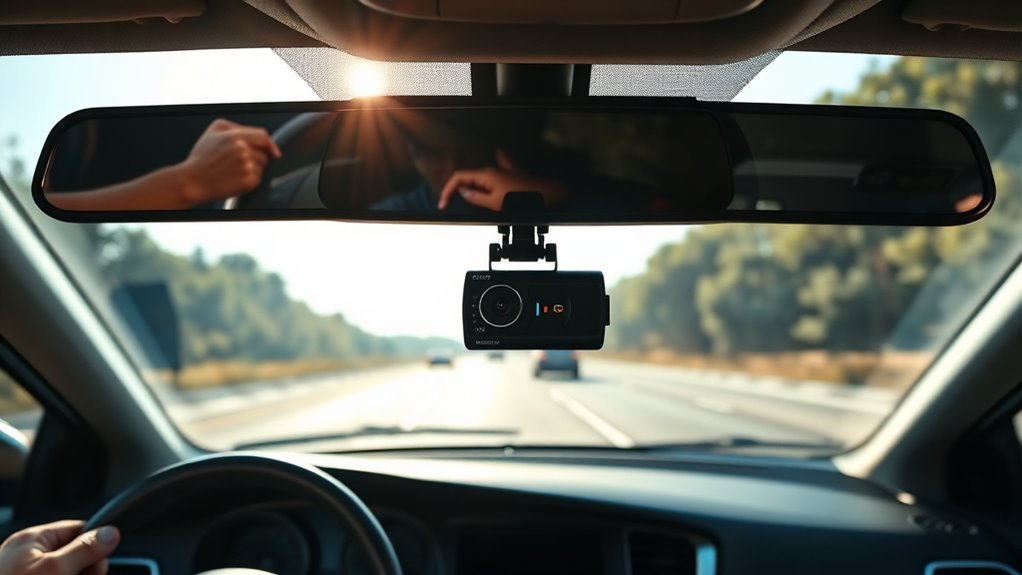
When you’re choosing a good dash cam, focus first on video quality. Clear footage is what helps most after an accident or traffic dispute.
Next, check how easily you can mount it, power it, and remove it when needed.
Next, check how easily you can mount it, power it, and remove it when needed.
You should also look for a reliable parking mode, simple controls, and a screen that lets you review clips quickly.
Make sure the device fits your vehicle and stores enough footage for your driving habits.
If you drive often, pick a model that starts recording automatically and saves files without fuss.
Also, consider the app experience. Easy transfers and settings save you time.
A durable build matters too, because heat and vibration can wear down cheap devices fast.
Video Quality and Night Vision
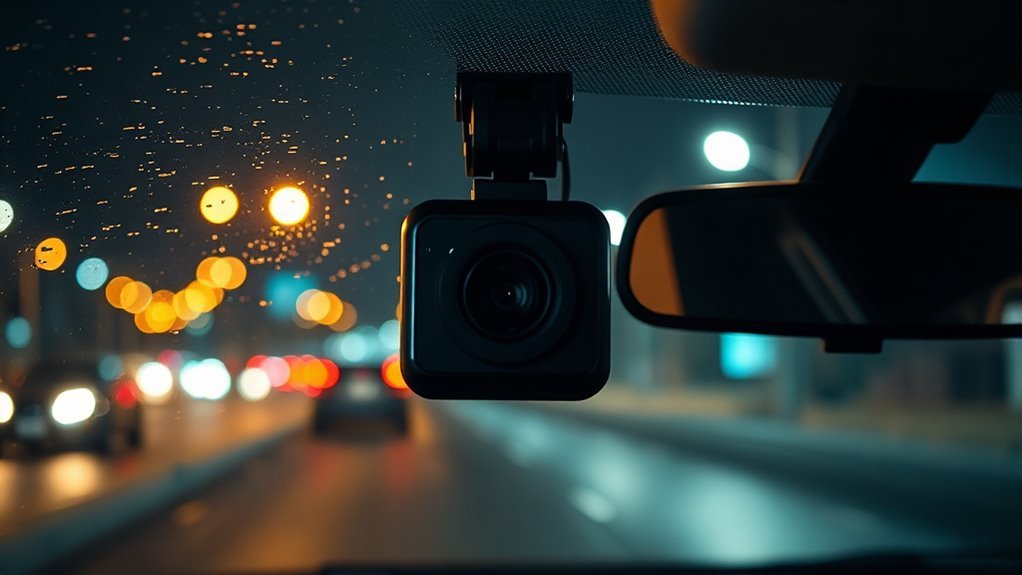
You’ll want a dash cam that records in high resolution so you can clearly read plates, signs, and road details.
Strong low-light performance matters too. Your camera needs to capture usable footage after dark or in poor weather.
When you compare models, focus on both sharp daytime clarity and reliable night vision.
This way, you’ll ensure you’re covered no matter the time of day or conditions.
Resolution And Clarity
Resolution matters because it determines how much detail your dash cam can capture, especially in fast-changing traffic or low-light conditions.
You should look for at least 1080p, but 1440p or 4K gives you sharper footage, clearer license plates, and more usable evidence after an incident.
Higher resolution also helps when you zoom in on a clip without turning faces or signs into blur.
Pair that with a lens that keeps edges crisp across the frame, not just in the center.
And don’t ignore bitrate, either! A camera can promise high resolution and still compress away fine detail.
If you drive often in busy areas, better clarity makes reviewing events faster and less frustrating.
It also gives you confidence that your footage can support a claim or dispute.
Low-Light Performance
Night driving exposes weak dash cams fast, so low-light performance should be high on your checklist.
You want a camera that keeps details visible when streetlights fade and headlights flare.
Look for a large sensor, wide aperture, and strong noise reduction. These features help you capture plates, lane markings, and road hazards without turning the image into blur or grain.
- Check night sample footage before you buy.
- Prioritize HDR or WDR for balanced exposure.
- Choose reliable infrared support only if your cabin needs it.
A good dash cam won’t just record darkness; it’ll reveal what happened in it.
If you drive often after sunset, don’t settle for daytime-only sharpness.
Loop Recording and Storage
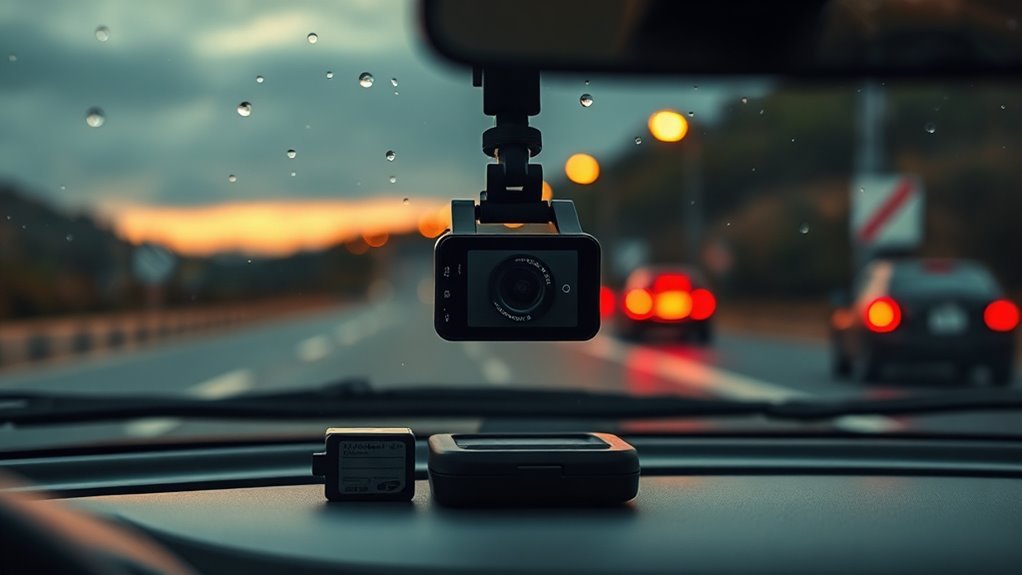
Loop recording keeps your dash cam running without you having to babysit the memory card. It automatically overwrites the oldest clips when storage fills up.
You should still choose a camera that lets you set clip length. Shorter loops make it easier to find a specific event.
Also, pair it with a high-endurance card so repeated writes don’t wear it out quickly.
| Setting | Why it matters |
|---|---|
| 1 minute loops | Faster file review |
| 3 minute loops | Balanced coverage |
| 5 minute loops | Fewer files to manage |
| High-endurance card | Better long-term reliability |
| Auto-protect | Preserves important footage |
You’ll also want enough storage for your usual drive time. If you commute daily, larger capacity helps you keep more recent footage before older clips roll off.
Parking Mode and Motion Detection
When you park, parking mode can keep your dash cam watching for bumps, break-ins, and other activity around your car.
You’ll want enough surveillance coverage to catch what matters without wasting power or memory.
Motion trigger sensitivity also matters. A setting that’s too high can cause false alerts, while one that’s too low can miss real incidents.
Parking Surveillance Coverage
Parking coverage matters most when your car is sitting still.
So, look for a dash cam with a reliable parking mode and motion detection that actually records incidents without draining your battery.
You want coverage that protects the front, rear, and sides as much as possible when you’re away.
Wide-angle lenses help, but placement matters too. Blind spots can leave gaps in evidence.
Check that the camera keeps recording after impact and saves the clip automatically.
- Front coverage should capture license plates and vehicle movement.
- Rear coverage should document backing collisions and hit-and-runs.
- Side coverage should catch door dings, parking lot scrapes, and passing pedestrians.
If the footage is clear and complete, you’ll have a better chance of identifying what happened and proving your case.
Motion Trigger Sensitivity
Set motion trigger sensitivity too high, and your dash cam may save a clip every time a leaf blows past or a car drives by in the next lane.
You want it tuned just low enough to catch real threats, yet high enough to wake on a person, door opening, or bumper tap.
Balance matters.
| Setting | Result | Best Use |
|---|---|---|
| Low | Fewer false clips | Busy streets |
| Medium | Balanced alerts | Most drivers |
| High | More recorded events | Quiet lots |
Test it in your parking spot, then review a few clips.
If you see noise, lower the level; if you miss movement, raise it.
Good sensitivity gives you useful evidence without filling your card with junk.
Installation, Power, and App Control
Installation can make or break your dash cam experience. So, it’s worth checking how the camera mounts, how it draws power, and whether the app is easy to use before you buy.
Installation matters: check the mount, power source, and app usability before buying a dash cam.
You want a setup that fits your windshield cleanly and stays put in heat or cold.
If you hardwire it, you’ll get a neater look and continuous power. On the other hand, using the lighter socket means simpler installation.
- Pick a mount you can remove and adjust easily.
- Choose a power option that matches how you drive.
- Test the app for quick video access and settings changes.
A good app should let you review clips, change settings, and update firmware without frustration.
If setup feels clunky, you’ll use the camera less and trust it less.
Premium Dash Cam Features That Matter Most
When you move into premium dash cams, the features should solve real problems, not just raise the price.
Look for crisp 4K recording; it captures license plates and road signs more clearly.
HDR or WDR is essential for handling harsh sunlight, tunnels, and nighttime glare. A wide dynamic range keeps details visible when lighting changes fast.
Parking mode matters too, since it can record impacts while you’re away.
GPS tagging gives you speed and location evidence, which can support an insurance claim.
If you drive often at night, choose a dash cam with strong low-light performance and infrared cabin coverage.
Advanced driver alerts can add value, but they shouldn’t replace safe driving.
Focus on features that improve evidence, protection, and everyday confidence on the road.
Frequently Asked Questions
How Long Do Dash Cam Batteries Typically Last?
Dash cam batteries typically last 10 to 30 minutes on their own.
So, you’ll usually rely on your car’s power.
If you want parking mode, choose a hardwired setup or a battery pack.
Are Dash Cams Legal in Every State or Country?
No, you can’t assume that.
Like a traveler crossing borders with a lantern, you must check each state’s or country’s rules.
Some ban windshield obstruction, audio recording, or certain mounting spots altogether.
Do Dash Cams Record Sound Inside the Car?
Yes, many dash cams record sound inside your car if you enable audio.
You can often turn it off in settings.
Check your local laws, since some places require everyone’s consent before you record conversations.
Can Dash Cams Drain a Vehicle’s Battery Overnight?
Yes, they can if you leave parking mode on or the camera’s hardwired poorly.
You should use a low-voltage cutoff. Otherwise, your battery can discharge overnight, especially with older batteries or long recording settings.
How Often Should Dash Cam Footage Be Backed Up?
You should back up dash cam footage weekly, and right away after any incident.
Treat it like catching falling glass—you don’t want vital moments slipping away before you save them securely.
Conclusion
A good dash cam does more than record your drive—it stands guard like a quiet co-pilot.
When you choose sharp video, solid night vision, and reliable loop recording, you give yourself peace of mind on every trip.
Add smart parking protection, easy installation, and app control, and you’ll have a tool that works without fuss.
Pick the features that matter most to you, and you’ll drive with confidence.
Knowing your evidence is always ready makes all the difference.
In conclusion, a quality dash cam is essential for every driver. Look for features like high-resolution video, night vision, and smart parking alerts.
These elements not only provide security but also add convenience to your driving experience.
With the right dash cam, you can drive worry-free, knowing you’re protected on every journey.