What Is Silicone Spray for Car Suspension?
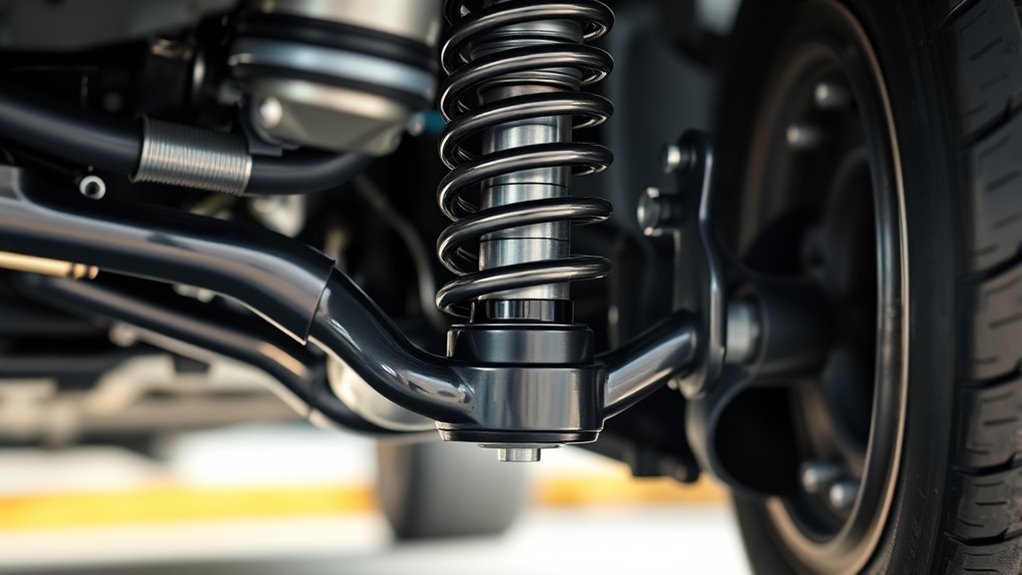
Silicone spray for car suspension is an essential lubricant designed to enhance the performance of your vehicle’s suspension system. It effectively reduces friction and prevents annoying squeaks by protecting rubber, metal, and plastic components from moisture and wear.
This versatile spray creates a waterproof barrier that shields parts from rust and corrosion. As a result, it ensures smoother operation and significantly extends the lifespan of your suspension components.
To use silicone spray, simply apply it to joints and bushings during your maintenance routine for effective lubrication.
If you want to keep your suspension quiet and performing at its best, there’s plenty more to learn about the proper use of silicone spray.
With the right application, you can enjoy a more comfortable ride and prolong the life of your vehicle’s suspension system.
Key Takeaways
– Silicone spray lubricates car suspension components, reducing friction and preventing squeaking in bushings and joints.
It’s safe for rubber, metal, and plastic parts, which is great because it protects rubber from degradation unlike some greases.
The spray forms a waterproof barrier, shielding suspension parts from moisture, rust, and corrosion.
Plus, its aerosol form makes it super easy to apply to hard-to-reach areas of the suspension for effective lubrication.
Just remember, regular application every 6 to 12 months is key to maintaining smooth suspension operation and extending the lifespan of those components.
Understanding Silicone Spray and Its Properties
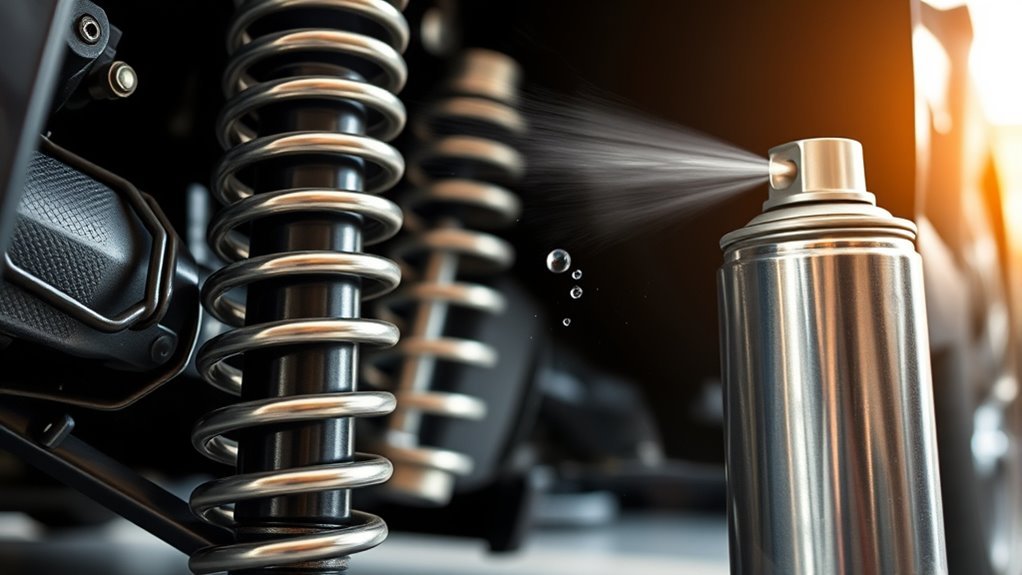
Silicone spray offers a reliable way to reduce friction and protect your car’s suspension components from moisture.
As a silicone lubricant, it’s versatile and non-reactive, making it safe for rubber, metal, and plastic parts in your suspension system. You’ll find it especially useful because it won’t degrade rubber components like some other lubricants might.
When applied carefully to clean suspension joints, silicone spray creates a smooth, waterproof barrier that helps prevent squeaking and reduces wear.
However, keep in mind that while it provides temporary relief from noise and friction, silicone lubricant isn’t a replacement for regular maintenance.
For joints under high pressure, you’ll still need proper grease lubrication to guarantee long-lasting protection and performance.
Benefits of Using Silicone Spray on Suspension Components
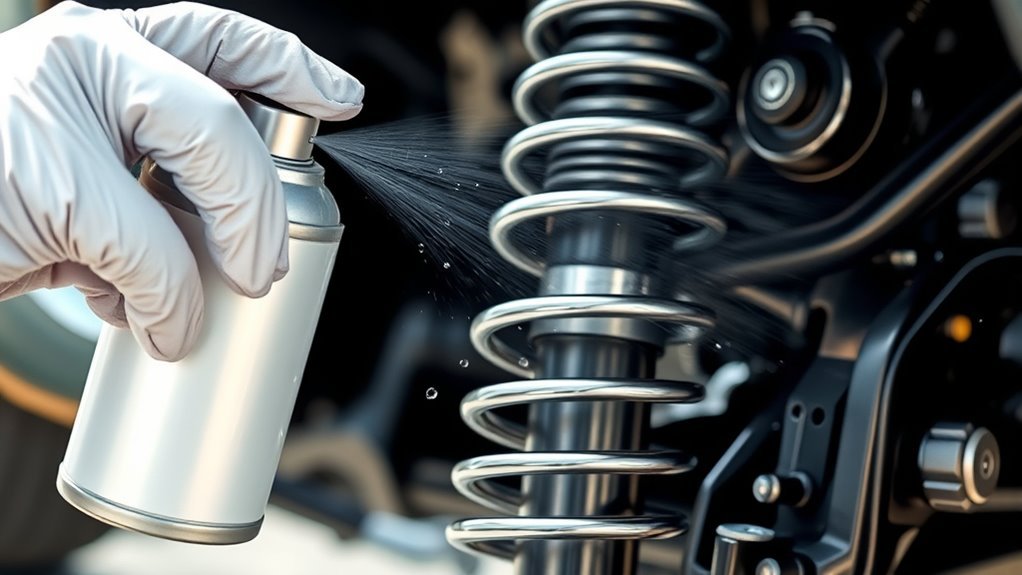
Using a water-resistant lubricant on your suspension components can greatly reduce friction and prevent those annoying squeaks in joints and bushings.
Silicone spray excels at this by providing smooth, consistent lubrication that keeps suspension parts moving freely. Its water-resistant nature also shields metal components from rust and corrosion, helping extend their lifespan.
Since silicone is non-reactive, you don’t have to worry about it damaging rubber or plastic parts within your suspension system.
Applying silicone spray regularly guarantees smoother operation, which improves your ride quality and handling. Plus, by reducing wear and tear on high-pressure joints, silicone spray can lower your maintenance costs over time.
How Silicone Spray Protects Rubber and Plastic Parts
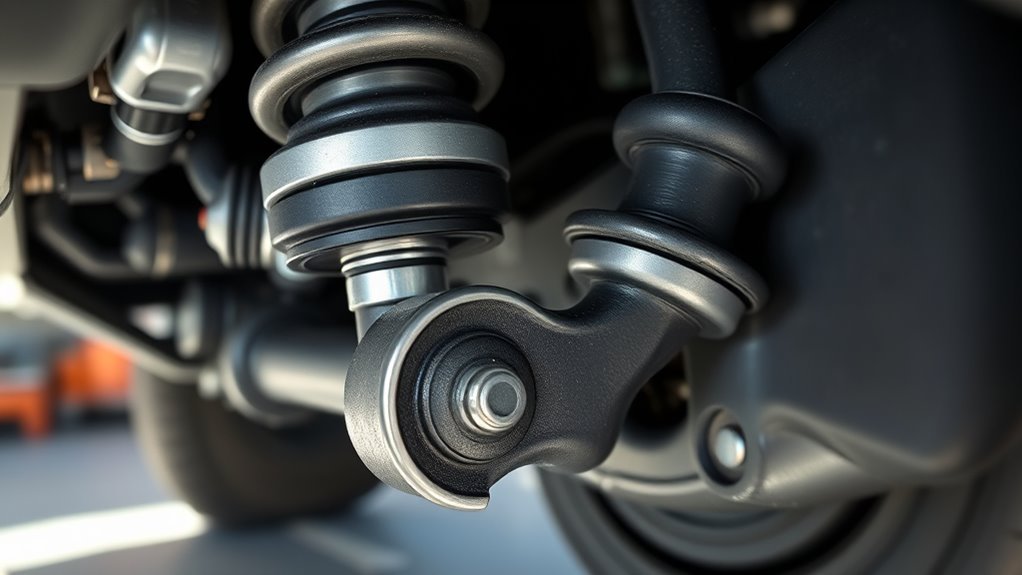
Beyond lubricating metal parts, silicone spray also plays an essential role in protecting rubber and plastic components in your suspension system.
When you use silicone spray, it forms a thin, non-reactive film that prevents rubber and plastic from drying out, cracking, or degrading.
This protective layer also displaces moisture, guarding against corrosion and environmental damage.
Regularly spraying these parts helps maintain their flexibility and reduces friction, enhancing the overall performance and longevity of your suspension.
| Protection Aspect | Benefits |
|---|---|
| Moisture Displacement | Prevents corrosion and deterioration |
| Flexibility Maintenance | Keeps rubber and plastic supple |
| Friction Reduction | Enhances component performance |
Using silicone spray is a smart way to extend the life of suspension parts and improve vehicle handling.
Application Techniques for Lubricating Suspension Joints
Although suspension joints often go unnoticed, properly lubricating them is essential to keeping your vehicle running smoothly and quietly.
Before using silicone spray, clean the joints thoroughly to remove dirt and debris. This ensures the lubricant adheres well.
Focus on key areas like bushings and linkages where friction causes squeaks and wear.
Apply silicone spray evenly and generously, allowing it to penetrate deeply for effective lubrication.
After application, test your suspension by bouncing the vehicle to confirm noise reduction and smooth movement.
Remember, silicone spray uses extend beyond initial application. Reapply regularly, especially in harsh conditions, to maintain protection and prevent future squeaks.
This careful technique keeps your suspension joints functioning efficiently and prolongs their lifespan.
Comparing Silicone Spray With Other Suspension Lubricants
When choosing between silicone spray and lithium grease, you’ll notice silicone offers better compatibility with rubber components, preventing degradation.
Aerosol silicone spray lets you reach tight spots easily, unlike thicker greases that can be messier to apply.
Understanding these differences helps you pick the right lubricant for your suspension’s specific needs.
Silicone vs. Lithium Grease
If you want to keep your car’s suspension running smoothly, choosing between silicone spray and lithium grease depends on the job.
Silicone spray works great on rubber parts, keeping them flexible and moisture-free without a greasy feel.
Lithium grease, on the other hand, is thicker and better for heavy-duty metal parts like ball joints, offering longer-lasting protection under pressure.
| Feature | Silicone Spray | Lithium Grease |
|---|---|---|
| Lubrication Type | Light, non-greasy | Thick, heavy-duty |
| Best For | Rubber bushings, seals | Metal-to-metal joints |
| Moisture Protection | Excellent | Moderate |
| Application Frequency | More frequent | Long-lasting |
| Durability | Moderate | High |
Use silicone spray for flexible parts and lithium grease for tough metal contacts.
Aerosol vs. Grease Application
Choosing between silicone spray and lithium grease also means deciding how you apply lubrication to your suspension.
Silicone spray comes in an aerosol form that’s quick and easy to apply but tends to evaporate or wash away faster.
Grease, on the other hand, is thicker and designed to handle high-pressure conditions, providing longer-lasting protection.
Here’s what to evaluate:
- Aerosol sprays offer fast application but need frequent reapplication.
- Grease adheres better under load and lasts longer.
- Silicone spray is good for temporary squeak relief.
- Grease is preferred for critical suspension parts like ball joints and bushings.
Ultimately, grease is the better choice if you want durable, high-performance suspension lubrication.
Rubber Compatibility Considerations
Since rubber components play an essential role in your car’s suspension, ensuring their compatibility with lubricants is necessary.
Silicone spray excels in rubber compatibility considerations by lubricating without causing swelling or degradation, unlike some petroleum-based greases.
It forms a thin, non-staining film that repels moisture, preventing rust and maintaining flexibility across temperatures.
This helps keep rubber bushings and seals in prime condition, reducing friction and extending their lifespan.
| Lubricant Type | Rubber Compatibility | Moisture Resistance |
|---|---|---|
| Silicone Spray | High – No swelling | Excellent – Repels |
| Petroleum Grease | Low – Can cause swelling | Poor – Absorbs moisture |
| Lithium Grease | Moderate – Some degradation | Moderate |
| Teflon Spray | High – Safe on rubber | Good |
| Graphite Lubricant | Low – Drying effect | Poor |
Silicone spray offers superior rubber compatibility considerations for suspension care.
Maintenance Tips for Prolonging Suspension Life With Silicone Spray
To keep your suspension in top shape, apply silicone spray only on clean joints. This guarantees it sticks well and works effectively.
Make it a habit to reapply regularly, especially after driving through tough weather or rough terrain.
Timing your maintenance right can prevent wear and keep your ride smooth.
Proper Application Techniques
Start by thoroughly cleaning the suspension joints to remove dirt and debris before applying silicone spray.
This guarantees the spray adheres well and reduces friction effectively.
Next, identify the bushings and joints that need lubrication to focus your application.
Apply the silicone spray evenly, covering all targeted parts to minimize noise and wear.
After applying, test the suspension movement to confirm the spray penetrates properly and provides smooth operation.
- Clean suspension components thoroughly
- Target specific bushings and joints
- Apply spray evenly for full coverage
- Test suspension movement after application
Following these techniques helps you maintain your suspension system’s performance and prolong its life by reducing friction and preventing wear.
Frequency and Timing
Applying silicone spray correctly is just one part of keeping your suspension running smoothly.
To get the best results, you need to pay attention to frequency and timing. Make sure you apply silicone spray to suspension joints every 6 to 12 months.
This is especially important if your vehicle is older or you notice squeaking.
Before spraying, clean the components thoroughly to help the lubricant stick better.
Focus on high-friction areas like bushings and joints, as these wear out faster without proper lubrication.
After applying, monitor your suspension for any noise or signs of wear, and reapply as needed.
In dirty environments, use silicone spray sparingly since excess can attract dirt and reduce effectiveness.
Proper timing and regular maintenance will prolong your suspension’s life effectively.
Frequently Asked Questions
What Are the Main Uses of Silicone Lubricant Spray?
You use silicone lubricant spray mainly to reduce friction, prevent squeaks, and protect rubber and plastic parts.
It also helps repel moisture and stop rust on metal components.
This keeps your car’s suspension moving smoothly and lasting longer.
What to Lube Suspension With?
Did you know 70% of suspension wear comes from poor lubrication?
You should use grease for heavy-duty joints and silicone spray on rubber parts.
This helps reduce friction, prevent squeaks, and protect components from moisture and dirt buildup.
Is WD-40 Silicone Based?
WD-40 isn’t silicone-based, but it offers a silicone spray variant designed for lubrication and protection.
You’ll want to use that for surfaces needing a silicone coating, not the regular WD-40 formula.
What Is the Best Silicone Lubricant for Car Windows?
You’ll want CRC Extreme Duty Silicone spray for your car windows.
It lubricates smoothly, prevents sticking, and protects rubber seals without causing damage.
This keeps your windows operating quietly and extends their lifespan effectively.
Conclusion
Think of silicone spray as the secret handshake your car’s suspension parts love—slippery, protective, and trustworthy.
Just like a well-oiled machine runs smoother, using silicone spray keeps your suspension joints moving freely and guards rubber and plastic from cracking.
One driver shared how a simple spray saved their suspension from early wear, extending its life by years.
So, give your suspension that slick TLC—it’s a small step with big rewards.
In conclusion, using silicone spray for your car’s suspension is a smart and effective way to maintain its performance.
This simple application not only prevents wear and tear but also protects vital components from damage.
By ensuring that your suspension joints remain lubricated and functional, you can significantly extend the lifespan of your vehicle’s suspension system.
Consider incorporating silicone spray into your regular maintenance routine—your car will thank you!