What Is a Car Suspension Testing Machine and How Does It Work?
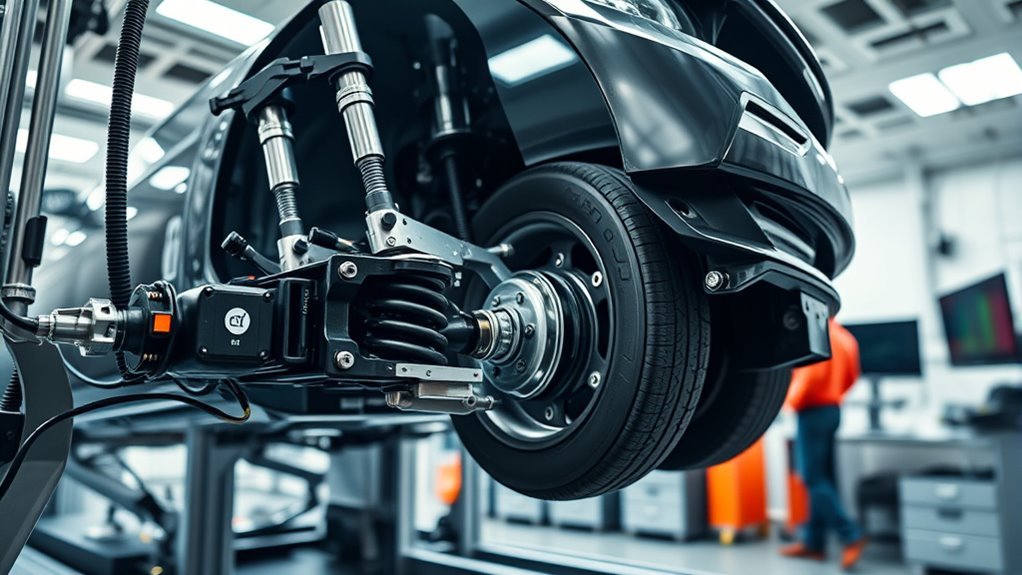
A car suspension testing machine is an essential tool for vehicle maintenance, allowing you to assess your vehicle’s shock absorbers, spring pressure, and overall suspension without needing to disassemble any parts.
It operates using sensors and controlled vibrations that simulate real road conditions, such as bumps and potholes.
This process reveals hidden faults in your suspension system, ensuring that your ride remains smooth and safe.
By identifying issues early, you can prevent costly repairs down the line, making these machines crucial for maintaining vehicle performance and safety.
If you’re curious about how these machines work and why they’re so important, there’s a wealth of information to dive into.
Key Takeaways
- A car suspension testing machine evaluates suspension components by measuring damping force, spring pressure, and detecting leaks without disassembly.
- It uses sensors and resonance methods to simulate real road vibrations and assess shock absorber performance accurately.
- The machine applies controlled movements replicating various road conditions to test suspension response and identify hidden faults.
- High-precision force sensors and pneumatic vises ensure precise, repeatable measurements for diagnosing suspension issues.
- Regular maintenance and calibration of the machine ensure reliable performance and accurate suspension diagnostics over time.
Definition and Purpose of a Car Suspension Testing Machine
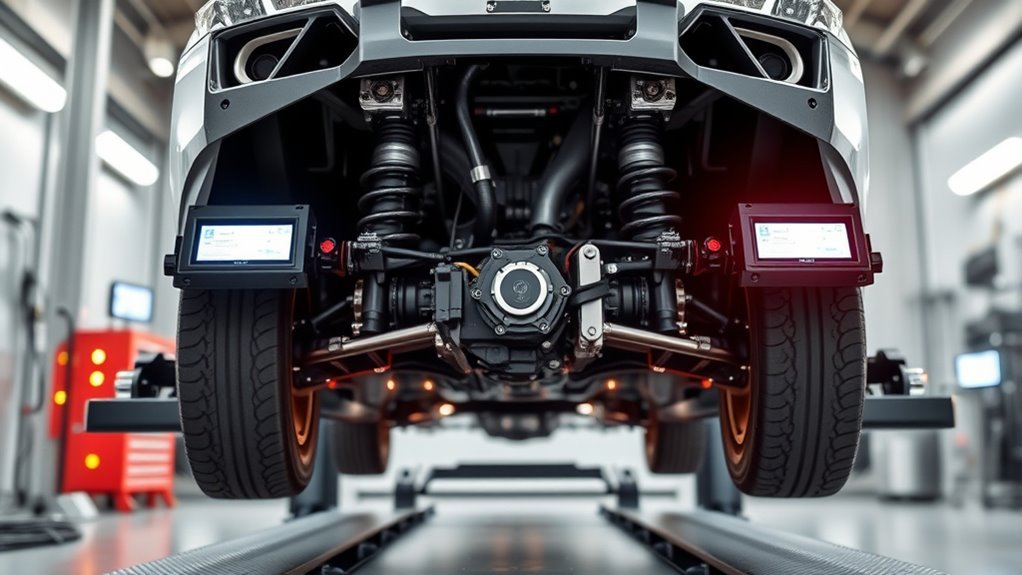
A car suspension testing machine helps you evaluate how well your vehicle’s suspension system performs by measuring key factors like damping force, spring pressure, and detecting potential leaks.
This suspension testing tool uses resonance methods, causing your vehicle to vibrate on a test plate to assess shock absorption without needing to disassemble any parts.
By using this machine, you can quickly identify issues in your vehicle suspension, including problems with air springs found in luxury cars.
Regular suspension testing guarantees your vehicle maintains ride comfort, safety, and reliability while catching hidden faults early.
For mechanics and auto repair shops, this machine is essential to prevent costly repairs and keep your vehicle running smoothly over time.
Key Components and Technologies Used in Suspension Testing
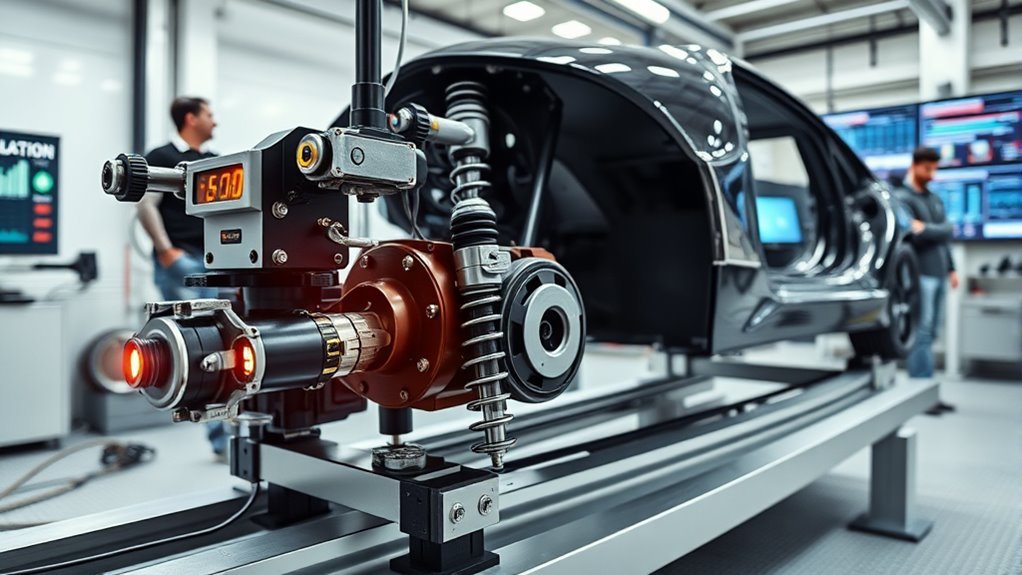
Suspension testing machines rely on advanced components and technologies to deliver precise assessments of your vehicle’s suspension system.
Key testing equipment includes high-precision force and wheel load sensors that measure damping force, spring pressure, and leakage without disassembly.
Air suspension compressors, pressure tester kits, and pneumatic self-centering vises enable thorough inspections and measurements.
Technologies like the resonance method analyze vibration curves to evaluate shock absorber effectiveness accurately.
Leakage rate testing is another vital process, detecting air escaping from suspension systems to identify wear or damage early.
By using this sophisticated equipment and technology, suspension testing guarantees your system performs at its best and remains safe.
Sophisticated suspension testing ensures optimal performance and safety for your vehicle’s suspension system.
You get detailed insights into the condition of your suspension, helping prevent failures before they occur.
How Suspension Testing Machines Simulate Road Conditions
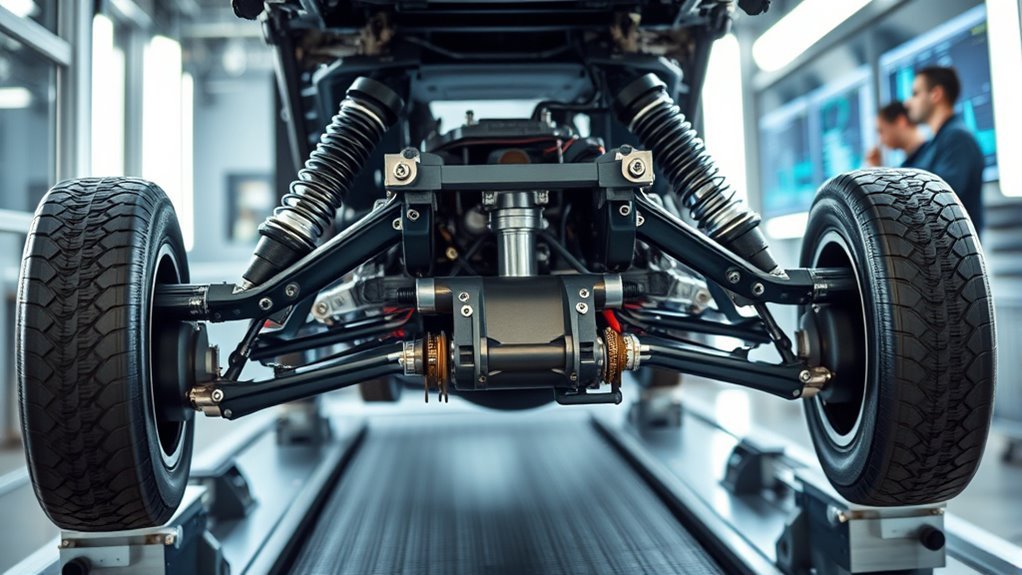
When you use suspension testing machines, they replicate road surface vibrations by generating controlled movements that mimic real driving conditions.
You’ll notice they apply resonance frequency excitation to test how shock absorbers respond under stress.
This approach helps you evaluate suspension performance quickly and accurately without removing parts.
Road Surface Vibration Simulation
Although you might not notice it, car suspension testing machines play an essential role in replicating road surface vibrations to evaluate vehicle performance.
The suspension tester adopts an exciter with an electric motor and eccentric wheel to create accurate suspension vibrations that mimic different road irregularities.
This simulation helps you understand how shock absorbers respond to real-world conditions.
| Road Surface Type | Vibration Pattern | Impact on Suspension |
|---|---|---|
| Smooth Asphalt | Low-frequency, steady | Minimal shock absorption |
| Gravel | High-frequency, sharp | Tests damping response |
| Pothole | Sudden, high amplitude | Checks structural resilience |
Resonance Frequency Excitation
To replicate real driving scenarios more precisely, testing machines use resonance frequency excitation by generating vibrations that match your vehicle’s natural suspension frequencies.
This involves an exciter equipped with an electric motor and eccentric wheel that sweeps through frequencies to find the natural resonance of your suspension system.
Once identified, the machine disconnects power, letting a flywheel maintain the vibration.
This process captures the suspension’s vibration response, allowing the machine to analyze shock absorbers and suspension components without taking them apart.
By studying this data, it detects hidden issues and assesses damping performance, ensuring your suspension works effectively.
This method simulates real road conditions closely, helping maintain ride quality and safety in your vehicle through precise suspension testing.
Common Types of Suspension Systems Evaluated by Testing Machines
Since suspension systems play an essential role in your vehicle’s safety and comfort, testing machines rigorously evaluate several common types. These machines assess key suspension parts like coil springs, leaf springs, torsion bars, and air springs to guarantee peak performance and durability.
Air springs, for instance, are tested for their responsiveness in luxury adaptive ride systems. Here’s a snapshot of what’s evaluated:
| Suspension Type | Primary Use | Testing Focus |
|---|---|---|
| Coil Springs | Most passenger cars | Compression & expansion |
| Leaf Springs | Trucks, heavy-duty | Load-bearing capacity |
| Torsion Bars | Various vehicles | Stress and twisting force |
| Air Springs | Luxury vehicles | Vibration absorption, durability |
Understanding these helps you appreciate how testing machines keep your ride smooth and safe.
Practical Applications and Benefits of Suspension Testing
Understanding how different suspension types undergo testing sets the stage for appreciating the practical applications and benefits of suspension testing machines.
When you use these machines during a Vehicle Inspection, you quickly identify issues like damping force problems, spring pressure faults, or leaks without disassembling parts.
This testing process helps you spot hidden suspension and alignment defects early.
That’s important because it prevents unexpected breakdowns and costly repairs.
Whether you’re a mechanic or a vehicle manufacturer, suspension testing improves ride comfort, handling, and overall performance.
It also guarantees compliance with safety standards, enhancing road safety.
Plus, by monitoring vibration responses, you can accurately diagnose critical components, especially in luxury vehicles with air suspension.
Suspension testing ultimately saves time, reduces maintenance costs, and keeps vehicles running smoothly.
Best Practices for Maintaining and Using Suspension Testing Equipment
You’ll want to regularly calibrate your suspension testing equipment to keep measurements accurate and reliable.
Keeping your workspace clean helps prevent contamination that could affect your results.
Also, store your tools in a controlled environment to avoid damage from extreme temperatures or humidity.
Regular Calibration Importance
Although it might seem tedious, regular calibration of your suspension testing equipment is crucial for accurate and reliable results.
Without regular calibration, even minor deviations can cause incorrect assessments of a vehicle’s suspension system, leading to faulty diagnostics and potential safety risks.
You should follow the manufacturer’s guidelines, typically calibrating at least once a year or after heavy use, to maintain precision.
Using calibration kits designed for suspension testers helps improve measurement accuracy and extends equipment life.
Keep a detailed log of all calibration activities, including dates and adjustments, to track accuracy and meet industry standards.
This disciplined approach guarantees your suspension testing machine consistently delivers dependable data for evaluating vehicles’ suspension system performance.
Clean Workspace Maintenance
Maintaining a clean and organized workspace plays an essential role in preserving the accuracy and longevity of your suspension testing equipment.
In repair shops, clean workspace maintenance helps prevent dust and debris from contaminating sensitive components, which can skew test results.
You should regularly wipe down surfaces and keep tools neatly arranged to boost efficiency and safety during testing.
Avoid clutter that could lead to accidental damage or misplacement of parts.
Always follow manufacturer guidelines for inspection and calibration intervals, and document every maintenance activity to monitor equipment reliability.
By adopting proper handling techniques and maintaining a spotless environment, you’ll minimize wear and tear.
This ensures that your suspension testing machines deliver consistent and reliable performance over time.
Proper Storage Procedures
Proper storage procedures play an essential role in preserving the accuracy and lifespan of your suspension testing equipment.
When dealing with Car Suspension components, you need to store your testing machines in a controlled environment to prevent damage from humidity, dust, or temperature changes.
This helps maintain their functionality and reliability. Always keep your workspace clean to avoid contamination that could skew test results.
Don’t forget to regularly inspect and calibrate your equipment to guarantee precise measurements. Document all maintenance activities, including inspections and repairs, so you have a clear history of your machine’s performance.
Finally, use proper handling techniques—like securely using a pneumatic self-centering vise—to minimize wear and tear.
Frequently Asked Questions
How Much Does a Suspension Diagnostic Cost?
You’ll typically pay between $50 and $150 for a suspension diagnostic, depending on your location and vehicle type.
Some shops might offer free checks with services, but advanced diagnostics or luxury cars can cost more.
How Long Does a Suspension Test Take?
You’re cutting to the chase by asking, and a suspension test usually takes 30 minutes to an hour.
It depends on your vehicle’s complexity, the tester’s skill, and the machine’s efficiency.
Don’t rush it!
How Can I Test My Car’s Suspension?
You can test your car’s suspension by performing a bounce test on each corner.
Inspect for leaks or damage, and use pressure tester kits for air systems.
If you’re unsure, it’s always a good idea to visit a professional for thorough testing with advanced machines.
What Car Brand Has the Best Suspension System?
When you glide over bumps in a Mercedes-Benz, or feel Audi’s quattro grip corners, you’ll know their suspension’s exceptional.
They blend comfort and control so well, you’ll hardly notice rough roads at all.
Conclusion
Now that you know how a car suspension testing machine works and its key benefits, wouldn’t you want to guarantee your vehicle’s suspension is performing at its best?
These machines help simulate real road conditions, giving you accurate insights into your suspension system’s durability and comfort.
By regularly using and maintaining this equipment, you can catch issues early and enjoy a smoother, safer ride every time you hit the road.
In conclusion, investing in a car suspension testing machine is essential for ensuring your vehicle’s performance.
Regular testing enhances durability, improves comfort, and ultimately contributes to a safer driving experience.
So, why not make it a priority to keep your suspension system in top shape?