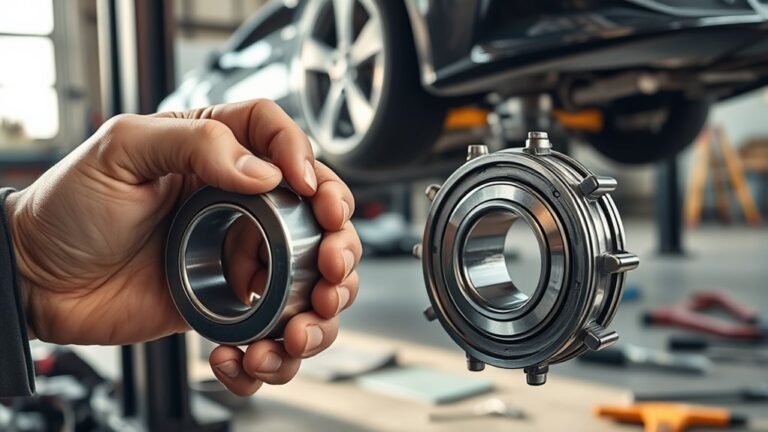
What Are Tire Balancing Beads and How Do They Work?
Tire balancing beads are tiny ceramic or glass particles added inside tires to maintain balance while driving.
As your tire spins, these beads move with centrifugal force, filling in heavy spots and continuously adjusting the balance.
This dynamic action effectively reduces vibrations, extends tire life, and enhances ride comfort.
They tend to work better than fixed weights, particularly on larger or uneven tires.
If you’re curious about the various types, benefits, and installation of tire balancing beads, keep exploring the details!
Key Takeaways
- Tire balancing beads are small ceramic or glass particles placed inside tires to maintain dynamic balance during rotation.
- They move inside the tire using centrifugal force to redistribute and correct heavy spots as the tire spins.
- This continuous self-adjustment reduces vibrations, enhances ride comfort, and extends tire life by preventing uneven wear.
- Beads offer real-time balancing, adapting to speed changes and terrain, unlike fixed traditional wheel weights.
- Installation involves adding beads before tire inflation, allowing them to flow and balance the tire dynamically during use.
What Are Tire Balancing Beads?

Tire balancing beads are small, round particles made from materials like ceramic or tempered glass that you install inside your tires to keep them balanced as they rotate.
Tire balancing beads are tiny ceramic or glass particles placed inside tires to maintain balance during rotation.
These tire balancing beads provide dynamic balancing by responding to centrifugal force during tire rotations, redistributing themselves to counteract imbalances.
This continuous rebalancing happens in real time, ensuring your tires stay properly balanced on varying terrains.
Bead manufacturers design these particles to suit different tire sizes, with the right quantity essential for ideal performance.
This balancing solution is especially useful for larger or specialty tires on off-road vehicles, trailers, and commercial trucks.
How Do Tire Balancing Beads Work?

You’ll notice that tire balancing beads use centrifugal force to move inside the tire as it spins.
This migration allows the beads to automatically fill in heavy spots, keeping the tire balanced in real-time.
Centrifugal Force Dynamics
Although you might not see them, balancing beads inside your tires use centrifugal force to keep your ride smooth.
As your tires spin, the beads redistribute themselves, moving outward to the tire walls. This action counteracts weight imbalances in the unbalanced wheel, effectively balancing it on the go.
Their dynamic nature means they continuously adjust to changes in speed and terrain, maintaining peak performance.
The stronger the centrifugal force—especially at higher speeds—the better the beads can stabilize your tires.
This constant movement helps extend tire life by adapting to wear and conditions like mud buildup.
- Balancing beads respond to centrifugal force inside tires.
- They move to areas with excess weight to balance wheels.
- Their dynamic nature provides ongoing adjustment.
- Improved performance and tire life through real-time redistribution.
Real-Time Balance Adjustment
As your wheels spin, balancing beads actively shift to counteract any imbalances caused by uneven wear or debris.
These tiny beads use centrifugal force to move inside the tire, seeking out heavier spots created by tire wear or manufacturing inconsistencies.
This migration allows for real-time adjustments, continuously balancing the tire as conditions change.
Unlike fixed weights, beads provide dynamic balancing that adapts throughout the tire’s lifespan, improving overall performance.
You’ll especially notice their effectiveness in oversized or off-road tires where terrain and wear fluctuate frequently.
By constantly redistributing themselves, the beads maintain smoother rides and reduce vibration, helping your tires perform at their best.
This real-time balancing guarantees your tires respond to uneven wear immediately, keeping your vehicle stable and efficient.
Bead Migration Mechanism
Three key forces work together to make tire balancing beads effective, with centrifugal force playing the main role.
The bead migration mechanism relies on centrifugal force pushing the beads inside the tire toward the heavy spot as the tire rotates.
This movement redistributes weight, allowing the balancing beads to continuously adjust and maintain balance over time.
When the tire rotates, the beads flow dynamically to counteract imbalances, providing dynamic balancing without manual intervention.
Key points about the bead migration mechanism:
- Centrifugal force pushes beads to heavy spots.
- Beads move inside the tire, adjusting in real-time.
- Balancing beads continuously adjust to maintain balance.
- Dynamic balancing adapts as tire conditions change.
This process guarantees your tires stay balanced effortlessly throughout their life.
Types of Tire Balancing Beads

When choosing tire balancing beads, you’ll find several types designed to suit different needs and driving conditions.
Glass beads are budget-friendly and quiet, ideal for everyday driving. However, they may break down under high temperatures.
Glass beads offer a cost-effective, quiet solution for daily driving but may degrade with heat exposure.
Steel beads offer strong balancing effectiveness, especially for off-road tires and high-speed vehicles. Still, they can cause noise and may damage aluminum rims.
Ceramic beads strike a balance, combining steel’s effectiveness with glass’s quietness. Keep in mind, they come at a higher cost.
Plastic beads are lightweight and silent but provide minimal balancing effectiveness. They’re best for minor imbalances and low-speed driving.
Benefits of Using Tire Balancing Beads
When you use tire balancing beads, you’ll notice your tires last longer thanks to reduced uneven wear.
They also help improve your fuel efficiency by minimizing vibrations that make your engine work harder.
This means you get more miles and better gas mileage with less hassle.
Improved Tire Longevity
Because tire balancing beads continuously adjust to imbalances as you drive, they help distribute weight evenly around your tires.
This markedly reduces uneven wear, which is a common issue.
This dynamic balancing capability improves tire longevity by extending the overall lifespan by at least 30%.
By minimizing vibrations, tire balancing beads enhance stability and prevent issues that cause premature tire wear.
You’ll also see lower maintenance costs since uneven wear can lead to suspension damage and other expensive repairs.
- Evenly distributing weight to reduce uneven wear
- Minimizing vibrations for smoother rides
- Extending overall lifespan of tires
- Preventing issues that raise maintenance costs
Using tire balancing beads means you get better performance and longer-lasting tires without frequent rebalancing hassles.
Enhanced Fuel Efficiency
Although tire balancing beads work quietly inside your tires, they can boost your fuel efficiency by at least 2.2%.
By improving the wheel’s balance through dynamic balancing, tire beads reduce rolling resistance and vibrations.
This means your tire performance stays ideal, wasting less energy during acceleration and deceleration.
As a result, your fuel economy improves while your tires wear evenly, extending tire life.
Here’s how tire beads enhance fuel efficiency:
| Factor | Benefit |
|---|---|
| Wheel Balance | Reduces vibrations |
| Rolling Resistance | Lowers energy loss |
| Tire Performance | Maintains smooth driving |
| Tire Life | Extends replacement intervals |
Using tire beads helps you save fuel and enjoy a smoother ride with less strain on your vehicle.
Comparing Tire Balancing Beads and Traditional Weights
If you want a tire balancing method that adapts on the go, tire balancing beads offer a dynamic solution by moving freely inside the tire to continuously adjust balance.
Unlike traditional weights that provide static balancing, beads deliver dynamic balance, especially effective for truck tires and off-road use.
Traditional weights attach externally and can cause vibrations if misplaced, while balancing beads self-correct imbalances as you drive.
Plus, beads are more environmentally friendly, eliminating lead weight pollution and simplifying installation through the valve stem.
- Balancing beads adjust continuously; weights remain fixed.
- Beads excel in oversized or unevenly worn tires.
- Installation via valve stem is quick and easy.
- Beads reduce environmental impact compared to traditional weights.
Choosing beads or weights depends on your tire balancing needs and vehicle type.
How to Install Tire Balancing Beads
When installing tire balancing beads, you’ll want to add the recommended amount directly into the tire before inflating it to guarantee even distribution and effective balancing.
If the tire is already mounted, deflate it, remove the valve core, and carefully feed the beads through the valve using an applicator bottle.
Always follow the manufacturer’s guidelines to use the correct amount of beads based on your tire size.
Once the beads are inside a tire, inflate the tire as usual.
The beads work by dynamically balancing the tire while it’s in motion, eliminating the need for static weights.
After installation, monitor for any vibrations to verify the dynamic balancing is effective and that you’ve added the appropriate amount of balancing beads.
Frequently Asked Questions
Do Tire Balance Beads Actually Work?
Yes, tire balancing beads can work, especially for oversized or off-road tires, but they’re not perfect.
You might notice vibrations at high speeds, and effectiveness varies.
What Are the Disadvantages of Balance Beads?
Don’t count your chickens before they hatch—balance beads can cause vibrations, valve stem damage, and erratic tire response.
You might also lose suspension control, especially at low speeds.
This makes traditional weights a safer bet for smooth rides.
How Long Do Tire Balancing Beads Last?
Tire balancing beads last the entire lifespan of your tires, usually 40,000 to 70,000 miles.
They don’t wear out like traditional weights, so once installed, you typically won’t need to replace them or worry about maintenance.
Can You Put Too Much Balancing Beads in a Tire?
You can definitely overload your tire with balancing beads—it’s like stuffing a suitcase too full.
Too many beads cause vibrations, clumping, and poor performance.
Conclusion
So, you want perfectly balanced tires without the hassle of sticky weights?
Tire balancing beads might just surprise you—they silently shift inside your tire, doing the balancing act for you while you’re busy driving.
It’s almost ironic how these tiny beads can outsmart traditional weights that cling to your rims.
If you’re looking for a low-maintenance, clever way to keep your ride smooth, give these little beads a spin.
You might wonder why you didn’t try them sooner.
In conclusion, tire balancing beads offer an innovative solution for achieving a smooth ride without the weight of traditional balancing methods.
They work by dynamically adjusting as you drive, ensuring your tires remain balanced.
So, if you’re tired of dealing with the inconvenience of sticky weights, consider switching to tire balancing beads for a hassle-free driving experience.