What Is Liquid Glass for Car Radiators and How Does It Work?
Liquid glass for car radiators is a sodium silicate solution that offers a quick solution for minor leaks.
It works by forming a heat-activated, glass-like barrier inside the cooling system.
When you pour it in and run your engine, it heats up and bonds to cracks, effectively stopping coolant loss.
This method provides a fast and temporary fix, but it’s important to handle it with care and apply it correctly.
If you’re curious about how to use it properly and want to explore other options for radiator repairs, keep reading for more details!
Key Takeaways
- Liquid glass, or sodium silicate, is a quick fix that seals minor radiator leaks by forming a glass-like substance when heated.
- It works by filling small cracks and creating a durable, heat-activated glass layer that stops coolant from leaking.
- To apply it, you need to mix it with water and run the engine for about 45 minutes while monitoring the temperature to ensure effective sealing.
- Just a heads up: safety precautions are important! Wear protective gear and ensure proper ventilation since it can be corrosive and toxic.
- While it’s an effective temporary solution for minor leaks, keep in mind that permanent repairs usually need traditional methods like welding or soldering.
Understanding Liquid Glass and Sodium Silicate
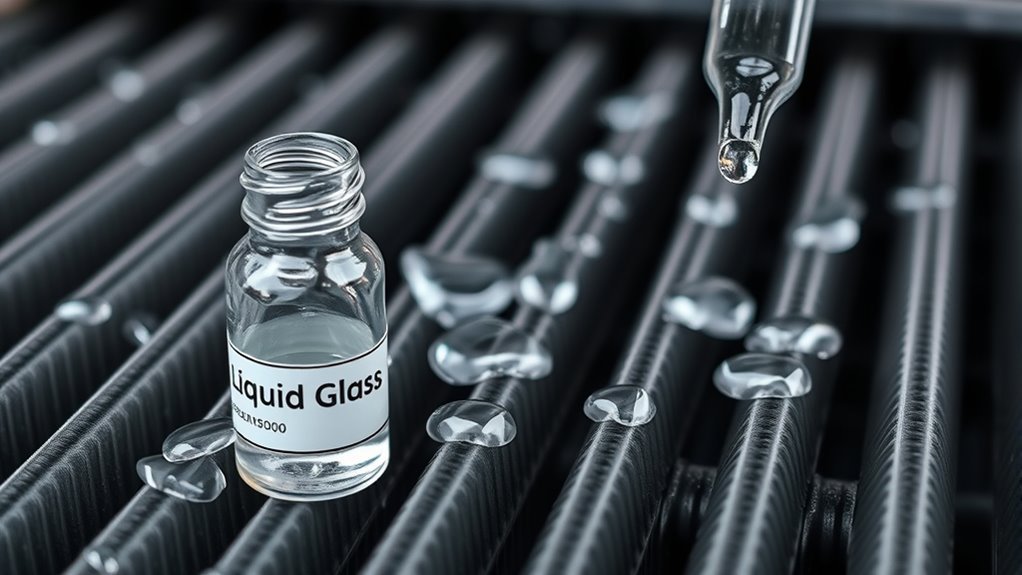
Liquid glass, also known as sodium silicate, acts as a quick fix for minor radiator leaks by forming a glass-like seal when heated.
When you spot a leaking head gasket or small cracks in your radiator, sodium silicate can provide a temporary block seal to stop coolant loss.
To use it, you’ll drain the radiator, mix sodium silicate with water, then run the engine to activate the sealing process.
Drain the radiator, mix liquid glass with water, then run the engine to seal leaks effectively.
This compound works without needing full circulation, making it handy for quick fixes.
However, keep in mind that sodium silicate isn’t a permanent solution—you should handle it with care to avoid clogging, especially around radiator necks.
Regular system maintenance is essential to prevent further issues after application.
How Liquid Glass Seals Radiator Leaks

When heated, sodium silicate transforms into a glass-like substance that fills and seals small cracks in your radiator.
This Sodium Silicate Liquid reacts with heat and air, creating a durable glass layer that stops coolant from leaking through small leaks or even a compromised head gasket.
It doesn’t require circulation in the cooling system to activate, making it a straightforward solution for quick fixes.
Here’s how it works:
| Leak Type | Leak Size | Sealing Mechanism |
|---|---|---|
| Radiator Crack | Small leak | Glass layer fills crack |
| Head Gasket | Minor seepage | Glass seals gasket gaps |
| Radiator Core | Tiny cracks | Sodium silicate hardens |
| Hose Junction | Small holes | Glass forms tight seal |
| Coolant Pipes | Micro leaks | Hardened glass plugs holes |
This method effectively stops leaks by layering glass within damaged areas.
Proper Application and Usage Guidelines
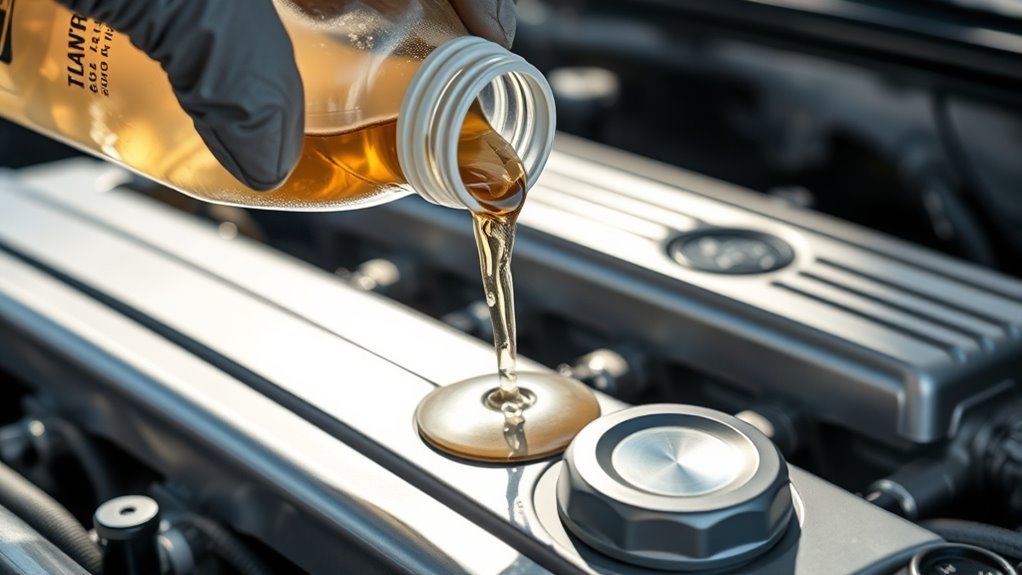
Before you add Liquid Glass to your radiator, make sure to drain and flush the coolant system thoroughly.
Mix the sodium silicate with water as directed.
Then, run your engine for about 45 minutes to activate the seal.
Afterward, drain and flush the system again while keeping a close eye on your engine temperature to catch any issues early.
Preparation and Mixing
To prepare sodium silicate for your car radiator, start by mixing it with about a quart of water in a separate container.
Before adding the liquid glass mixture, make certain to drain your coolant system completely by disconnecting the radiator hoses.
This step prevents contamination and guarantees the liquid glass can work effectively.
Once mixed, pour the sodium silicate and water blend into the radiator.
Then, top it off with hose water.
Start the engine and keep an eye on the water level.
Running the engine for around 45 minutes activates the liquid glass, allowing it to seal leaks by crystallizing when exposed to heat and air.
Proper preparation and mixing are key to a successful coolant system repair.
Post-Application Procedures
Although the engine needs to run for 45 minutes to activate the liquid glass, you should stop it afterward and wait 15 minutes before draining the coolant system carefully to prevent burns.
This waiting period allows the chemical reaction inside the radiator to complete, sealing leaks effectively.
After draining, flush the coolant system thoroughly with water to remove any leftover liquid glass residue.
When you refill, install a new thermostat with a gasket to maintain proper cooling system function.
Keep a close eye on your engine temperature post-application since the fix may last up to six months.
If you notice overheating again, you might need to repeat the process.
Following these steps guarantees your coolant system stays safe and efficient after using liquid glass.
Safety Precautions When Using Liquid Glass
When you handle liquid glass, you need to protect your skin and lungs since it’s corrosive and can cause irritation.
Be careful with the radiator too—improper use can lead to clogs or long-term engine damage.
Following safety steps closely helps you avoid these risks and keeps your car running smoothly.
Handling and Toxicity Risks
Since liquid glass is corrosive, you need to handle it carefully to avoid skin and eye irritation or respiratory problems from inhaling its fumes.
Sodium silicate requires proper ventilation during use. Wearing gloves and eye protection helps minimize exposure risks.
Be mindful that improper application can cause the chemical to crystallize in radiator necks, leading to blockages and damage.
Keep liquid glass away from children and pets, as ingestion can cause serious gastrointestinal issues.
Always follow manufacturer guidelines and safety data sheets for handling and disposal to reduce toxicity risks.
Long-Term Engine Effects
Because liquid glass can crystallize and cause blockages, you should take extra care when using it in your radiator.
Liquid Glass, mainly sodium silicate, may temporarily seal leaks but can lead to blockages in radiator necks if not applied properly. These blockages can disrupt coolant flow, risking engine overheating and damage.
While users report minimal corrosion, the long-term effects on engine components, especially in older cars, remain uncertain.
Relying solely on Liquid Glass might mask deeper problems, causing more serious issues later.
To minimize risks, flush your cooling system thoroughly before and after treatment to remove residues that could affect performance.
Regularly monitor your radiator for leaks, as the sealant’s effectiveness can diminish over time.
Cautious maintenance is essential to protect your engine’s health.
Alternatives to Liquid Glass for Radiator Repair
Although Liquid Glass is a popular choice for radiator repair, you have several other options that might better suit your needs.
Sodium silicate, often called liquid glass, is an effective alternative that seals minor leaks without needing the cooling system to circulate.
Block sealers, like Steel Seal, claim to fix leaks at head gaskets without disassembly.
Block sealers such as Steel Seal offer leak repairs at head gaskets without needing to take the engine apart.
However, these should be used cautiously due to varying effectiveness.
For temporary external fixes, you might try Liquid Nails, though it’s not suited for high-pressure systems.
Traditional methods like soldering or welding offer more permanent repairs, especially on cast iron radiators with low or no pressure.
While some suggest unconventional fixes like ground black pepper, these aren’t reliable long-term solutions.
Choosing the right option depends on your radiator’s condition and pressure system.
Common Issues and User Experiences
How well does Liquid Glass really work for radiator repairs?
Many users find it effective for sealing minor leaks thanks to its main ingredient, sodium silicate, which forms a glass-like seal when heated.
However, experiences vary—some report the fix only lasts a short time, making it more of a temporary fix than a permanent solution.
You should also be cautious, as improper use can cause the product to crystallize in the radiator neck, potentially leading to new problems.
To reduce risks, many recommend flushing your radiator before and after application.
Frequently Asked Questions
What Is the Best Product to Permanently Stop a Radiator Leak?
You should use professional repairs like soldering, welding, or part replacement to permanently stop radiator leaks.
Sealants only offer temporary relief.
Always consult a mechanic for lasting, reliable fixes that protect your cooling system.
How Long Will Liquid Glass Last?
Liquid glass can last anywhere from a quick few weeks to a surprising two years, depending on your leak’s size and driving conditions.
Don’t forget—it’s a temporary fix, so keep an eye on your radiator!
Which Is Better, Liquid Glass or Ceramic Coating?
You’ll find ceramic coating better for long-term protection and aesthetics.
On the other hand, liquid glass suits quick radiator leak fixes.
Choose based on your needs—durability and finish versus temporary sealing and repair speed.
Will Liquid Glass Fix a Blown Head Gasket?
Liquid glass is like a bandage for your blown head gasket—it can temporarily seal small leaks, but it won’t fix the underlying damage.
You’ll need professional repair for a lasting solution, so don’t rely on it completely.
Conclusion
You might see liquid glass as a quick fix, a clear, flowing solution slipping into tiny radiator cracks like water filling a dry crevice.
Yet, while it seals leaks smoothly, it’s not a permanent fortress—think of it as a glass bridge over a fragile gap.
Using it wisely means balancing ease with caution, knowing when to rely on it and when a full repair stands firm like solid metal against future damage.
In conclusion, while liquid glass can be a handy temporary solution for car radiator leaks, it’s essential to recognize its limitations.
For long-term durability, consider it a stopgap rather than a substitute for comprehensive repairs.
By understanding when and how to use liquid glass effectively, you can protect your vehicle from further damage and ensure reliable performance down the road.