Why Is Drag Car Suspension Essential for High Performance?
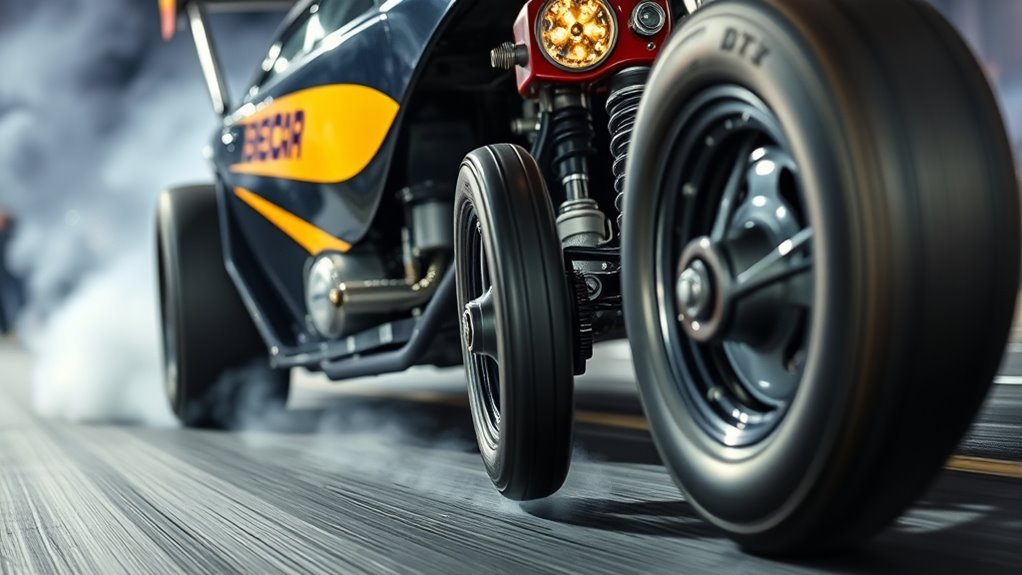
You need a finely tuned suspension in your drag car to maximize traction and control weight transfer during launch.
Proper shock adjustments keep your front end elevated, preventing sudden drops that reduce grip and slow acceleration.
By customizing compression and rebound settings for track conditions, you’ll achieve consistent, faster 60-foot times.
Without good suspension, launches become unstable and inconsistent.
If you want to master these setups and boost your performance, understanding suspension’s role is key.
Key Takeaways
- Drag car suspension manages weight transfer to maximize traction and maintain optimal grip during launch and acceleration.
- Proper shock tuning controls front end elevation, enhancing stability and improving 60-foot times.
- Customizable suspension settings adapt to track conditions, ensuring consistent performance across varying surfaces.
- Adjusting compression and rebound rates optimizes weight distribution, preventing front end unloading and boosting acceleration.
- Expert suspension setup and technical support enable precise adjustments for improved traction and race control.
The Role of Suspension in Traction and Weight Transfer
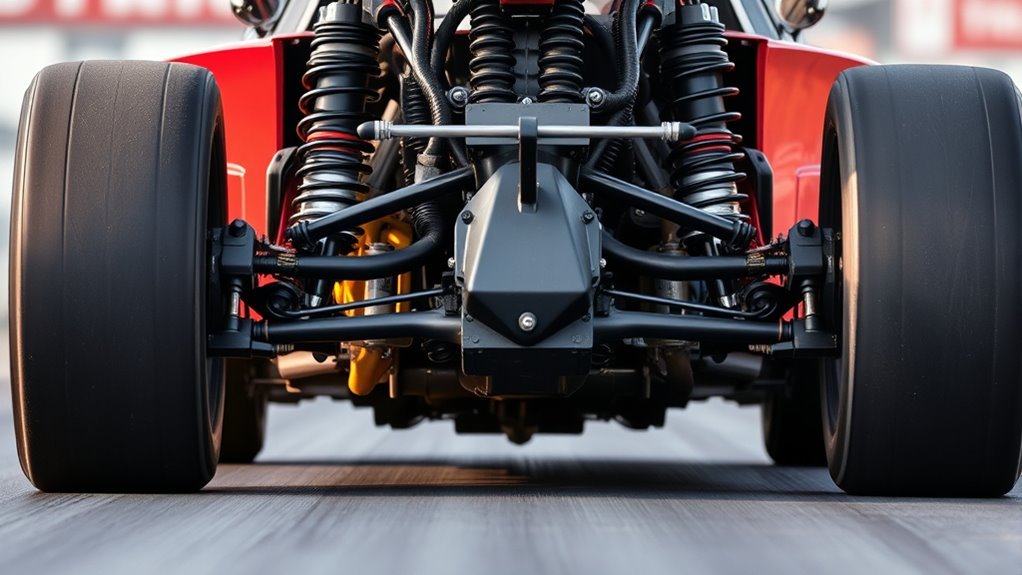
When you launch a drag car, the suspension system plays an essential role in managing weight transfer to maximize traction.
Drag racing suspension is designed to control how weight shifts from the rear to the front, helping you maintain grip right off the line.
Proper shock settings keep the front end elevated during launch, improving weight distribution and preventing the front from unloading too quickly.
Proper shock tuning maintains front-end height at launch, enhancing weight balance and traction control.
Adjusting suspension height and stiffness directly influences how your vehicle reacts to acceleration, ensuring the tires stay planted.
By fine-tuning compression and rebound rates, you optimize weight transfer, which leads to more consistent 60-foot times and better overall performance.
Mastering these suspension dynamics lets you harness your car’s power efficiently and dominate the track.
Customizing Shocks for Optimal Drag Racing Performance
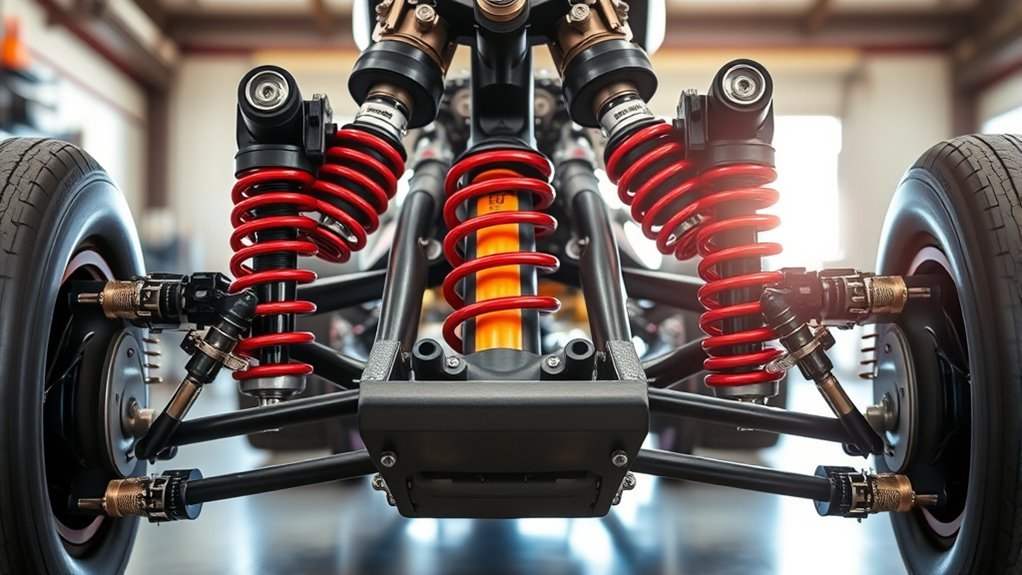
Because every drag strip presents unique challenges, customizing your shocks is essential to maximize traction and control during launches.
By adjusting shock settings, you can optimize weight transfer and improve performance consistency.
For sticky tracks, you’ll want increased front rebound and decreased rear rebound, while untreated surfaces require the opposite.
Investing in adjustable shocks lets you adapt quickly to varying conditions and chassis setups, ensuring both peak performance and shock longevity.
Properly tuned shocks help maintain front end elevation, which is vital for effective weight distribution and better 60-foot times.
Don’t hesitate to engage technical experts and analyze data to refine your shock customization further.
Customizing shocks isn’t just about immediate gains—it’s about building a versatile setup that keeps you competitive on any drag strip.
Impact of Suspension Settings on Launch and Acceleration
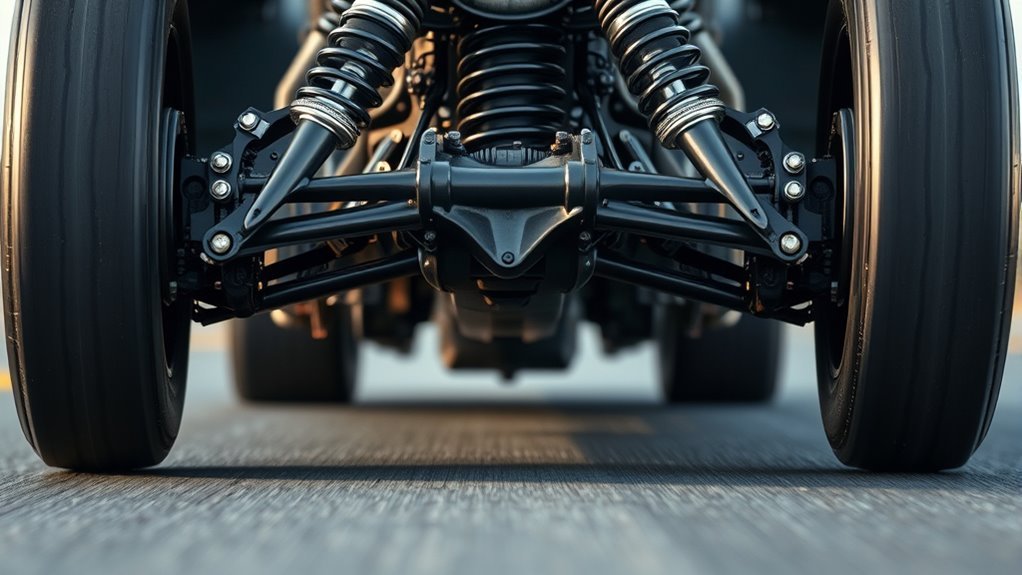
You’ll want to focus on how your suspension settings affect launch stability and optimize acceleration.
Adjusting shock compression and rebound can improve weight transfer, keeping your car balanced off the line.
Fine-tuning these settings based on track conditions helps you get the best possible 60-foot times.
Launch Stability Factors
A well-tuned suspension plays an essential role in how your drag car launches and accelerates off the line.
Understanding launch stability factors can drastically improve your performance in a drag race. Proper suspension settings control weight transfer, ensuring peak traction and vehicle balance right from the start.
Here are three key points to focus on:
- Adjust front shock rebound and compression to manage weight transfer. This helps maintain front-end elevation longer during launch.
- Increase front rebound on sticky tracks to prevent the front end from unloading too quickly. This enhancement boosts stability.
- Fine-tune launch RPM alongside suspension settings. Doing so can maximize acceleration and improve your sixty-foot times.
Acceleration Optimization Techniques
Understanding how your suspension settings affect launch and acceleration can give you a real edge on the strip.
Adjusting shock compression and rebound rates directly impacts weight transfer, which is essential for maximizing grip during a drag launch.
On sticky tracks, increasing front rebound improves front-end stability. This helps you achieve quicker launches and better 60-foot times.
Pair these settings with proper tire pressure to reduce spin and boost traction during the initial acceleration.
Keeping the front end elevated during launch also shifts weight to the rear tires, enhancing grip.
Additionally, launching at a higher RPM, around 3,500, delivers more power off the line, accelerating your drag car faster.
Fine-tuning these suspension elements optimizes your acceleration, making every run more competitive.
Common Suspension Challenges and How to Address Them
When tuning your drag car’s suspension, striking the right balance between front and rear shock settings is essential.
Improper adjustments can cause inconsistent launches and poor weight transfer.
Incorrect tuning leads to unstable launches and ineffective weight transfer, hindering performance on the drag strip.
One common issue is the front end unloading too quickly, which reduces traction and acceleration.
You need to keep the front end elevated throughout the run to maintain grip and stability.
Here are three challenges and how to address them:
- Front end unloading: Adjust shocks to prevent sudden front end drop-off during launch.
- Tire pressure: Experiment with pressures to boost grip and improve suspension response.
- Weight distribution: Guarantee proper balance for better traction and control at high speeds.
Focusing on these will help you overcome suspension challenges and improve your drag car’s performance.
Importance of Technical Support and Expert Guidance
Although you can learn a lot on your own, having access to technical support and expert guidance will dramatically improve your drag car’s suspension setup.
When you communicate directly with knowledgeable advisors, you get tailored advice that fits your unique racing style and track conditions, boosting your consistency.
Shock manufacturers who analyze performance data offer insights you might miss, helping you fine-tune your suspension for optimal outcomes.
Technical support isn’t just for pros—it’s essential for racers at every level, ensuring you make informed decisions without guesswork.
Plus, a reliable supply chain guarantees you can quickly get crucial parts, reducing downtime and keeping you race-ready.
With expert help, you’ll enhance your suspension efficiently and maintain peak performance on the track.
Evaluating Suspension Upgrades for Consistent Race Results
Since upgrading your drag car’s suspension directly impacts weight transfer during launches, it plays a crucial role in improving traction and achieving faster 60-foot times.
To evaluate suspension upgrades for consistent race results, you need to take into account these key factors:
- Track Conditions: Adjust suspension settings based on whether the track is prepped or untreated for ideal handling.
- Customized Shocks: Invest in shocks tailored to your chassis and weight changes to maintain consistent performance.
- Data Analysis: Use support from shock manufacturers and data insights, especially when starting a new account, to find the best setup.
Frequently Asked Questions
What Makes a Car Accelerate Faster?
You make a car accelerate faster by optimizing weight distribution,
adjusting suspension for better traction,
selecting the right tires,
managing launch RPM,
and tuning settings to control weight transfer,
ensuring maximum grip and power off the line.
What Car Was Banned From NHRA?
You’d be stunned to see the Ford Mustang Cobra Jet 1400 sprinting down the strip, but the NHRA banned it.
Its electric power shocked traditional racers, pushing limits so far, they had to stop it from competing.
What Are Ladder Bars For?
Ladder bars help you keep the rear axle stable during acceleration, improving traction and preventing axle wrap.
They boost your car’s launch grip and let you fine-tune suspension for better control and faster times on the drag strip.
With ladder bars, you can really enhance your performance on the track!
Is Lower Suspension Better for Speed?
You might think lower suspension always boosts speed, but it depends.
Lowering your car can improve stability and traction for faster launches.
Yet, you’ve got to balance it carefully with tuning to avoid handling issues.
Conclusion
When you fine-tune your drag car suspension, you’re directly boosting traction and controlling weight transfer. This is essential for nailing quick launches.
Imagine a racer who adjusted their shocks for better weight distribution and shaved off tenths of a second at the strip—that’s the power of the right setup.
Don’t overlook expert guidance and quality upgrades; they keep your car consistent and competitive. With the right suspension, you’re not just racing—you’re dominating every run.
In conclusion, optimizing your drag car suspension is crucial for enhancing performance. It not only improves traction but also ensures effective weight transfer during launches. With the right adjustments and upgrades, you can achieve faster times and stay ahead of the competition. Don’t underestimate the impact of a well-tuned suspension on your racing success—it’s the key to unlocking your car’s full potential on the strip.