How Much Oil Does Your Car Take?
You’ll need to know your car’s exact oil capacity to keep the engine running smoothly and avoid damage.
Small cars usually take about four quarts, while standard vehicles often need around five.
Larger trucks with V-8 engines may require up to seven quarts.
Always check your owner’s manual to confirm the right amount and type of oil for your engine.
It’s crucial to keep an eye on your oil levels.
Regularly checking and topping up ensures that your vehicle maintains peak performance.
You’ll find out how to do this in the following sections!
Key Takeaways
- Most small cars require around four quarts of engine oil for a complete change.
- Standard passenger vehicles typically need about five quarts of oil.
- Larger engines, such as V-8 trucks, may require up to seven quarts or more.
- Always consult your vehicle’s owner’s manual for the exact oil capacity specifications.
- Using the recommended oil capacity ensures proper lubrication and prevents engine damage.
Importance of Engine Oil for Your Vehicle
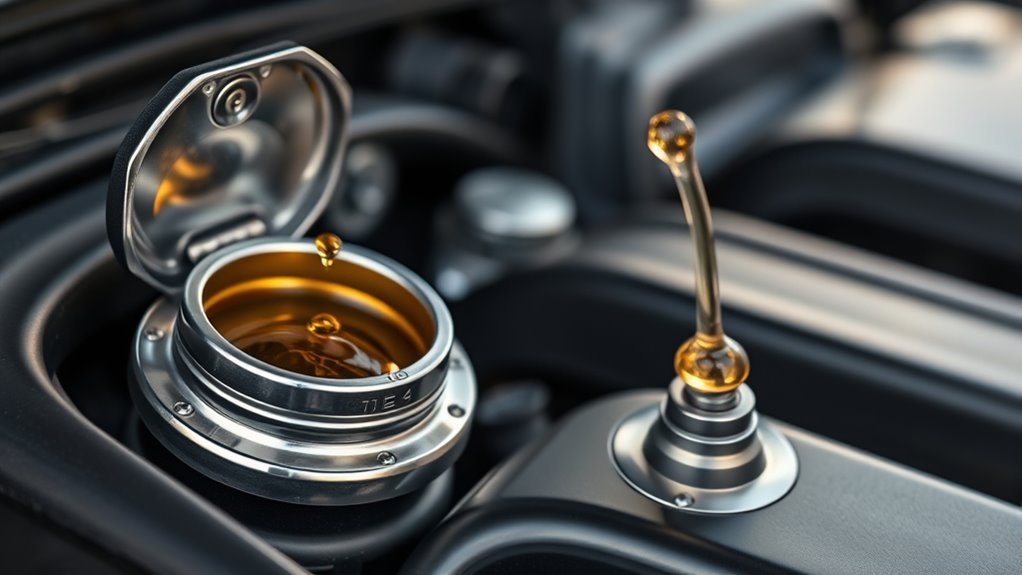
Engine oil plays an essential role in keeping your car running smoothly by lubricating its moving parts and reducing friction.
You need to regularly check oil levels to guarantee your engine gets proper lubrication, which prevents wear and tear.
Knowing your vehicle’s oil capacity helps you avoid overfilling or running low, both of which can harm your engine.
Engine oil also aids in heat dissipation, maintaining peak engine temperatures and preventing overheating.
Neglecting to check oil frequently or using dirty oil can cause sludge buildup, leading to costly repairs and decreased engine efficiency.
Determining the Correct Oil Type for Your Car

You’ll want to use the oil type specified by your car’s manufacturer to keep your engine running smoothly.
Mixing different oils can cause compatibility issues that harm performance, so stick to the recommended specifications.
If you’re unsure, check your owner’s manual or ask a mechanic for guidance.
Manufacturer Oil Specifications
One of the most important steps in maintaining your car is using the correct oil type, as specified in your owner’s manual.
This manual provides essential details about the motor oil viscosity rating, like 5W-30 or 10W-40, which guarantees your engine runs smoothly across different temperatures.
Sticking to the manufacturer’s oil specifications helps you avoid poor lubrication, which can lead to engine damage.
Always check the oil quality regularly to prevent dirty or unsuitable oil from harming your engine.
Using the recommended oil type improves engine efficiency, extends its lifespan, and reduces costly repairs.
Oil Compatibility Considerations
Although it might seem straightforward, selecting the correct oil type requires careful attention to your vehicle’s specifications to guarantee compatibility.
You should consult the owner’s manual for the right engine oil viscosity and certification standards.
Using the wrong oil or mixing oils can harm engine performance and damage the oil filter. Regularly check your oil level and quality to prevent premature wear.
| Factor | Importance | Tip |
|---|---|---|
| Owner’s Manual | Specifies oil type and viscosity | Always follow the manual |
| Oil Filter | Works best with correct oil type | Replace during oil changes |
| Oil Level | Maintains engine lubrication | Check frequently |
| Oil Mixing | Can reduce lubrication quality | Avoid mixing different oils |
| Engine Design | Determines oil compatibility | Use recommended oil only |
Use guides like AMSOIL for added assurance.
How Often Should You Check and Top Up Oil Levels
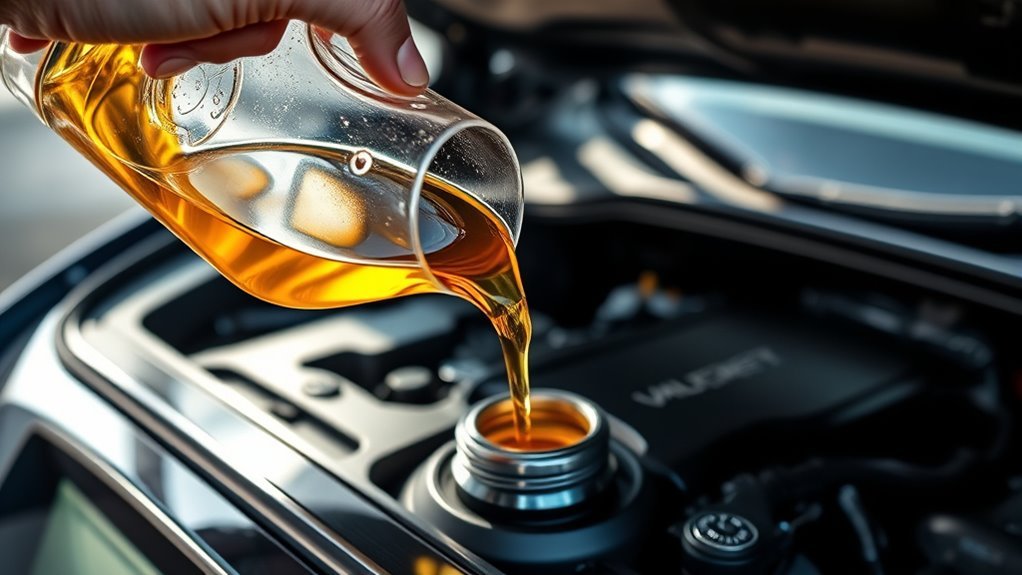
A good rule of thumb is to check your car’s oil every two weeks to keep your engine running smoothly and avoid costly repairs.
Even new cars consume some oil between services, so topping up as needed is crucial.
Before long trips, always check oil levels to avoid breakdowns.
Many drivers overlook this, with only 24% checking weekly and 43% relying solely on annual servicing.
To properly maintain your vehicle:
- Check oil levels biweekly and before long journeys.
- Use the right oil your car needs to guarantee peak performance.
- If you’re unsure or detect issues, visit a mechanic promptly.
Regular checks help detect low oil early, preventing engine damage and saving you money.
Essential Tools for Checking and Adding Engine Oil
Several essential tools make checking and adding engine oil straightforward and mess-free.
First, you’ll need the dipstick to measure your engine oil level accurately. Before taking a reading, wipe the dipstick clean with a rag or tissue to guarantee precision.
Start by wiping the dipstick clean to ensure an accurate engine oil level reading.
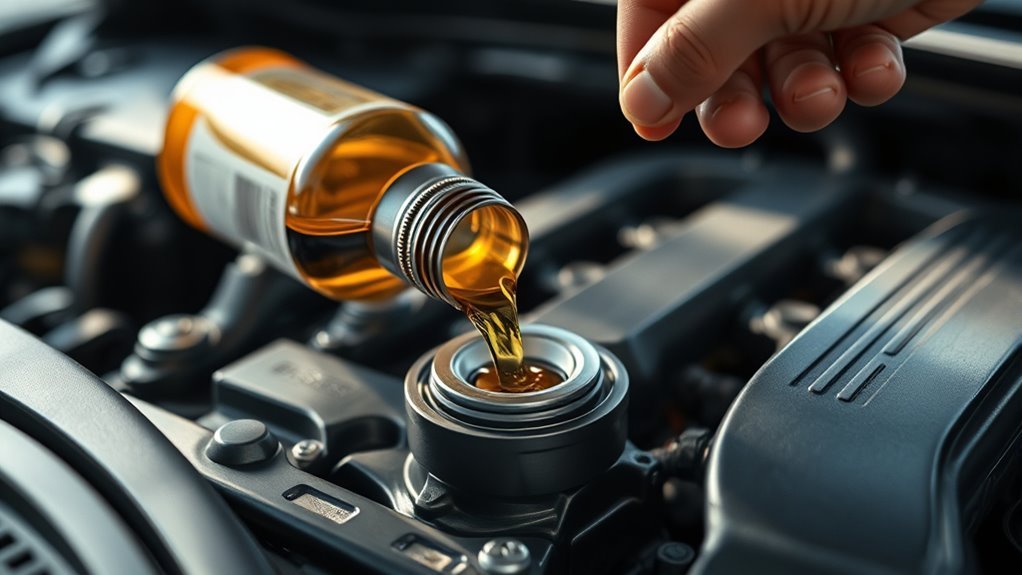
When it’s time to add oil, use a funnel to pour engine oil into the oil filter cap without spills or mess. Be certain you have the correct type of engine oil as specified in your owner’s manual to maintain peak engine performance.
Optional gloves can keep your hands clean during the process, but the dipstick, funnel, and oil are the core tools you’ll rely on for effective oil maintenance.
Step-by-Step Guide to Checking and Topping Up Oil
Before you check your oil, make sure your car is parked on a level surface.
Also, ensure the engine has been off for at least five minutes to let the oil settle.
Then, follow these steps:
- Locate the dipstick, usually marked with a yellow handle. Pull it out and wipe it clean with a rag.
- Reinsert the dipstick fully, then pull it out again. Check the oil level against the markings; it should be near the high mark.
- If the oil is below the lower mark, use a funnel to add the correct oil type gradually. Let it settle between pours.
Regular checks on a level surface help keep your engine running smoothly and prevent damage.
It’s a simple task that goes a long way!
Common Questions About Oil Capacity and Maintenance
You might wonder how much oil your car actually needs and how to keep those levels just right.
Knowing typical oil capacities—from four quarts for small cars to up to 12 for diesel trucks—helps you avoid overfilling or running low.
Let’s answer common questions to keep your engine running smoothly.
Typical Oil Capacities
Most cars need between four and seven quarts of oil, depending on the engine size and type.
If you drive a small car with a four-cylinder engine, expect an oil capacity of about four quarts.
Larger engines or trucks will require more.
To help you understand typical oil capacities:
- Small cars usually take around 4 quarts, covering all essential engine parts.
- Most standard vehicles need roughly 5 quarts.
- Trucks with V-8 engines can require up to 7 quarts, while diesel pickups may need even more.
Always check your owner’s manual for the exact oil capacity your vehicle needs.
This guarantees you fill the right amount to keep your engine parts well lubricated and running smoothly.
Maintaining Correct Levels
Although checking your engine oil might seem straightforward, maintaining the correct level requires regular attention and understanding.
You should always consult your vehicle’s owner’s manual to know the exact oil capacity, as it varies. Most cars need about five quarts, while trucks with V-8 engines may require seven.
Perform oil level checks at least once a month, or more often if you drive frequently, to keep your engine properly lubricated.
Make sure to let the engine sit for 15 minutes after running to get an accurate dipstick reading.
Avoid overfilling oil, as it can cause foaming and reduce lubrication effectiveness.
Staying within the recommended oil capacity prevents premature wear and costly repairs, ensuring your engine runs smoothly.
Frequently Asked Questions
How to Check Oil Level?
You check oil level by pulling the dipstick from your cold, parked car.
Wipe it clean, then reinserting it.
After that, remove it again to read the oil mark.
If it’s low, you’ll need to add some oil soon.
What Engine Does My Car Have?
You don’t need a detective squad—check your owner’s manual or look under the hood for a label.
It usually tells you if you’ve got a four-cylinder, V6, or V8 engine powering your ride.
How Is an Oil Consumption Test Done?
You fill your engine with oil, then drive normally for about 1,000 miles.
Afterward, you check the oil level, note any drop, and inspect oil color and consistency to spot leaks or engine issues.
This process helps determine how much oil your engine is consuming.
It’s a simple yet effective way to keep track of your engine’s health!
How Much Litre of Engine Oil?
You’ll typically need about 4 to 5 liters of engine oil for most cars.
Check your owner’s manual or use the AMSOIL Product Guide to find the exact amount for your vehicle’s engine.
Conclusion
Keeping your car’s engine oil at the right level isn’t just routine—it’s like giving your vehicle a daily dose of energy.
Without the proper oil type and regular checks, your engine could struggle, causing costly damage.
So, grab your dipstick and take a moment; it’s a small act that keeps your car running smoothly, like a heartbeat that never misses a beat.
Don’t let your engine run dry—treat it well, and it’ll thank you on every drive.
In conclusion, maintaining the correct oil level is crucial for your car’s performance and longevity. Regular checks and using the right type of oil can prevent engine struggles and expensive repairs.
Think of it as your vehicle’s lifeline; a little attention goes a long way.
So, make it a habit to check that oil level regularly. Your car will reward you with smoother drives and fewer headaches down the road!