How Do You Rotate Tires on a 4 Wheel Drive
To rotate tires on a 4 wheel drive, you will want to make sure you’re following the right technique to maximize tire longevity and performance.
Begin by moving the rear tires straight to the front.
Then, cross the front tires to the opposite rear positions.
This method helps even out wear since the front tires are primarily responsible for steering and braking.
Make sure all tires are the same size and type for optimal performance.
And if you can, include your full-sized spare in the rotation as well.
Rotating your tires every 6,000 to 8,000 miles will keep them lasting longer and help maintain your vehicle’s safety.
If you want to protect your investment, understanding proper rotation techniques and patterns is essential.
Key Takeaways
- Rotate 4WD tires every 6,000 to 8,000 miles to ensure even tread wear and extend tire life.
- Use the rearward cross pattern: rear tires move straight to the front, while front tires cross to opposite rear positions.
- Include the full-sized spare tire in the rotation to balance wear across all tires.
- Ensure all tires are the same size, type, and load rating before rotating for optimal performance and safety.
- Check tire pressures and inspect wheel alignment and suspension during rotation. This helps prevent uneven wear and any mechanical issues.
Understanding Tire Rotation on 4WD Vehicles
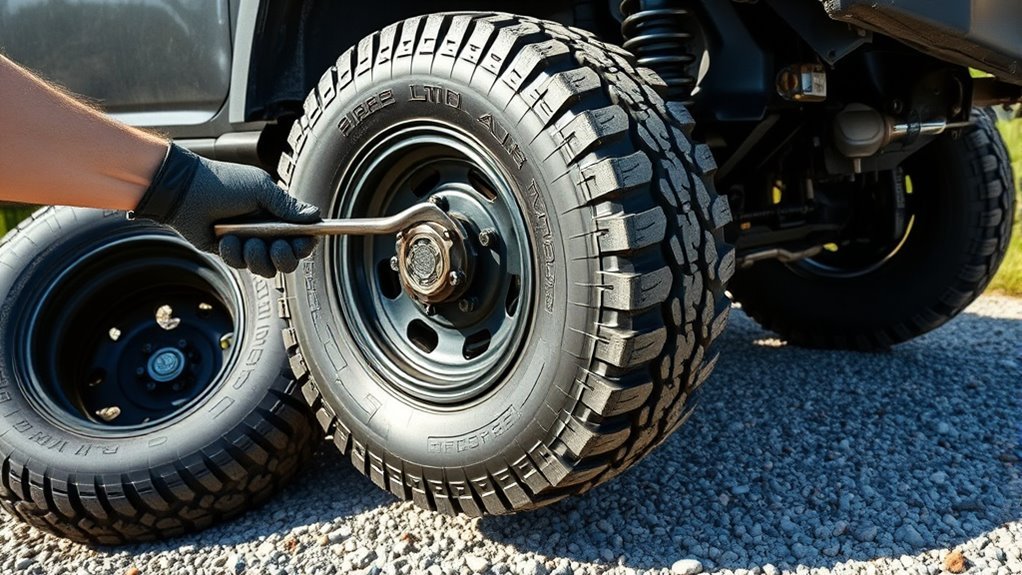
Although you might overlook it, rotating your tires regularly is essential for maintaining even wear on your 4WD vehicle.
You should have your tires rotated every 6,000 to 8,000 miles to keep them wearing evenly.
The typical rotation sequence for 4WD vehicles involves moving the rear tires straight to the front and switching the front tires to the opposite rear positions.
When you perform tire rotations, make sure all tires are the same size, type, and load rating to avoid any performance issues.
Also, including a full-sized spare in the rotation can help extend tire life.
Don’t forget to check tire pressure and alignment, as these directly affect how your tires wear over time in a 4WD setup.
Common Tire Wear Patterns and Causes
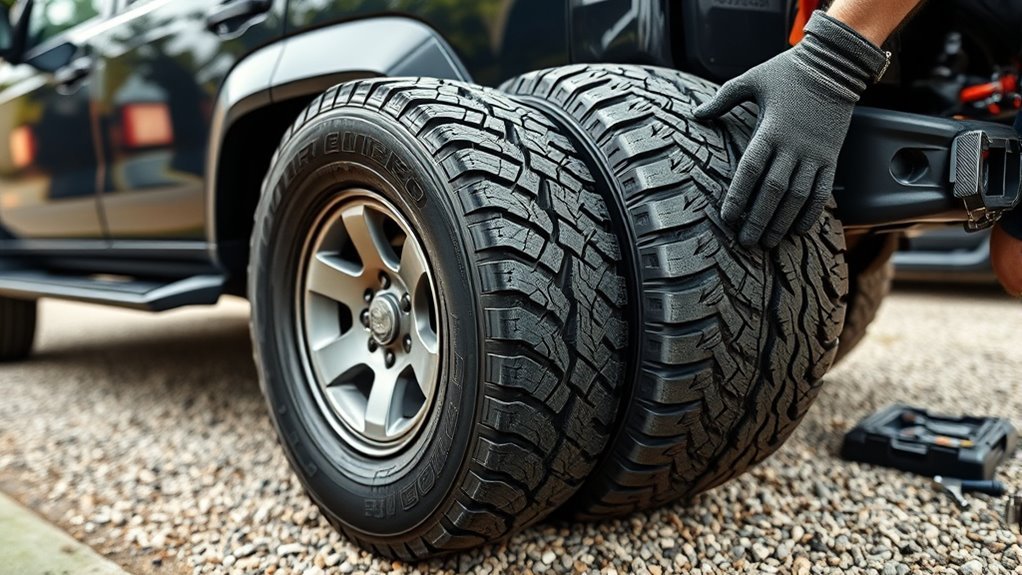
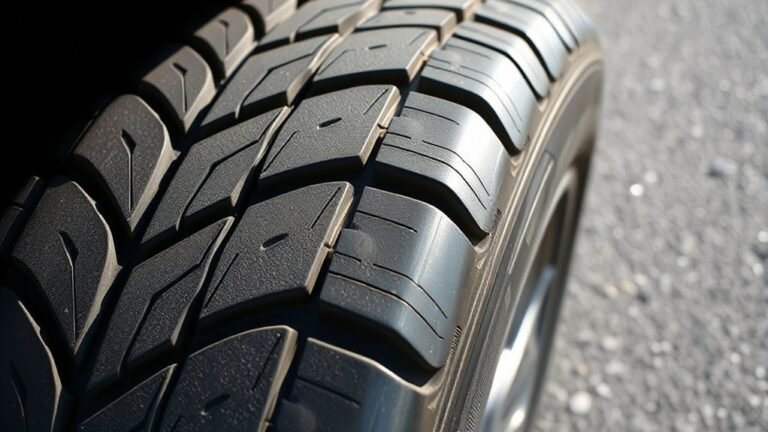
You’ll notice that tires wear differently depending on their position and the driving conditions you face.
Front tires often wear faster due to steering and braking.
On the other hand, rough roads can accelerate wear on the rear tires.
Plus, carrying heavy loads changes how your tires contact the road.
This can affect wear patterns and rotation needs.
Typical Wear Locations
Since driving conditions heavily influence tire wear on a 4-wheel drive, you’ll often notice the rear tires wearing faster when frequently traveling on gravel roads due to debris kicked up by the front tires.
Typical tire wear patterns on 4WDs show the rear tires suffering more from cuts and abrasions.
Meanwhile, the front tires may develop uneven wear, especially if you’ve added heavy accessories like bull bars.
Load variations and suspension types also affect wear locations, with camber changes causing uneven wear across all tires.
To maintain balanced wear and extend tire life, it’s essential to rotate your tires regularly—moving them between front and rear axles.
This helps even out wear and prevents premature tire replacement.
Keep an eye out for uneven wear, as it might signal mechanical issues needing attention.
Impact of Driving Conditions
Understanding where your tires wear is just one part of the picture—how you drive and the conditions you face play a major role in shaping those wear patterns.
Driving conditions like gravel roads cause your rear tires to wear faster, as stones flicked up by the front tires chip and degrade the tread unevenly.
Heavy accessories, such as bull bars and winches, add weight to the front, increasing front tire wear due to altered load distribution.
To keep wear balanced, you need regular inspections of mechanical components like wheel alignment and suspension.
Ignoring these can accelerate uneven wear and reduce tire life.
Effects of Vehicle Load
Although your driving habits influence tire wear, the load your vehicle carries plays an equally essential role.
Vehicle load considerably impacts tire wear rates, especially on the front tires, which often bear more weight due to steering and weight distribution.
Adding accessories like bull bars or winches increases this front-heavy load, causing uneven wear.
You’ll notice that heavier loads can change camber angles, accelerating wear on certain tires.
Additionally, if you drive on gravel roads, rear tires might wear faster because of debris thrown up by the front tires.
To minimize uneven wear caused by varying vehicle load, regularly check and adjust your tire pressures.
Managing these factors helps extend tire life and keeps your 4-wheel drive performing efficiently.
Recommended Tire Rotation Frequency
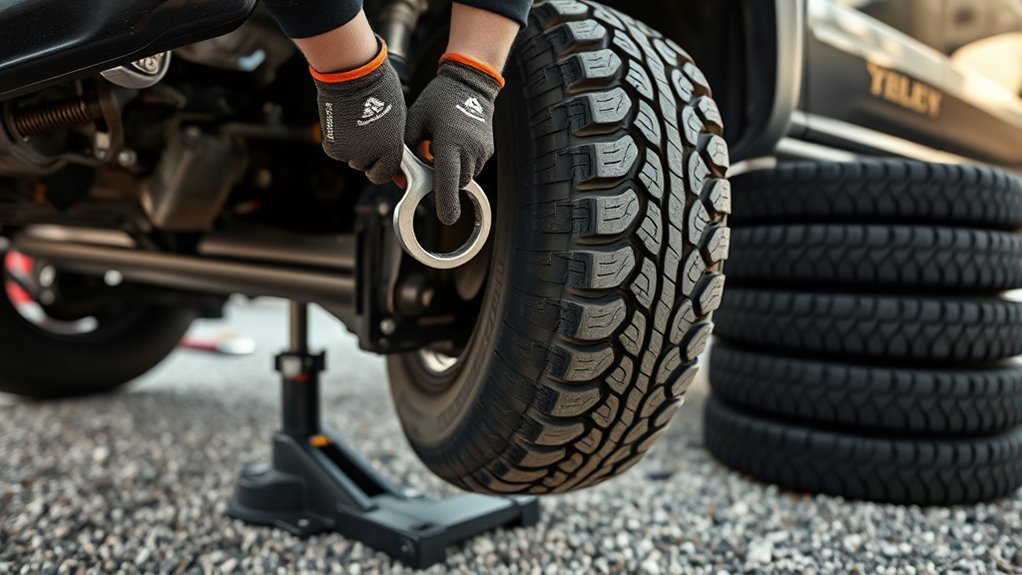
You should rotate the tires on your 4-wheel drive vehicle every 10,000 kilometers (about 6,000-8,000 miles) to promote even wear and extend their lifespan.
This tire rotation frequency helps guarantee your tires typically wear evenly, improving safety and performance.
It’s important to keep an eye on your tires between rotations. Factors like incorrect tire pressure or mechanical issues can cause uneven wear and may require more frequent rotations.
Maintaining proper tire pressures adjusted for load and driving conditions also plays a key role in preventing uneven wear between rotation intervals.
Tire Rotation Patterns for 4 Wheel Drive
Rotating your tires regularly is key to even wear.
But knowing how to do it correctly for a four-wheel drive vehicle makes all the difference.
The most common tire rotation pattern is the rearward cross pattern.
In this pattern, rear tires move straight to the front, while front tires cross to opposite rear positions.
If you have directional tires, you must dismount and remount them correctly, as they can’t rotate side to side.
Always use tires of the same size and type to maintain safety and performance.
Here’s a quick reference:
| Position Before | Rotation Pattern | Notes |
|---|---|---|
| Front Left | Moves to Rear Right | Cross to opposite side |
| Front Right | Moves to Rear Left | Cross to opposite side |
| Rear Left | Moves to Front Left | Moves straight forward |
| Rear Right | Moves to Front Right | Moves straight forward |
And don’t forget to keep a full-sized spare in mind for consistent wear.
Including the Spare Tire in Rotation
When you include a full-sized spare tire in your rotation, you help balance wear across all five tires. This extends their overall lifespan and improves safety.
To do this effectively, the spare tire should be rotated in a specific pattern—typically placed on the right rear position during the cycle.
Make certain your spare tire matches the size and type of your other tires to maintain balanced performance.
Avoid rotating temporary spares since they’re meant only for emergencies.
Also, regularly check the spare tire’s air pressure and age during each rotation.
If it’s too old or underinflated, replace it to guarantee safety.
Tips and Tools for Safe Tire Rotation
Including your spare tire in the rotation means you’ll need the right tools and safety measures to handle all five tires properly.
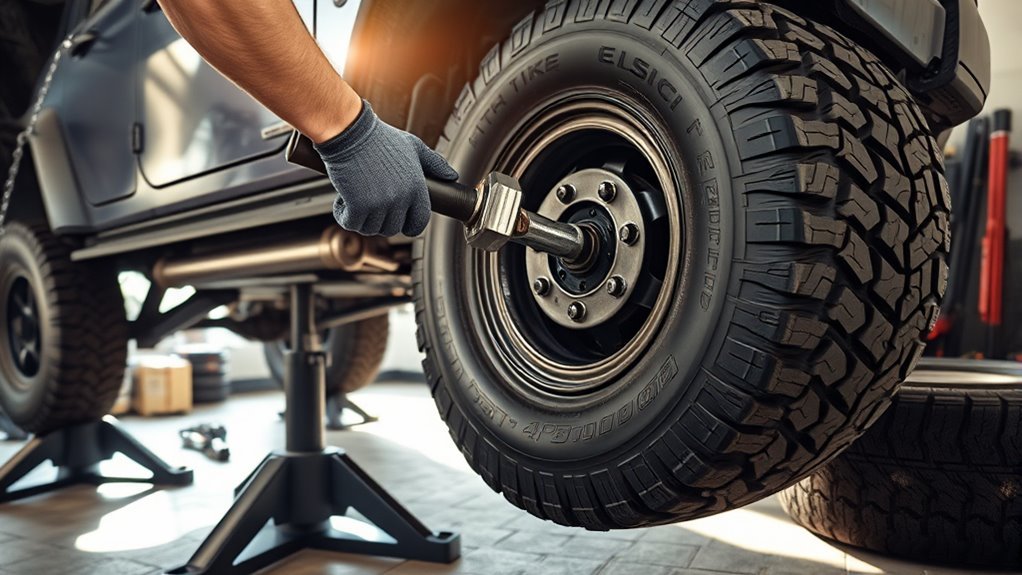
Use a floor jack and jack stands to safely elevate your vehicle, ensuring it’s stable before you start rotating your tires.
Elevate your vehicle safely with a floor jack and jack stands before starting tire rotation.
A lug wrench or air impact wrench helps remove lug nuts quickly, but always use a torque wrench to tighten them to the manufacturer’s recommended 75 to 100 pound-feet.
Don’t forget to check tire pressures on all tires, including the spare, adjusting them as needed for peak performance.
Inspect tire date codes to avoid using tires older than six years.
And remember to reset your Tire Pressure Monitoring System sensors after you finish rotating your tires to keep accurate monitoring.
Frequently Asked Questions
How to Rotate Radial Tires on a Car?
You rotate radial tires by identifying if they’re directional or not.
For non-directional tires, use the rearward cross pattern.
For directional tires, rotate front to rear only.
Always check pressures and tighten lug nuts properly.
What Is the Correct Tire Rotation Pattern for a Chevy Silverado 1500 With 4×4 Transmission?
Picture your Chevy Silverado’s rear tires moving straight up front, while the front tires crisscross to opposite rear spots—
that’s the rearward cross pattern you should use for your 4×4 to keep traction balanced and tires lasting.
How to Rotate 5 Tyres?
You place the full-size spare on the right rear,
then rotate the other four tires in a rearward cross pattern.
Always check tire pressure and tighten lug nuts to the manufacturer’s specs after rotating.
What Does It Mean to Rotate Tires on a Car?
Think of rotating tires as giving your car’s shoes a fresh dance order.
You’re simply switching their positions to guarantee even wear, helping your tires last longer and your ride stay smoother and safer on the road.
Conclusion
Rotating your tires on a 4WD vehicle is like giving your car a balanced diet—it keeps everything running smoothly and extends tire life.
By following the right rotation pattern and including your spare, you’ll avoid uneven wear and improve performance.
Remember, regular rotations are key to safe driving and getting the most out of your tires.
Keep your tools handy, stay consistent, and your 4WD will thank you with every mile.
In conclusion, rotating your tires is essential for maintaining balance and performance in your 4WD.
By sticking to a routine and using the correct patterns, you can significantly extend the life of your tires while ensuring safer driving.
So, make it a habit to include tire rotation in your maintenance schedule for optimal results!