7 Key Symptoms of Low Engine Oil in a Car
If your oil pressure warning light turns on, it means your engine oil pressure is too low, signaling a lubrication problem.
You might hear knocking or tapping noises as metal parts rub without enough oil.
Your engine could overheat more often, and the low oil level indicator might light up.
You may notice excessive exhaust smoke, a drop in engine performance, and oil that darkens quickly.
Spotting these signs early helps protect your engine—keep exploring to understand how to prevent damage.
Key Takeaways
- Oil pressure warning light illuminates, often turning from yellow to red, indicating dangerously low oil pressure.
- Engine produces knocking or tapping noises due to insufficient lubrication and increased metal friction.
- Frequent engine overheating occurs as low oil levels fail to properly lubricate and cool engine parts.
- Low oil level indicator light activates when oil quantity drops below the minimum required level.
- Decreased engine performance, including sluggish acceleration and power loss, results from inadequate lubrication.
Oil Pressure Warning Light Illuminates

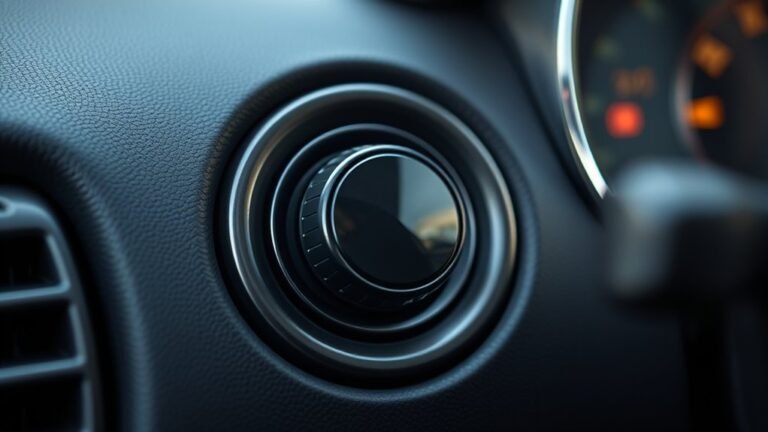
One of the first signs you’ll notice when your engine oil is low is the oil pressure warning light illuminating on your dashboard.
This light usually turns on when the oil pressure falls below safe levels, signaling a potential problem with your engine’s lubrication.
The warning can shift from yellow to red, indicating how urgent the issue is.
The light’s color changes from yellow to red, showing the increasing urgency of the oil pressure issue.
It’s important not to confuse this with the low oil level indicator, which measures oil quantity, not pressure.
If you ignore the oil pressure warning light and keep driving, you risk severe engine damage due to poor lubrication.
To avoid this, regularly check the oil pressure sensor and maintain your oil system.
Staying on top of this helps prevent the warning light from coming on unexpectedly.
Engine Produces Knocking or Tapping Noises

When your engine oil is low, you might hear knocking or tapping noises coming from the engine.
These sounds usually mean your engine components aren’t getting enough lubrication, causing increased friction.
When oil pressure drops, bearings and other moving parts lose their protective cushioning, leading to metal-on-metal contact.
If your oil’s degraded or has the wrong viscosity, it won’t shield the engine components properly, making those abnormal noises worse.
Ignoring persistent knocking can cause serious damage, especially to pistons and the crankshaft, as wear accelerates without sufficient oil.
To avoid costly repairs, check your oil levels and viscosity regularly.
Acting quickly can prevent further harm and keep your engine running smoothly.
Engine Overheats Frequently
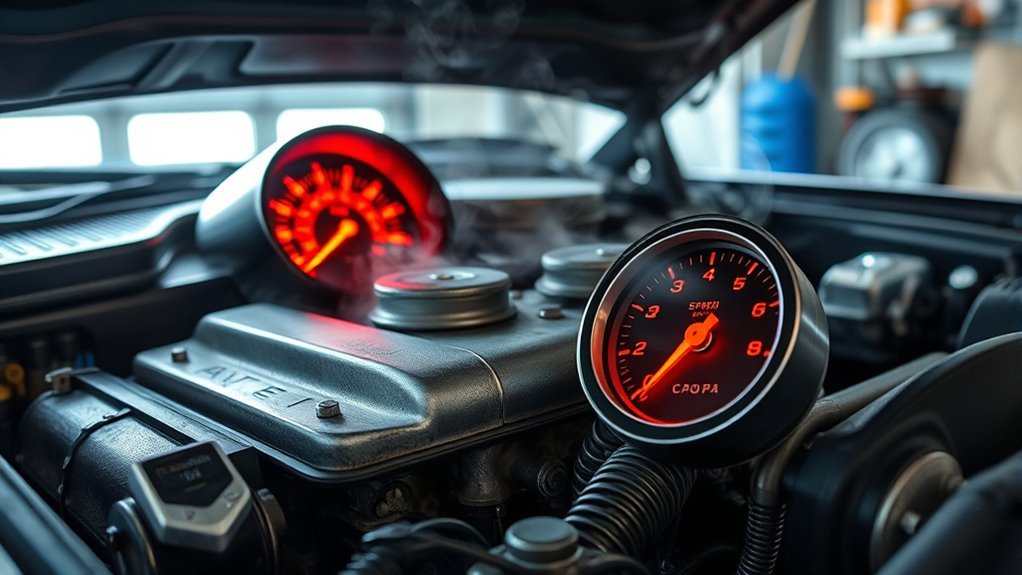
Engine overheating often signals that your engine oil is running low. This causes insufficient lubrication and excessive heat buildup in critical components.
When engine oil levels drop, the oil pump struggles to circulate oil properly. This leads to hot spots and increased friction.
This friction not only generates more heat but also accelerates oil degradation, worsening the problem.
To prevent frequent overheating, keep an eye on your engine oil by following these steps:
- Check engine oil levels regularly.
- Replace engine oil according to your vehicle’s schedule.
- Use the correct oil viscosity recommended by the manufacturer.
- Address any leaks or oil consumption issues promptly.
Oil Level Indicator Shows Low Oil
When your oil level indicator shows low oil, it means your engine isn’t getting the lubrication it needs.
This can happen due to leaks, burning oil, or lack of maintenance.
You should check the oil level immediately and add the correct oil to avoid serious engine damage.
Understanding Oil Level Alerts
How do you know if your car’s engine oil is running low?
Your dashboard’s low oil level indicator lights up when oil drops below the minimum needed for proper lubrication.
This alert differs from the oil pressure light, which signals flow issues.
Ignoring this warning risks severe engine damage due to increased friction.
To stay on top of it, follow these steps:
- Regularly check your oil level using the dipstick, especially after oil filter changes.
- Top up oil as needed to keep levels within the recommended range.
- Consult your owner’s manual for specific oil types and check intervals.
- Never ignore the low oil alert—it protects your engine’s health and longevity.
Causes of Low Oil
Although you might regularly check your oil, low levels can still occur due to several common causes.
Oil leaks from worn gaskets, seals, or damaged oil pans can quickly reduce your engine’s oil.
Excessive wear inside the engine increases oil consumption, gradually lowering the oil level.
If you often take short trips, your engine might not reach ideal temperature, causing condensation that dilutes and consumes oil faster.
Using the wrong oil viscosity or degraded oil compromises lubrication, leading to increased consumption.
Neglecting regular oil changes allows sludge to build up, hampering oil flow and contributing to low levels.
Understanding these causes helps you stay vigilant and maintain proper oil levels for your engine’s health.
Immediate Actions Required
If your oil level indicator lights up, you should immediately check the oil using the dipstick to see if it needs topping up.
Ignoring this can cause severe engine damage due to poor lubrication.
Here’s what you need to do:
- Park your car on level ground and turn off the engine.
- Pull out the dipstick, wipe it clean, then reinsert and remove it to check the oil level.
- If low, add the recommended type and viscosity of oil as per your manual.
- After topping up, monitor the indicator; if it stays on, inspect for leaks or excessive oil consumption.
Taking these steps promptly protects your engine and guarantees your car runs smoothly.
Exhaust Smoke Becomes Excessive
When your car’s exhaust starts producing excessive smoke, it often means the engine oil is running low.
Insufficient engine oil causes parts to overheat and wear faster, leading to oil burning off in the combustion chamber.
Low engine oil leads to overheating and wear, causing oil to burn inside the combustion chamber.
This results in blue or gray smoke coming from the exhaust.
You might also notice a distinct burning smell, signaling that oil is being consumed during combustion.
Excessive smoke can indicate oil leaks from worn gaskets or seals, which further lowers engine oil levels.
To avoid this issue, check your oil regularly and top it up as needed.
Keeping the engine oil at the proper level guarantees your engine remains well-lubricated.
This helps prevent the excessive exhaust smoke that signals trouble.
Decrease in Engine Performance
Since engine oil lubricates essential components, low levels can cause your car to lose power and respond sluggishly when you press the throttle.
When oil is insufficient, the bearing clearances narrow due to increased friction, which impacts engine efficiency.
Here’s what you might notice:
- Reduced acceleration and slow throttle response.
- Engine knocking or unusual noises from poor lubrication.
- Higher operating temperatures due to increased friction.
- Oil pressure warning light signaling inefficient engine operation.
Low oil pressure means your engine isn’t working at its best, causing decreased performance.
Ignoring this can cause serious damage and costly repairs.
Keep an eye on oil levels to maintain proper bearing clearances and promote smooth engine function.
Oil Becomes Dark and Dirty Quickly
Low engine oil levels don’t just affect performance; they can also accelerate the oil’s degradation.
When your engine oil becomes dark and dirty quickly, it often signals contamination from combustion byproducts or that you’re not changing the oil frequently enough.
This buildup of soot and sludge decreases the oil’s viscosity, making it less effective at lubricating critical engine parts.
If you notice your engine oil darkening excessively within a short time, it could point to engine wear or faulty components needing inspection.
Regularly checking your oil condition helps catch these issues early.
Sticking to the recommended oil change schedule is essential because dirty engine oil can lead to increased engine wear and potential long-term damage, compromising your car’s reliability.
Frequently Asked Questions
How Do You Know Your Engine Oil Is Low?
You know your engine oil is low when the dashboard warning light turns on.
You might also hear knocking noises or notice that your car feels sluggish.
Additionally, if the dipstick shows oil below the minimum mark, it’s time to check and top off promptly.
What Does It Mean When the Engine Oil Pressure Warning Light Is On?
When the oil pressure warning light comes on, it means your engine’s lifeblood is running thin, risking serious damage.
Don’t ignore it—check your oil pressure immediately before your engine screams for help.
How Serious Is Low Oil Pressure?
Low oil pressure is very serious because it means your engine isn’t getting enough lubrication.
If you don’t act fast, it can cause severe engine damage or failure, leading to expensive repairs or even engine replacement.
Can You Drive if Your Engine Oil Is Low?
Sure, you can drive with low engine oil—if you enjoy expensive engine repairs and unexpected breakdowns.
But seriously, don’t risk it.
Pull over, check oil, and top it off before causing serious damage.
Conclusion
So, you probably won’t notice low engine oil until your car starts yelling at you—literally—with warning lights, strange noises, or even smoke.
It’s ironic how something as simple as checking your oil can save you from costly repairs and headaches.
But hey, if you enjoy surprises like overheating engines or sudden performance drops, ignoring those signs works just fine.
Otherwise, keep an eye on your oil—you’ll thank yourself later.
In conclusion, staying vigilant about your engine oil levels is crucial.
Regular checks can help you avoid the key symptoms of low engine oil, such as warning lights, unusual sounds, or even smoke.
By prioritizing oil maintenance, you can ensure your engine runs smoothly and avoid costly repairs down the road.
So, make it a habit to check your oil—you’ll appreciate the peace of mind it brings!