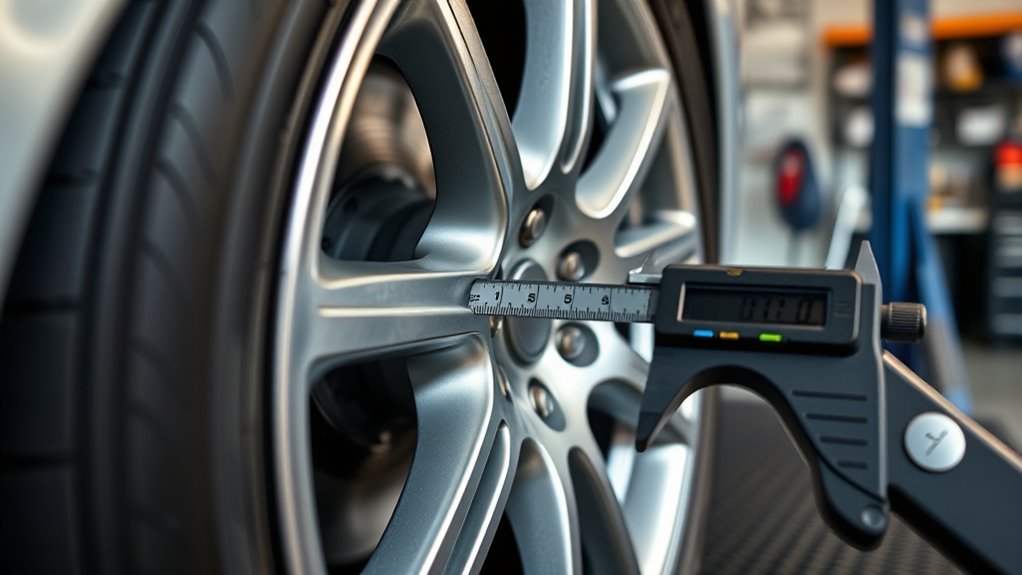
How to Find Wheel Offset
To find your wheel offset, start by placing the wheel face down on a soft surface.
Using a ruler or caliper, measure from the mounting surface to the wheel’s back edge.
Next, divide this measurement by two to find the centerline distance.
Then, subtract that centerline distance from the mounting surface distance to determine the offset in millimeters.
A positive offset means the mounting surface is closer to the front of the wheel, while a negative offset indicates it’s farther back.
Understanding wheel offset is essential to avoid fitment issues when selecting wheels for your vehicle.
With this knowledge, you can make informed choices that enhance your vehicle’s performance and aesthetics.
There’s more useful information ahead to guide you in making the right decision!
Key Takeaways
- Place the wheel face down on a soft surface to avoid damage before measuring offset.
- Use a straight edge across the wheel’s width and measure from the mounting surface to the edge.
- Divide the measured distance by two to locate the wheel’s centerline.
- Calculate offset as the distance (in millimeters) from the mounting surface to the wheel centerline.
- Verify offset specifications via the vehicle manual or manufacturer resources to ensure proper fitment.
Understanding Wheel Offset
When you look at a wheel, its offset determines how its mounting surface aligns with the centerline, measured in millimeters.
Wheel offset affects how your wheels fit on your vehicle, impacting both performance and appearance.
A positive offset means the mounting surface is closer to the wheel’s front, which is common in modern cars to improve aerodynamics.
Negative offset shifts the mounting surface behind the centerline, giving your vehicle a wider stance, often preferred for off-road use.
Zero offset aligns the mounting surface exactly with the wheel’s centerline, maintaining the original wheel position.
Using the correct wheel offset is essential to avoid clearance issues with suspension parts and fenders.
This helps prevent rubbing and ensures safe, smooth driving.
Understanding these differences helps you choose the best wheels for your ride.
Tools Needed to Measure Wheel Offset
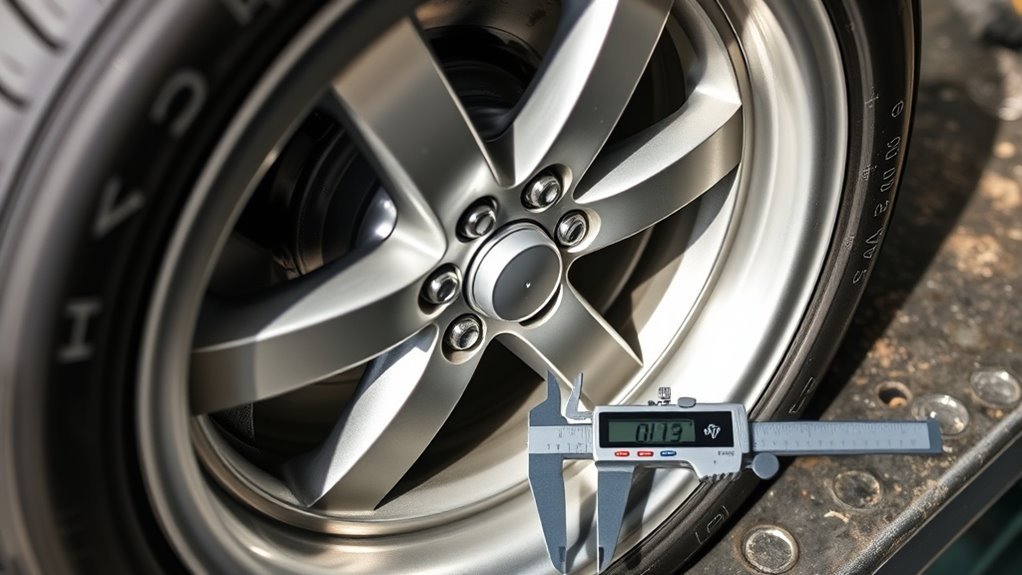
Measuring wheel offset requires a few essential tools to guarantee accuracy and ease.
First, you’ll need a caliper or a ruler to measure the distance from where the mounting surface is located to the wheel’s centerline.
A flat surface is vital, so place the wheel face down on a soft area to protect its finish.
To get a reference point, use a straight edge across the wheel for backspacing measurement.
Record this in inches, then convert it to millimeters, since offset is measured in millimeters.
Having a calculator or an online wheel offset calculator helps you compare wheel width and offset values quickly.
This ensures you find the right fit without guesswork.
These tools simplify and improve your measurement process.
Step-by-Step Guide to Measuring Wheel Offset
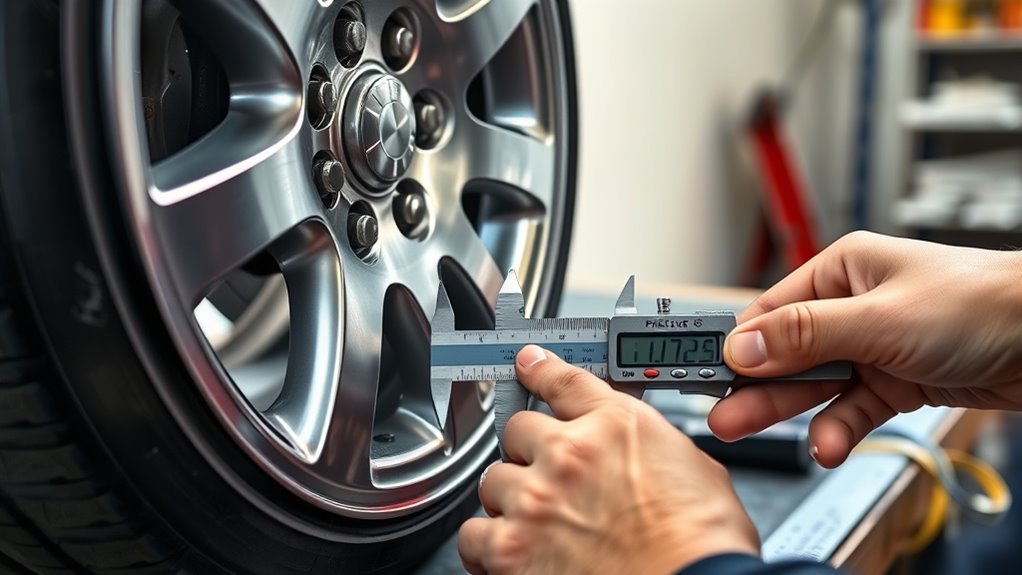
Although it might seem tricky at first, you can accurately determine your wheel offset by following a few straightforward steps.
First, place your wheel face down on a soft surface to avoid damage.
Use a straight edge across the wheel’s width, then measure from the mounting surface to this straight edge with a caliper or ruler.
This distance shows how the offset is measured.
Divide this number by two to find the centerline, then compare it to the mounting surface’s position.
Knowing your wheel size helps guarantee accuracy.
Accurate wheel size knowledge is essential for precise offset measurements and proper fitment.
The right offset guarantees proper clearance with suspension components, preventing rubbing or handling issues.
Always double-check measurements and consult specs to confirm compatibility with your vehicle.
Interpreting Positive, Negative, and Zero Offsets
You’ll find that positive, negative, and zero offsets each change where the wheel sits relative to your vehicle’s body.
Positive offset pushes the wheel inward, while negative offset pushes it outward.
Zero offset keeps it centered.
Knowing these differences helps you choose wheels that fit properly and handle well.
Meaning of Offset Types
When choosing wheels, understanding the offset type is essential because it directly affects how your wheels fit and perform.
Here’s what you need to know about the meaning of offset types:
- Positive offset means the wheel’s mounting surface is toward the front, positioning the wheel closer to your vehicle’s body—common in modern setups.
- Negative offset places the mounting surface behind the centerline, pushing the wheel outward for a wider stance.
- Zero offset aligns the mounting surface with the wheel’s centerline, keeping the wheel directly in line with the vehicle.
- Proper offset is measured in millimeters and guarantees your wheels won’t rub or stress suspension parts.
Knowing if your wheel has a positive offset, negative offset, or zero offset helps you avoid fitment problems and maintain ideal handling.
It’s really important to get this right for both performance and safety!
Effects on Wheel Position
Since wheel offset directly influences how your wheels sit relative to your vehicle, understanding its effects on wheel position is key to choosing the right fit.
A positive offset pushes the wheel closer to your vehicle’s body, improving aerodynamics but potentially reducing track width stability.
On the other hand, a negative offset moves the wheel outward, widening your stance and enhancing stability.
However, this may cause clearance issues with suspension parts and increase component wear.
Zero offset aligns the wheel’s mounting surface with its centerline, offering a balanced wheel position and preserving original handling.
Selecting the proper offset is essential for fitment.
It ensures sufficient clearance between wheels, fenders, brakes, and suspension.
By knowing how offset affects wheel position, you can avoid tire rubbing, improper handling, and premature wear.
This knowledge helps you achieve a safer, more reliable setup.
Checking Manufacturer Specifications for Offset
One of the easiest ways to find the correct wheel offset for your vehicle is to check the manufacturer’s specifications.
These details are usually in the owner’s manual or on the manufacturer’s website.
Here’s how you can proceed:
- Locate the wheel specifications section to find the original wheel offset and width, typically in millimeters.
- Use the Vehicle Identification Number (VIN) to verify your vehicle configuration and guarantee accuracy.
- Refer to the standardized offset range provided by the manufacturer, which helps maintain proper fitment with aftermarket wheels.
- Consult online databases or forums for additional insights from other owners who have replaced wheels on the same vehicle model.
This way, you can ensure that you’re making informed decisions when it comes to your wheels!
Consulting Experts for Accurate Offset Information
Although you can find general offset guidelines online, consulting fitment experts at wheel and tire retailers guarantees you get precise recommendations tailored to your vehicle’s make and model.
These experts use specialized tools and software to determine the ideal wheel offset based on your vehicle specifications and how you plan to use your car.
Consulting fitment experts also helps you understand how different offsets affect handling, clearance, and appearance.
Expert advice clarifies how wheel offsets impact your vehicle’s handling, clearance, and overall appearance.
Professional technicians often access manufacturer databases to verify offsets, guaranteeing accuracy and safety.
Additionally, experts can warn you about potential issues with suspension components or tire fitment.
By relying on their knowledge, you avoid costly mistakes and guarantee your wheels perform well and look great.
Don’t hesitate to ask questions and get advice from those who know your vehicle best.
Frequently Asked Questions
Where Can I See My Wheel Offset?
You can see your wheel offset stamped on the back of your wheels.
Check your vehicle’s owner manual, or look it up in online fitment guides.
Tire shops and forums can also help you find accurate info quickly.
What Does 20 Offset Mean on Rims?
Imagine parking your car close to a curb—20 offset means your wheel’s mounting surface sits 20mm toward the car’s centerline.
This pushes the wheels inward, like hugging the curb tightly.
It can improve aerodynamics but also limits your outward stance.
How Do I Know What My Offset Is?
You can find your offset by checking the wheel’s markings or measuring backspacing and wheel width.
Use online calculators to help. If you have specs, they’ll often show positive or negative offset directly.
What Is +15 Offset on Wheels?
Think of +15 offset as your wheel stepping 15 millimeters outward from the centerline.
You’ll get a wider stance, better cornering grip, and a sportier look.
But watch for potential rubbing with tires or suspension parts.
Conclusion
Now that you know how to measure wheel offset, why settle for guesswork when you can get it right every time?
With the right tools and steps, you’ll easily understand whether your wheels have positive, negative, or zero offset.
Always double-check manufacturer specs and don’t hesitate to consult experts if you’re unsure.
Getting your wheel offset right not only improves performance but also keeps your ride safe and smooth.
So, are you ready to roll with confidence?
Understanding wheel offset is essential for optimal vehicle performance.
Proper offset ensures better handling, alignment, and tire wear.
Don’t take chances; measure accurately and refer to your vehicle’s specifications.
With a little effort, you can ensure your wheels are perfectly tailored to your ride.
So, go ahead and enjoy a safer, smoother driving experience!