How to Know if You Need a Wheel Alignment
You’ll know you need a wheel alignment if your car pulls to one side or your steering wheel isn’t centered when driving straight.
Uneven tire wear, like bald spots or worn edges, is another clear sign.
You might also feel vibrations through the steering wheel.
Ignoring these problems can reduce tire life, hurt fuel efficiency, and compromise safety.
Keep an eye on these signs, and you’ll find out how proper alignment keeps your ride smooth and secure.
Key Takeaways
– Your vehicle pulls to one side when driving straight, indicating possible misalignment.
If you notice this, it’s a good idea to get it checked out.
– Uneven tire wear, such as bald spots or excessive edge wear, signals alignment issues.
Keep an eye on your tires; they can tell you a lot about your alignment.
– A crooked or off-center steering wheel suggests the need for wheel alignment.
This is definitely a sign that something isn’t quite right.
– Vibrations in the steering wheel or seat at higher speeds often point to alignment problems.
If you’re feeling those shakes, it’s time to investigate further.
– Schedule alignment if you notice impacts like hitting curbs or after installing new tires.
These events can easily throw off your alignment, so it’s best to be proactive.
Common Signs of Wheel Misalignment
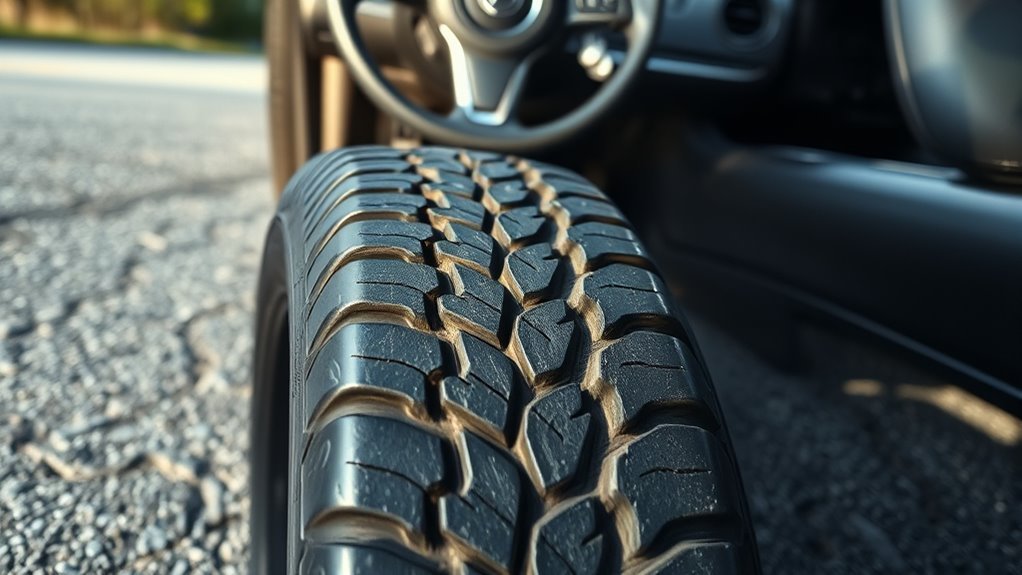
One of the easiest ways to tell if your wheels are misaligned is when your vehicle pulls to one side while driving straight.
This pull to one side often signals misaligned wheels, which can affect your driving experience and tire longevity.
You might also notice uneven tire wear, like bald spots or excessive wear on one edge, indicating alignment issues.
Pay attention to your steering wheel—if it’s crooked or doesn’t return smoothly to center after a turn, suspension components or alignment could be the problem.
Vibration in the steering wheel or seat, especially at higher speeds, also suggests a misalignment or unbalanced tires.
Addressing these signs through routine maintenance helps guarantee better control and extends tire life.
Effects of Misalignment on Vehicle Performance

Misaligned wheels can cause several serious problems that directly impact your vehicle’s performance and safety.
Ignoring an alignment check when you notice signs of misalignment can lead to costly consequences.
Here’s what misalignment affects:
- Uneven Wear: Misalignment causes uneven tire wear, forcing premature replacements that drain your wallet.
- Vehicle Handling: Steering and suspension suffer, reducing your control during turns or high speeds, which jeopardizes safety.
- Fuel Efficiency: Increased rolling resistance from poor alignment lowers fuel efficiency, costing you up to 10% more at the pump.
Addressing misalignment promptly guarantees better performance and safety.
How Tire Wear Indicates Alignment Issues
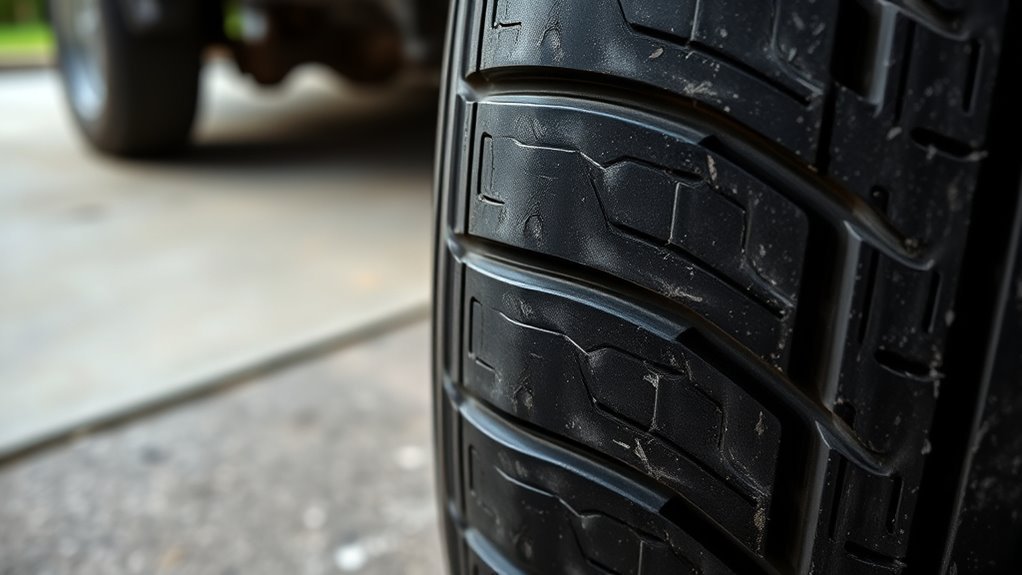
If you notice uneven tire wear or damage along the edges of your tires, it’s a strong sign your wheels might be misaligned.
These patterns mean your tires aren’t gripping the road evenly, which can affect handling and safety.
Paying attention to these wear signs helps you catch alignment issues before they cause bigger problems.
Uneven Tire Wear
Uneven tire wear serves as a clear warning sign that your vehicle’s alignment might be off.
When your wheels are misaligned, weight distribution across your tires becomes uneven. This can lead to rapid tread wear and reduce the lifespan of your tires.
Regular tire inspections help you spot these issues early. This can prevent costly damage and maintain vehicle safety.
Watch for these common signs:
- Bald spots or excessive wear on tire edges, signaling misalignment.
- Uneven tread wear patterns that indicate alignment problems.
- Reduced handling and stability due to compromised tire grip.
Addressing alignment problems promptly guarantees proper alignment.
This ensures even weight distribution and better handling and stability.
Keeping an eye on uneven tire wear protects your tires and keeps your ride safe.
Edge Tread Damage
Edge tread damage often reveals alignment problems you might overlook during a quick tire check.
When you spot significant wear on the inner or outer edges of your tires, it’s a clear sign of misalignment, usually from improper toe settings.
This uneven wear means your tires aren’t making proper contact with the road, which can compromise your vehicle’s handling and safety.
Regular tire inspections should include checking for this kind of damage to catch alignment issues early.
Ignoring edge tread damage can lead to premature tire replacement and reduced fuel efficiency due to increased rolling resistance.
Getting a timely wheel alignment not only extends your tires’ lifespan but also improves your vehicle’s performance.
When to Schedule a Wheel Alignment Service
Although many drivers overlook regular maintenance, scheduling a wheel alignment service every 12,000 to 15,000 miles—or at least once a year—keeps your vehicle performing smoothly and extends the life of your tires.
To know when to schedule your next alignment check, watch for these signs:
Watch for signs like pulling or uneven tire wear to know when to schedule your next alignment check
- Your vehicle pulls to one side while driving straight, signaling misalignment.
- You notice uneven tire wear, like bald spots or edge wear, indicating alignment adjustments are needed.
- After new tire installations or impacts, like hitting a curb, it’s wise to service the suspension systems with an alignment.
Following these tips guarantees peak performance and prevents premature tire wear.
Don’t wait until problems escalate—stay proactive with your wheel alignment.
The Role of Suspension in Wheel Alignment
The suspension system acts as the essential link between your vehicle’s body and its wheels, playing a key role in keeping your wheel alignment on point.
It guarantees your tires maintain ideal contact with the road, which is critical for proper steering and vehicle performance.
When suspension parts wear out, like bushings or struts, misalignment can happen, causing uneven tire wear and inconsistent handling.
Worn suspension parts prevent accurate adjustments of wheel angles, directly impacting alignment.
By keeping your suspension in good shape, you allow the wheels to stay perpendicular and parallel, improving safety and ride quality.
Regularly checking your suspension helps catch issues early, so your alignment services can be more effective and your tires last longer.
Choosing a Professional for Wheel Alignment Service
How do you find the right professional to handle your wheel alignment?
Start by choosing a service center with certified technicians who use specialized tools for precise adjustments.
This guarantees your vehicle performance stays ideal.
Next, consider these tips:
- Pick reputable auto repair shops or dealerships known for quality service and customer satisfaction.
- Check online reviews to gauge the reliability of alignment specialists in your area.
- Confirm the service center offers a warranty on wheel alignment work to safeguard your investment.
Frequently Asked Questions
How Much Does an Alignment Usually Cost?
You can expect a wheel alignment to usually cost between $50 and $150, depending on whether it’s front-end or four-wheel.
Luxury vehicles or extra adjustments might push the price above $150.
How Do I Check My Wheel Alignment Myself?
Drive straight on a flat road, then release the steering wheel.
If your car drifts or your wheel emblem tilts, check for uneven tire wear and vibrations.
These signs mean you should get your alignment checked.
What Are the Symptoms of a Bad Wheel Alignment?
If your steering wheel’s crooked while driving straight, your car drifts to one side, or tires wear unevenly, you’ve got bad alignment.
You’ll also feel vibrations or delayed steering.
Don’t ignore these signs; get it checked promptly.
How Much Does Alignment Cost?
You’ll typically pay $50 to $150 for a standard wheel alignment.
But for luxury or high-performance cars, the cost can range from $150 to $250.
Prices vary by location and services, so it’s a good idea to shop around.
Also, consider lifetime packages for potential savings!
Conclusion
If you’re wondering whether you need a wheel alignment, trust your instincts and those telltale signs like uneven tire wear or your car pulling to one side.
Some say you can “feel” misalignment before seeing it—turns out, that’s true!
Your suspension plays a big role, too, so don’t ignore strange handling. When in doubt, schedule a professional check.
Staying proactive keeps your ride smooth and your tires lasting longer.
In conclusion, if you notice any signs of misalignment, such as pulling to one side or uneven tire wear, it’s crucial to address these issues promptly.
Your vehicle’s suspension system is vital for safe handling, so don’t hesitate to seek a professional evaluation.
By being proactive about wheel alignments, you not only ensure a smoother ride but also extend the lifespan of your tires.
Remember, a little attention now can save you from costly repairs later!