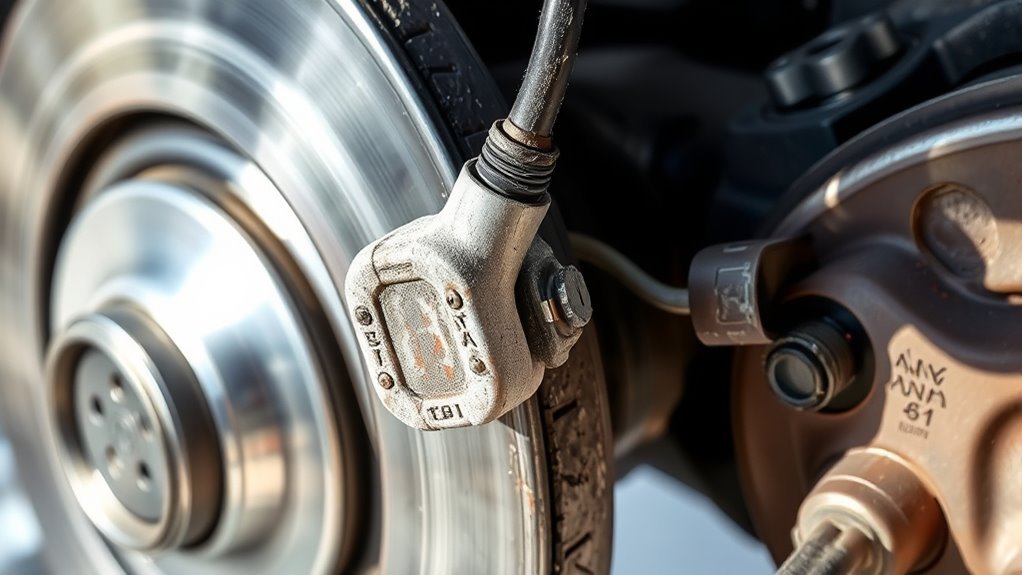
How to Tell Which Wheel Speed Sensor Is Bad
You can tell which wheel speed sensor is bad by connecting a diagnostic scanner to your car’s OBD-II port.
This will help you check for ABS error codes that pinpoint the faulty sensor.
Once you have the codes, it’s a good idea to visually inspect each sensor and wiring for any damage, corrosion, or loose connections.
Comparing live sensor data for inconsistencies is another effective method.
You can also test the sensors with a magnet to check their response.
Don’t forget to keep an eye on warning lights and erratic speed readings, as they can provide valuable clues.
Explore further to understand each step in detail.
Key Takeaways
- Use an OBD-II scanner to read ABS fault codes indicating the specific faulty wheel speed sensor.
- Compare live sensor data from each wheel to identify inconsistent or erratic speed readings.
- Visually inspect sensors for physical damage, corrosion, or loose connectors at each wheel hub.
- Check voltage and signal output of each sensor to detect electrical issues causing sensor failure.
- Look for damaged or dirty reflector rings that may trigger ABS warning lights and sensor errors.
Identifying Symptoms of a Faulty Wheel Speed Sensor
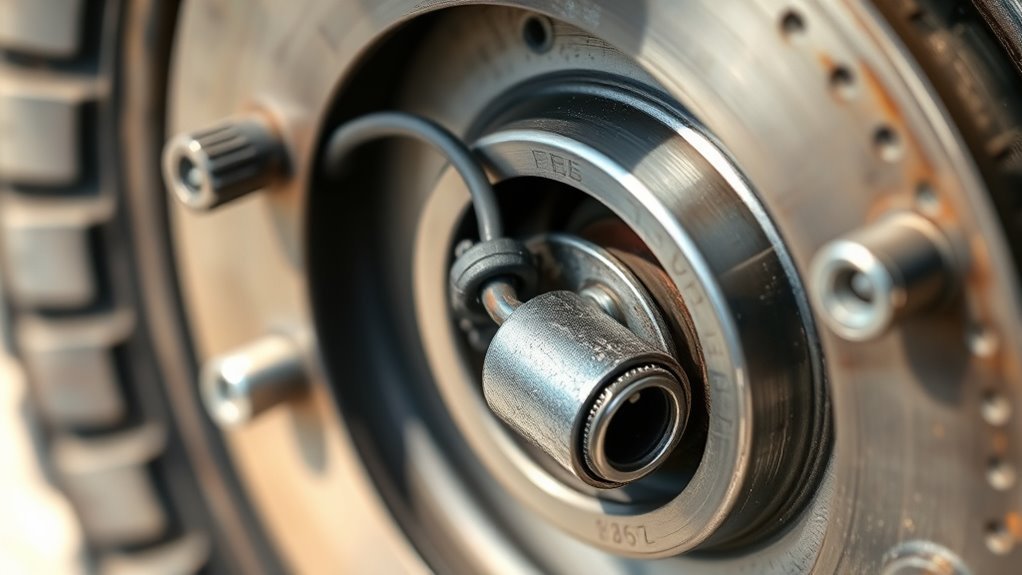
When your ABS warning light comes on, it’s often a sign that one of your wheel speed sensors is malfunctioning.
You might notice a pulsating brake pedal during stops or erratic speedometer readings.
Both of these are common symptoms of a bad wheel speed sensor.
These sensors send essential data to your vehicle’s anti-lock braking system, so when one fails, the ABS light stays on to alert you.
Besides the ABS light, you could also see the check engine light. This indicates that the system’s struggling to process accurate wheel speed information.
A faulty sensor can disable your ABS and traction control, which can compromise safety during sudden braking.
Recognizing these signs early helps you address the bad wheel speed sensor before it causes further issues.
Using a Diagnostic Scanner to Detect Sensor Errors
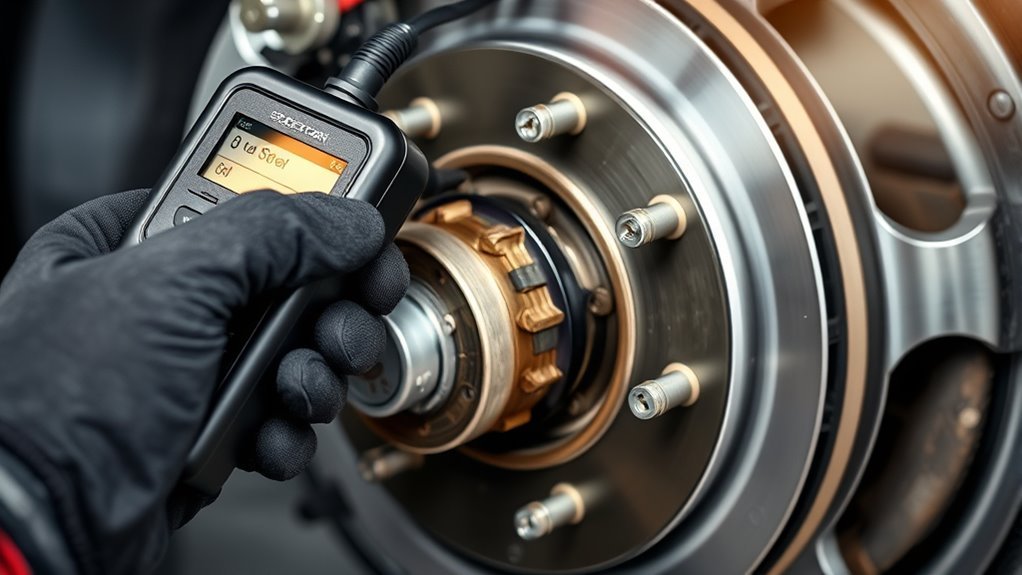
To start, connect your diagnostic scanner to the vehicle’s OBD-II port and power it on.
Then, read the error codes related to the wheel speed sensors to pinpoint which one is causing trouble.
Finally, interpret the live sensor data to compare each wheel’s readings and confirm the faulty sensor.
Scanner Setup Steps
Start by connecting your diagnostic scanner to the vehicle’s OBD-II port, usually found under the dashboard near the steering column.
Next, turn on the ignition without starting the engine to power the scanner and let it communicate with your vehicle’s systems.
Once connected, navigate to the ABS or wheel speed sensor section in the scanner’s menu.
Here, you can access any stored trouble codes related to the ABS Wheel Speed Sensor and other speed sensors.
These codes help pinpoint which sensor—front left, front right, rear left, or rear right—might be faulty.
After noting the relevant codes, clear them and perform a test drive.
This step confirms if the issue persists, indicating whether you need to inspect or replace the bad sensor.
Reading Error Codes
How can you quickly identify which wheel speed sensor is causing trouble?
By reading error codes with a diagnostic scanner, you can pinpoint sensor failure precisely. When you connect the scanner, it retrieves specific codes related to wheel speed sensors, often starting with “C” and including identifiers like C0035 for the left front sensor.
This lets you know exactly which sensor is malfunctioning. Some scanners even offer live data and active tests, so you can watch sensor performance in real-time and engage the ABS system to confirm the faulty unit.
After you fix the sensor failure, clear the error codes to reset the ABS warning light and verify the repair.
Reading error codes is your fastest, most accurate way to detect wheel speed sensor issues.
Interpreting Sensor Data
Why does one wheel speed sensor seem off compared to the others?
Using a diagnostic scanner, you can measure the speed each sensor reports in real time.
This helps you spot sensor problems by comparing values side by side.
If one sensor consistently shows a different speed or erratic data, it likely indicates a fault.
The scanner also retrieves ABS fault codes tied to specific wheel sensors, so you can target your troubleshooting effectively.
Additionally, the tool monitors voltage and signal outputs, revealing electrical issues behind sensor malfunctions.
By interpreting this sensor data accurately, you avoid guesswork and quickly identify which wheel speed sensor is bad.
This saves time and ensures your ABS system functions properly.
Visual Inspection of Wheel Speed Sensors and Connectors
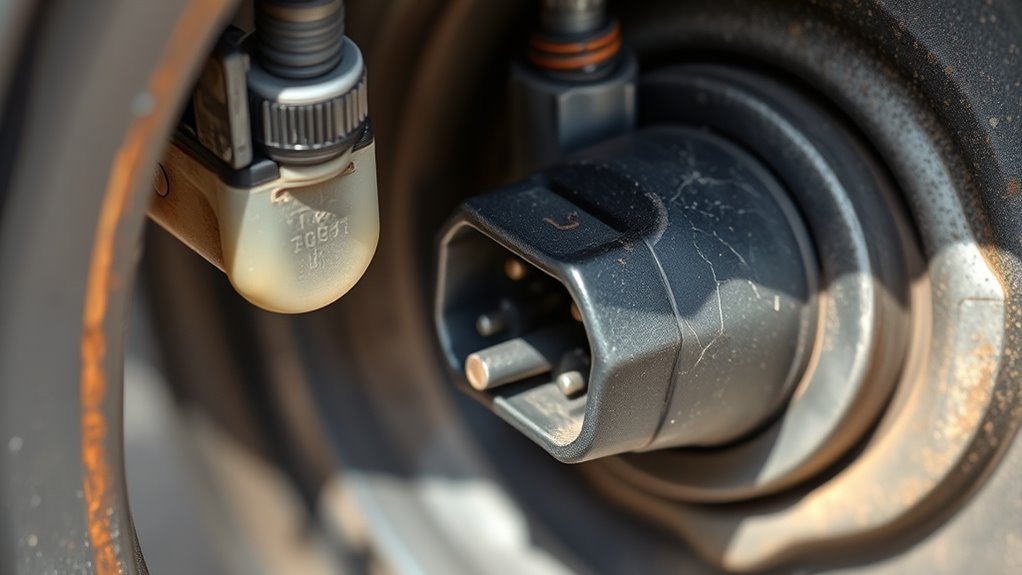
Although diagnosing a faulty wheel speed sensor can seem complex, you can quickly identify issues by visually inspecting the sensors and their connectors.
Start by checking each sensor for cracks, corrosion, or physical damage that might affect performance.
Begin by inspecting sensors for cracks, corrosion, or any physical damage impacting their function.
Look closely at the connectors and wiring for fraying, loose connections, or dirt buildup, all of which can disrupt electrical signals.
Make sure each sensor is securely mounted to the wheel hub, as looseness can cause inaccurate readings and trigger warning lights.
Don’t forget to clear away any mud or rust that could block the sensor’s detection ability.
Finally, inspect the reflector ring for wear or damage, since problems here can also activate ABS warning lights and lead to sensor failure.
Testing Wheel Speed Sensors With a Magnet or Tool
You can test each wheel speed sensor using a small magnet or a pocket screwdriver to interrupt its magnetic field, which should trigger a signal if the sensor is working properly.
First, make sure the vehicle’s electrical system is functioning since the speed sensor usually runs on a 12-volt circuit.
Hold the magnet or tool near the sensor to create a magnetic disruption and watch for a signal on your multimeter.
If you get a reading, the sensor is likely fine, but the ABS warning might still be caused by issues with the reflector ring inside the wheel bearing.
Always inspect the sensor’s wiring and location for damage or debris before testing, as these can affect speed sensor performance and cause ABS faults.
Understanding the Role of the Reflector Ring in Sensor Function
After testing the wheel speed sensor with a magnet or tool, the next step is to understand how the reflector ring plays a key role in the sensor’s function.
The reflector ring, usually located within the wheel bearing assembly, has a toothed design that passes by the wheel speed sensor as the wheel rotates.
This interaction creates an interrupting magnetic field, allowing the sensor to accurately measure wheel speed.
If the reflector ring is damaged or misaligned, it can cause inconsistent or missing signals, triggering ABS or traction control warnings.
So, when diagnosing sensor issues, you must check the reflector ring’s condition.
Even if the sensor tests fine, a faulty reflector ring often needs replacement to guarantee your vehicle’s control systems receive accurate wheel speed data.
When to Seek Professional Help for Sensor Replacement
If your vehicle shows multiple warning lights or unusual behavior, it’s time to get expert help diagnosing the sensor issues.
Professionals have the tools and knowledge to pinpoint complex problems quickly, saving you time and money.
Don’t wait too long—early intervention can prevent further damage and keep your car running safely.
Recognizing Complex Sensor Issues
When multiple warning lights like the ABS and traction control illuminate simultaneously, it’s a clear sign you should seek professional help to diagnose your wheel speed sensors.
These signs of a bad sensor can indicate complex issues that aren’t easily fixed with a simple DIY check.
A professional mechanic uses specialized diagnostic tools to accurately read your vehicle’s error codes, pinpointing exactly which sensor is faulty.
If you notice erratic speedometer readings or inconsistent braking, don’t ignore these symptoms—they suggest deeper problems that require expert attention.
Attempting to fix such issues yourself could lead to misdiagnosis and costly repairs later.
A thorough professional inspection also uncovers hidden electrical faults or wiring damage, ensuring your vehicle’s safety systems function properly.
Benefits of Expert Diagnosis
Accuracy plays a crucial role in diagnosing wheel speed sensor issues. Relying on expert mechanics guarantees you pinpoint the faulty sensor quickly.
When you seek professional auto repair, technicians use specialized tools and software to get precise readings. This avoids guesswork and ensures you receive the best service possible.
They’ll also consider factors like your vehicle’s history and environmental conditions that might affect sensor performance. This thorough approach saves you time and money by preventing unnecessary parts replacement.
Plus, mechanics have access to the latest service bulletins and manufacturer guidelines. This makes sure they follow best practices every step of the way.
Most importantly, expert diagnosis confirms critical safety systems like ABS and traction control work properly. This reduces your risk of accidents caused by faulty sensor data.
Trusting professionals helps you restore your vehicle’s performance and safety efficiently. It’s a smart choice for any car owner!
Timing for Professional Intervention
Knowing the right moment to call in a professional can save you from costly repairs and guarantee your vehicle stays safe on the road.
If your Check Engine Light comes on alongside ABS or traction control warnings, or you notice unusual brake behavior, it’s time to seek expert help.
DIY scans showing multiple sensor codes or visible sensor damage also demand professional intervention.
Here’s when to prioritize professional sensor replacement:
| Symptom | Indicator | Action Needed |
|---|---|---|
| Multiple warning lights | ABS, Check Engine Light | Professional diagnosis |
| Pulsating brake pedal | Loss of anti-lock brakes | Immediate mechanic consult |
| Multiple sensor codes | Scanner readout | Expert sensor pinpointing |
| Sensor damage/contamination | Visual inspection | Qualified repair |
| Erratic speedometer readings | Transmission issues | Professional replacement |
Don’t delay vehicle maintenance when these signs appear.
Frequently Asked Questions
Can Autozone Check ABS Sensors?
Yes, AutoZone can check ABS sensors by reading your vehicle’s diagnostic trouble codes.
They’ll help identify issues, but you might need a professional mechanic for detailed testing and repairs if sensor problems persist.
What Voltage Should an ABS Sensor Be?
You should see the ABS sensor voltage fluctuate between 0 and 12 volts as the wheel spins.
Typically, it needs to reach around 0.5 to 1 volt when moving to signal properly.
How to Fix a Speed Sensor?
Oh, sure, just wave a magic wand!
But seriously, you disconnect the battery, remove the faulty sensor,
swap in the new one, reconnect everything, clear codes, and take a test drive.
Easy peasy, right?
Is the Wheel Speed Sensor Important?
Yes, the wheel speed sensor’s essential.
It helps your ABS and traction control work properly, keeping you safe by preventing wheel lockup and maintaining stability.
Without it, braking efficiency and vehicle handling can seriously suffer.
Conclusion
Now that you know how to spot symptoms, use a diagnostic scanner, and perform visual and magnet tests, you’re better equipped to identify a bad wheel speed sensor.
Remember to check the reflector ring’s condition and understand its role.
If things get tricky or you’re unsure, don’t hesitate to seek professional help.
By staying informed and being thorough, you’ll be able to diagnose issues effectively.
And knowing when to ask for assistance is key to maintaining your vehicle’s performance.
In conclusion, identifying a faulty wheel speed sensor involves recognizing symptoms, performing tests, and assessing the reflector ring.
With this knowledge, you can ensure your vehicle remains safe and runs smoothly.
When in doubt, don’t forget that professional help is just a call away!